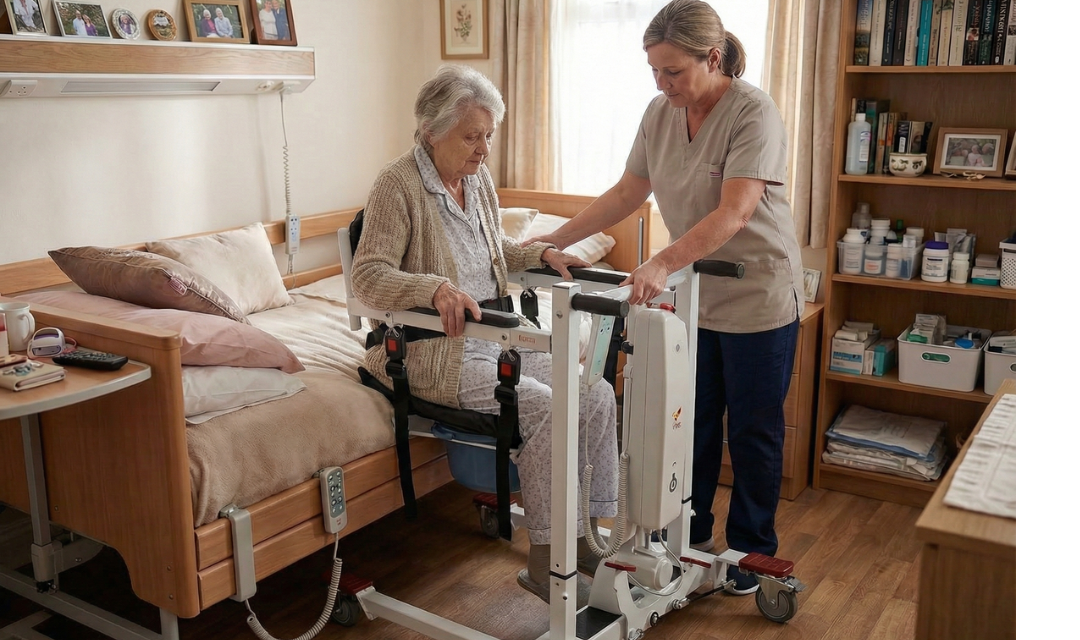
Home medical equipment setup in a safe modern home care environment for seniors in 2026

8

Dec

The Complete 2026 Guide to Home Medical Equipment: Costs, Insurance, Best Products & Expert Buying Tips

The Essential Resource for Families, Seniors & Caregivers

Choosing the right
home medical equipment
is one of the most important decisions families make when caring for seniors, adults with disabilities, or loved ones recovering at home.
The difference between the right product and the wrong one often determines safety, comfort, long-term outcomes—and peace of mind.

In this fully updated 2025 Complete Homecare Medical Equipment Guide, we break down everything you need to know before purchasing essential items such as hospital beds,
medical bed mattresses,
Hoyer lifts for home use,
patient transfer chairs,
mobility walkers, pressure relief systems, and more.

What This Flagship Guide Covers

  • The most essential medical equipment for elderly at home in 2025
  • Best products across key categories (beds, lifts, mattresses, walkers & more)
  • How to choose each type of equipment safely and correctly
  • Top brand comparisons for 2025
  • Costs, pricing ranges & what families typically spend
  • Complete Medicare & insurance coverage breakdown for home medical equipment
  • Expert-level buying tips to avoid common mistakes
  • Step-by-step roadmap for setting up a safe homecare environment

Whether you're researching a
hospital bed for home use,
exploring advanced pressure relief solutions like an
alternating pressure mattress,
or comparing mobility aids such as a
4-wheel rollator walker,
this guide provides the clarity, facts, and direction you need.

Our goal is simple: to help families make confident, safe, medically sound decisions—without confusion, misinformation, or pressure.
This guide was built on real caregiver experiences, professional insights, and the latest 2025 industry standards.

Who This Guide Is For

✔ Families caring for elderly loved ones at home
✔ Adults recovering from surgery or illness
✔ Seniors seeking greater comfort, safety, and independence
✔ Caregivers and home health providers
✔ Anyone seeking unbiased, expert information on homecare equipment

Let’s begin with a deep look into the most important homecare categories—and how to choose the right equipment for safety, comfort, and long-term health.

The Most Essential Homecare Medical Equipment

Building a safe and medically sound environment at home starts with choosing the right
home medical equipment.
In 2025, the needs of seniors and adults receiving care at home continue to evolve, driven by longer life expectancy, higher rates of chronic conditions, and the growing demand for safe aging-in-place solutions.

Below is a breakdown of the most essential categories of
medical equipment for elderly at home—each one critical for safety, mobility, comfort, and long-term health outcomes.

1. Hospital Beds for Home Use

A hospital bed for home use provides significantly better positioning, circulation, and safety than a standard mattress.
Adjustable height helps prevent caregiver injuries, and electric controls allow the individual to remain comfortable with minimal strain.

  • Reduces fall risk and improves nighttime safety
  • Supports proper elevation to prevent respiratory struggles
  • Minimizes caregiver lifting and strain
  • Improves sleep quality for seniors and bedridden patients

2. Medical Bed Mattresses & Pressure Relief Systems

A proper medical bed mattress is essential in preventing pressure injuries, improving circulation, and reducing long-term complications.

In particular, an
alternating pressure mattress redistributes weight automatically—shown by
NIH clinical studies
to reduce the risk of pressure ulcers and hospital readmissions.

  • Helps prevent bed sores and skin breakdown
  • Improves comfort for long-term bed users
  • Promotes healthy circulation and sleep
  • Reduces the need for manual repositioning

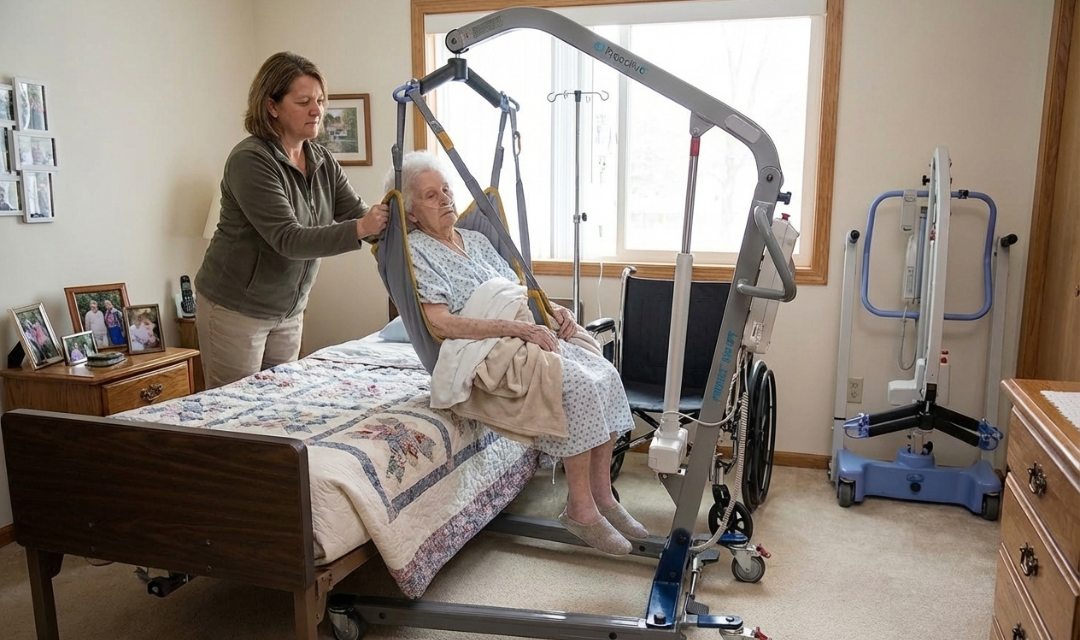
3. Patient Lifts & Transfer Devices

A Hoyer lift for home use or electric lift is essential for safe transfers.
These devices prevent caregiver injuries—one of the most common reasons caregivers suffer long-term back damage.

For even simpler daily transfers (bed → toilet → wheelchair), many families choose a
patient transfer chair,
which doesn’t require slings and allows an easier one-person transfer.

  • Reduces the risk of hospital or facility transfer injuries
  • Allows seniors with limited mobility to remain at home safely
  • Makes toileting, bathing, and repositioning significantly easier
  • Improves quality of care and reduces caregiver burnout

4. Walkers, Rollators & Mobility Aids

The right 4 wheel rollator walker or mobility aid gives seniors independence, stability, and confidence in their daily routines.

Many families search for the
best walkers for seniors
as one of the first steps in improving mobility and fall prevention—especially after hospitalization or surgery.

  • Enhances balance and reduces fall risk
  • Essential for outdoor walking, shopping, and daily tasks
  • Provides built-in seating for rest breaks
  • Ideal for seniors with mild to moderate mobility limitations

5. Bathroom Safety & Fall Prevention Equipment

Bathroom-related falls are one of the leading causes of injury among adults 65+.
Essential equipment—such as grab bars, raised toilet seats, shower benches, and transfer chairs—dramatically reduces risk and improves daily independence.

  • Reduces slips in wet or unsteady areas
  • Improves stability during transfers and standing
  • Helps seniors bathe and toilet safely without supervision

6. Mobility Scooters for Independence

Mobility scooters help seniors stay active in the community, travel longer distances, and reduce strain on the joints and lower body.
They are ideal for outdoor use, errands, and daily tasks where a walker may not provide enough support.

  • Allows longer-distance mobility without fatigue
  • Supports continued independence for aging adults
  • Ideal for outdoor shopping, parks, and travel
  • Helps seniors maintain social activity and confidence

These six equipment categories form the foundation of a safe, effective homecare environment in 2025.
In the next section, we’ll explore how to choose the right items within each category—and what features truly matter.

How to Choose the Right Homecare Medical Equipment: A Complete Buyer’s Framework

Selecting the right
home medical equipment
is one of the most important decisions families face. The goal is not just to purchase a product—it’s to choose equipment that improves safety, prevents injuries, supports healing, reduces caregiver strain, and allows seniors to maintain dignity and independence at home.

This buyer’s framework breaks down exactly what to look for in each major category—from
hospital beds for home use,
medical bed mattresses,
Hoyer lifts,
patient transfer chairs,
and 4-wheel rollator walkers.

Your 2026 Homecare Equipment Decision Checklist

Before choosing any equipment, always consider:

  • Mobility level: Can the person stand? Pivot? Bear partial weight?
  • Medical diagnosis: Stroke, dementia, Parkinson’s, chronic pain, post-surgery, etc.
  • Skin integrity: Is there risk of pressure sores?
  • Caregiver support: Are transfers done by one person or two?
  • Home layout: Stairs? Narrow hallways? Small bathrooms?
  • Budget & coverage: What will Medicare or insurance cover?
  • Longevity needs: Is this for short-term recovery or long-term care?

How to Choose a Hospital Bed for Home Use

Choosing the right hospital bed for home use
is critical for safety, comfort, and long-term positioning.
Beds vary widely in adjustability, motor strength, height range, and support features.

Key Features to Look For

  • Full-electric controls for head, foot, and height adjustments
  • Low height range to reduce fall risk
  • Durable frame for long-term daily use
  • Safe working load appropriate for patient weight
  • Compatible with pressure relief mattresses

Best For:

Seniors with mobility limitations, patients needing frequent repositioning, and anyone recovering from major surgery or illness.

How to Choose a Medical Bed Mattress

The right medical bed mattress
prevents pressure injuries, reduces pain, and protects patients who spend many hours in bed.

Mattress Types & When to Choose Them

  • Foam Mattress: Best for short-term recovery or low-risk patients.
  • Alternating Pressure Mattress: Best for high-risk or existing pressure sores.
  • Low Air Loss Mattress: Best for extreme moisture issues or advanced skin breakdown.
  • Gel or Hybrid Mattress: Best for patients needing both support and cooling.

Key Features

  • Weight capacity & support density
  • Ease of cleaning
  • Noise level of pump (for A/P systems)
  • Pressure mapping and skin protection features

How to Choose a Hoyer Lift or Transfer Device

A Hoyer lift for home use
becomes essential when a person cannot safely transfer on their own or requires moderate-to-maximal assistance.

Electric vs Hydraulic Lifts

  • Electric lifts: Best for daily transfers and preventing caregiver strain.
  • Hydraulic lifts: More affordable but require manual pumping.

When to Consider a Patient Transfer Chair

A patient transfer chair
is ideal for seniors who cannot use slings or for families needing fast, one-person transfers between bed, toilet, and wheelchair.

Key Considerations

  • Weight capacity & stability
  • Sling types & compatibility
  • Turning radius (small spaces need compact frames)
  • Battery life (for electric lifts)

How to Choose a Walker or Rollator

The right walker or
4-wheel rollator walker
dramatically improves balance, reduces fall risk, and increases daily independence.

Key Features to Consider

  • Brake type & stability
  • Seat height & comfort
  • Weight capacity (standard vs bariatric)
  • Terrain compatibility (indoor, outdoor, all-terrain)
  • Foldability for transport

Best For:

Seniors with moderate mobility needs, post-surgery recovery, or anyone needing support during walking.

With these guidelines, families can confidently choose the right equipment based on medical needs, home environment, and daily safety considerations.
In the next section, we’ll compare the top 2025 brands for hospital beds, mattresses, lifts, and mobility equipment—highlighting strengths, differences, and ideal use cases.

Top Brands & Product Comparisons for Homecare Medical Equipment

Choosing the right home medical equipment
often comes down to understanding how each manufacturer designs their products — including durability, safety,
comfort, and ease of use for both patients and caregivers.

Below are the top homecare brands for hospital beds,
medical bed mattresses, Hoyer lifts,
patient transfer equipment, and mobility walkers.
Each comparison chart includes strengths, ideal users, and clinical considerations for 2025.

1. Best Hospital Bed Brands for Home Use (2026)

Hospital beds must balance durability, smooth repositioning, motor reliability, and fall-prevention features.
Below are the most trusted manufacturers for hospital beds for home use.

Brand
Strengths
Best For

Joerns Healthcare
Premium clinical-grade beds with exceptional motor reliability, safety rails, and long-term durability.
Long-term care, high-acuity users, professional caregiver environments.
Invacare
Trusted for affordability, dependable performance, and widely used by home-care agencies.
Families needing reliable, budget-friendly beds for home recovery or aging in place.
Proactive Medical
Advanced low-height safety beds and durable construction for reduced fall risk.
High fall-risk seniors, dementia patients, and users needing frequent height adjustments.

2. Best Medical Bed Mattress & Pressure Relief Brands

Pressure prevention is one of the top medical needs for seniors and long-term bed users.
Below are leading brands for medical bed mattresses,
including foam, gel, hybrid, alternating pressure, and low air loss systems.

Brand
Strengths
Best For
Proactive Medical (Protekt Series)
Industry leader in alternating pressure and low-air-loss systems; clinically validated for ulcer reduction.
High-risk patients, stage 1–4 pressure injuries, long-term bed users.
Invacare
Reliable foam and pressure-redistribution surfaces at a strong price point.
Low-to-moderate risk users, short-term recovery, basic pressure support.
Lumex / Graham-Field
Hybrid foam-air technology with enhanced body contouring and comfort.
Users seeking premium comfort for extended sleep or chronic pain.
ProBasics
Affordable entry-level foam and gel mattresses for general home care.
Short-term users, budget-conscious families.

3. Best Patient Lift & Hoyer Lift Brands

Safe transfers reduce caregiver injuries and protect seniors from falls.
Below are the most trusted manufacturers for
Hoyer lifts for home use
and other transfer devices.

Brand
Strengths
Best For
Joerns / Hoyer
Gold-standard lift mechanisms, smooth operation, superior build quality.
Daily transfers, long-term care, professional caregiver environments.
Invacare
Reliable hydraulic and electric lifts at balanced price points.
Home users needing dependable lifts for moderate daily use.
McKesson
Durable and budget-friendly hydraulic lifts widely used in home care.
Families needing safe transfers with a lower-cost lift.
ProBasics
Entry-level hydraulic lifts suitable for occasional transfers.
Short-term recovery or infrequent home transfers.

4. Best Walkers, Rollators & Mobility Brand Comparisons

Mobility aids support safe walking, stability, and independence.
Below are leading brands for 4-wheel rollator walkers
and traditional walkers.

Brand
Strengths
Best For
Triumph Mobility
High-end rollators with superior stability, ergonomic seating, and outdoor performance.
Active seniors needing premium outdoor mobility.
Karman Healthcare
Lightweight, ergonomic mobility aids and wheelchairs.
Users requiring ultra-light mobility support.
Invacare
Reliable rollators and walkers trusted across the home care industry.
General mobility support, post-surgery use.
Carex
Affordable walkers with simple, lightweight design.
Budget-conscious families and short-term mobility needs.
McKesson
Durable, dependable standard walkers for basic support.
Stability-focused users with mild unsteadiness.
ProBasics
Simple, cost-effective mobility aids for general daily use.
Short-term recovery, basic mobility needs.

2026 Cost Breakdown & Smart Savings Guide for Homecare Medical Equipment

Caring for a loved one at home can bring unexpected expenses — especially when purchasing
home medical equipment, mobility aids, or
patient transfer solutions.
This section breaks down real 2025 cost ranges and gives families practical strategies to save
30%–60% on essential equipment.

At MedCare Mobility, we proudly serve as a trusted nationwide supplier for seniors, caregivers, long-term care facilities,
and home-based patients — offering:

  • Top 10% cashback rewards program for all purchases — unmatched in the industry.
  • Veteran, military, and organizational discounts for qualified groups.
  • Special pricing for bulk orders, group homes, assisted-living facilities, and nonprofits.
  • Price-match guarantee on qualified items.

These programs make MedCare Mobility one of the most affordable and supportive places to purchase
homecare equipment in 2025.


1. Realistic 2026 Cost Ranges for Essential Homecare Equipment

These national averages reflect true market pricing across the industry in 2026.

Equipment Type
2026 Price Range
Notes

Hospital Beds for Home Use
$899 – $3,900
Joerns = premium clinical-grade; Invacare = standard home use.

Medical Bed Mattresses
$289 – $3,500
Alternating pressure = highest cost; foam redistribution = budget-friendly.

Hoyer Lift for Home Use
$399 – $2,500
Hydraulic = affordable; electric = easier for caregivers.

Patient Transfer Chair
$749 – $1,499
Replaces wheelchair, toilet transfer, lift — major value.

4-Wheel Rollator Walker
$129 – $599
Premium outdoor models cost more (e.g., Triumph Mobility).

Wheelchairs (Standard & Lightweight)
$189 – $799
Lightweight Karman chairs last longer & reduce strain.


2. How Families Can Save 30%–60% on Homecare Equipment in 2026

These strategies can dramatically reduce out-of-pocket costs — especially when combined with MedCare Mobility’s
cashback rewards and discount programs.

✓ Buy only the features you truly need

Avoid paying for advanced functions (tilt systems, bariatric capacities) unless medically required.

✓ Choose hydraulic lifts when appropriate

Electric lifts offer convenience but hydraulic lifts save hundreds and work perfectly for most homes.

✓ Foam mattresses can prevent overspending

Stage 1 pressure prevention doesn’t always require an alternating pressure system — foam redistribution may be sufficient.

✓ Compare brands — not just price

Proactive Medical, Invacare, ProBasics, Karman, and Triumph Mobility offer excellent mid-range options with strong reliability.

✓ Use bundle pricing when possible

Hospital bed + mattress, or lift + sling bundles can save 10%–25% instantly.

✓ Leverage MedCare Mobility Rewards

Our top 10% cashback rewards program helps families earn cash back on every purchase —
usable toward future equipment, accessories, or upgrades.

✓ Ask about Veteran & organization discounts

MedCare Mobility proudly supports Veterans, long-term care facilities, nonprofits, and community programs with additional discounts.

✓ Use tax deductions & HSA/FSA benefits

Many home medical purchases qualify for IRS medical deductions or HSA/FSA reimbursement.

✓ Invest in long-lasting quality

Paying slightly more upfront can prevent costly early replacements.

Quick 2026 Savings Checklist

  • ✔ Compare 3–5 models before purchasing.
  • ✔ Choose the simplest model that meets needs.
  • ✔ Look for hydraulic versions of lifts.
  • ✔ Use MedCare Mobility rewards for 10% cashback.
  • ✔ Ask about Veteran & organizational discounts.
  • ✔ Use HSA/FSA or medical tax deductions.
  • ✔ Always check for warranty length.

2026 Medicare & Insurance Guide for Home Medical Equipment: What’s Actually Covered

Few areas create more confusion for families than Medicare and insurance coverage
for home medical equipment.
Rules vary widely, approvals depend on medical justification, and many products that caregivers assume are covered
actually are not included in traditional Medicare benefits.

This section gives you a clear, simplified breakdown of what Medicare covers in 2025,
what it does not cover, and how to avoid common delays or denials.
All information is sourced from highly trusted government resources, including:

1. What Medicare Part B Covers in 2026

Medicare Part B covers certain items classified as Durable Medical Equipment (DME)
if they meet these criteria:

  • ✓ The equipment is medically necessary
  • ✓ It is prescribed by a licensed doctor
  • ✓ It is used in the home
  • ✓ It will last at least 3 years
  • ✓ It is provided by a Medicare-approved supplier

If approved, Medicare generally covers 80% of the allowed amount after deductibles.
The remaining 20% is the patient’s responsibility.

Common Home Equipment Medicare Usually Covers:

  • ✓ Standard wheelchairs (manual)
  • ✓ Walkers and 4-wheel rollators (basic models)
  • ✓ Hospital beds (primarily semi-electric models)
  • ✓ Standard mattresses (not specialty pressure systems)
  • ✓ Patient lifts — but typically only manual/Hydraulic Hoyer lifts

2. What Medicare Does Not Cover in 2025-2026

This is where most families are surprised. Medicare does not cover many modern safety, comfort,
or pressure-injury-prevention devices — even if they are medically beneficial.

Not Covered by Medicare:

  • Alternating pressure mattresses (APM systems)
  • Low air loss mattresses
  • Full-electric hospital beds (upgrades are out-of-pocket)
  • Patient transfer chairs (new category not covered)
  • Lift recliner chairs
  • Electric Hoyer lifts
  • Power scooters / power wheelchairs unless meeting very strict criteria
  • Most comfort accessories (bed rails, cushions, bedside tables)

Because of this, many families choose to purchase equipment out-of-pocket to avoid delays, limitations,
and Medicare model restrictions.

3. Important Reality Check: Medicare Rentals vs. Ownership

Medicare often requires rentals instead of ownership for hospital beds and wheelchairs.
This means:

  • • You do not choose the brand or model
  • • You cannot upgrade to better equipment
  • • Delivery may take longer
  • • You may receive refurbished or used equipment

Families who want better quality, comfort, or features often find purchasing independently to be a more practical and safer solution.

4. How to Improve Your Chances of Medicare Coverage

To increase approval rates, make sure your doctor includes:

  • • The exact diagnosis
  • • Functional limitations (cannot stand, cannot walk, pressure injury risk)
  • • Duration of need (long-term, permanent, or chronic)
  • • Medical justification for needing the item at home

5. How MedCare Mobility Helps Families Save Without Waiting for Insurance

Insurance and Medicare are helpful — but limited.
Because of this, MedCare Mobility offers several ways to make homecare equipment far more affordable:

  • 10% Cashback Rewards on every purchase — a top-tier program in the industry.
  • Veteran & Military Discounts with proper verification.
  • Group, organization, and facility pricing.
  • Price match guarantee on many models.
  • Fast shipping nationwide — no long insurance delays.

These programs help families secure safer, higher-quality equipment without the limitations of Medicare rentals.

Your Complete Path to Safe, Confident Homecare in 2026

Caring for a loved one at home is one of the most meaningful responsibilities a family can undertake.
Yet it often comes with overwhelming decisions, complex medical needs, and uncertainty about which
home medical equipment will truly improve safety, comfort, and independence.
This 2026 guide was built to give families real clarity — not sales language, but trusted, expert-level guidance.

From selecting the right hospital bed for home use
or Hoyer lift for home use,
to choosing pressure-relief systems, mobility aids, or patient transfer solutions, every choice shapes your loved one’s long-term safety and quality of life.
With the right information, families can prevent avoidable injuries, reduce caregiver strain, and build a truly supportive home environment.

Why Families Trust MedCare Mobility

MedCare Mobility is more than a supplier — we are a nationwide partner dedicated to helping families navigate the
homecare journey with confidence, transparency, and compassion.
We proudly provide:

  • ✓ Expert, unbiased guidance for all major homecare categories
  • ✓ Top-rated brands used by healthcare professionals nationwide
  • ✓ A top 10% cashback rewards program on all purchases
  • ✓ Special discounts for Veterans, facilities, and organizations
  • ✓ Fast, reliable shipping across the United States
  • ✓ Support teams who help you choose the right equipment — not the most expensive one

With these resources, families no longer have to navigate confusing product lists, Medicare rules, or uncertain online sellers.
MedCare Mobility offers a trusted path backed by expertise, safety standards, and real-world caregiver experience.

Final Takeaway for Families & Caregivers

Homecare is not just about equipment — it is about creating a safer, more dignified life for the people who matter most.
With the right home medical equipment, the proper guidance, and a knowledgeable support system, your loved one can enjoy
more independence, fewer risks, and a higher quality of life at home.

Your journey to safer, easier, more confident homecare begins with a single step: informed decision-making backed by trusted expertise.
MedCare Mobility is here to walk that path with you — every step of the way.

Need Help Choosing the Right Home Medical Equipment?

Our specialists are here to guide you with expert recommendations tailored to your loved one’s medical needs, home layout, and budget.


Explore Home Medical Equipment


Leave a Reply

RELATED

Posts