26
Sep
Why a Medical Suction Machine Can Save Lives: The Essential Role of Portable Airway Management
The Hidden Crisis of Blocked Airways
Every year, thousands of emergencies occur where the difference between life and death is not a defibrillator or advanced drug—but simply the ability to clear an airway. When someone cannot breathe due to mucus, saliva, vomit, blood, or other fluids, their brain and body are starved of oxygen within minutes. Without immediate intervention, permanent damage or death can follow.
For emergency medical services (EMS), fire departments, nursing homes, and caregivers at home, this is not a rare occurrence—it is a daily reality. From trauma accidents on highways to elderly patients with swallowing difficulties, airway obstruction is one of the most urgent problems in healthcare.
Who Faces These Risks the Most?
-
Elderly Patients & Stroke Survivors
Many seniors lose muscle control for swallowing (dysphagia), leaving them unable to clear secretions. A home suction machine becomes essential to avoid aspiration pneumonia. -
Patients with Neuromuscular Diseases (ALS, MS, Muscular Dystrophy)
Weak respiratory muscles mean these patients cannot cough or clear mucus on their own, making suctioning life-sustaining. -
Children and Infants with Respiratory Illnesses
Babies with RSV, pneumonia, or congenital conditions often cannot manage mucus buildup. -
Trauma & Accident Victims
Vomit, blood, or facial injuries frequently block airways. First responders rely on portable medical suction machines to stabilize patients before transport. -
Tracheostomy Patients
Whether at home or in a care facility, a suction machine is vital to keep trach tubes free from mucus plugs.
Without immediate access to a reliable medical suction machine, these patients risk suffocation, severe lung infections, or long-term complications.
Why Organizations Depend on Portable Medical Suction Machines
For EMS and Fire Departments
- In cardiac arrest, suctioning is the first intervention before CPR or intubation.
- During mass casualty incidents, multiple portable units manage several patients simultaneously.
- In rural or long transports, a portable medical suction machine bridges the gap to hospital care.
For Nursing Homes & Rehabilitation Centers
- Preventing hospital readmissions from aspiration pneumonia.
- Protecting tracheostomy patients during routine care.
- Allowing caregivers to respond instantly without waiting for hospital equipment.
For Home Healthcare Providers
Having a home suction machine available means independence and dignity
for patients who otherwise would be hospitalized repeatedly.
Real-World Stories That Show the Difference
The Elderly Stroke Patient at Home
A caregiver notices her husband struggling to breathe as secretions block his throat.
Within seconds she reaches for the suction machine. By clearing the airway, she prevents
another hospital trip—and quite possibly saves his life.
The Car Accident Scene
Paramedics arrive to find a driver unconscious, with blood pooling in the mouth from facial trauma. Without immediate suction, the patient cannot be ventilated. The portable medical suction machine
in their kit makes intubation possible, stabilizing the patient for transport.
The Child with RSV
A mother, trained by her home health nurse, uses her home suction machine to clear her infant’s
thick mucus during a respiratory infection. Without it, her baby could have faced respiratory failure.
These scenarios highlight why airway management is not optional—it’s essential.
The truAIRE Portable Suction Machine: A Trusted Solution
Among the many options available today, the truAIRE Portable Suction Machine stands out for its balance of power, portability, and safety. It was designed with both emergency responders and home caregivers in mind.
What Makes truAIRE Different?
-
Hospital-Grade Suction Anywhere: Adjustable 80–600 mmHg vacuum power clears everything from thin secretions to thick fluids.
-
Safe Flow Rate: 18 L/min flow reduces mucosal trauma, making it safer for repeated use in vulnerable patients.
-
Portable & Lightweight: At just 3.6 lbs, it’s smaller and lighter than most competitors, operating directly inside its carrying bag.
-
Long-Lasting Battery: Up to 90 minutes runtime with replaceable lithium-ion battery ensures uninterrupted use in the field or at home.
-
Quiet Operation: At ~60 dBA, it won’t disrupt patients at home or in clinical environments.
-
Complete Kit Included: Collection jar, tubing, filters, and AC/DC power supply are all provided for immediate readiness.
Who Benefits Most from truAIRE?
-
EMS and Fire Departments needing reliable equipment in the field.
-
Hospitals & Clinics as a transport or backup suction system.
-
Nursing Homes & Rehab Facilities caring for trach patients or those with swallowing disorders.
-
Home Patients & Caregivers who require daily airway clearance.
-
Disaster Relief Teams working in field medicine and mobile clinics.
In short, the truAIRE is not just a piece of equipment—it is a game changer in ensuring airway safety across all levels of care.
The Bigger Picture: Why Reliable Suction Saves Lives
The importance of airway clearance is recognized worldwide. The American Heart Association includes suctioning as part of the basic steps in advanced cardiac life support (ACLS) during emergencies (AHA Guidelines). Without it, advanced interventions like ventilation or intubation may not even be possible.
This underscores why investing in a portable medical suction machine is not optional—it’s essential for any organization or caregiver responsible for life safety.
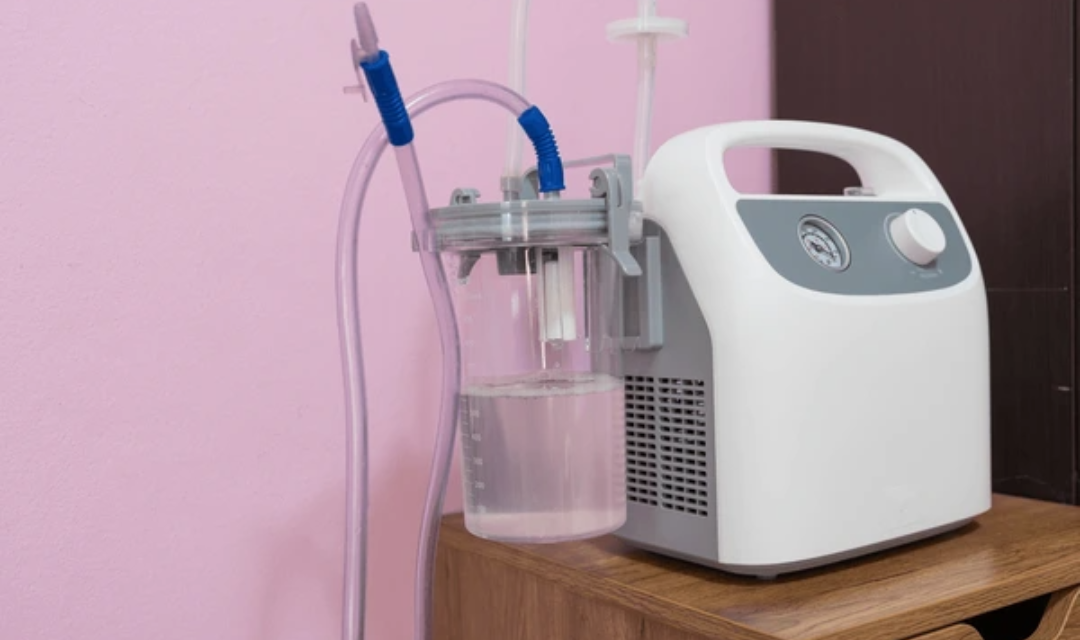
A medical suction machine (also called an aspirator) is a device that creates negative pressure (vacuum) to remove fluids — mucus, saliva, blood, secretions — from a person’s airway (oral, nasal, tracheal). ZOLL+1
Portable suction machines use a vacuum pump, tubing, a collection canister, and filters. The device draws the fluid through a catheter into the canister while keeping the device dry and preventing contamination. ZOLL+1
They’re commonly used in EMS, home care, hospitals, and anywhere airway clearance is needed.
Many people benefit from portable suction, including:
-
Patients with neuromuscular disorders (e.g. ALS, muscular dystrophy) who cannot cough effectively. Your ALS Guide
-
Tracheostomy patients who need to clear secretions to prevent tube blockage.
-
People with swallowing dysfunction (dysphagia) or frequent aspiration risk.
-
Patients recovering from surgery or with respiratory infections causing excess secretions.
-
Home caregivers and hospice users who don’t have immediate hospital support.
Using a suction machine at home can reduce emergency hospital visits and improve safety for individuals who would otherwise struggle to maintain a clear airway.
For clinical and portable suction, an adjustable range is important because different patients and fluids require different suction strength. A typical effective vacuum range is around 80 to 600 mmHg (negative pressure).
The device must allow safe low suction settings (for fragile tissues) and higher settings (for thicker secretions). This is one of the features that distinguish better machines.
Also, flow rate (liters per minute) matters: too high flow can damage mucosal tissue; too low may not clear the airway.
Battery runtime depends on the battery type, capacity, and duty cycle. Many devices adopt an intermittent cycle (e.g. 30 minutes on, then rest) to avoid overheating and extend battery life.
Some high-end portable devices claim runtimes up to 90 minutes (on intermittent use) under optimal conditions. (You’ll want to verify exact specs for any particular model.)
It’s also standard practice to keep spare batteries or external power (AC/DC) available to ensure continuous operation in field or home settings.
Cleaning & Maintenance:
-
After each use: empty the canister, wash it with warm soapy water, rinse, and let air dry. AboutKidsHealth+1
-
Weekly or periodically: change tubing, check filters, inspect for leaks, and disinfect parts (e.g. soak in diluted vinegar or disinfectant per manufacturer instructions) AboutKidsHealth+1
-
Always check battery, electrical connections, pressure gauge, seals, and tubing integrity. SSCOR Blog
Troubleshooting common issues:
-
No suction / low suction: check for leaks, disconnected tubing, blocked lines, full canister, clogged filter. AboutKidsHealth
-
Motor runs but no vacuum: might be internal component wear or pump failure.
-
Device overheats or stops: allow it to cool, ensure ventilation, and do not overuse beyond duty cycle.
-
Suction catheter too small or clogging: try a larger catheter, wet it before suctioning, reposition patient. AboutKidsHealth
Always follow the manufacturer’s user manual for safety and warranty compliance.
Portable suction machines provide strong, flexible capability outside of fixed settings. While stationary (wall-mounted) suction systems often deliver very high continuous suction and unlimited power, they lack mobility.
Portable units are essential for transport, EMS scenes, home use, and transitional care. The key is selecting a portable unit with sufficient vacuum, good flow rate, reliable battery, and durable construction to approach the performance of stationary systems in mobile or off-grid settings.
In many medical settings, both systems coexist: wall suction in hospital rooms, portable suction for movement, backup, or during outages.
-
Limit suction duration: Generally, suctioning should not exceed 10–15 seconds at a time to prevent hypoxia or trauma. MedCare Learning Hub+1
-
Preoxygenation: For patients at risk, give supplemental oxygen before suctioning if possible.
-
Appropriate catheter size: Use the smallest catheter that’s effective—oversized can cause tissue damage. SSCOR Blog
-
Avoid closed spaces or leaks: Ensure all connections are tight and no leaks exist.
-
Do not suction blindly: Use visualization (look before inserting) and a sweeping motion—never drag the catheter blindly. SSCOR Blog+1
-
Risk of bleeding or trauma: In cases of facial/skull fractures, nasal injuries, or after certain surgeries, suctioning may be contraindicated or require great caution. SSCOR Blog
-
Electrical safety: Never use when the device is wet or if cords are damaged. Disconnect power before cleaning. MedCare Learning Hub
-
Infection control: Use sterile/disposable catheters, change filters, disinfect surfaces to prevent cross-contamination.
The cost of a good portable suction machine can vary widely—ranging from a few hundred to over a thousand dollars—depending on features like vacuum range, battery capacity, build quality, and included accessories.
In many regions, portable suction machines are considered durable medical equipment (DME). For example, in the context of ALS, some guides state that suction machines can be rented for the first 13 months under Medicare, with supplies covered afterward. Your ALS Guide
Coverage depends on:
-
Whether the device is deemed medically necessary
-
Your insurance / DME benefits
-
Documentation and physician prescription
-
Rental vs purchase policies in your jurisdiction
Always check with the patient’s insurance provider and DME supplier in advance to confirm coverage and potential out-of-pocket costs.