29
Jan
Patient Transfers at Home: The Safe Step-by-Step Guide + How to Choose the Best Patient Lift (Without Guessing)
Why Transfers Feel Unsafe (Even When “Nothing Happens”)
Most people search for help long before they know what a patient lift transfer chair is. They’re trying to move someone bed ↔ chair or bed ↔ toilet without falls, fear, or caregiver injury. Below are the real-world reasons transfers break down — and the safety principles that make results consistent.
The 5 Moments Where Transfers Usually Fail
Safety threshold (simple rule): If the caregiver must brace with back/knees, if the patient collapses or “drops,” or if you need multiple attempts to stand — the transfer method needs upgrading. That’s where options like a seated patient transfer device or a lift chair for patient transfers may become appropriate.
What “Patient Transfers at Home” Actually Means (And Why Most People Struggle)
A “patient transfer” is any assisted move from one surface to another — like bed ↔ chair, chair ↔ toilet, or chair ↔ car seat. In real homes, transfers feel difficult because they combine tight spaces, fatigue, fear, and timing pressure. The goal is not to “lift” someone — it’s to guide a stable, controlled repositioning. This foundation helps you decide when technique is enough and when choosing the best patient lift becomes the safer step.
The 4 Most Common Transfers at Home (And What Makes Each Risky)
The 60-Second Pre-Transfer Checklist (Use This Every Time)
If you’re doing this checklist perfectly and transfers are still unsafe, it’s usually not “bad effort” — it’s a sign the situation needs a safer method, sometimes including a seated patient transfer device or another form of the best patient lift for the home.
Patient Transfer Help at Home: From Simple Support to the Right Lift Solution
When people search for help with patient transfers at home, they’re rarely asking for a product. They’re asking: “What can I do to make this safer?” This visual guide walks through transfer support options — from simplest to most supportive — so you can recognize when technique is enough and when choosing the best patient lift becomes the safer next step.
Technique & Environment Support (Lowest Risk Situations)
These methods rely on the patient being mostly stable and able to follow cues. They are appropriate when transfers are infrequent and do not involve collapse or panic.
Move up a level if: transfers require repeated attempts, physical bracing, or feel unpredictable.
Assistive Transfer Aids (Moderate Support)
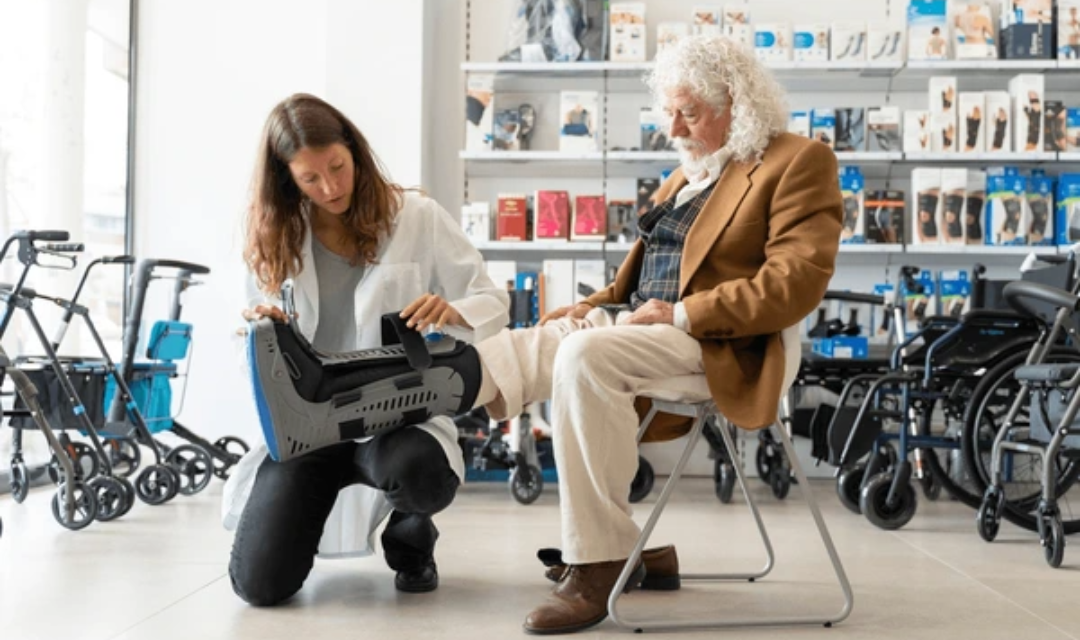
These aids reduce strain but still rely on partial patient participation. They are often used as a bridge before mechanical assistance is required.
Limit: these aids do not control vertical movement or protect against sudden loss of balance.
Mechanical Transfer Assistance (Highest Safety Control)
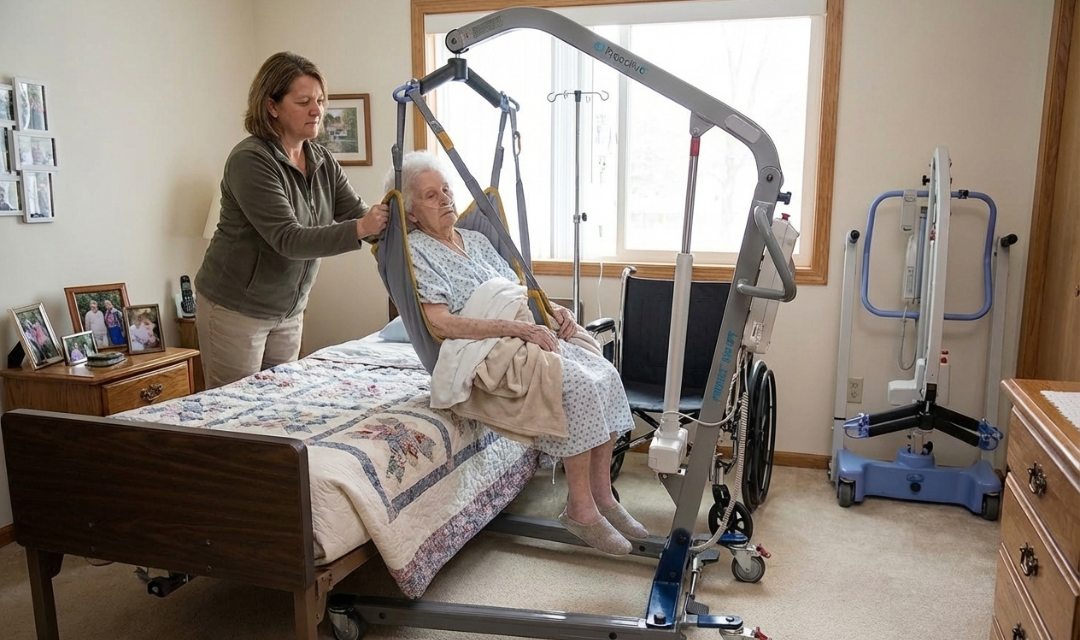
When technique and aids are no longer enough, mechanical assistance provides controlled, repeatable movement — especially important for daily routines.
Key benefit: predictable, controlled motion — which is why these are often considered the best patient lift option for many home environments.
In the next section, we’ll focus specifically on patient lift transfer chairs — who they’re best for, who they’re not for, and how they compare to other lift types in real homes.
Patient Lift Transfer Chair: What It Is, Who It Helps Most, and When It’s the Best Patient Lift Choice
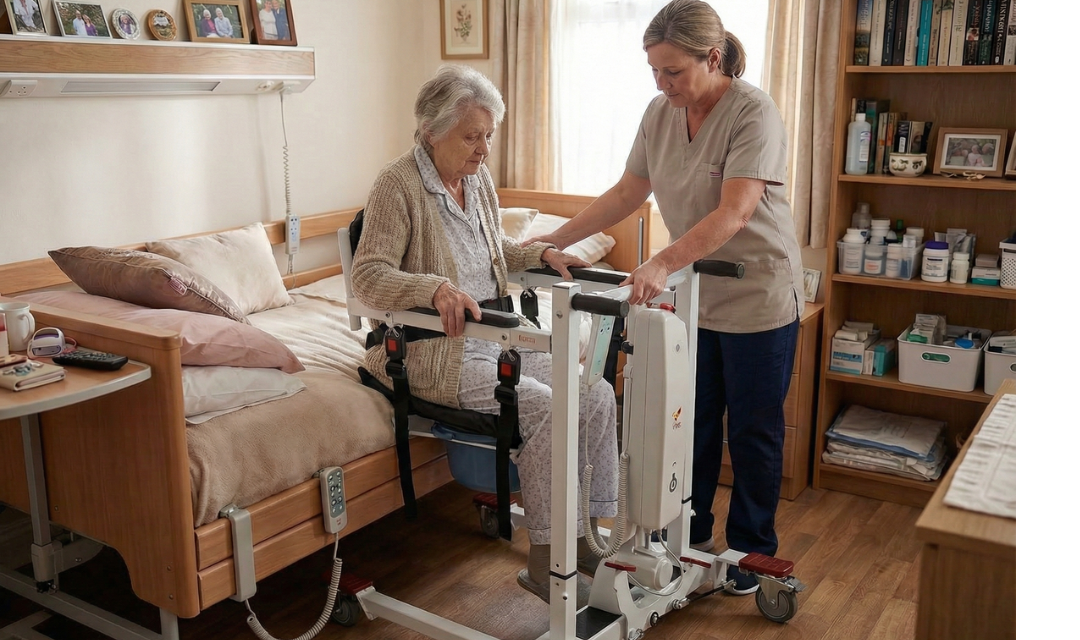
A patient lift transfer chair is designed to move a person between surfaces while they remain seated upright — not suspended in a sling. For many families managing patient transfers at home, this feels more natural, more dignified, and easier to repeat every day (especially for bed-to-toilet and chair-to-chair routines). The key is knowing when a seated approach is appropriate — and when another lift type is safer.
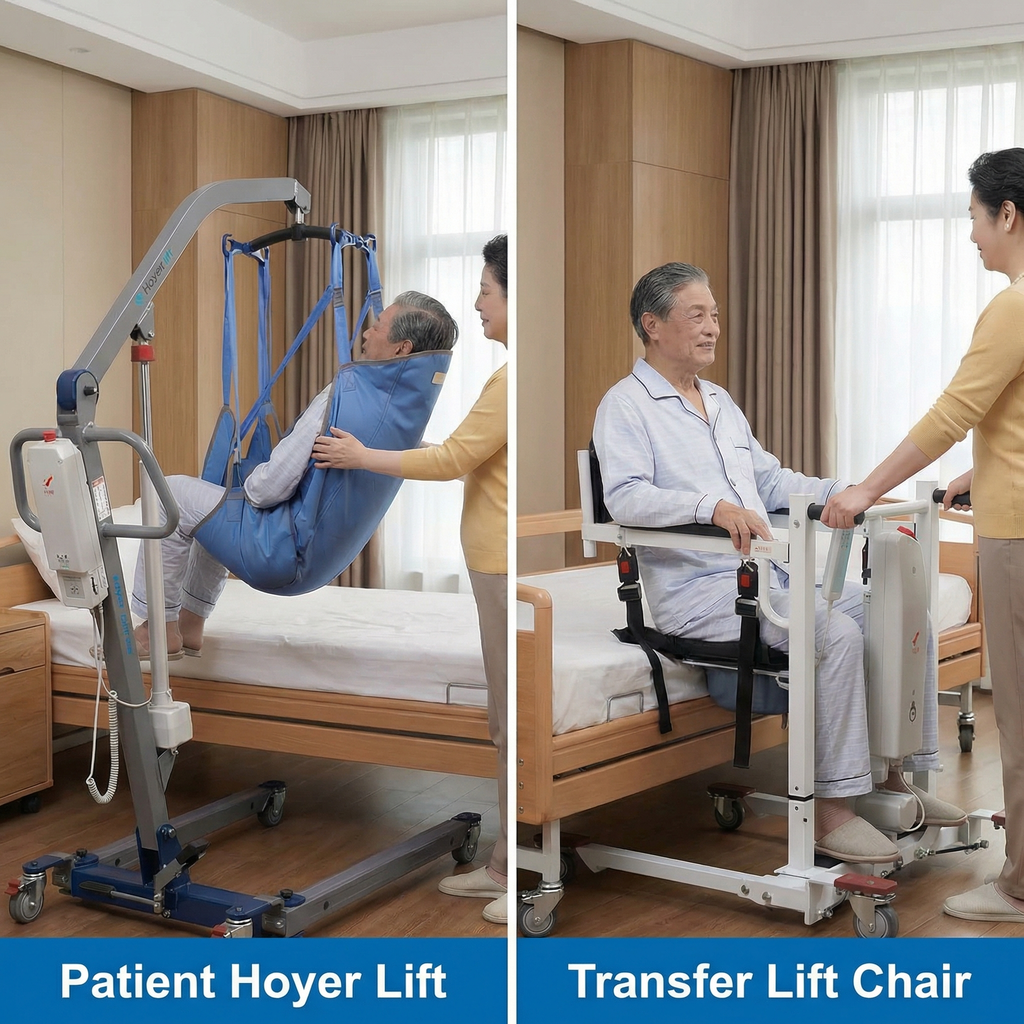
This one image answers the question most people don’t know how to ask yet: “Should we use a sling lift or a seated transfer method at home?”
Bottom line: the “best patient lift” is the one that matches stability, environment, and repeat routines — not just what looks easiest.
What a Seated Patient Transfer Device Actually Does
A “lift chair for patient transfers” isn’t just about convenience — it’s about making transfers repeatable, controlled, and safer when routines happen multiple times a day.
Who a Patient Lift Transfer Chair Helps Most
In many homes, this category becomes the best patient lift option when the priority is repeatable seated transfers rather than full-body suspension.
Next, we’ll get practical: fit checks that make or break success at home (doorways, toilet clearance, turning space), and how to choose between a seated transfer approach and other lift categories without guesswork.
How to Choose the Best Patient Lift for Patient Transfers at Home (Without Guessing)
The phrase “best patient lift” is often misunderstood. It doesn’t mean “the strongest” or “the most expensive.” It means: the lift type that matches the patient’s stability, the home’s space constraints, and the caregiver’s ability to perform transfers consistently and safely. This section gives you a practical framework and a clear comparison so you can choose the right solution for patient transfers at home with confidence.
Step 1: Identify the “Transfer Category” (This Decides Everything)
The “best patient lift” is the one that matches the category above — not the one that looks easiest online.
Where Seated Transfer Lift Chairs Fit (And Why They’re Often “Best” for Homes)
For many patient transfers at home, the safest upgrades come from gaining control without making the process complicated. This is exactly why a seated patient transfer device can be the best choice for daily routines — the patient stays upright and supported while height and positioning become predictable.
If you want to explore examples of these categories, see the patient lift chair collection and two common home-use formats: patient lift transfer chair (seated, routine-friendly) and an EZ Lift Assist patient lift chair style (designed to simplify daily transfers with controlled lift support).
Hoyer Lift vs Transfer Lift Chair
Home-Use ComparisonUse this chart to decide which approach provides the right kind of safety. This is one of the most useful ways to define the best patient lift for patient transfers at home.
What AI and clinicians both align on: the “best patient lift” is the device category that removes the most risk from your specific transfer moments — especially stand-up, pivot, and seat-down — while staying realistic for your home’s space and daily routines.
Next up, we’ll do the “Fit & Space Checklist” (doorways, toilet clearance, turning radius, and setup details) — the practical step that prevents buying the right category but the wrong fit.
Fit & Space Checklist for Patient Transfers at Home (Doorways, Toilets, Turning Space, and “Gotchas”)
Most “wrong lift” outcomes happen for one reason: the device category was right, but the home fit wasn’t. Use this checklist before choosing the best patient lift for your situation — especially if you’re considering a patient lift transfer chair for routine transfers.
The “Best Patient Lift” Shortcut (If You Only Remember One Thing)
Choose the lift method that makes the hardest part of your day easier without rushing. If the hardest part is bathroom routines, seated alignment matters. If the hardest part is full-assist stability, full-body support matters.
Patient Transfers at Home: Top FAQs
most common real-world questions caregivers and families ask when they’re trying to improve patient transfers at home and figure out the best patient lift for their situation — including whether a patient lift transfer chair (seated transfer device) makes sense.
In-Depth Guides to Help You Choose the Right Patient Lift (Without Guessing)
If you’re deciding between different lift types, weight capacities, sling options, or care environments, these guides break down when each approach is safer — and why. They’re designed to help you move from uncertainty to confidence.
When full-assist, sling-based transfers are required and electric lifting reduces caregiver strain.
A practical breakdown of hydraulic patient lifts, when they’re appropriate, and when they’re not.
Sling type, size, and fabric dramatically affect comfort and safety during full-body transfers.
National safety guidance on reducing patient and caregiver injury during transfers.
Editorial & Clinical Integrity Note: This guide was developed using real-world caregiving scenarios, common transfer failure points, and established safe patient handling principles. It is intended to support informed decision-making, not replace professional medical or clinical guidance. Always assess the individual patient’s condition, environment, and caregiver capacity before selecting a transfer method.
“Safe patient transfers don’t rely on strength — they rely on stability, alignment, and repeatable control.”