

Walker Knowledge Base
The Complete Walker & Rollator Knowledge Base
Understand how walkers work, how they should fit, what their parts and features do, how wheels and brakes affect performance, how to use and maintain them, and how different walker designs respond to real mobility challenges.
General educational information—not an individualized gait, balance or rehabilitation assessment. Walker selection, fitting and training may require guidance from a physical therapist, occupational therapist or another qualified professional.
What do you want to understand?
What Is a Medical Walker, and What Does It Actually Do?
A medical walker enlarges the user’s base of support and provides hand contact that can improve stability during standing and walking. Different designs change how much the device must be lifted, how freely it rolls, how tightly it turns, how much braking control it requires and whether it provides a seat.
Standard walker
A rigid or folding frame with four contact points. It may have rubber tips on all legs or wheels in front with glides or tips in back.
Rollator
A rolling walker with three or four wheels, hand brakes and often a seat, backrest and storage.
Specialized walker
A walker adapted for a particular posture, body size, environment or workflow, such as an upright, bariatric, petite, all-terrain or transport model.
A walker does not “fix” balance by itself. It changes the support available to the user. Its benefit depends on correct fit, adequate strength and coordination, safe technique, the environment and whether the design matches the person’s actual mobility pattern.
Walker vs. cane
A cane provides one additional contact point and usually less support. A walker creates a broader support frame but requires more space and a different walking pattern.
Walker vs. wheelchair
A walker assists standing mobility. A wheelchair provides seated mobility. Some people use both for different distances, fatigue levels or environments.
Complete Guide to Choosing the Right Walker
This Knowledge Base explains how walkers function and how to use, fit and maintain them. The dedicated guide focuses specifically on choosing among walker categories.
Walker Anatomy: What Every Part Does
Walker terminology becomes much easier once the device is viewed as a system. Each component affects support, maneuverability, comfort, folding, braking or maintenance.
Core walker and rollator components
Hand grips
Where the user loads and steers the device. Shape, material and angle influence hand comfort and control.
Frame and cross brace
Create structural support and determine width, rigidity, stride clearance and folding behavior.
Height-adjustment points
Allow the grips or forearm supports to be aligned with the user’s body dimensions.
Wheels or leg tips
Control rolling resistance, obstacle approach, turning and the need to lift or slide the walker.
Brakes and parking locks
Slow, stop and stabilize a rollator. They must be correctly adjusted and fully locked before sitting.
Seat and backrest
Provide temporary rest on compatible models and influence seat height, width and overall frame geometry.
Rear glides, skis or ferrules
Change how a standard walker moves over flooring and when rear legs resist forward motion.
Storage and holders
Carry items without occupying the hands, but placement and loading can affect balance and clearance.
Many walker complaints that sound like “the walker feels wrong” can be traced to one component: grips set too high, a seat too tall, worn rear tips, uneven brake tension, small wheels on rough ground or accessories that shift weight away from the frame’s intended center.
How Walkers Change Balance, Weight Transfer and Stride
A walker creates external support in front of and beside the user. The person must still control body position, advance the device and step within a safe relationship to the frame.
| Design | How it advances | Stability characteristic | User demand | Common limitation |
|---|---|---|---|---|
| Walker without wheels | Lift and place | High resistance to unintended rolling | Upper-body strength and coordination | Slow, effortful movement |
| Two-wheel walker | Roll front, slide or lift rear | Stable frame with easier forward progression | Control of rear tips or glides | Less turning freedom than a rollator |
| Three-wheel rollator | Continuous rolling and steering | Narrow, agile geometry | Brake use and dynamic control | Less lateral stability than many four-wheel models |
| Four-wheel rollator | Continuous rolling | Stable rolling base with a seat on many models | Hand-brake control and walking pace | Can move away if the user cannot control speed |
| Upright rollator | Continuous rolling with forearm support | Taller support position and larger frame | Forearm positioning, brake control and turning space | Heavier and less compact |
More wheels do not automatically mean more safety. Wheels reduce rolling resistance. That can improve mobility for one user and create a control problem for another. The correct design depends on balance, reaction time, braking ability, endurance and gait pattern.
Walker Height, Posture, Grip Position and Seat Fit
A correctly fitted walker should allow the user to stand close enough to the frame, maintain controlled elbow flexion and avoid reaching, shrugging or excessive forward bending. Seated models also require an appropriate seat height and width.
Confirm these relationships—not just the advertised user-height range
- Grip height at the user’s side
- Comfortable elbow bend
- Shoulders remain relaxed
- User can stay inside the frame
- Hands reach brakes without strain
- Seat height supports controlled sitting and standing
- Seat width fits without crowding
- Frame width clears the home route
- Feet do not strike rear wheels or braces
- Walker remains level at all adjustment points
Signs a walker may be too high
- Shoulders lift toward the ears.
- Elbows remain nearly straight.
- The user walks too far behind the frame.
- Brakes or grips are difficult to reach naturally.
Signs a walker may be too low
- The user bends excessively at the waist.
- Too much body weight rests through the hands.
- The frame crowds the knees or stride.
- Neck and back fatigue increase while walking.
Published height ranges are screening information, not a complete fit assessment. Arm length, posture, shoe height, joint motion, seat transfer ability and frame geometry can make two people of the same height fit very differently.
Walker Wheels, Casters, Tires and Terrain Performance
Wheel diameter, width, material and construction influence obstacle clearance, vibration, turning effort, maintenance and the surfaces a walker handles comfortably.
| Wheel or tire type | Typical strength | Common use | Tradeoff |
|---|---|---|---|
| 5-inch front wheels | Compact and predictable | Standard walkers and smooth indoor surfaces | Limited obstacle approach |
| 6-inch wheels | Compact rollator maneuverability | Home, clinics and smooth sidewalks | More vibration over cracks |
| 8-inch wheels | Balanced indoor/outdoor performance | General four-wheel rollators | Larger folded footprint |
| 10- to 12-inch wheels | Improved approach to surface changes | Outdoor and all-terrain designs | More weight and overall length |
| Hard solid tires | No inflation or flat-tire maintenance | Low-maintenance everyday use | Can transmit more vibration |
| Soft polyurethane tires | Maintenance-free with added cushioning | Mixed indoor/outdoor use | Still less compliant than pneumatic tires |
| Pneumatic tires | Traction and shock absorption | Trails, boardwalks and uneven outdoor paths | Pressure checks and puncture risk |
“All terrain” does not mean stairs, steep slopes, loose sand or uncontrolled off-road use. It generally describes improved performance on maintained outdoor surfaces. User control, tire condition, slope, weather and walking speed remain critical.
Walker and Rollator Brakes: Slowing, Stopping and Parking
Rollator brakes serve two different functions: controlling movement while walking and locking the frame before sitting or parking. A brake that appears to work while unloaded may still be inadequate when the user is walking downhill or preparing to sit.
Loop-style hand brakes
Usually pull upward to slow and push downward to lock. They require grip strength, reach and coordinated use of both hands unless the model provides a linked system.
Push-down brakes
Brake through downward loading or a specific lever action. The user must understand exactly how the model slows and locks.
One-hand linked brakes
A single bar or control can operate both rear brakes, which may help selected users with unilateral hand weakness.
Parking locks
Keep the rollator stationary before sitting. Both sides must fully engage on a firm, level surface.
Cable-free systems
Route braking components within or along the frame to reduce exposed cables, snag points and maintenance complexity.
Brake adjustment
Compensates for cable stretch, pad wear or wheel changes. Unequal tension can make the walker pull or lock unevenly.
Stop completely, place the rollator on a firm level surface, engage both parking brakes, verify the frame does not move and turn using the method taught for the user. Never sit on a rollator that is still rolling.
Walker Frames: Steel, Aluminum and Structural Design
Frame material influences product weight, stiffness, capacity, cost and transport. Geometry and reinforcement are just as important as the material name.
| Frame characteristic | Typical advantage | Typical limitation | What matters more than the label |
|---|---|---|---|
| Steel | High rigidity and durability at accessible cost | Usually heavier | Tube dimensions, welds, braces and capacity |
| Aluminum | Lower weight and corrosion resistance | Premium reinforced models may cost more | Frame engineering and tested capacity |
| Reinforced bariatric frame | Higher capacity and wider support | Larger turning and doorway requirements | Overall width, seat width and matching user fit |
| Side-folding frame | Narrow stored profile and easier standing storage | Different seat and brace geometry | Latch integrity and stability when reopened |
| Double-fold travel frame | Reduced transport volume | More hinges and locking points to inspect | Folded dimensions and actual lift weight |
Walker Seats, Seat Height, Backrests and Safe Resting
Seat width alone does not determine comfort or safety. Seat height, depth, frame width, backrest position, brake locking and the user’s sit-to-stand ability all matter.
Seat height
Affects how easily the user lowers and rises. A tall seat may be difficult for a petite user; a low seat may demand more leg strength.
Seat width and depth
Influence fit and comfort, but a wider seat also increases the frame’s overall width and doorway requirements.
Backrest design
A strap, padded bar or contoured support provides different contact. It should be used only in the intended seated direction.
Most rollator seats are not designed for a caregiver to push the user while seated. Only use transport mode when the exact model is specifically designed, equipped and labeled for that purpose.
Walker Folding, Storage, Vehicle Loading and Travel
A walker can be light but awkward, or heavier but compact and easy to grasp. Evaluate total weight, folded dimensions, folding direction, latch security, detachable accessories and the person who will lift it.
Closing mechanism
- Side-to-side or front-to-back
- Single or double fold
- Latch and pinch points
- Standing when folded
Handling weight
- Total product weight
- Basket or bag removal
- Safe handholds
- Caregiver lifting ability
Cargo fit
- Trunk opening
- Folded depth and height
- Wheel and brake protection
- Secure placement
Between uses
- Dry location
- Brake cables protected
- No blocked exits
- Easy access without trip hazards
Walker Safety on Floors, Sidewalks, Ramps, Curbs and Outdoor Surfaces
The same walker can feel stable on level tile and difficult on thick carpet, slopes or broken pavement. Surface friction, wheel size, moisture, lighting, clutter and the user’s pace all affect control.
Hard indoor flooring
Watch for wet surfaces, loose cords, throw rugs and rear tips that slide too freely or catch unexpectedly.
Carpet
Thicker carpet increases rolling and sliding resistance. Small wheels and worn glides may catch at transitions.
Door thresholds
Approach slowly and squarely. Large wheels may reduce impact, but no wheel eliminates the need for control.
Ramps and slopes
Speed can increase downhill and pushing effort rises uphill. Brakes, hand control and the manufacturer’s slope guidance matter.
Sidewalks and parking lots
Look for cracks, drainage grates, curb cuts, traffic, cross slopes and changes from bright to shaded areas.
Grass and gravel
Firm maintained grass differs from loose, wet or uneven ground. Test traction and turning before committing to the route.
Rain and snow
Moisture reduces traction and can affect brakes, grips, bearings and frame condition. Avoid unsafe conditions rather than relying on larger wheels alone.
Escalators and stairs
Use elevators and approved access routes. A standard walker or rollator should not be used as a stair-climbing device unless specifically designed for that purpose.
Using a Walker: Starting, Turning, Sitting and Passing Through Doors
Exact gait instructions should come from a qualified professional who understands the user’s weight-bearing status, strength and diagnosis. General principles still help explain why certain habits create problems.
Prepare before moving
- Wear secure footwear.
- Confirm the walker is open and locked.
- Check tips, wheels and brakes.
- Stand close to the frame before stepping.
Keep control of the frame
- Advance only as far as can be controlled.
- Avoid pushing the walker too far ahead.
- Keep the body within the support area.
- Turn with small controlled steps.
Prepare the destination
- Back toward the chair or rollator seat carefully.
- Lock rollator brakes fully.
- Reach only as instructed.
- Lower with control rather than falling backward.
After surgery or injury, the order of advancing the walker and legs may be clinically specific. Do not rely on a general web sequence when the user has non-weight-bearing, partial-weight-bearing or other restrictions.
Walker Measurements and What They Mean
Product dimensions are not interchangeable. “Width” may refer to overall width, width inside the grips, seat width or width between wheels. Always confirm which measurement is being reported.
| Measurement | What it describes | Why it matters |
|---|---|---|
| Handle height | Grip position above the floor | Posture, elbow angle and brake reach |
| Overall width | Widest part of the open walker | Doorways, hallways and bathroom access |
| Inside grip width | Space between the hands or frame sides | Body clearance and comfortable arm position |
| Seat width and depth | Usable resting surface | Fit, comfort and frame size |
| Seat height | Seat surface above the floor | Controlled sitting and standing |
| Wheelbase or depth | Front-to-rear footprint | Turning, stability and furniture clearance |
| Folded dimensions | Stored width, depth and height | Vehicle loading and home storage |
| Product weight | Weight of the complete device | Lifting, transport and caregiver handling |
| Weight capacity | Manufacturer-rated user load | Structural limit—not a measure of fit by itself |
Walker Maintenance, Cleaning and Routine Inspection
Walkers are often used daily and exposed to vibration, moisture, curb impacts, folding cycles and body weight. Small changes can develop gradually and become easy to overlook.
Check these areas regularly and before demanding use
- Frame is fully open and locked
- All height settings are equal
- Fasteners are present and secure
- Hand grips do not rotate or split
- Brake cables are not frayed or kinked
- Both brakes slow evenly
- Parking locks hold the loaded frame
- Wheels rotate without wobble
- Tires, tips and glides are not worn through
- Seat, backrest and accessories are secure
Cleaning
- Use products approved by the manufacturer.
- Avoid soaking bearings, brake mechanisms or padding.
- Dry the frame and grips after cleaning.
- Remove contamination from wheels and tips.
Replacement
- Match tips, glides, wheels and brake parts to the exact model.
- Do not drill, weld or alter the frame.
- Remove damaged equipment from use.
- Contact the manufacturer or authorized provider when parts are uncertain.
Why a Walker Wobbles, Pulls, Squeaks or Feels Difficult to Control
Many common problems can be traced to fit, uneven adjustment, worn components, surface conditions or damage. Stop using the walker when structural safety is uncertain.
The walker rocks or feels uneven
Check that all leg extensions are set to matching positions, tips or wheels are equally worn, the frame is fully open and the floor is level. A bent frame requires professional evaluation or replacement.
The rollator pulls to one side
Unequal brake drag, wheel damage, bearing resistance, tire pressure or frame misalignment may be responsible. Compare both sides before adjusting anything.
The brakes do not hold when locked
Stop using the seat. Check the manual for adjustment and inspect cables, pads, tires and locking travel. Both parking brakes must hold reliably before sitting.
The walker squeaks or clicks
Noise may come from folding joints, loose hardware, bearings, plastic trim or frame movement. Identify the source and follow manufacturer maintenance instructions rather than applying lubricant indiscriminately.
The rear tips catch on the floor
The surface, wear pattern, tip material or walker angle may be responsible. Compatible glide caps or skis may help on selected models, but they also reduce stopping resistance.
The user keeps kicking the rear wheels
The frame may be too far behind, too narrow, too low or poorly matched to stride. Rear-wheel geometry and an “S”-shaped support can also affect foot clearance.
The walker feels too fast
A freely rolling device may not match the user’s control or reaction time. Brake adjustment, a different wheel configuration or a more stable walker category may need professional evaluation.
The user hunches over the walker
Check height, grip position, fatigue, pain and whether the user is pushing the frame too far ahead. Raising the handles is not always the only solution.
How Health and Mobility Conditions Can Change Walker Use
The same diagnosis can produce very different strength, balance, endurance, cognition, hand function and gait. These examples explain what may need evaluation—not which product every person should buy.
Arthritis and hand pain
Grip shape, brake force, handle angle and weight through the hands may matter as much as frame weight.
Stroke or one-sided weakness
Hand function, neglect, foot clearance, turning and linked one-hand braking may require specialized assessment.
Parkinsonian gait
Freezing, short steps, turning difficulty and forward momentum can change whether a freely rolling device is appropriate.
Neuropathy
Reduced sensation may affect foot placement, surface detection and balance recovery even when the walker feels supportive.
COPD or limited endurance
Seat access, walking pace, oxygen storage and recovery breaks may become important, while brake and transfer safety remain essential.
Hip or knee surgery
Weight-bearing restrictions, pain, joint motion and the prescribed gait sequence determine technique and device progression.
Back or wrist discomfort
Standard grips, upright forearm support and posture changes place loads differently. The cause of pain should be evaluated rather than assumed.
Balance disorders
Vision, vestibular function, reaction time and turning can affect whether the walker improves stability or introduces a new control demand.
Senior Mobility Challenges & Solutions
Explore walking difficulty, balance, outdoor safety, mobility aids and independence within the broader context of aging and home mobility.
Walker Accessories, Replacement Components and Add-On Safety
Accessories can improve storage, visibility, comfort and surface performance. They should match the exact walker and remain within the manufacturer’s loading and compatibility guidance.
Bags, baskets and pouches
Keep items off the hands. Load should remain centered and should not block the user’s feet, brakes or folding mechanism.
Trays
Useful on selected walkers for carrying light items while stationary or moving carefully. Never overload or use as a body-support surface.
Cup and cane holders
Reduce the need to carry separate objects, but must remain clear of wheels, doorways and the user’s stride.
Glides, skis and replacement tips
Change rear-leg friction and must match the tube diameter, model and intended flooring.
Replacement wheels and brake parts
Diameter, axle, bearing, tire and brake geometry must match the walker. Similar appearance does not confirm compatibility.
Lights, reflectors and visibility aids
Improve visibility but do not replace safe lighting, route planning or reflective clothing in low-light environments.
Walker Accessories
Explore bags, trays, holders, glides and other accessories, then verify fit for the exact walker model.
Common Walker Terms Explained
Manufacturers and retailers sometimes use the same term differently. These definitions create a consistent reference for comparing specifications and instructions.
Rollator
A wheeled walking aid with hand brakes, usually three or four wheels and often a seat.
Caster
A wheel assembly that may swivel to steer or remain fixed depending on the design.
Ferrule
A replaceable rubber or synthetic tip fitted to the bottom of a walker leg.
Rear glide
A low-friction cap or ski that allows a rear walker leg to slide over appropriate flooring.
Cross brace
A structural member connecting the sides of a walker and contributing to rigidity or folding.
Dual-release folding
A mechanism that allows each side of a standard walker to fold independently.
Wheelbase
The relationship among wheel positions that influences stability, turning and overall footprint.
Parking brake
A brake lock intended to keep a rollator stationary before sitting or parking.
Hemi height
A lower adjustment range intended for shorter users or particular functional needs.
Bariatric walker
A wider or reinforced walker with a higher rated capacity and dimensions matched to larger users.
Upright walker
A rolling walker that supports the forearms at a higher position rather than relying only on low hand grips.
Transport rollator
A model specifically designed to convert between walking support and companion-pushed seated transport.
Representative Walker Designs and What They Demonstrate
These products are used as concrete examples of walker engineering and fit. They are not universal recommendations and should be evaluated against the user, environment and professional guidance.

Proactive Medical Protekt Two-Button Folding Steel Walker
Shows the basic anatomy and function of a dual-release folding walker with optional front wheels.
Examine this walker
Proactive Medical Protekt Bariatric Two-Button Folding Walker
Demonstrates how frame width, steel construction and capacity change the standard-walker design.
Examine this walker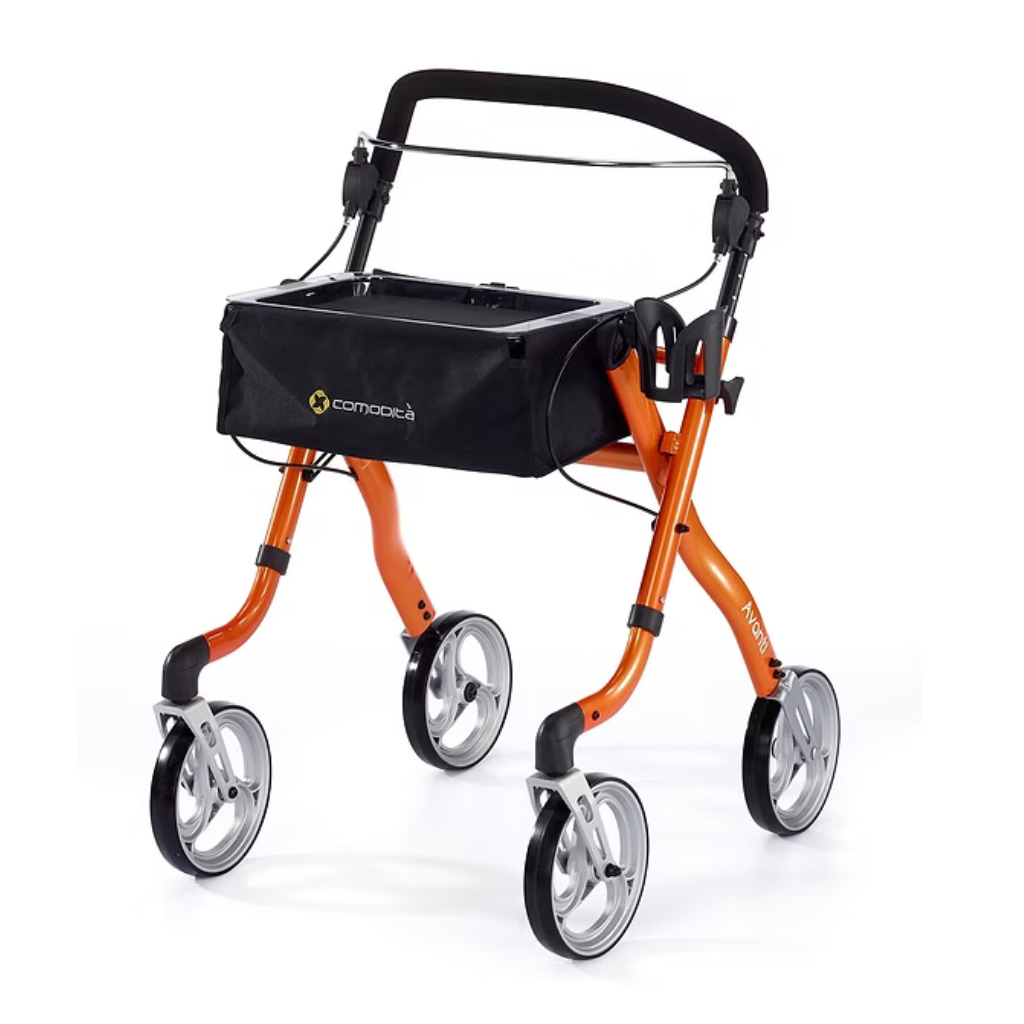
COMODITÀ Avanti – Modern Walker Aid for Elderly Independence
Useful for explaining brake-bar systems intended to operate both rear brakes from one or two hands.
Examine this walker
Lumex Walkabout Four-Wheel Hemi Rollator – Lightweight Hemi Walker with Wheels
Illustrates the importance of lower seat height and shorter handle ranges for smaller adults.
Examine this walker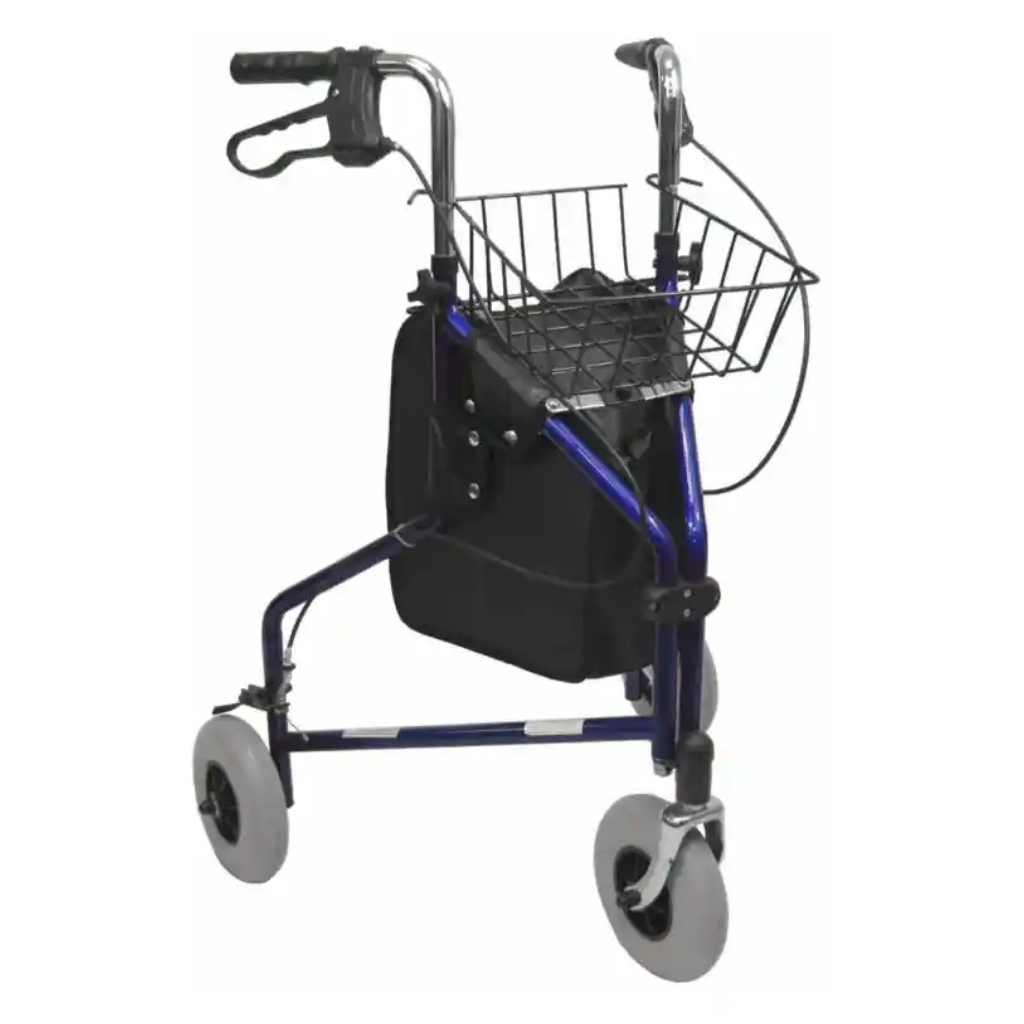
Karman R-3600 Three-Wheel Rollator – Lightweight 3 Wheeled Mobility Walker
Shows how a narrow three-wheel frame prioritizes turning and storage over maximum four-wheel stability.
Examine this walker
Karman R-4602-T Two-in-One Rollator and Transport Chair
Demonstrates the difference between resting on a rollator and being pushed in an approved transport configuration.
Examine this walker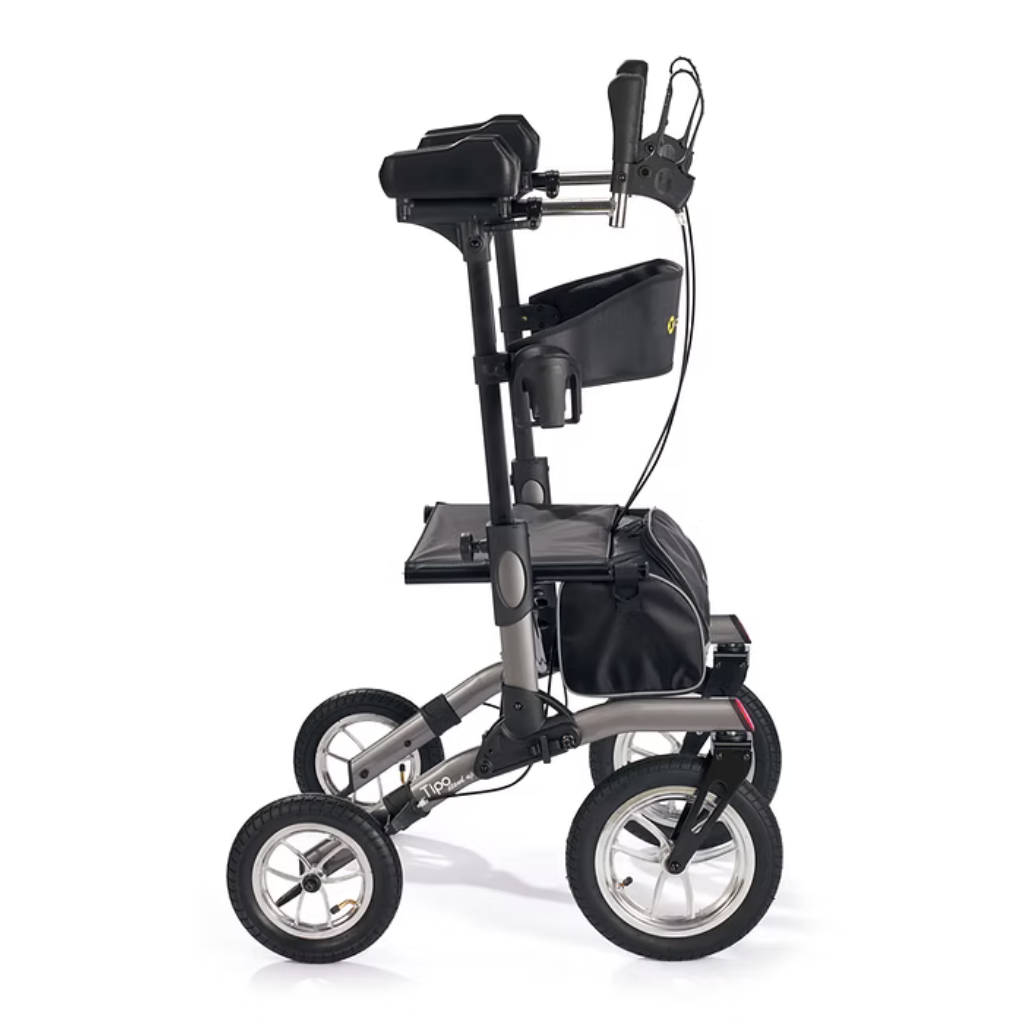
Comodità Tipo StandUp Advance – Upright Walker with Seat
Illustrates forearm support, taller adjustment ranges and the larger footprint of upright rollators.
Examine this walker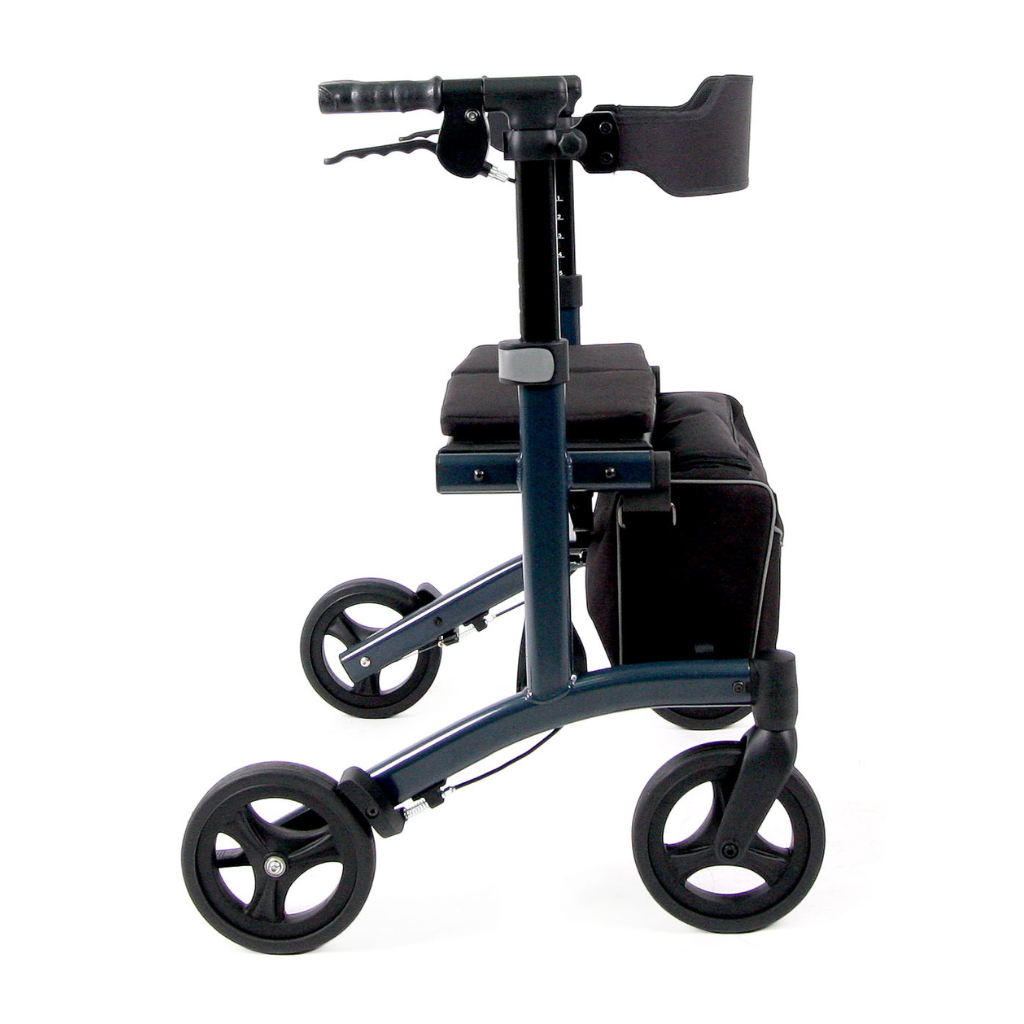
Triumph Escape HD – Lightweight Rollator Walker with Chair
Shows that higher capacity does not always require the heaviest steel frame.
Examine this walker
Lumex Walkabout Imperial Bariatric Rollator – Heavy Duty Walker with Wide Seat
Highlights the relationship among seat width, overall width, doorway clearance and weight capacity.
Examine this walker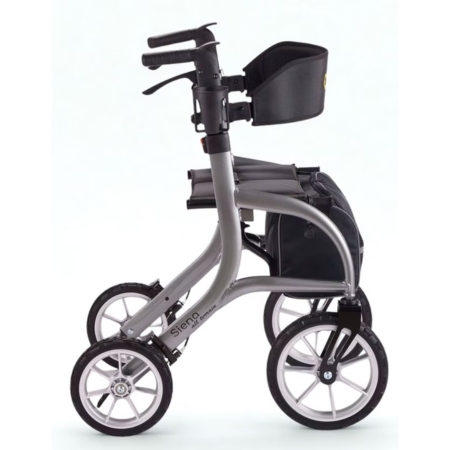
COMODITÀ Siena All-Terrain Rollator Walker
Demonstrates how 12-inch front wheels, 10-inch rear wheels and soft solid polyurethane tires can improve maintained outdoor performance without pneumatic-tire upkeep.
Examine this walker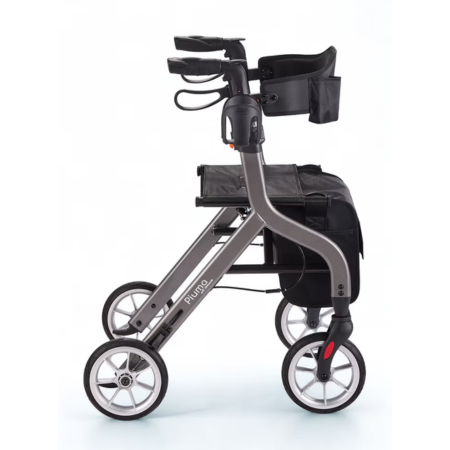
COMODITÀ Piuma Ultra-Lightweight Rollator
Illustrates the relationship among a 16-pound frame, compact vehicle loading, 8-inch wheels, seated rest support and a full accessory package.
Examine this walker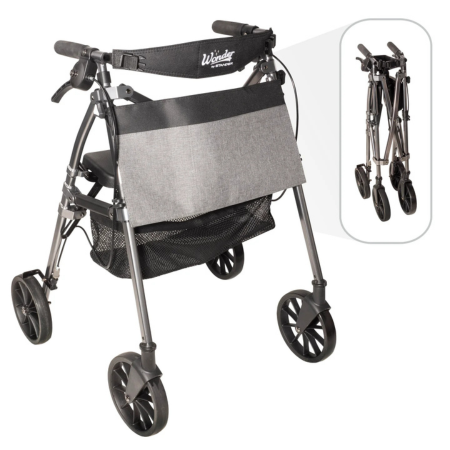
Stander Wonder Rollator Walker with Seat
Demonstrates how specialized folding geometry can reduce storage volume while retaining four 8-inch wheels, a seat, a backrest and locking brakes.
Examine this walkerAll Walkers and Rollators From the Supplied Master Sheet
Use the filters to examine how real walker designs differ by frame, wheels, posture, seating, capacity, portability and environment. This library supports research; it does not replace the Walker Assessment or professional fitting.
MedCare Mobility sells the products shown below. Product placement does not establish that a model is appropriate for a particular person. Verify current specifications, fit, instructions, availability and clinical suitability.
Proactive Medical Protekt Two-Button Folding Steel Walker
ls) Protekt Adult Walker With Wheels, Steel - 350 lb. Wt-Cap. PM1052 E0143 (with wheels) Protekt Junior Walker With Wheels, Aluminum - 350 lb. Wt-Cap. PM1052AJ Protekt® Two-Button Folding Steel Walker are an ideal and dependable Protekt® Walkers The solution for those who require a supportive and durable walking aid for their daily activities. The easy-to-us…
View walker details
Proactive Medical Protekt Bariatric Two-Button Folding Walker
The Protekt® Bariatric Two-Button Folding Walkers provide maximum strength and durability for the larger individual. This walker is an ideal and dependable solution for those who require a supportive yet durable aid for their daily activities. The easy-to-use push button mechanism allows for opening and closing with the user’s fingers or palms. The walker’s…
View walker details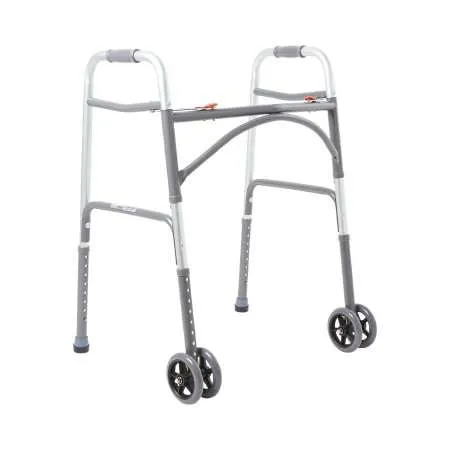
McKesson Bariatric Folding Walker Adjustable Height Steel Frame 500 lbs. Weight Capacity 32 to 39 Inch Heigh
Mckesson Bariatric Folding Walker Adjustable Height Steel Frame 500 lbs. Weight Capacity 32 to 39 Inch Height The Mckesson Bariatric Folding Walker Adjustable Height is a versatile and reliable mobility aid designed to provide exceptional support and stability for individuals with varying mobility needs. Engineered with a focus on both strength and convenien…
View walker details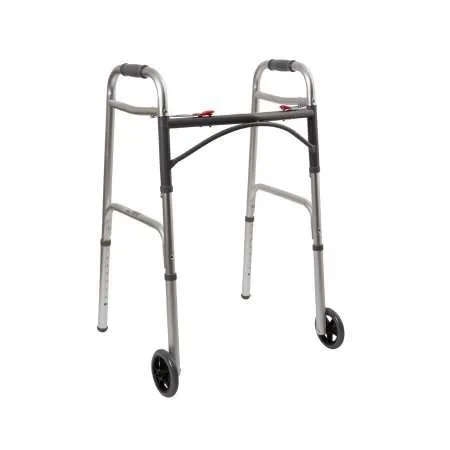
McKesson Folding Walker Adjustable Height Aluminum Frame
McKesson # 1073638 Manufacturer # 146-10210-4 Brand McKesson Manufacturer McKesson Brand Country of Origin China Application Dual Release Folding Walker with Wheels Base Specifications 5 Inch Front Wheels / Rear Glides Base Width 24 Inch Base Width Buy American Act (BAA) Compliant No Color Silver Depth 17-1/2 Inch Depth FSA Eligible - Buy UOM Yes FSA Eligibl…
View walker details
McKesson Folding Walker Adjustable Height Aluminum Frame 350 lbs. Weight Capacity
Review the product page for complete dimensions, fit, braking, seating, wheel and capacity details.
View walker details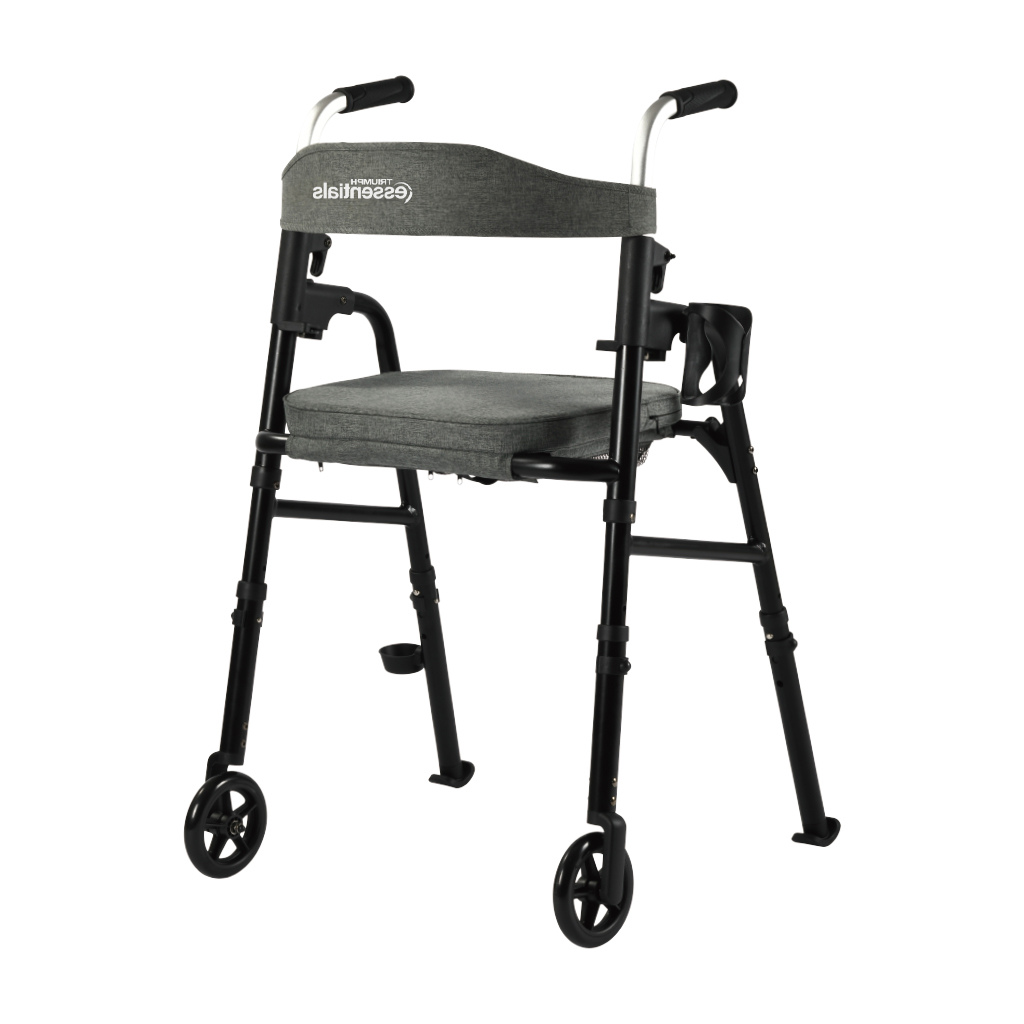
Triumph Essentials – The Compact Adult Walker with Seat
The Triumph Essentials Seated Walker redefines mobility with its lightweight design, padded seat, and travel-friendly folding system. Perfect for seniors and adults seeking safety, convenience, and comfort, this adult walker with seat delivers simplicity without sacrificing functionality.
View walker details
COMODITÀ Avanti – Modern Walker Aid for Elderly Independence
The COMODITÀ Avanti Walker Aids for Elderly is designed for comfort, stability, and ease of use — even in tight spaces. Its patented one-hand braking system makes it especially ideal for stroke patients, seniors with limited mobility, or anyone who values safety and independence.
View walker details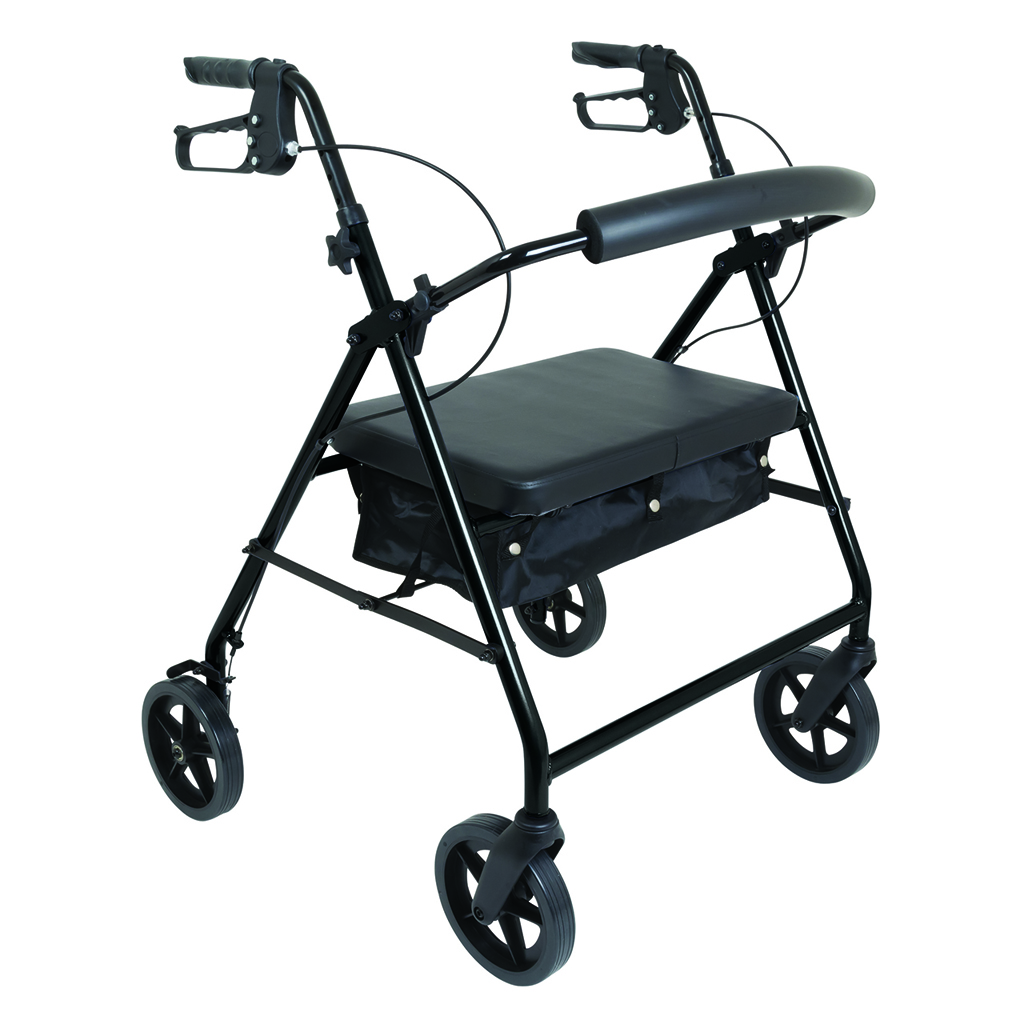
Protekt Bariatric Rollator – Heavy Duty Walker with Seat (500 lb Capacity)
The Protekt Bariatric Rollator is a premium heavy duty walker with seat designed to provide unmatched stability, comfort, and independence for individuals who need extra support. Built with a reinforced steel frame and durable 8-inch wheels, this bariatric rolling walker is engineered for both safety and performance—indoors and outdoors. With a weight capaci…
View walker details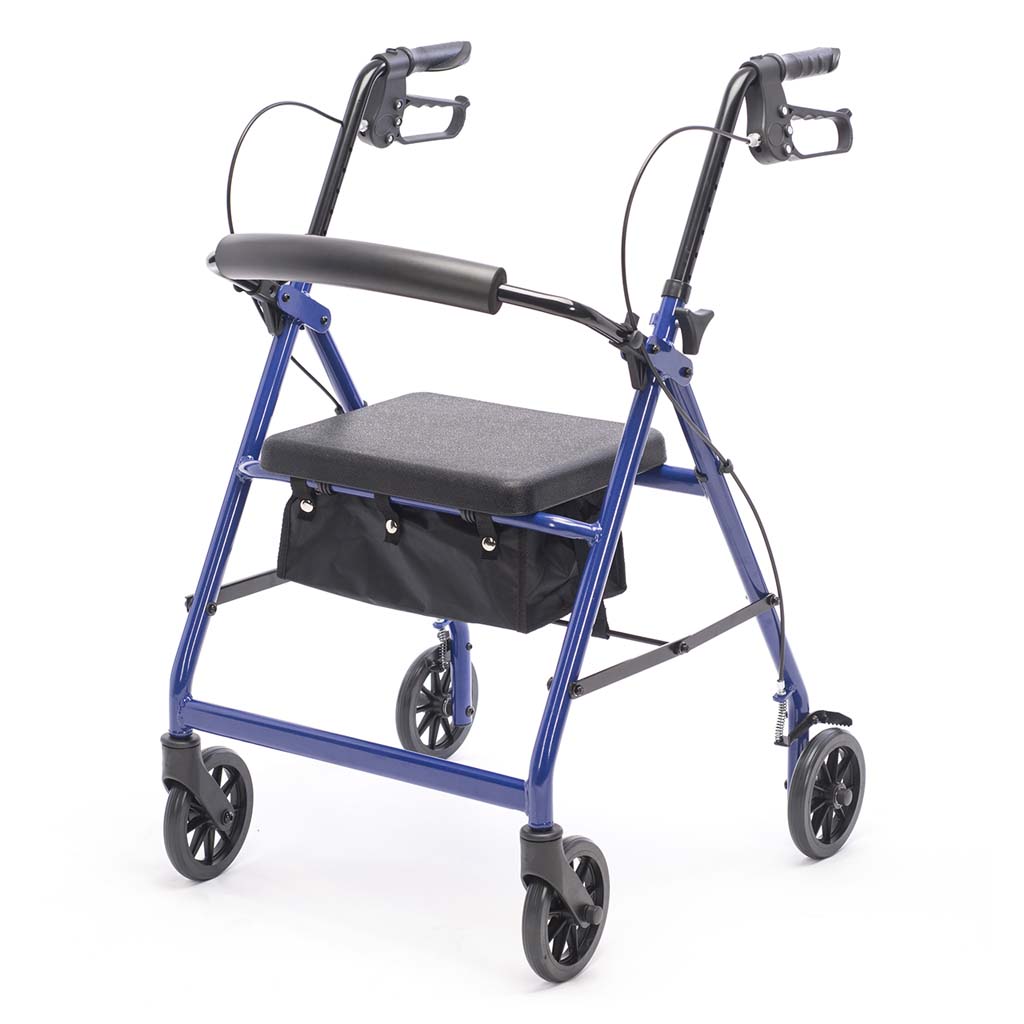
Protekt Aluminum Rollator – Lightweight Walker for Elderly
The Protekt® Aluminum Rollator is a stylish, lightweight, and reliable walker for elderly individuals who want to maintain independence, mobility, and safety in everyday life. Designed with comfort and affordability in mind, this rollator combines a durable aluminum frame with easy maneuverability, making it perfect for both indoor and outdoor use.
View walker details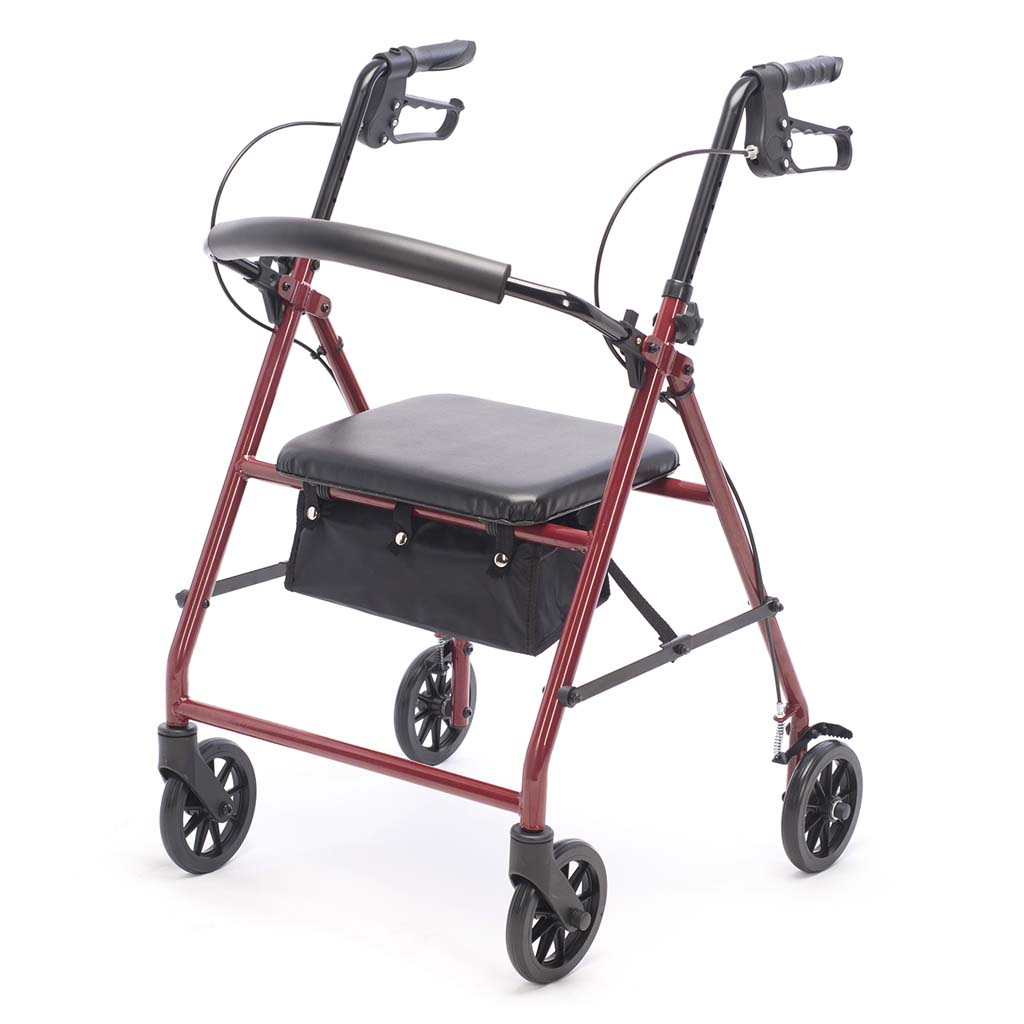
Protekt Steel Rollator – Lightweight Rollator Walker with Seat
The Protekt® Steel Rollator is the ideal choice for anyone seeking a dependable, stylish, and lightweight rollator walker with seat. Built with a durable steel frame yet easy to maneuver, this rollator provides both strength and comfort for daily use. Supporting up to 350 lbs, it delivers the stability elderly users and patients need while still being compac…
View walker details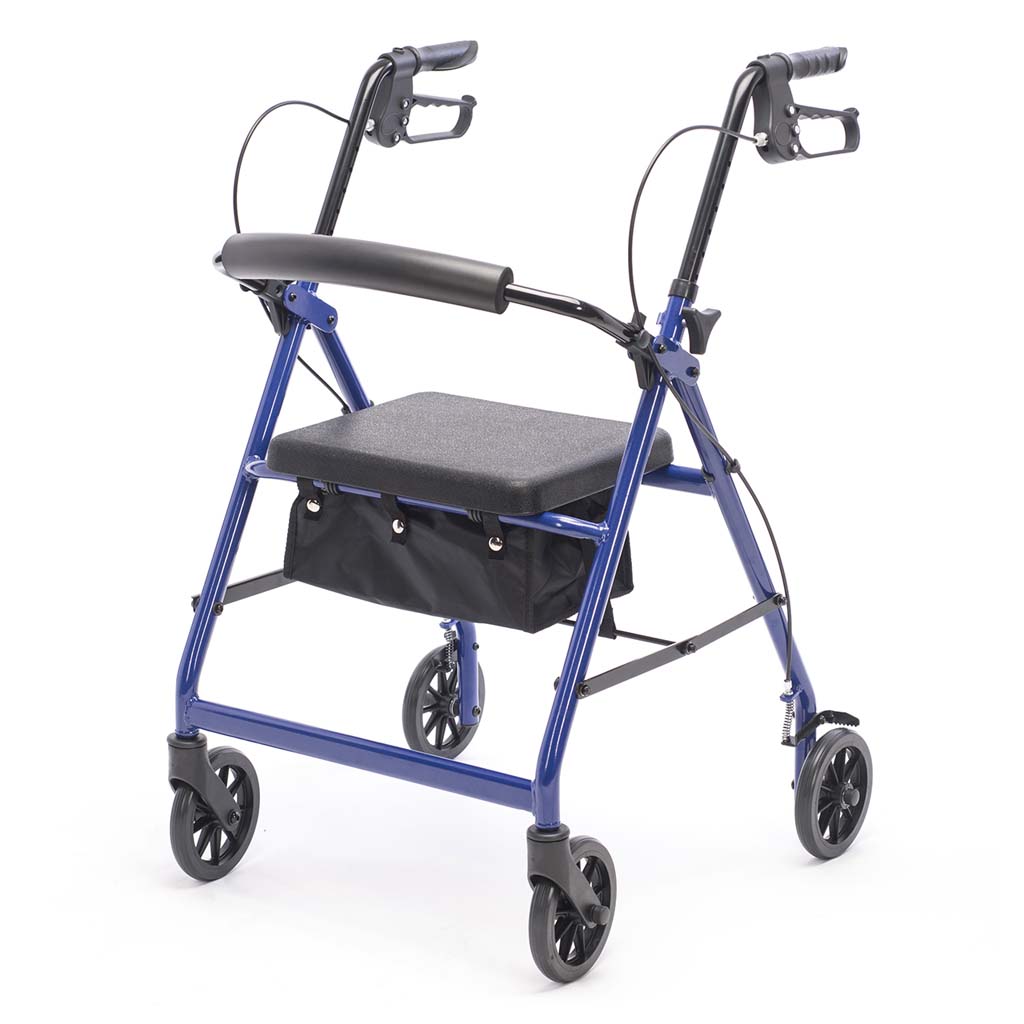
Protekt Steel Rollator (KD) – Reliable Mobility Walker with Seat
The Protekt® Steel Rollator (Knock Down) is a versatile, durable, and stylish mobility walker designed to provide stability, comfort, and independence for everyday use. With its heavy-duty powder-coated steel frame and ergonomic features, it’s built to support up to 350 lbs while still folding easily for compact storage and transport.
View walker details
Karman R-4608 Rollator – Lightweight 4 Wheel Walker with Seat
The R-4608 Rollator is a lightweight and durable 4 wheel walker with seat designed to bring comfort, safety, and mobility back into your daily routine. Constructed with a powder-coated aluminum frame in stylish burgundy or blue, this rollator combines strength, stability, and lightweight maneuverability for both indoor and outdoor use.
View walker details
Lumex Set n’ Go Wide Adjustable Height – 4 Wheeler Mobility Walker
The Lumex Set n’ Go® Wide Rollator redefines what a 4 wheeler mobility walker should be — versatile, comfortable, and built to fit a wider range of users. Designed with extra room and customizable height settings, this rollator walker is ideal for larger individuals or anyone who values both stability and comfort in daily mobility.
View walker details
Karman R-4800 Extra Wide Aluminum Rollator – Heavy Duty Rollator for Bariatric Users
The Karman R-4800 Extra Wide Rollator is engineered for strength, comfort, and reliability — the ultimate heavy duty rollator for bariatric users and anyone seeking enhanced support. With an extra-wide 23″ handle opening, a 400 lb weight capacity, and a durable aluminum frame, this rollator offers the stability of a steel model while remaining lightweight at…
View walker details
Karman R-4700W Extra Wide Steel Rollator – Heavy Duty Bariatric Rollator
The R-4700W Extra Wide Steel Rollator is a premium bariatric rollator designed to provide maximum comfort, strength, and reliability for larger adults and bariatric users. Built with a super-strength steel frame and a wide 23-inch handle opening, this rollator offers exceptional stability and support while maintaining smooth maneuverability indoors and outdo…
View walker details
Lumex Walkabout Imperial Bariatric Rollator – Heavy Duty Walker with Wide Seat
The Lumex Walkabout Imperial Rollator is the ultimate solution for anyone seeking a heavy duty walker with wide seat that combines strength, comfort, and confidence. Expertly engineered for bariatric users and larger adults, this premium heavy duty rollator walker features a 20-inch extra wide padded seat, a robust 450 lb weight capacity, and oversized 8-inc…
View walker details
Lumex Walkabout Four-Wheel Hemi Rollator – Lightweight Hemi Walker with Wheels
The Lumex® Walkabout Four-Wheel Hemi Rollator is the perfect blend of comfort, safety, and convenience for users who need a hemi walker with wheels designed for shorter or more petite individuals. Built with a lightweight aluminum frame, this hemi walker weighs only 14 lbs yet supports up to 300 lbs (evenly distributed).
View walker details
Karman R-4602-T Two-in-One Rollator and Transport Chair
Karman R-4602-T Two-in-One Rollator and Transport Chair Two in one rollator R-4602. Get the best of both worlds. Having a walker and rollator only gets better when you combine ultra light weight materials with an extra added function of a seat.
View walker details
McKesson 4 Wheel Rollator Adjustable Height Aluminum Frame
This reliable mobility aid combines convenience and comfort, making it the perfect choice for individuals seeking a versatile walking companion. With its sturdy construction and ergonomic design, the McKesson Walker with Seat ensures stability and support. Experience enhanced mobility today.
View walker details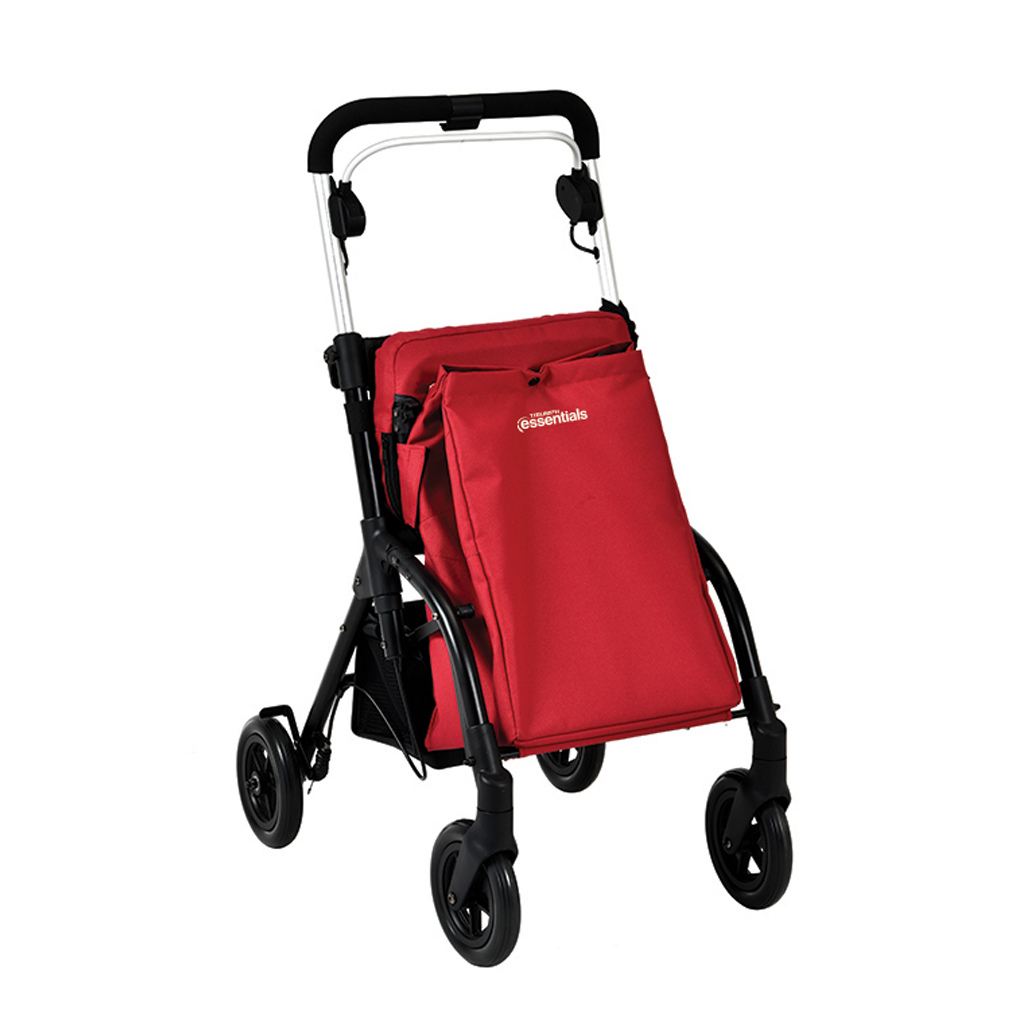
Essentials Shopping Rollator – Premium Adult Wheeled Walker with Seat & Storage
The Essentials Shopping Rollator is not just a mobility aid — it’s your all-in-one walking companion. Designed for adults who want independence, comfort, and practicality, this adult wheeled walker combines lightweight construction, a padded seat, dual storage bags, and smooth-rolling wheels into one sleek package. Whether you’re navigating your home, shoppi…
View walker details
Karman R-3600 Three-Wheel Rollator – Lightweight 3 Wheeled Mobility Walker
The R-3600 Three-Wheel Rollator is the ideal solution for those seeking a 3 wheeled mobility walker that combines stability, maneuverability, and convenience. Designed with a durable steel frame and lightweight 15 lb construction, this walker offers reliable support without unnecessary bulk. Its 3-wheel design provides superior agility in tight spaces, makin…
View walker details
Lumex GF 3-Wheel Cruiser – Lightweight 3 Wheeler Mobility Walker
The Lumex GF 3-Wheel Cruiser is the ideal solution for those who want a 3 wheeler mobility walker that delivers freedom, maneuverability, and style. Unlike bulky 4-wheel rollators, this lightweight aluminum walker is designed for individuals who don’t require maximum stability but want more agile movement to perform everyday activities with confidence.
View walker details
Triumph Escape HD – Lightweight Rollator Walker with Chair
The Triumph Escape HD is not just another rollator — it’s the ultimate mobility solution for those who demand strength, comfort, and innovation. Engineered with a lightweight aluminum T-frame yet built to support up to 450 lbs, this rollator combines heavy-duty performance with effortless portability.
View walker details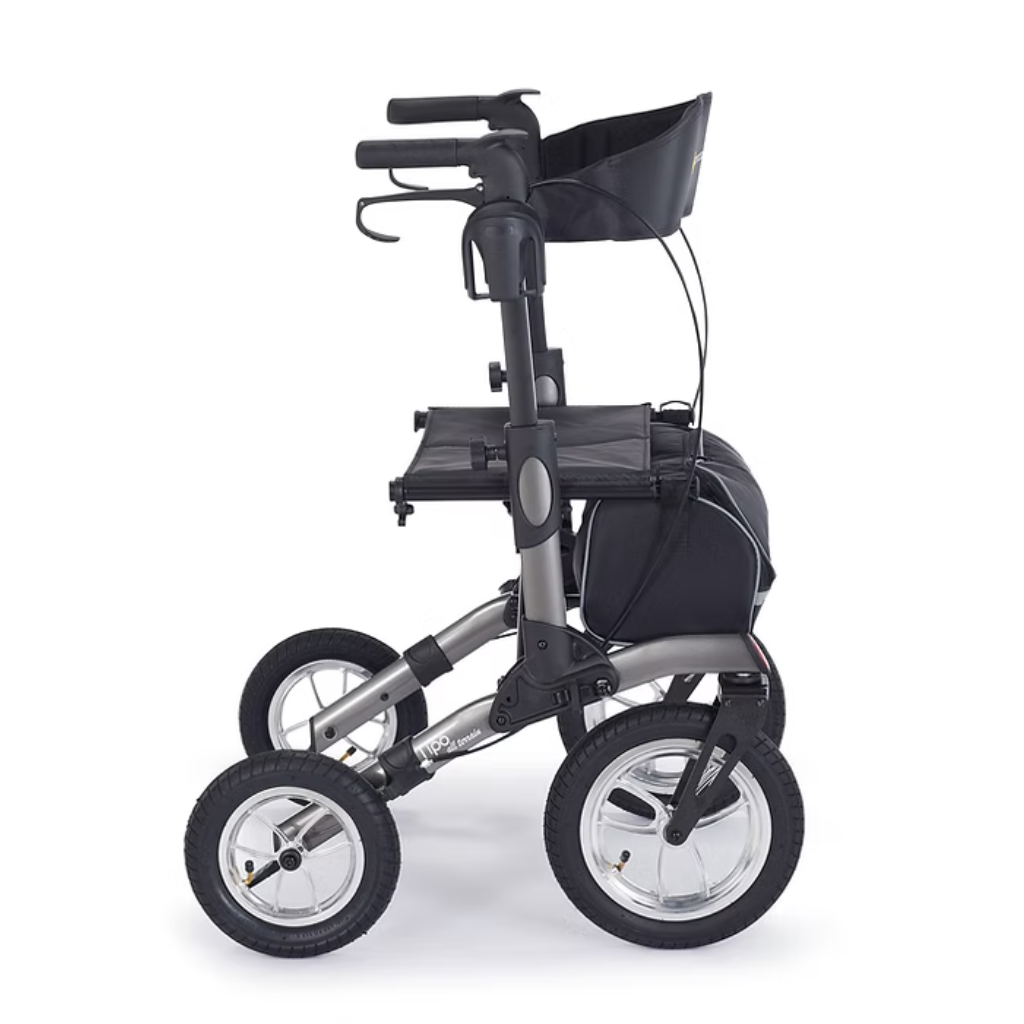
COMODITÀ Tipo All Terrain Walker – Premium All Terrain Rollator Walker
Step beyond the limits of standard rollators with the COMODITÀ Tipo All Terrain Walker — a mobility aid designed for people who want to stay active, independent, and adventurous. Engineered with 12” pneumatic front wheels and 10” rear wheels, this walker rolls smoothly over sidewalks, trails, boardwalks, beaches, grass, gravel, and even hiking paths.
View walker details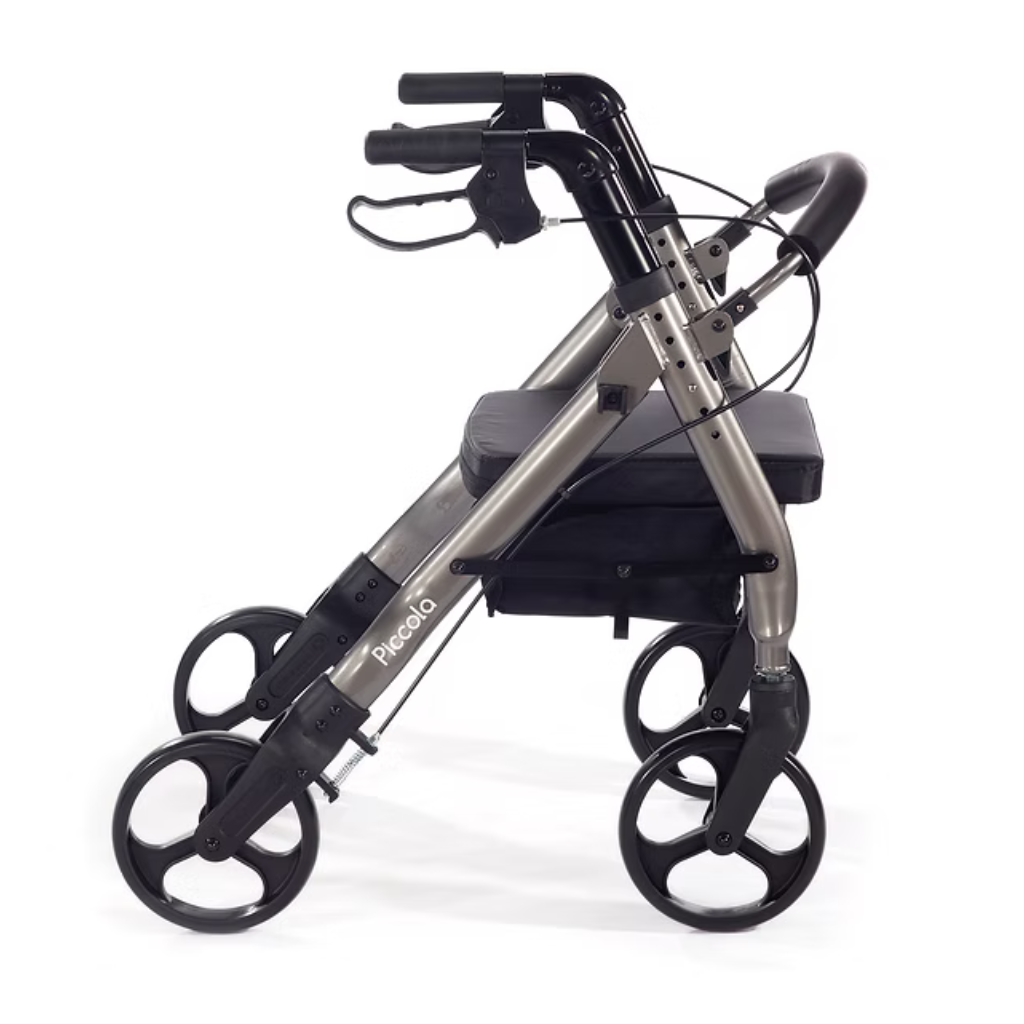
Comodità Piccola – Petite Rollator Walker with Seat
The Comodità Piccola Petite Rollator Walker with Seat is expertly designed for users up to 5’4” tall who need a reliable mobility solution without compromising safety or style. Offering the same trusted comfort as the popular Prima model, the Piccola provides a lighter, petite-friendly frame with all the premium features you expect from Comodità.
View walker details
Triumph Essential Compact Lightweight Rollator Walker – Foldable 4-Wheel Mobility Aid with Seat & Storage
Enjoy mobility, freedom, and confidence with the Essential Compact Rollator, a premium lightweight rollator walker designed for everyday use. Engineered for comfort, functionality, and portability, this rollator is perfect for seniors, adults, and anyone seeking reliable support without the bulk of a traditional walker.
View walker details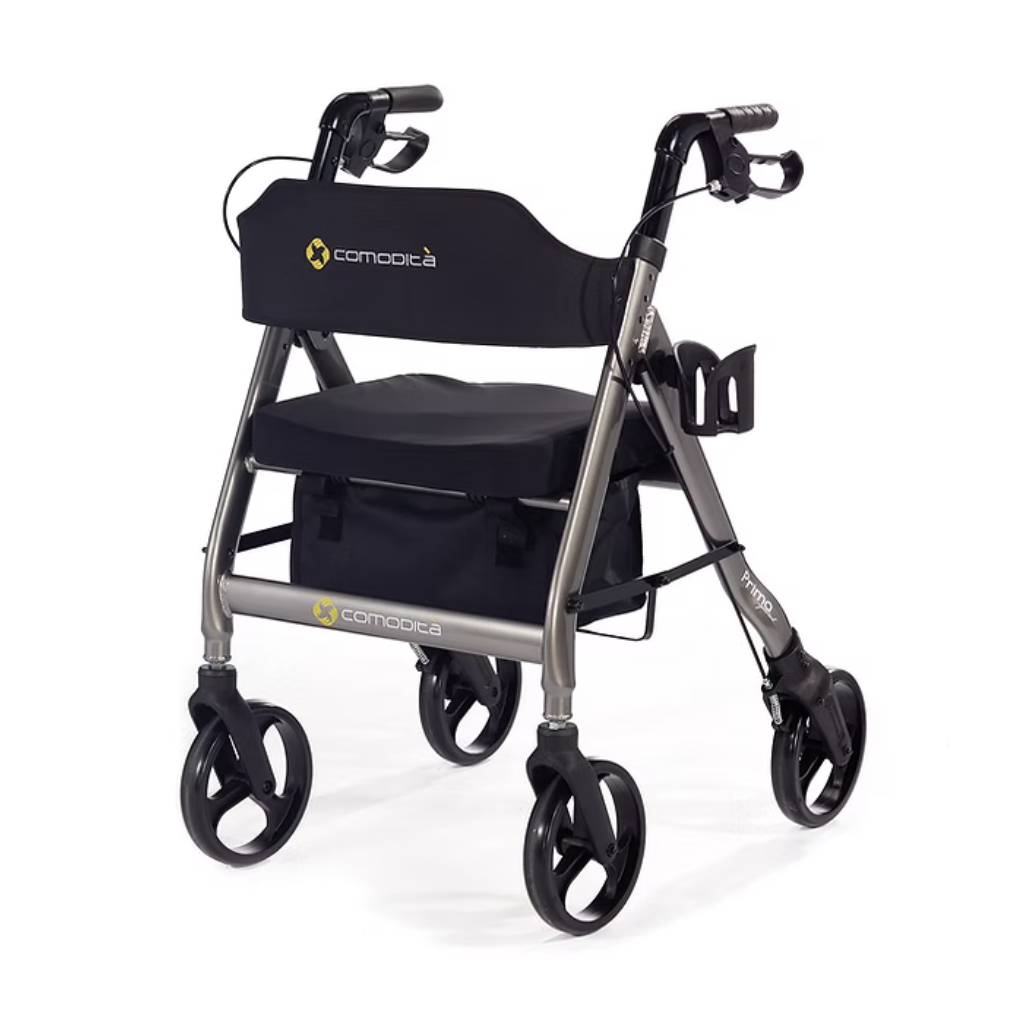
Comodità Prima Special – Walker with 4 Wheels and Seat (Wide Seat Rollator)
Experience comfort, stability, and safety like never before with the Comodità Prima Special Walker with 4 Wheels and Seat. Built with a reinforced frame and an ultra-comfortable 16” orthopedic seat, this rollator provides the strength of a heavy-duty walker and the comfort of a wide seating area for users who need extra room and support.
View walker details
COMODITÀ Tipo Classic – Travel Walker with Big Wheels
Looking for a walker that combines safety, style, and unbeatable functionality? The COMODITÀ Tipo Classic Travel Walker with Big Wheels is built for those who want freedom, independence, and the confidence to stay active anywhere. With its patented modern design, sturdy frame, and extra-large wheels, this walker makes travel, daily errands, and outdoor adven…
View walker details
Comodita Spazio Special – Heavy Duty Walker with Seat
The Comodita Spazio Special is not just any walker—it’s a premium heavy duty walker with seat designed for maximum comfort, strength, and safety. Built for users who demand extra stability and comfort, this model combines durability with ergonomic innovation, ensuring that every step is taken with confidence and ease.
View walker details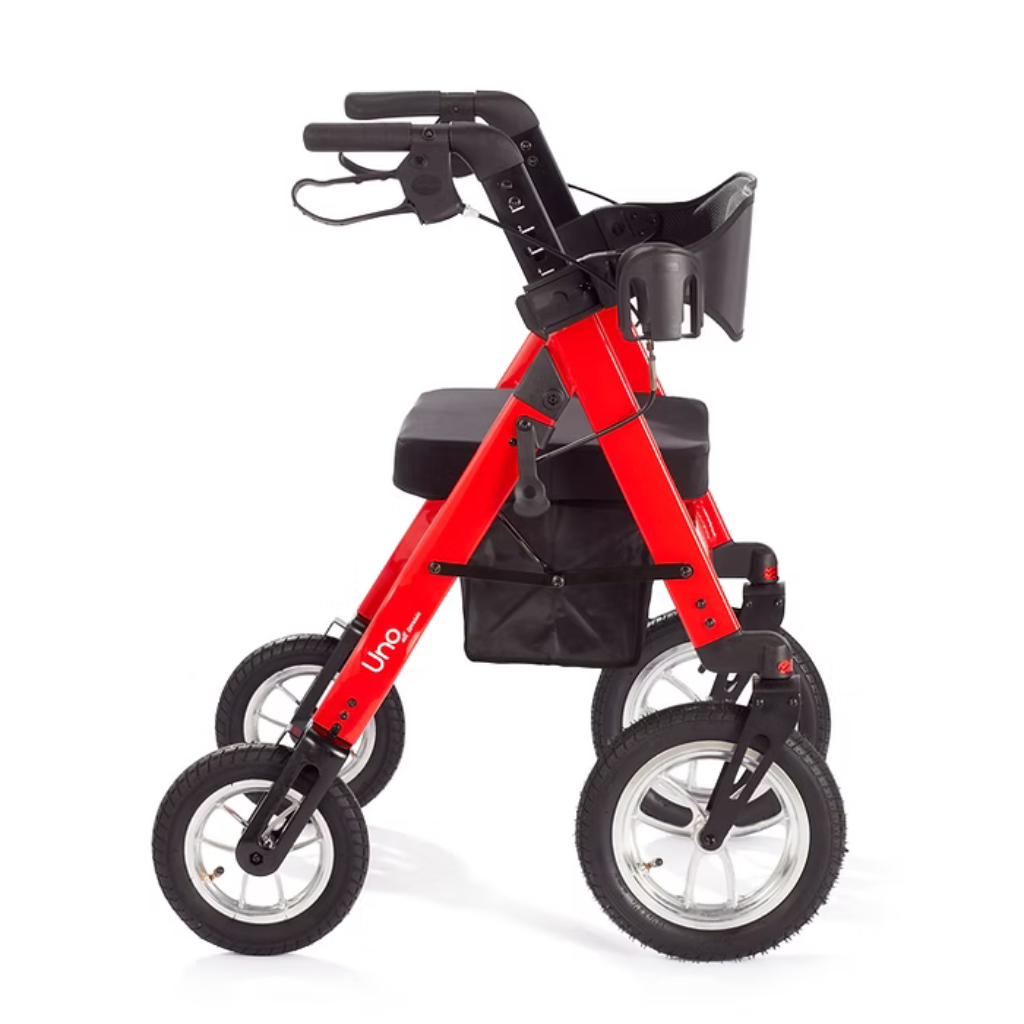
UNO All Terrain Rollator – Premium Outdoor Mobility Walker with Seat
Experience mobility without limits with the UNO All Terrain Rollator, built for those who want freedom, stability, and confidence indoors and outdoors. Unlike standard rollators, this all terrain rollator is engineered with 12” pneumatic front wheels and 10” pneumatic rear wheels to provide superior traction on gravel, cobblestones, trails, boardwalks, and f…
View walker details
Essential Seated Rollator – Lightweight Foldable Rollator Walker with Seat
The Essential Seated Rollator is the ideal solution for adults and seniors seeking a lightweight foldable rollator walker with seat that doesn’t compromise on strength or comfort. Designed in Europe with premium quality standards, this mobility aid combines simplicity, durability, and practicality to help you stay active and independent.
View walker details
Comodita Spazio Heavy Duty Walker with Seat
The Comodita Spazio Heavy Duty Walker with Seat is the wider, reinforced version of the popular Prima model — specially engineered for users who demand strength, comfort, and stability in one durable mobility solution. Supporting up to 440 lbs of weight capacity, this heavy duty walker with seat ensures unmatched safety and reliability for larger adults, bar…
View walker details
COMODITÀ Tipo Petite Rollator Walker with Seat – Safe, Stylish & Built for Petite Users
The COMODITÀ Tipo Petite Rollator Walker with Seat is the perfect mobility solution for individuals under 5’4” who want comfort, stability, and independence. Unlike oversized walkers that feel bulky, this petite walker has been specially designed to fit smaller users while still delivering the durability and confidence of a heavy-duty rollator.
View walker details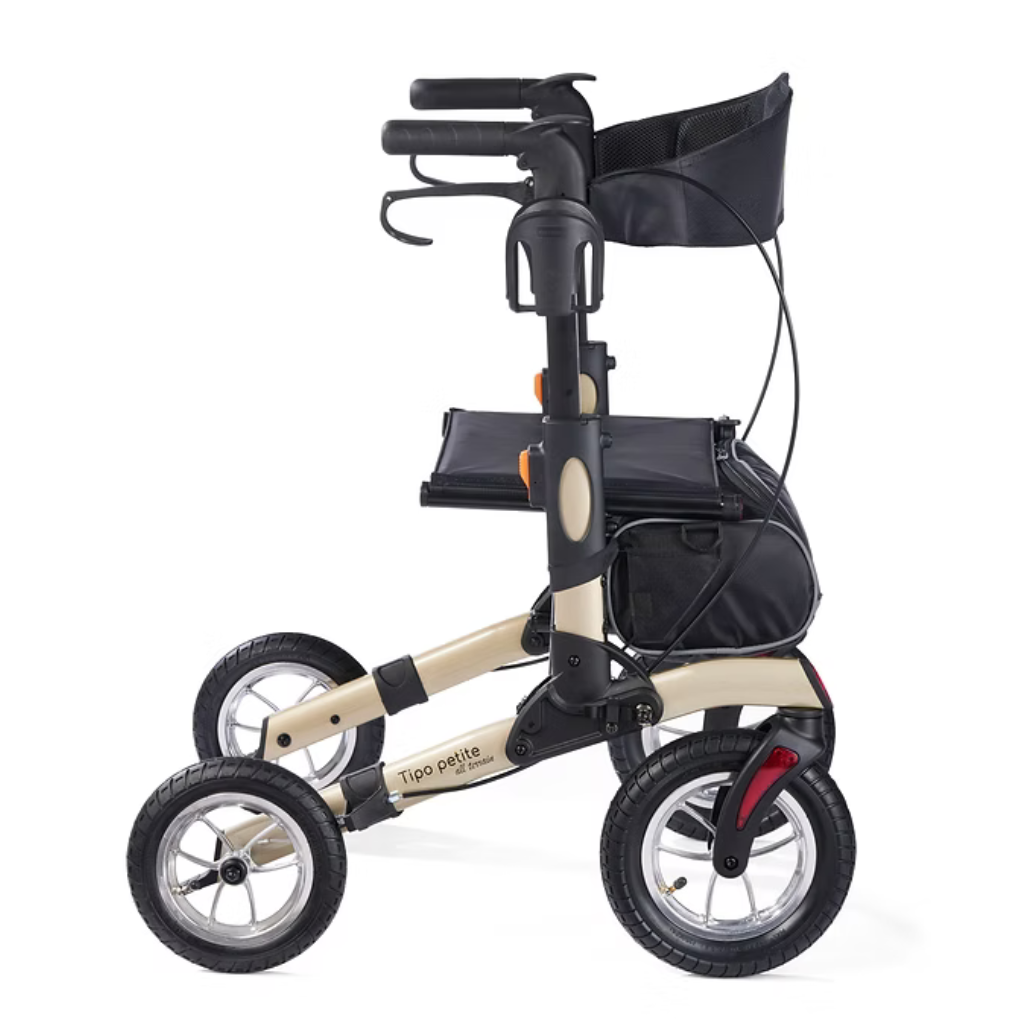
COMODITÀ Tipo Petite All Terrain Rollator – Small Rollator for Petite Elderly Users
The COMODITÀ Tipo Petite All Terrain Rollator is the ultimate solution for those searching for a small rollator designed specifically for individuals up to 5’4” in height. Unlike standard rollators that can feel oversized or unstable for petite users, the Tipo Petite delivers perfect proportions, superior safety, and unmatched durability.
View walker details
Comodità Tipo StandUp Advance – Upright Walker with Seat
The Comodità Tipo StandUp Advance Upright Walker with Seat is designed for people who want more than just support – they want independence, confidence, and freedom of movement. Unlike traditional rollators, this upright mobility walker allows you to stand tall and support your weight on your forearms instead of your hands and wrists, easing pressure on shoul…
View walker details
Lumex Gaitster Upright Rollator Walker with Seat
The Lumex® Gaitster Upright Rollator is expertly engineered to help seniors and adults maintain mobility, independence, and proper posture. Unlike standard walkers that force users to hunch forward, this upright rollator walker with seat supports your forearms, reduces wrist and back strain, and encourages a natural, confident walking position.
View walker details
COMODITÀ Siena All-Terrain Rollator Walker with Large Wheels & Seat
A premium four-wheel all-terrain rollator with 12-inch front wheels, 10-inch rear wheels and soft solid polyurethane tires. Its sideways-folding frame, 23-inch seat, reinforced backrest and included storage accessories illustrate how large-wheel outdoor performance can be combined with maintenance-free tires.
View walker details
COMODITÀ Piuma Ultra-Lightweight Rollator with Seat
A 16-pound rollator built around portability, smooth 8-inch wheels and everyday seated support. Its compact fold, locking brakes, wide seat and included cane holder, cup holder and shopping bag demonstrate how a travel-oriented frame can remain fully equipped for regular use.
View walker details
Stander Wonder Rollator Walker with Seat
A 15-pound aluminum rollator designed to fold up to three times smaller than many conventional rollators. Four 8-inch wheels, locking hand brakes, a built-in seat and backrest, and integrated storage make it a useful reference for ultra-compact folding geometry.
View walker detailsWalker Guides, Assessment Tools, Categories and Comparison Resources
The Knowledge Base explains the equipment. These connected resources help users choose, compare and browse when they are ready to move from education into a specific decision.
Get personalized selection support
Browse walker categories
Understand broader mobility challenges
Explore walker accessories
Use this page as a terminology, design and maintenance reference.
When discussing clinical gait instruction, falls or condition-specific mobility, cite the appropriate original clinical or public-health source. Product specifications should be verified against current manufacturer documentation.
Walker and Rollator Questions & Answers
Search the Knowledge Base questions about fitting, wheels, brakes, maintenance, posture, safety, accessories and long-term use.
What is the difference between a walker and a rollator?
A standard walker has four legs or two front wheels with rear tips or glides. A rollator has three or four wheels, hand brakes and often a seat and storage. The rollator rolls continuously and therefore requires more speed and brake control.
How does a walker improve stability?
A walker creates a wider external base of support and provides hand contact. The benefit depends on correct fit, technique, strength, coordination and the user’s ability to keep the frame controlled.
Can a walker prevent falls?
A properly selected and used walker may improve stability, but it cannot eliminate falls. Fit, training, home hazards, vision, footwear, medications, strength and balance all influence risk.
How high should walker handles be?
Handles are commonly adjusted near the wrist level when the user stands upright with arms relaxed, allowing comfortable elbow flexion. Individual posture, arm length and clinical needs may require a different setup.
How much should my elbows bend when using a walker?
The elbows should generally remain comfortably flexed rather than locked or sharply bent. Exact positioning should allow relaxed shoulders and controlled support.
Why do I hunch over my walker?
Possible reasons include handles that are too low, pushing the frame too far ahead, fatigue, pain, weak posture or a walker design that does not match the user. Raising the handles without evaluating the cause can create a new problem.
What wheel size is best for a walker?
There is no universal best size. Small wheels are compact on smooth floors; 8-inch wheels balance indoor and outdoor use; 10- to 12-inch wheels generally approach outdoor surface changes more easily but increase weight and footprint.
Are larger walker wheels safer?
Larger wheels can roll over cracks and transitions more easily, but they do not automatically make a walker safer. Braking, speed, frame geometry, terrain and user control remain important.
What is the difference between solid and pneumatic walker tires?
Solid tires do not require inflation and cannot go flat. Pneumatic tires provide more cushioning and traction but require pressure checks and can puncture. Soft polyurethane tires offer a maintenance-free middle ground.
How do rollator brakes work?
Most loop brakes pull upward to slow and push downward to engage the parking lock. Designs differ, so users should learn the exact control and confirm both brakes hold before sitting.
Why do my rollator brakes not hold?
Cable stretch, pad wear, tire wear, incorrect adjustment or damaged parts may prevent secure locking. Stop using the seat until both parking brakes hold reliably.
Can rollator brakes be adjusted?
Many can be adjusted according to the manufacturer’s instructions. Unequal or incorrect adjustment can create drag, pulling or inadequate braking, so professional service may be appropriate.
Can I sit on a rollator?
Only if the model includes a seat intended for the user. Stop on a firm level surface, engage both parking brakes and follow the sitting method taught for the user.
Can someone push me while I am sitting on a rollator?
Usually not. Most rollators are not transport chairs. Companion pushing is permitted only when the exact model is designed and configured for transport use.
How do I know whether a rollator seat is the right height?
The user should be able to sit and rise with control, place the feet appropriately and avoid dropping onto or climbing up to the seat. The frame and brakes must remain stable.
Why does my walker wobble?
Unequal leg settings, worn tips, loose fasteners, an incomplete folding lock, wheel damage or a bent frame can cause rocking. Remove the walker from use when structural damage is suspected.
Why does my rollator pull to one side?
Unequal brake tension, wheel resistance, bearing damage, tire pressure or frame misalignment may be responsible. Inspect both sides before making adjustments.
How often should a walker be inspected?
Perform a quick check before use and a more complete routine inspection based on use intensity and the manufacturer’s instructions. Brakes, tips, wheels and folding locks deserve frequent attention.
When should walker tips or glides be replaced?
Replace them when tread is worn, the material cracks, the insert becomes loose or wear changes the walker’s level or traction. Use compatible parts for the exact tube and model.
Can walker wheels be replaced?
Many models have replaceable wheels, but diameter, axle, bearing and brake geometry must match. Use manufacturer-approved or confirmed compatible components.
Can I lubricate squeaky walker wheels?
Only as permitted by the manufacturer. Some lubricants attract dirt, damage plastics or reach braking surfaces. First identify whether the noise comes from a bearing, hinge, fastener or damaged component.
How should a walker be cleaned?
Use manufacturer-approved cleaning products, wipe rather than soak moving parts and dry the frame, grips, seat and wheels. Inspect for damage during cleaning.
Can a walker be used on carpet?
Yes in many cases, but thick carpet and transitions increase resistance. Wheel size, rear tips or glides and the user’s ability to advance the walker affect performance.
Can a rollator be used on grass or gravel?
Some large-wheel or all-terrain models handle firm maintained surfaces better than small-wheel rollators. Loose gravel, wet grass, slopes and holes can still be unsafe.
Can I use a walker on a ramp?
Ramps increase braking demands downhill and pushing effort uphill. Follow the manufacturer’s guidance and seek training when slope control is uncertain.
Can I take a walker on an escalator?
Use an elevator or approved accessible route. Escalators create wheel, balance and timing hazards for walker users.
How do I get through a door with a walker?
Approach slowly, account for the direction of the door, keep the walker controlled and avoid removing both hands simultaneously unless trained to do so safely. Automatic doors are generally easier.
What is a three-wheel rollator?
A three-wheel rollator uses a triangular frame for narrow turning and compact storage. It usually lacks the broad seated platform of a four-wheel model and may provide less lateral stability.
What is an upright walker?
An upright walker supports the forearms at a higher position and can reduce reliance on low hand grips. It is usually taller, heavier and larger than a standard rollator.
What is a bariatric walker?
A bariatric walker has a higher rated capacity and often a wider, reinforced frame. The user must still fit the grip spacing, seat, handle range and home environment.
What is a petite or hemi-height walker?
It has lower handle and often lower seat ranges for shorter users or specific mobility needs. Petite fit should be confirmed by measurements, not height label alone.
What makes a walker good for travel?
Product weight, folded dimensions, folding speed, latch security, standing storage, removable accessories and vehicle fit all matter. Lightweight does not always mean compact.
Can I hang a bag on walker handles?
Heavy bags on handles can change steering, balance and brake access. Use storage designed for the walker and follow its loading limit.
Are walker accessories universal?
No. Tube size, frame shape, brake routing, folding joints and weight limits vary. Verify the exact walker and accessory compatibility.
When should I ask a therapist to check my walker?
Seek evaluation when the user is falling, leaning heavily, unable to control speed, developing pain, recovering from surgery, changing weight-bearing status or struggling with transfers and turns.
Where can I get help choosing a walker?
Use the MedCare Mobility Walker Assessment Tool and Complete Walker Buying Guide, and seek individualized guidance when balance, gait or medical restrictions are complex.
Sources, Product Methodology and Safety Boundaries
This Knowledge Base combines the supplied MedCare Mobility walker catalog, manufacturer-derived product details, established mobility concepts and links to public-health and aging resources. Current product specifications and instructions should be verified before use or purchase.
How information is organized
Walker knowledge is grouped by anatomy, mechanics, fit, wheels, brakes, materials, use environment, maintenance, troubleshooting and terminology.
How products are used
Products illustrate real design differences and are filterable by characteristics. They are not presented as universal medical recommendations.
How selection is separated
The Knowledge Base explains equipment. The Walker Assessment and buying guide handle personalized selection and category comparison.
How safety is framed
General education does not replace gait training, diagnosis-specific instruction, weight-bearing restrictions or the exact manufacturer manual.
Explore the Complete Home Medical Equipment Knowledge Base
Continue researching patient lifts, medical mattresses, hospital beds, wheelchairs, cushions, seating, home safety and other mobility and care-equipment topics.