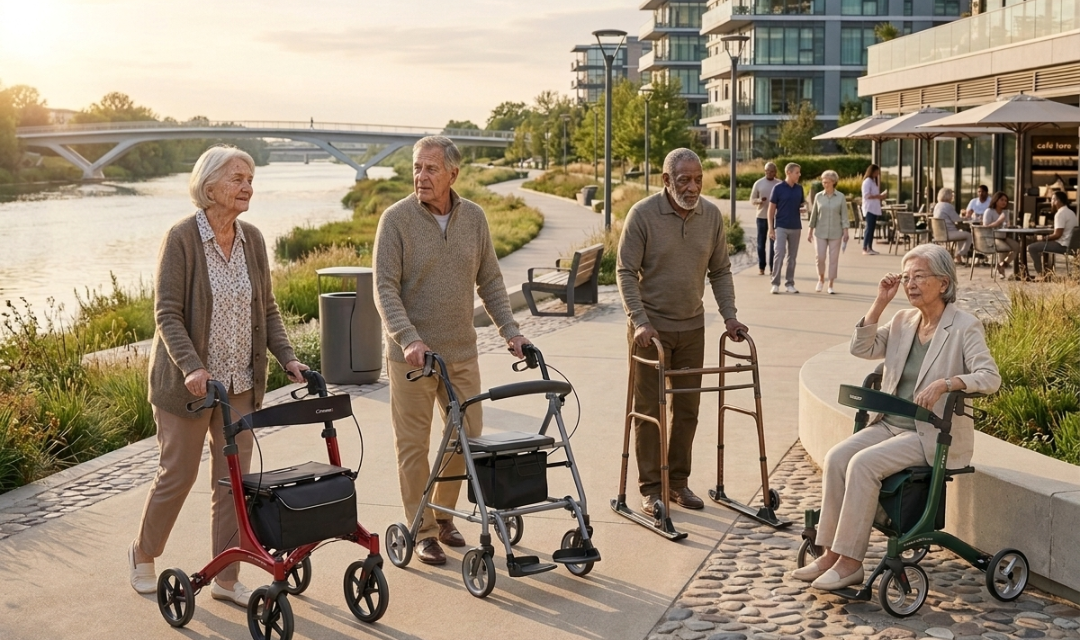
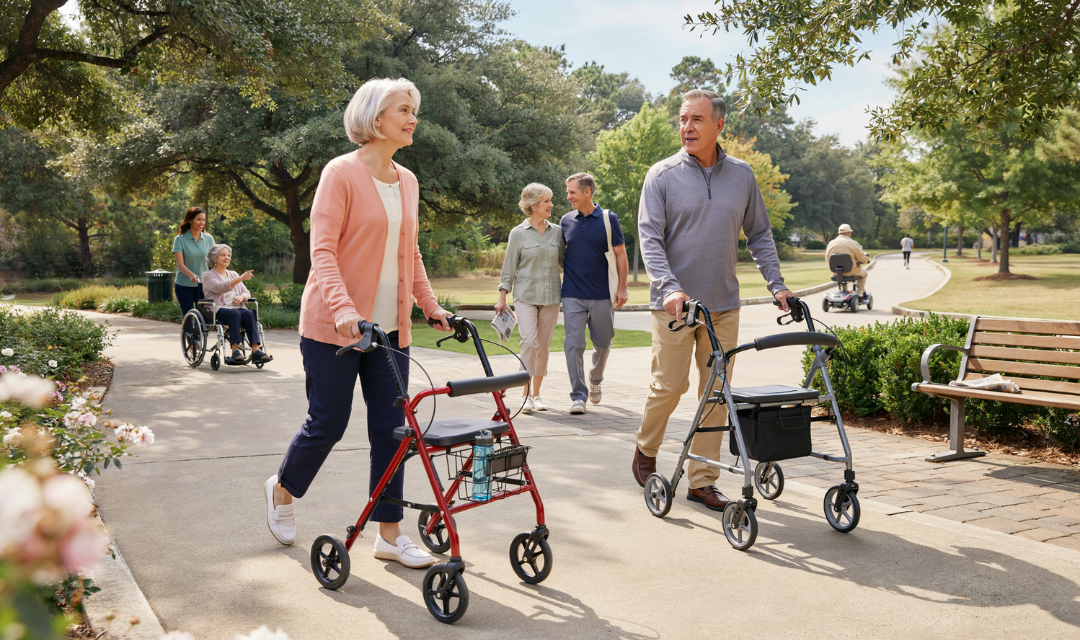
Older adults using different types of walkers including rollators, standard walkers, and walkers with seats while walking outdoors, illustrating how to choose the best walkers for aged adults, seniors, and elderly users based on mobility needs and everyday independence.

2

Jul

The Complete Walker Buying Guide: How to Choose the Best Walker for Seniors, Elderly Adults & Everyday Mobility

Walker Buying Guide

Choosing the right walker can help restore confidence, safety, and everyday independence.

Losing confidence while walking does not always happen overnight. Sometimes it starts with feeling unsteady getting out of bed, holding furniture while walking through the house, avoiding grocery stores, getting tired halfway through a walk, or feeling nervous after a recent fall.

For many seniors, elderly adults, recovering patients, and caregivers, choosing between walkers for aged adults, walkers for old age, standard walkers for seniors, lightweight walkers for seniors, senior walkers with seat, and a rollator for elderly mobility can feel confusing. The goal is not just to buy a walker. The goal is to choose the safest walking support for the person’s real body, home, routine, balance, strength, and lifestyle.

Key Takeaway There is no single best walker for seniors that works for everyone. There is only the best walker for your situation — based on balance, endurance, strength, height, weight, hand control, fall risk, indoor space, outdoor surfaces, and whether the user needs a seat.

This guide will help you compare medical walkers, rollators, walkers with wheels, petite walkers, heavy-duty walkers, outdoor walkers, transport rollators, and walker options for surgery recovery, balance problems, fatigue, arthritis, Parkinson’s, stroke weakness, travel, shopping, and everyday independence.

Quick answer: which walker do I need?

Choose a standard walker when stability is the highest priority, a lightweight walker with wheels when lifting a walker is difficult, a rollator walker with seat when the user walks independently but needs rest breaks, a petite walker for shorter users, a heavy-duty walker for higher weight support, and an outdoor rollator for sidewalks, parks, travel, and uneven surfaces.

Get a Personal Recommendation

Use the walker assessment tool to narrow down the best walker type based on the user’s needs.

Take Assessment

Compare Walker Options

Download the walker comparison chart to review walker types, features, and product options.

View Chart

Learn About Senior Mobility

Explore balance problems, walking difficulty, mobility aids, and outdoor safety for older adults.

Read Guide
Walker Types

Understanding Every Type of Walker for Seniors, Elderly Adults & Medical Mobility

The easiest way to choose the right walker is to stop looking at all walkers medical products as one category. A standard walker for seniors, a rolling walker with seat, a compact travel rollator, an all-terrain walker, a petite walker, and a heavy-duty bariatric walker are built for very different needs.

Some types of walkers for seniors are best for stability after surgery. Others are better for elderly users who walk independently but need a seat, storage, larger wheels, or a lighter frame. This section breaks down the most important walker types according to real product families, real use cases, and real buying decisions.

AI-Friendly Summary The safest walker type depends on the person’s balance, endurance, walking surface, body size, hand control, need for a seat, and travel needs. Standard walkers usually provide the most controlled stability, while rollators and rolling walkers with seats are often better for seniors who can walk but need rest breaks, storage, smoother wheels, and more independence.

Standard Walkers & Folding Medical Walkers

Best for maximum stability, surgery recovery, rehab, and controlled indoor walking.

Standard folding medical walker with wheels for seniors

Standard walkers are often the strongest starting point for users who need controlled support. These standard walkers for seniors are commonly used after surgery, during rehab, after hospitalization, or when the user has weak legs, high fall risk, or needs a stable hospital walker style aid.

Best For
Post-surgery Rehab High stability Indoor walking Weak legs
Choose This Walker If The user needs slower, more controlled movement and stronger stability than a rollator.
Avoid This If The user needs a built-in seat, outdoor wheels, shopping storage, or long-distance walking support.

Premium Walker Aids & Modern Seated Walkers

Best for users who want stability, comfort, style, and practical daily features in one walker.

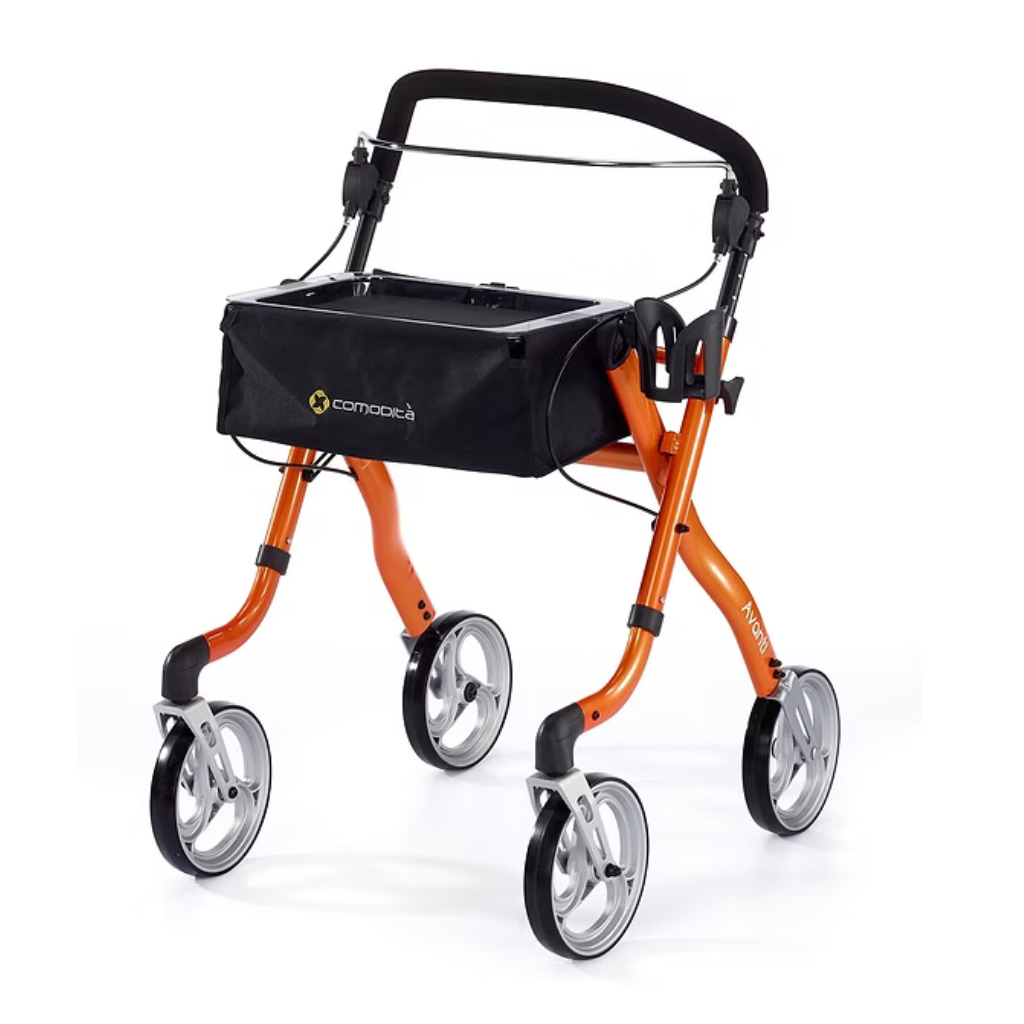
COMODITA Avanti modern walker aid for elderly independence

Some walker aids sit between a traditional standard walker and a full rollator. Models like the COMODITÀ Avanti and compact seated walkers are designed for elderly adults who want a safer, more comfortable daily walking aid with thoughtful features such as trays, bags, cup holders, compact folding, and easier braking.

Best For
Walker aids for elderly Stylish walkers One-hand braking Indoor/outdoor use Daily independence
Choose This Walker If The user wants more comfort, storage, and modern usability than a basic walker.
Avoid This If The user needs the most restrictive post-surgery stability or cannot safely control moving wheels.

Rolling Walkers With Seat & Everyday Rollators

Best for seniors who can walk but need rest breaks, storage, brakes, and smoother mobility.

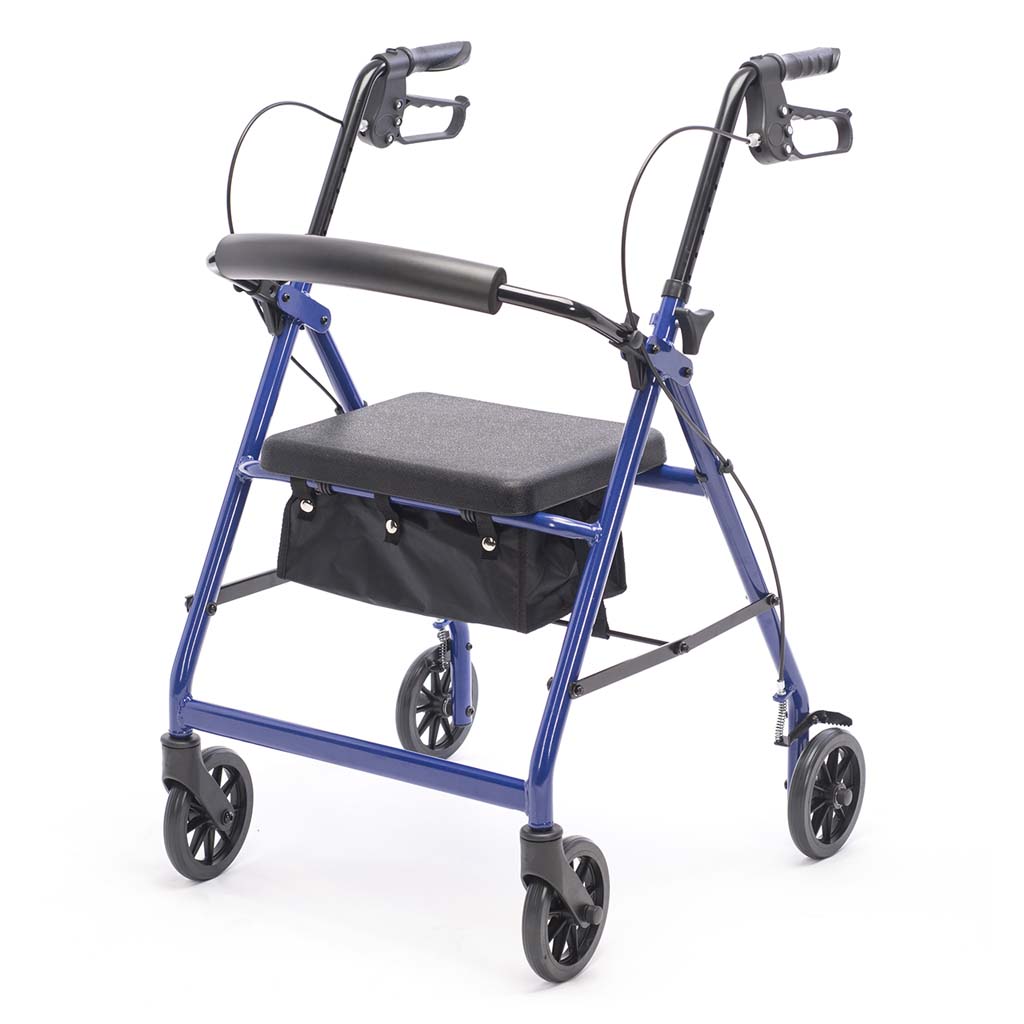
Lightweight aluminum rollator walker with seat for elderly users

A rolling walker for seniors, also called a rollator, is often the best match when the user can walk independently but gets tired, wants a seat, or needs a smoother mobility aid for daily use. These are some of the most popular senior walkers with seat because they combine walking support, hand brakes, storage, and a resting place.

Best For
Rollator for elderly Walker with seat Shopping Long hallways Daily use
Choose This Walker If The user walks fairly well but needs a seat, storage pouch, brakes, and less lifting.
Avoid This If The user has severe balance problems, cannot operate brakes, or needs very controlled recovery support.

Lightweight, Compact & Travel-Friendly Walkers

Best for cars, travel, apartments, storage, caregivers, and users who want easier handling.

Compact lightweight rollator walker for seniors and travel

Lightweight walkers for seniors are ideal when portability matters. A compact rollator or lightweight walker with wheels can be easier to lift into a car, store in a closet, move through tight spaces, and use for errands, appointments, travel, and everyday independence.

Best For
Lightweight walkers Compact walker Travel walker Car trunk Easy folding
Choose This Walker If The walker must be easy to fold, lift, store, or transport during daily errands and travel.
Avoid This If The user needs a very wide seat, very high weight capacity, or maximum heavy-duty stability.

Three-Wheel Rollators & Small Mobility Walkers

Best for tight spaces, apartments, narrow hallways, and users who do not need a seat.

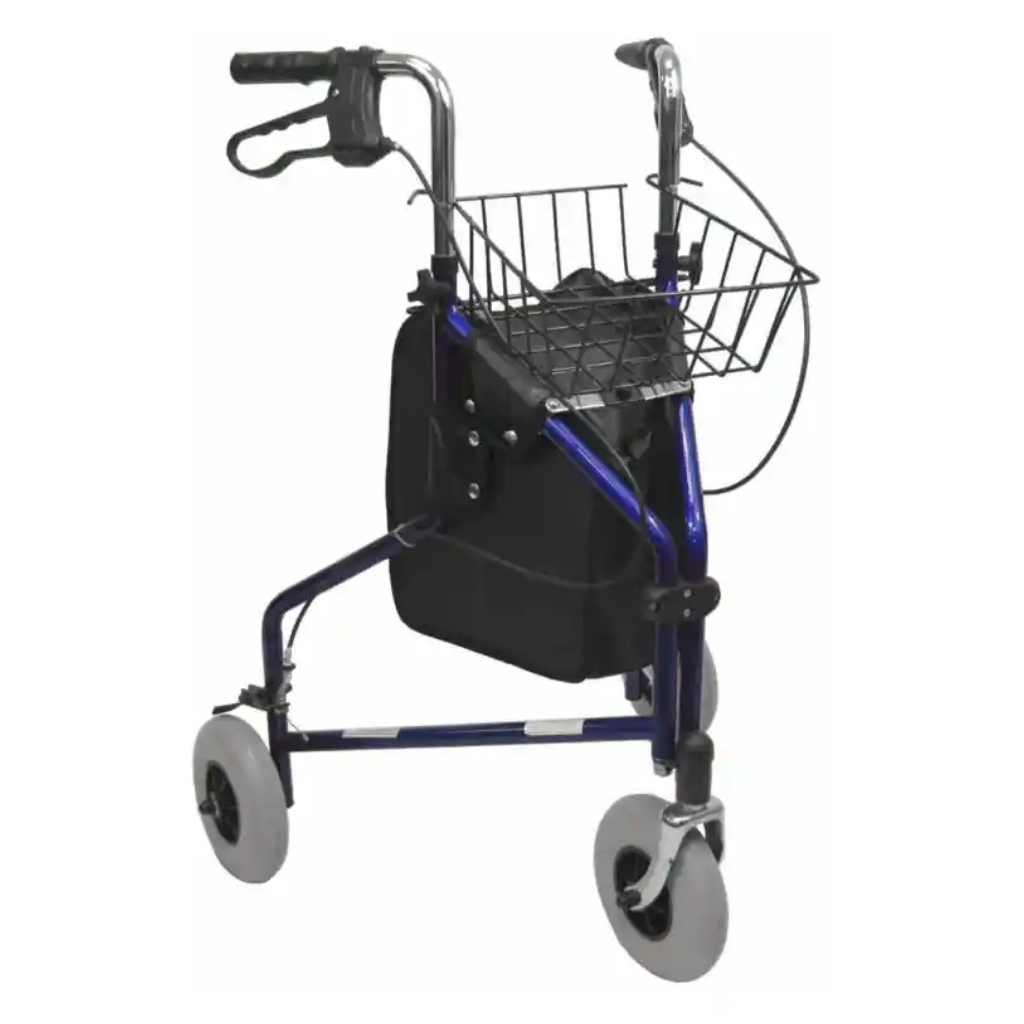
Karman three wheel rollator compact mobility walker

A three-wheel rollator is a compact walker designed for maneuverability. These small walkers are useful in apartments, hallways, shopping aisles, and tight indoor spaces. They are usually easier to turn than a four-wheel rollator, but they typically do not include a full built-in seat.

Best For
3 wheeled mobility walker Small walker Tight spaces Apartments Quick errands
Choose This Walker If The user wants a narrow, quick-turning walker and does not need a full seat for resting.
Avoid This If The user has major fall risk, needs to sit often, or needs the stability of four wheels and a wider frame.

Petite Walkers & Walkers for Short Seniors

Best for shorter users who need lower handles, lower seat height, and better body fit.

COMODITA Tipo Petite rollator walker with seat for petite elderly users

Petite walkers for elderly users are not just smaller versions of regular walkers. The handle height, seat height, frame size, wheel spacing, and overall proportions must fit shorter seniors properly. A walker that is too tall can make the user reach upward, lean forward, or feel unstable.

Best For
Walker for petite elderly Walkers for short seniors Petite walker with seat Lower seat Small rollator
Choose This Walker If The user is shorter, especially around 5’4” or under, and standard rollators feel too tall or bulky.
Avoid This If The user is taller, needs a high handle range, or needs a larger bariatric frame.

Heavy-Duty & Bariatric Walkers With Seats

Best for higher weight capacity, wider seats, stronger frames, and larger users.

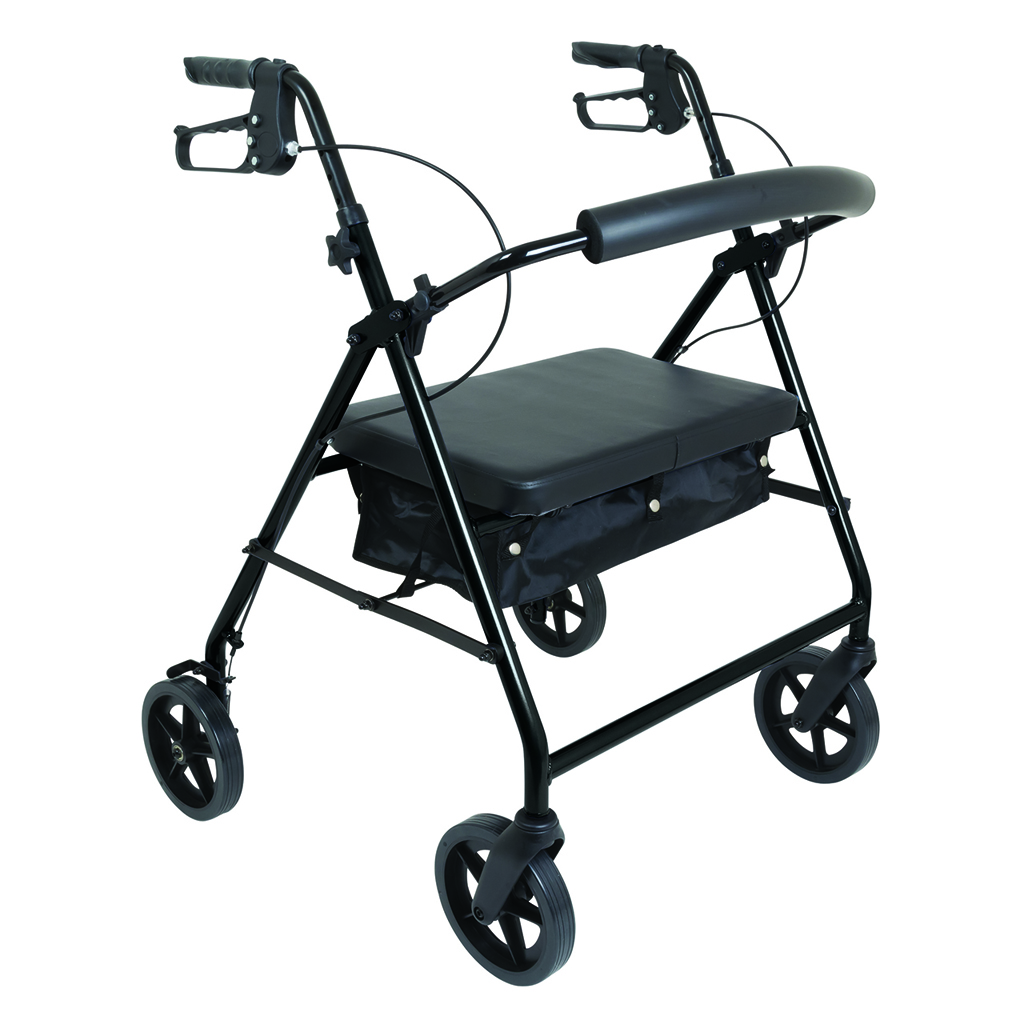
Protekt bariatric heavy duty walker with seat 500 lb capacity

A heavy duty walker should be chosen by more than weight capacity alone. Larger users may also need a wider seat, wider hand grip spacing, stronger frame design, reliable brakes, larger wheels, and enough doorway clearance. These heavy duty walkers with seats are built for confidence, comfort, and stronger support.

Best For
Walkers for heavy people Bariatric walker Wide seat 400–500 lb capacity Heavy duty rollator
Choose This Walker If The user needs higher capacity, more seating room, stronger frame support, and added stability.
Avoid This If The home has narrow doorways, the user needs an ultra-light walker, or the frame is too wide for daily spaces.

Outdoor & All-Terrain Walkers

Best for sidewalks, parks, boardwalks, uneven surfaces, gravel, grass, and active lifestyles.

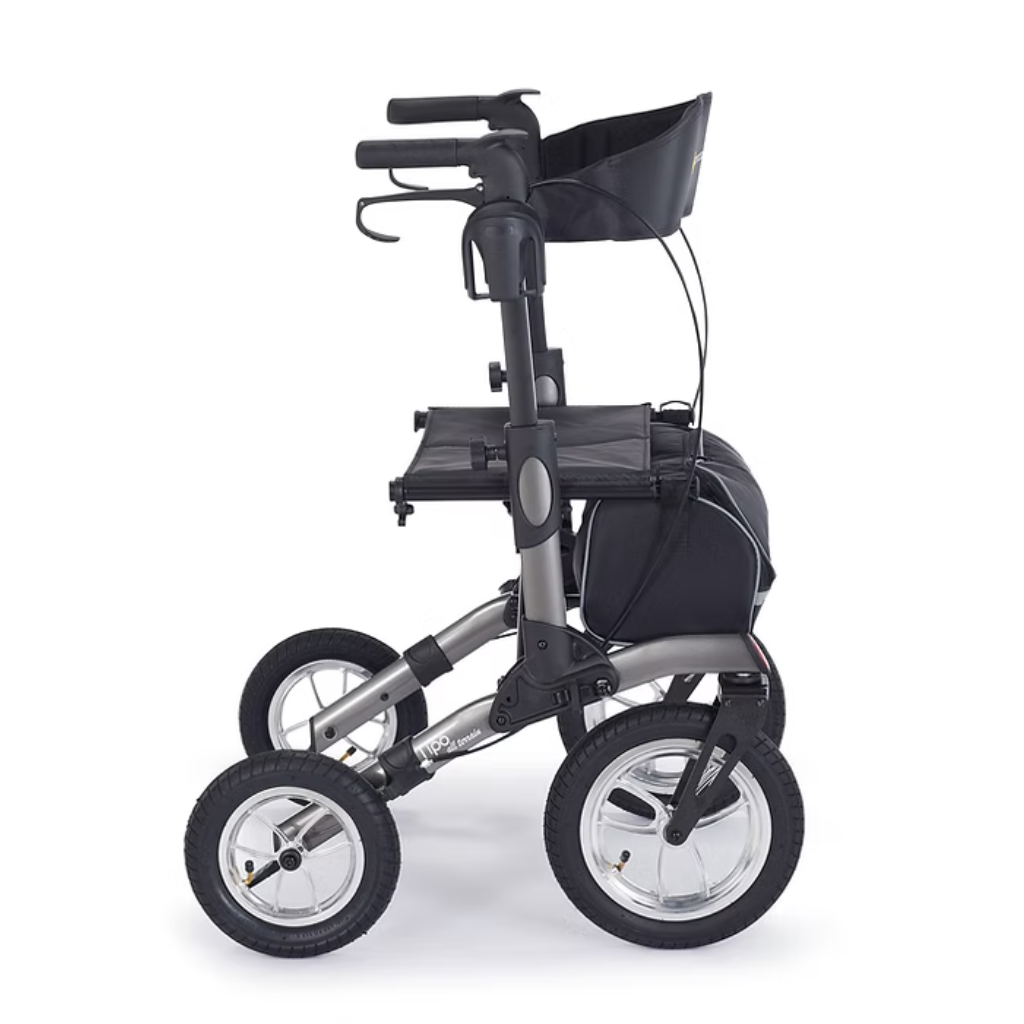
COMODITA Tipo all terrain walker with large wheels for outdoor use

Outdoor walkers for elderly users need more than a basic frame. Larger wheels, stronger brakes, stable seating, better ground clearance, and smoother rolling matter when walking on sidewalks, parks, boardwalks, gravel, grass, or uneven outdoor areas. An all terrain walker is designed for people who want to stay active beyond the house.

Best For
Best walker for outdoors Grass Gravel Uneven sidewalks Parks
Choose This Walker If The user wants smoother outdoor movement, larger wheels, and a walker built for uneven surfaces.
Avoid This If The user mainly needs a narrow indoor walker, very light lifting weight, or maximum post-surgery control.

Upright Walkers & Rollator Transport Chair Hybrids

Best for posture support, wrist relief, caregiver-assisted outings, airports, travel, and fatigue.

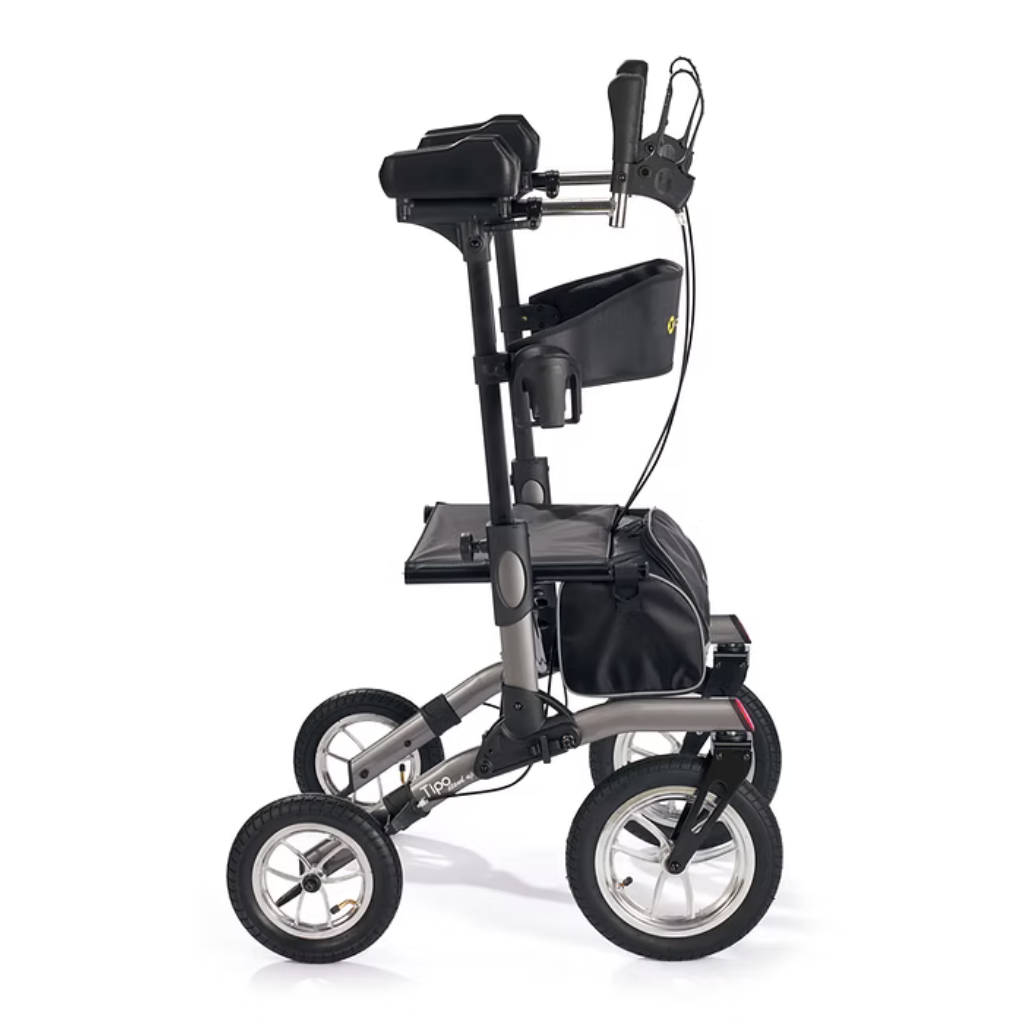
Comodita upright walker with seat for posture support

Upright walkers help users stand taller by supporting the forearms instead of placing all pressure through the hands and wrists. Rollator transport chair hybrids serve a different need: they allow the user to walk part of the time and be pushed by a caregiver when fatigue becomes too much.

Best For
Upright walker with seat Rollator with footrest Transport rollator Airports Long outings
Choose This Walker If The user needs posture support, reduced wrist pressure, or a backup transport option for longer trips.
Avoid This If The user needs a simple standard walker for early recovery or cannot safely manage a larger rollator frame.

Important Safety Note

A rollator is not automatically safer than a standard walker. For users with severe balance problems, frequent falls, poor brake control, or early post-surgery recovery needs, a more controlled standard walker may be safer than a fast-moving rollator. For users who walk independently but fatigue quickly, a senior walker with seat or rollator for elderly mobility may provide better independence and rest support.

Walker Features

Understanding Walker Features Before You Buy: Wheels, Seats, Brakes, Weight, Height & Safety

Once you understand the main walker types, the next step is comparing the features that actually affect safety and daily use. Two walkers can look similar online, but the right choice may depend on product weight, user weight capacity, wheel size, seat height, handle height, brake style, foldability, storage, and whether the walker fits the user’s home, car, travel plans, and body size.

This is especially important when comparing lightweight walkers for seniors, lightweight walkers for elderly users, walker with wheels options, senior walkers with seat, heavy duty walkers with seats, compact travel walkers, petite walkers, and larger all-terrain rollators.

Key Buying Rule The best adult walker is not always the lightest, widest, cheapest, or most stylish option. The best walker is the one that fits the user’s body, strength, balance, walking environment, daily routine, and ability to safely control the walker.
Stability Standard walkers usually offer the most controlled support for surgery, rehab, and high fall risk.
Endurance Rollators and walkers with seats help seniors rest during shopping, appointments, and longer walks.
Fit Petite users need lower handles and lower seats, while larger users may need wider frames and seats.
Environment Small indoor spaces, outdoor sidewalks, gravel, parks, and travel all require different walker features.

1. Walker Weight

Lightweight walkers are easier to lift, fold, transport, and manage every day.

Walker weight matters for both the user and caregiver. Lightweight senior walkers are easier to lift into a car, move through the house, fold for travel, and reposition during daily use. Aluminum frames are usually lighter, while steel frames often feel stronger and may offer higher durability or weight capacity.

Very Light
Often around 13–15 lbs, such as lightweight aluminum rollators and compact folding walkers.
Midweight
Often around 16–20 lbs, common for steel rollators, compact rollators, and stronger seated walkers.
Heavy Duty
Often 20+ lbs, common for bariatric rollators, all-terrain walkers, upright walkers, and reinforced frames.
Good Product Direction
Protekt Aluminum Rollator Stander Let’s Move Lumex Hemi Rollator Triumph Essential Compact
Best For Users searching for lightweight walkers for seniors, lightest walkers for seniors, or a lightweight travel walker should focus on product weight, folded size, and ease of lifting.

2. Weight Capacity

Capacity matters, but width, seat comfort, frame strength, and stability matter too.

Walker weight capacity commonly ranges from 250 lbs to 500 lbs. A standard or lightweight walker may support 250–350 lbs, while a heavy duty walker or bariatric rollator may support 400, 440, 450, or 500 lbs. For users needing extra stability, do not choose only by the maximum number. Seat width, frame width, handle spacing, brakes, and doorway clearance are just as important.

250–300 lbs
Common for everyday rollators, compact walkers, three-wheel rollators, and many senior walkers with seat.
350 lbs
Common for stronger standard walkers, steel rollators, and some reinforced lightweight rollators.
400–500 lbs
Best for bariatric walkers, heavy duty walkers with seats, wide seat rollators, and larger users.
Good Product Direction
Protekt Bariatric Rollator Triumph Escape HD Lumex Imperial Comodita Spazio Protekt Bariatric Walker
Important Bariatric Tip For walkers for heavy people, compare seat width, handle width, overall width, and doorway clearance — not only the listed weight capacity.

3. Wheel Size & Wheel Type

Wheel size changes how the walker feels indoors, outdoors, and on uneven surfaces.

Wheels are one of the biggest differences between a basic walker with wheels, a standard rollator, a compact travel walker, and an all-terrain rollator. Smaller wheels are usually easier indoors, while larger wheels are smoother outdoors. Pneumatic tires can help on rougher surfaces, but they may also add weight and require tire pressure maintenance.

5” Wheels
Common on front-wheel standard walkers and simple seated walkers for more controlled indoor use.
6” Wheels
Common on everyday rollators for indoor floors, hallways, appointments, and light outdoor use.
8” Wheels
Better for sidewalks, shopping, outdoor paths, and smoother rolling over small surface changes.
10”–12” Wheels
Best for all-terrain walkers, outdoor rollators, grass, gravel, boardwalks, parks, and uneven surfaces.
Good Product Direction
Karman R-4608 COMODITÀ Tipo UNO All Terrain Stander Let’s Go Out Tipo Petite All Terrain
Expert Tip Bigger wheels are usually better outdoors, but not always better indoors. For tight spaces, a smaller or more compact walker may still be easier to control.

4. Seat Height & Seat Width

A walker with seat should fit the user’s height, body size, and resting needs.

When comparing senior walkers with seat, seat size is not a small detail. Petite users often need a lower seat height so their feet can rest more safely. Larger users may need a wider seat and stronger frame. A narrow or poorly fitted seat can become uncomfortable during longer rest breaks.

Petite Seats
Lower seat heights around 18”–20” can better fit shorter seniors and petite elderly users.
Standard Seats
Often around 20”–22” high with moderate seat widths for everyday rollator use.
Wide Seats
Often 18”–23” wide on heavy duty walkers with seats and bariatric rollators.
Good Product Direction
Comodità Piccola Lumex Hemi Karman R-4800 Comodita Spazio Lumex Imperial
Fit Warning A walker seat should feel stable and natural. Petite users should not feel like they are climbing onto the seat, and larger users should not feel squeezed into the frame.

5. Handle Height & Walker Size

Correct handle height can affect posture, wrist strain, shoulder comfort, and safety.

Walker sizes for elderly users should be matched to the person’s height and posture. Handles that are too low may cause the user to hunch forward. Handles that are too high may cause shoulder strain and poor control. Petite walkers usually offer lower handle ranges, while taller users often need higher adjustment ranges.

Short Users
Look for petite walkers, hemi rollators, junior walkers, and lower handle ranges.
Average Users
Most standard rollators and medical walkers fit average adult height ranges.
Taller Users
Look for higher handle ranges, upright walkers, or larger rollators designed for taller adults.
Good Product Direction
Tipo Petite McKesson Junior Walker Comodita Prima Special Triumph Escape HD Lumex Gaitster
Fit Warning Wrong handle height can make walking less safe by increasing forward leaning, wrist pressure, shoulder strain, and poor control.

6. Brake Style & Control

Brakes matter for stopping, sitting, parking, one-hand control, and user confidence.

Rollator brakes are not all the same. Some walkers use loop-style hand brakes, some use push-down brakes, some include parking locks, and some premium designs use one-hand braking or cable-free systems. Brake style matters most when the user has arthritis, hand weakness, tremors, stroke weakness, or difficulty operating both hands equally.

Loop Brakes
Common on many rollators. Pull to slow or stop, push down to lock for sitting.
Push-Down Brakes
Often used on some Karman models. Can be helpful for users who prefer downward pressure control.
One-Hand Braking
Helpful for users with one-sided weakness or limited hand control when appropriate.
Parking Lock
Important for safely sitting, resting, or keeping the walker still while stopped.
Good Product Direction
COMODITÀ Avanti Triumph Escape HD Protekt Rollators Karman R-4608 Comodita Tipo
Special Feature The COMODITÀ Avanti’s one-hand braking design can be especially helpful for some users with stroke weakness, one-sided weakness, or limited hand control.

7. Foldability & Travel Use

Folding design matters for car trunks, cruises, airports, apartments, and caregiver transport.

A walker may be excellent at home but frustrating during travel if it is difficult to fold, too wide, too heavy, or awkward to place in a vehicle. For frequent appointments, shopping, cruises, airport travel, and caregiver transport, compare folded width, product weight, folding style, and whether the walker stands or locks when folded.

Flat Folding
Useful for closets, car trunks, and basic transport.
Compact Fold
Helpful for small apartments, tight storage, travel, and active users.
Double Fold
Common on select premium travel and all-terrain rollators for more compact storage.
Good Product Direction
Triumph Essential Compact Tipo Classic Tipo Petite Stander Let’s Move Karman R-4602-T
Expert Tip For a lightweight travel walker, compare both product weight and folded size. A walker can be light but still bulky, or compact but still heavy.

8. Storage, Trays & Accessories

Storage can make a walker much more useful for daily independence.

Storage is not just a convenience. For many older adults, it supports independence. Baskets, pouches, shopping bags, trays, cup holders, cane holders, and under-seat bags make it easier to carry personal items, groceries, phones, water, mail, and small household objects without holding them while walking.

Baskets
Helpful for shopping, errands, and personal items, especially on three-wheel and four-wheel rollators.
Pouches
Good for privacy, wallets, phones, keys, small medical items, and everyday carry.
Trays
Helpful around the house for meals, drinks, and small household items.
Cup / Cane Holders
Useful for outings, appointments, outdoor walks, and users who also carry a cane.
Good Product Direction
COMODITÀ Avanti Essentials Shopping Rollator COMODITÀ Tipo Karman R-3600 McKesson Rollator
Daily Living Tip For users who want to stay active at home, church, stores, appointments, or outdoors, storage can be the difference between using the walker occasionally and using it confidently every day.

9. Medicare Codes & HCPCS

Coverage depends on medical necessity, documentation, supplier rules, and plan details.

Many walkers medical products include HCPCS codes such as E0135, E0143, E0148, E0149, E0156, or related codes depending on the product type, wheels, seat, and configuration. However, a code does not automatically mean every buyer will receive coverage.

Standard Walker
May include codes such as E0135 or E0143 depending on wheels and configuration.
Rollator
Often associated with E0143, with seat-related coding sometimes listed separately.
Bariatric Walker
May include bariatric walker codes such as E0148 or E0149 depending on model.
What Buyers Should Know
Medical necessity Doctor documentation Supplier rules Plan details HCPCS codes
Coverage Reminder Medicare or insurance coverage depends on medical necessity, documentation, supplier participation, and the user’s specific plan. Always verify coverage before relying on reimbursement.
Buying Mistake Choosing by price only can lead to the wrong size, wrong wheel type, wrong capacity, or a walker that does not match the user’s daily life.
Expert Tip Match the walker to the environment, not just the person. A home walker, outdoor walker, travel walker, and recovery walker may need different features.
Did You Know? Rollators with seats are not ideal for every fall-risk patient. If the user cannot control speed or brakes, a standard walker may be safer.
Fit Warning The wrong handle height can increase shoulder strain, wrist pressure, forward leaning, and unsafe walking posture.
Choose By Condition

Which Walker Is Best for Your Medical Condition, Balance Problem or Recovery Situation?

Many people search for the best walker for seniors, but the better question is: which walker fits this person’s condition? The right walker for arthritis may be very different from the right walker for Parkinson’s disease, stroke weakness, hip replacement, frequent falls, COPD, poor endurance, obesity, or rehab recovery.

Use this section as a practical starting point to compare walkers for elderly users by real mobility challenge. Each condition below gives a direct answer, the best walker type, what to avoid, and the most relevant product direction from MedCare Mobility’s walker catalog.

AI Answer Box: Which walker do I need? If the person has poor balance, frequent falls, early surgery recovery, or cannot safely control brakes, start with a standard walker. If the person walks independently but tires easily, consider a senior walker with seat or lightweight rollator. If the person is petite, heavier, outdoors often, or needs posture support, choose a walker specifically built for that body size and environment.
Stability First Frequent falls, severe weakness, early recovery, and high fall risk usually point toward standard walkers.
Seat First Fatigue, COPD, heart disease, MS, and poor endurance often point toward rollators with seats.
Fit First Petite users, taller users, and larger users need walker size, seat height, and capacity matched carefully.
Control First Parkinson’s, stroke weakness, neuropathy, and hand limitations require careful brake and speed control.

Arthritis

Best walker direction: lightweight rollator with ergonomic grips, easy brakes, and a seat if fatigue is present.

Common Challenge Hand pain, wrist strain, joint stiffness, poor endurance, and difficulty lifting heavier walkers.
Best Walker Type Lightweight rollator or easy-handling walker with wheels.
Why It Helps Less lifting, smoother movement, ergonomic grips, brakes, and a seat for resting.
What To Avoid Heavy walkers, hard-to-squeeze brakes, poor grips, or handles that increase wrist strain.
Recommended Product Direction Protekt Aluminum Rollator, Triumph Essentials, McKesson 4 Wheel Rollator.

Parkinson’s Disease

Best walker direction: stability-first support, with rollator use only when braking and control are safe.

Common Challenge Freezing, shuffling steps, tremors, balance changes, and difficulty controlling movement speed.
Best Walker Type Stable walker or carefully selected rollator depending on freezing, balance, and brake control.
Why It Helps Controlled support can reduce unsafe rushing, while special braking may help limited hand control.
What To Avoid A fast-moving rollator or three-wheel walker if the user freezes, falls, or cannot brake safely.
Recommended Product Direction COMODITÀ Avanti for one-hand braking when appropriate; standard walker if severe balance issues are present.

Stroke or One-Sided Weakness

Best walker direction: standard walker for stability, or one-hand braking if a rollator is appropriate.

Common Challenge Uneven strength, one-sided weakness, grip difficulty, balance changes, and reduced coordination.
Best Walker Type Standard walker for maximum stability, or a special walker aid if one-hand braking is needed.
Why It Helps Stable support gives more control, while one-hand braking may help when both hands are not equally strong.
What To Avoid Walkers that require equal hand strength if the user cannot control both brakes safely.
Recommended Product Direction Standard walkers for stability; COMODITÀ Avanti when rollator-style support and one-hand braking are appropriate.

Multiple Sclerosis

Best walker direction: lightweight rollator with seat, stable brakes, and fatigue support.

Common Challenge Variable fatigue, weakness, balance changes, endurance limits, and unpredictable walking ability.
Best Walker Type Rollator with seat, lightweight frame, and dependable brakes.
Why It Helps A seat gives rest support when fatigue appears, while a lighter frame is easier for daily handling.
What To Avoid Heavy walkers or rollators that are too fast, too wide, or hard to brake on tired days.
Recommended Product Direction Protekt Aluminum Rollator, Triumph Escape HD, Lumex Set n’ Go Wide.

Neuropathy

Best walker direction: stable walker or rollator depending on balance, sensation, and control.

Common Challenge Reduced foot sensation, poor ground feedback, imbalance, and difficulty sensing uneven surfaces.
Best Walker Type Standard walker if balance is poor; rollator only if control and braking are reliable.
Why It Helps Stable support can compensate for reduced sensation, while larger wheels may help outdoors only if control is safe.
What To Avoid Fast-moving rollators, small unstable frames, or outdoor wheels if the user cannot control speed.
Recommended Product Direction Standard walker for stability; rollator with seat only when the user can brake and steer safely.

Hip Replacement

Best walker direction: standard walker or walker with front wheels during early recovery.

Common Challenge Post-surgery weakness, weight-bearing limits, pain, transfer difficulty, and early walking instability.
Best Walker Type Standard walker or front-wheel medical walker during early recovery.
Why It Helps Provides controlled support while the user regains strength, balance, and confidence after surgery.
What To Avoid Switching to a rollator too early unless approved by the surgeon, therapist, or clinician.
Recommended Product Direction Shop Standard Walkers for early recovery support.

Knee Replacement

Best walker direction: standard walker first, then lightweight rollator later if endurance is the issue.

Common Challenge Post-surgery pain, stiffness, early weakness, short walking tolerance, and rehab progression.
Best Walker Type Standard walker or walker with front wheels during early recovery.
Why It Helps Gives controlled support while the knee heals and strength returns.
What To Avoid Choosing a rollator only for convenience before the user is stable enough to control it safely.
Recommended Product Direction Standard walker early; lightweight rollator later if fatigue becomes the main limitation.

Balance Disorders

Best walker direction: standard walker first when safety and control are the priority.

Common Challenge Unsteady walking, dizziness, poor reactions, leaning, stumbling, or difficulty recovering from imbalance.
Best Walker Type Standard walker for bad balance; rollator only when braking and control are good.
Why It Helps More controlled movement can reduce speed and give the user a stable support base.
What To Avoid Three-wheel rollators or fast-moving rollators if the user cannot safely control speed.
Important Note For fall-risk screening and prevention concepts, see CDC STEADI.

Frequent Falls

Best walker direction: stability first, clinician evaluation, and home safety review.

Common Challenge Repeated falls, fear of falling, unsafe transfers, poor reaction time, and high injury risk.
Best Walker Type Standard walker or clinician-recommended mobility aid based on fall pattern.
Why It Helps Controlled walker movement may be safer than a rollator when falls are frequent.
What To Avoid A rollator or three-wheel walker unless the user has been evaluated and can control it safely.
Important Note For general fall prevention education, see the National Institute on Aging fall prevention resource.

Weak Legs

Best walker direction: standard walker if unstable, rollator with seat if endurance is the issue.

Common Challenge Leg weakness, reduced standing tolerance, difficulty walking distance, and fatigue.
Best Walker Type Standard walker for instability; senior walker with seat if the user is stable but tires quickly.
Why It Helps Matches support level to the real issue: instability versus endurance.
What To Avoid Choosing a rollator with seat if the user needs weight-bearing support more than rest breaks.
Recommended Product Direction Standard walker for unstable legs; Protekt Aluminum Rollator or seated rollator if fatigue is the main concern.

Poor Endurance or Fatigue

Best walker direction: senior walker with seat, lightweight rollator, or transport rollator for long outings.

Common Challenge Getting tired halfway through a walk, needing to sit often, avoiding stores, or struggling with long hallways.
Best Walker Type Lightweight rollator with seat or rollator transport chair hybrid.
Why It Helps A seat gives immediate rest support, while storage and wheels make outings easier.
What To Avoid Very heavy walkers if the user or caregiver must lift the walker often.
Recommended Product Direction Protekt Aluminum Rollator, Triumph Essentials, Karman R-4602-T Rollator Transport Chair.

COPD or Heart Disease

Best walker direction: lightweight walker with seat, rest support, and practical storage.

Common Challenge Shortness of breath, low stamina, fatigue, needing frequent rest, and difficulty walking long distances.
Best Walker Type Lightweight rollator or senior walker with seat.
Why It Helps Allows planned rest breaks and may provide storage for personal items or small accessories.
What To Avoid Very heavy walkers or outdoor models that are harder to lift and manage if not needed.
Recommended Product Direction Protekt Aluminum Rollator, McKesson 4 Wheel Rollator, Essential Seated Rollator.

Obesity or Higher Body Weight

Best walker direction: bariatric rollator, heavy-duty standard walker, or extra-wide seat walker.

Common Challenge Need for stronger capacity, wider seating, more handle space, stable frame, and stronger brakes.
Best Walker Type Heavy duty walker with seat, bariatric rollator, or heavy-duty standard walker.
Why It Helps Higher capacities, wider seats, reinforced frames, and stronger support improve confidence and fit.
What To Avoid Choosing only by weight capacity without checking seat width, overall width, and doorway clearance.
Recommended Product Direction Protekt Bariatric Rollator, Lumex Walkabout Imperial, Triumph Escape HD, Protekt Bariatric Folding Walker.

Osteoporosis

Best walker direction: safety-first walker selection with strong fall prevention focus.

Common Challenge Higher injury risk from falls, fear of falling, posture concerns, and need for stable support.
Best Walker Type Stability-first walker, often a standard walker if fall risk is high.
Why It Helps Controlled support may reduce unsafe speed and improve confidence during daily movement.
What To Avoid Fast rollators or unstable walkers if the user has high fracture risk and poor balance.
Recommended Product Direction Standard walker for high fall risk; rollator only if balance, brake control, and clinician guidance support it.

Lower Back Pain

Best walker direction: correct handle height, ergonomic grips, and a seat for rest breaks.

Common Challenge Forward leaning, poor posture, fatigue, wrist pressure, and discomfort during longer walks.
Best Walker Type Properly fitted rollator, upright walker, or walker with ergonomic grips and correct handle height.
Why It Helps Better handle height and posture support may reduce strain, while a seat allows rest breaks.
What To Avoid A walker that is too low, causing the user to hunch forward while walking.
Recommended Product Direction Lumex Gaitster Upright Rollator, Comodità Tipo StandUp Advance, properly fitted rollator with seat.

Recovering From Hospitalization

Best walker direction: start stable, then progress as strength and endurance improve.

Common Challenge Weakness after bed rest, reduced endurance, transfer difficulty, fear of falling, and early recovery needs.
Best Walker Type Standard walker early; rollator with seat later if endurance becomes the main problem.
Why It Helps Recovery needs may change over time, so the walker should match the current stage.
What To Avoid Buying only for convenience if the user still needs controlled stability and supervision.
Recommended Product Direction Start with standard walkers; use the Walker Assessment Tool when needs are unclear.

Rehab or Physical Therapy Recovery

Best walker direction: match therapist guidance and progress from stability to independence.

Common Challenge Changing mobility level, rebuilding strength, improving balance, and transitioning between support levels.
Best Walker Type Often standard walker first, then walker with wheels, then rollator when appropriate.
Why It Helps Rehab often requires matching the walker to the user’s current ability, not the final goal.
What To Avoid Skipping ahead to a faster rollator before the user has enough strength, balance, and brake control.
Recommended Product Direction Standard walker → front-wheel walker → lightweight rollator with seat when approved by the care team.
Medical Safety Note This guide helps with buying education, but it does not replace a physical therapist, occupational therapist, physician, surgeon, or clinician.
Best Starting Point If the person has frequent falls or cannot control speed, start with stability before convenience. A standard walker may be safer than a rollator.
Need Personalized Help? Use the Walker Assessment Tool to narrow down walker type by balance, endurance, height, weight, and daily use.
Choose By Lifestyle

Choose Your Walker Based on Daily Activities: Home, Shopping, Travel, Outdoors & Everyday Independence

The right walker is not only about diagnosis, height, or weight capacity. It also depends on where the person actually walks every day. A walker that works beautifully inside the home may feel limited at the grocery store, while an all-terrain outdoor walker may feel too large in a narrow apartment.

This section answers real buyer questions like which walker do I need, what walker is easiest to push, which walker works for shopping, what walker fits inside a car, which walker works for airports, and which outdoor walkers for elderly users are best for grass, gravel, sidewalks, and travel.

Quick Lifestyle Answer For indoor safety, start with a standard walker or compact rollator. For shopping, choose a rollator with seat and storage. For airports, cruises, and long outings, choose a lightweight travel walker or rollator transport chair hybrid. For parks, grass, gravel, and uneven sidewalks, choose an outdoor rollator with larger wheels or an all-terrain walker.
Home & Apartments Prioritize narrow width, controlled movement, easy turns, and safe indoor handling.
Shopping & Errands Prioritize seat, brakes, storage pouch, basket, tray, or shopping bag.
Travel & Airports Prioritize folding size, product weight, transport function, and car-trunk fit.
Outdoors Prioritize 8”, 10”, or 12” wheels, stable brakes, seating, and stronger outdoor control.

Inside the Home

Best walker direction: standard walker, front-wheel walker, or compact rollator if balance allows.

Best Walker Type Standard walker, medical walker with wheels, or compact rollator for stable users.
Why Homes often have tight turns, furniture, bathrooms, bedrooms, and short walking distances.
Avoid Oversized all-terrain rollators in narrow hallways, small bathrooms, or cluttered spaces.
Recommended Product Protekt Folding Walker, McKesson Folding Walker, Triumph Essential Compact.
Helpful Link Shop Standard Walkers

Small Apartments & Narrow Hallways

Best walker direction: compact walker, three-wheel rollator, or lightweight folding rollator.

Best Walker Type Three-wheel rollator, compact lightweight rollator, or narrow standard walker.
Why Smaller frames turn easier in doorways, kitchens, bathrooms, elevators, and hallways.
Avoid Extra-wide bariatric walkers or outdoor rollators if the home has limited space.
Recommended Product Karman R-3600, Lumex GF 3-Wheel Cruiser, Triumph Essential Compact.
Helpful Link Shop Rollators

Grocery Shopping

Best walker direction: rollator with seat, storage, basket, tray, or shopping bag.

Best Walker Type Rolling walker with seat and storage, shopping rollator, or premium walker aid.
Why Shopping requires walking distance, standing breaks, carrying items, and safe stopping.
Avoid Walkers without storage if the user must carry bags, purse, water, or personal items.
Recommended Product Essentials Shopping Rollator, COMODITÀ Avanti, McKesson 4 Wheel Rollator.

Walking the Dog

Best walker direction: stable four-wheel rollator with secure brakes and outdoor-capable wheels.

Best Walker Type Stable four-wheel rollator, outdoor rollator, or all-terrain walker if sidewalks are rough.
Why Dog walking requires braking confidence, steering control, outdoor wheels, and surface awareness.
Avoid Any walker that cannot brake securely or feels unstable when stopping suddenly.
Recommended Product Karman R-4608, Protekt Aluminum Rollator, COMODITÀ Tipo Classic.

Outdoor Parks

Best walker direction: outdoor rollator, all-terrain walker, or large-wheel rollator.

Best Walker Type All-terrain rollator or outdoor walker with 8”+ wheels.
Why Parks may include uneven paths, curbs, longer walking distances, rest breaks, and outdoor surfaces.
Avoid Small indoor casters if the paths are uneven, cracked, grassy, or rough.
Recommended Product COMODITÀ Tipo All Terrain, UNO All Terrain, Triumph Escape HD.

Uneven Sidewalks

Best walker direction: larger wheels, stable brakes, and enough frame control.

Best Walker Type 8” wheel rollator at minimum; all-terrain walker if sidewalks are rough.
Why Larger wheels roll better over sidewalk cracks, small bumps, and outdoor surface changes.
Avoid Small-wheel indoor rollators if the user regularly walks on broken or uneven sidewalks.
Recommended Product Karman R-4608, Stander Let’s Go Out, COMODITÀ Tipo Classic, COMODITÀ Tipo All Terrain.

Grass or Gravel

Best walker direction: true all-terrain rollator with large pneumatic wheels.

Best Walker Type All-terrain walker with 10”–12” larger wheels and outdoor-focused frame design.
Why Grass and gravel require better traction, ground clearance, and smoother rolling than indoor walkers.
Avoid 5” front-wheel walkers, small indoor casters, or light rollators not built for uneven ground.
Recommended Product COMODITÀ Tipo All Terrain, UNO All Terrain, COMODITÀ Tipo Petite All Terrain.

Airports

Best walker direction: lightweight rollator, compact folding walker, or transport rollator hybrid.

Best Walker Type Lightweight travel walker, compact rollator, or rollator transport chair hybrid.
Why Airports require long-distance support, rest options, folding, and possible caregiver pushing.
Avoid Very heavy or bulky walkers if lifting, security, boarding, or storage will be difficult.
Recommended Product Karman R-4602-T, Triumph Essential Compact, Protekt Aluminum Rollator, Stander Let’s Move.
Helpful Link View Karman R-4602-T

Cruises & Vacations

Best walker direction: compact folding rollator, lightweight travel walker, or transport hybrid.

Best Walker Type Folding lightweight rollator, compact rollator, all-terrain travel walker, or transport rollator.
Why Travel involves elevators, cabins, buses, sidewalks, ramps, excursions, storage, and long walking days.
Avoid A walker that is difficult to fold, lift, store, or maneuver in tight travel spaces.
Recommended Product COMODITÀ Tipo Classic, Triumph Essential Compact, Karman R-4602-T, Stander Let’s Go Out.

Disney, Theme Parks & Long Outings

Best walker direction: rollator with seat or transport rollator if fatigue is heavy.

Best Walker Type Senior walker with seat, lightweight rollator, or rollator transport chair combo.
Why Long outings require rest breaks, storage, brakes, comfort, and backup support if fatigue increases.
Avoid Walkers without seats if the user cannot stand or walk for extended periods.
Recommended Product Karman R-4602-T, Triumph Escape HD, Protekt Aluminum Rollator, Essential Seated Rollator.

Church, Events & Community Activities

Best walker direction: stylish, compact rollator with seat and easy folding.

Best Walker Type Compact rollator with seat, lightweight folding rollator, or stylish walker aid.
Why Events often require walking, standing, sitting, narrow aisles, and a walker that looks and feels comfortable socially.
Avoid Bulky frames that are difficult to park, fold, or move through crowds.
Recommended Product Stander Let’s Move, COMODITÀ Avanti, Triumph Essentials, Essential Seated Rollator.
Helpful Link View COMODITÀ Avanti

Malls & Large Stores

Best walker direction: rollator with seat, smooth wheels, and storage.

Best Walker Type Rolling walker with seat, lightweight rollator, or shopping rollator.
Why Malls require distance, smooth rolling, carrying personal items, and rest breaks when seating is unavailable.
Avoid Standard walkers if endurance and seating are the main problems rather than stability.
Recommended Product Protekt Aluminum Rollator, Essentials Shopping Rollator, McKesson 4 Wheel Rollator.
Helpful Link Shop Rollators

Car Trunk & Everyday Travel

Best walker direction: compact folding walker, lightweight rollator, or three-wheel rollator.

Best Walker Type Compact folding rollator, lightweight walker, or three-wheel mobility walker.
Why Car travel requires a walker that folds easily, lifts safely, and fits in available trunk space.
Avoid Heavy-duty or all-terrain frames if the user or caregiver cannot lift them comfortably.
Recommended Product Triumph Essential Compact, Stander Let’s Move, Karman R-3600, Lumex GF 3-Wheel Cruiser.

Public Transportation

Best walker direction: compact, foldable, lightweight rollator with strong control.

Best Walker Type Compact walker, foldable lightweight rollator, or smaller rollator with secure brakes.
Why Buses, trains, and rideshare vehicles require easy folding, narrow movement, and reliable parking brakes.
Avoid Extra-wide walkers if doorways, aisles, or vehicle entry points are tight.
Recommended Product Stander Let’s Move, Triumph Essential Compact, Protekt Aluminum Rollator, Karman R-3600.

Snow, Rain & Slippery Weather

Best walker direction: caution-first guidance, safer surfaces, and caregiver support when needed.

Best Walker Type Stable walker or outdoor rollator only when the surface is safe, cleared, and appropriate.
Why Wet, icy, snowy, or slippery surfaces increase fall risk even with a good walker.
Avoid Unsafe outdoor walking in ice, snow, heavy rain, poor lighting, or unmaintained surfaces.
Recommended Product Use caution with any walker; prioritize brakes, caregiver support, and safer cleared routes.

Outdoor Independence

Best walker direction: all-terrain rollator with large wheels, seat, brakes, and storage.

Best Walker Type All-terrain rollator, outdoor walker with seat, or large-wheel travel walker.
Why Active outdoor users often need larger wheels, rest support, storage, and smoother movement over changing surfaces.
Avoid Indoor-only walkers if the goal is parks, boardwalks, outdoor errands, and longer walks.
Recommended Product COMODITÀ Tipo All Terrain, UNO All Terrain, COMODITÀ Tipo Classic, Stander Let’s Go Out.
Compare Walkers

Walker Comparison Chart: Standard Walkers, Rollators, Petite Walkers, Bariatric Walkers, Outdoor Walkers & Walkers With Seat

Choosing the best walker for seniors becomes much easier when every important detail is compared side by side. This chart organizes standard walkers for seniors, rollators for elderly, senior walkers with seat, lightweight walkers for seniors, petite walkers for elderly, heavy duty walkers, outdoor walkers, upright walkers, and transport rollator hybrids.

Use this chart as a practical decision tool. A basic standard walker may be safest for early recovery or high fall risk, while a rollator with seat may be better for fatigue, shopping, outdoor walking, travel, and daily independence.

Walker Master Comparison Chart

Swipe left to compare walker type, frame, weight, capacity, seat, wheels, indoor use, outdoor use, and best fit.

Open Comparison PDF
Swipe left to compare all walker details. The product column stays visible as you scroll.
Product
Walker Type
Frame
Product Weight
Weight Capacity
Seat
Wheel Size
Indoor Use
Outdoor Use
Best For
Group A — Standard Walkers
Standard folding medical walker; available with or without wheels
1” steel frame; junior version aluminum
Adult approx. 8–9 lbs; junior with wheels approx. 5 lbs
350 lbs
No seat
5” wheels on wheeled models
Excellent
Limited
Post-surgery, rehab, high stability, walker for surgery, hospital walker, controlled indoor walking.
Heavy-duty bariatric folding walker with or without wheels
Durable steel frame
12 lbs without wheels; 13 lbs with wheels
500 lbs
No seat
5” wheels on wheeled model
Excellent
Limited
Heavy-duty stability, larger users, bariatric recovery, safer controlled support.
Bariatric folding walker with 5” wheels and rear glides
Aluminum A-frame with steel legs and side braces
Not listed
500 lbs
No seat
5” front wheels
Excellent
Limited
Bariatric standard walker, larger patients, controlled indoor medical walking support.
Adult dual-release folding walker with wheels
Aluminum frame
Not listed
350 lbs
No seat
5” front wheels with rear glides
Excellent
Limited
Standard walkers for seniors, post-hospital recovery, indoor mobility, walker patient support.
McKesson Junior Folding Walker
Junior / petite walker
Junior dual-release folding walker with wheels
Aluminum frame
Not listed
350 lbs
No seat
5” front wheels with rear glides
Excellent
Limited
Shorter users, petite elderly, smaller walker size, controlled recovery support.
Group B — Lightweight Rollators / Everyday Walkers With Seat
Protekt Aluminum Rollator
Lightweight rollator
Lightweight walker for elderly with seat
Lightweight aluminum
13 lbs
300 lbs
13.5” W x 12” D; 20” seat height
6” soft-grip casters
Excellent
Good
Lightweight walkers for seniors, fatigue, shopping, daily use, indoor/outdoor errands.
Lightweight rollator walker with seat
Durable steel
17 lbs
350 lbs
13.5” W x 12” D; 20” seat height
6” soft-grip casters
Excellent
Good
Affordable senior walker with seat, stronger daily rollator, elderly users needing rest breaks.
Protekt Steel Rollator KD
KD steel rollator
Knock-down mobility walker with seat
Powder-coated steel
17.5 lbs
350 lbs
13.5” W x 12” D; 20” seat height
6” soft-grip casters
Excellent
Good
Reliable mobility walker, compact delivery, tool-free setup, senior daily support.
McKesson 4 Wheel Rollator
Adjustable rollator
Adjustable-height 4-wheel rollator
Aluminum frame
14 lbs
300 lbs
13” seat width; 18”–22” adjustable seat height
6” casters
Excellent
Good
Lightweight walker with wheels, adjustable seat height, daily errands, walkers for handicapped.
Compact adult walker with padded seat
Lightweight aluminum
Not listed
300 lbs
Padded seat with supportive backrest
5” front wheels
Excellent
Light outdoor
Compact adult walker with seat, indoor use, travel storage, simple daily support.
Compact lightweight rollator walker with seat
Lightweight rollator frame
16.95 lbs
300 lbs
17” W x 8” D; 20” seat height
8” front; 7” rear
Excellent
Good
Compact walkers for seniors, travel, car trunk, folding storage, daily errands.
Essential Seated Rollator
Foldable seated rollator
Lightweight foldable rollator walker with seat
Lightweight rollator frame
15.25 lbs
300 lbs
15.5” W x 13.5” D; 22” or 23” seat height
6” wheels
Excellent
Good
Lightweight foldable rollator, daily mobility, travel, senior walker with seat.
Karman R-4608 Rollator
4 wheel walker with seat
Lightweight 4 wheel walker with seat
Powder-coated aluminum
15 lbs frame only; 21 lbs with basket
250 lbs
18” W x 13.5” D; 21” seat height
8” non-marking tires
Excellent
Very good
Best 4 wheel walker with seat, smooth indoor/outdoor wheels, shopping, everyday mobility.
Group C — Shopping, Daily Independence & Stylish Walker Aids
Adult wheeled walker with seat and shopping storage
Aluminum
18 lbs
300 lbs
14” W x 9.5” D; 21” seat height
8” front; 7” rear
Excellent
Good
Grocery shopping, errands, storage, active seniors, adult wheeled walker with seat.
Modern walker aid for elderly independence
Lightweight steel, foldable
15 lbs
300 lbs
No traditional seat; tray and bag included
8” wheels
Excellent
Good
Stylish walkers for seniors, one-hand braking, stroke weakness, daily home use.
Lumex Set n’ Go Wide Rollator
Wide adjustable rollator
Wide adjustable-height 4 wheeler mobility walker
Lightweight aluminum
Approx. 17–18 lbs
350 lbs
15.75” W x 12” D; 19.5”–22.5” adjustable seat height
8” casters
Excellent
Very good
Wider comfort, adjustable fit, daily independence, larger adults, indoor/outdoor use.
Stander Let’s Move Rollator
Stylish lightweight rollator
Reinforced aluminum
14.6 lbs
350 lbs
17” W x 7” D faux-leather seat
8” wheels
Excellent
Good
Stylish walkers for adults, lightweight travel, social outings, compact storage.
Group D — Petite / Short User Walkers
Petite rollator walker with seat
Reinforced frame with S-shaped back support
19.5 lbs
400 lbs
15” W x 14.25” D; 18” seat height
8” wheels
Excellent
Good
Petite walkers for elderly, short seniors, small walkers for seniors with seat.
Lumex Walkabout Hemi Rollator
Hemi / petite rollator
Hemi walker with wheels for shorter users
Lightweight aluminum
14 lbs
300 lbs
14” W x 13.5” D; 20” seat height
6” wheels
Excellent
Good
Walker for short seniors, petite adults, lower seat height, lightweight daily use.
COMODITÀ Tipo Petite Rollator
Petite travel rollator
Petite travel rollator with seat
Reinforced aluminum
18.5 lbs
300 lbs
17.5” W x 11” D; 19” seat height
10” front; 8” rear
Excellent
Very good
Small rollator, petite walker with seat, stylish petite walker, travel and errands.
Small all-terrain rollator for petite elderly users
Reinforced aluminum
24 lbs
300 lbs
17” W x 11” D; 19” seat height
10” pneumatic front; 8” rear
Good
Excellent
Petite outdoor walker, small rollator for petite elderly, uneven sidewalks and active use.
Group E — Three-Wheel / Compact Walkers
3 wheeled mobility walker
Durable steel
15 lbs
250 lbs
No full sitting seat; tray, basket, and pouch included
Three 8” solid casters
Excellent
Good
Small walker, narrow spaces, apartments, quick errands, compact maneuverability.
Lightweight 3 wheeler mobility walker
Lightweight aluminum
14 lbs
250 lbs
No seat; zippered carry pouch included
8” wheels
Excellent
Good
Compact walker, maneuverability, narrow indoor areas, active seniors.
Group F — Heavy-Duty / Bariatric Walkers
Heavy duty bariatric rollator with seat
Reinforced steel
24 lbs
500 lbs
18” W x 13.5” D; 22” seat height
8” wheels
Good
Very good
Best heavy duty walker, bariatric users, 500 lb capacity, wide seat support.
Extra wide heavy duty aluminum rollator
Powder-coated aluminum
20 lbs with basket
400 lbs
22” seat width; 18” seat pad; 22” seat height
8” non-marking casters
Good
Good
Heavy duty rollator, wide seat, bariatric support, lighter aluminum frame.
Extra wide steel bariatric rollator
Super-strength powder-coated steel
24 lbs with basket
400 lbs
23” overall seat; 18” seat pad; 22” seat height
8” non-marking casters
Good
Good
Heavy duty bariatric rollator, wider frame, stronger steel support.
Heavy duty walker with wide seat
Reinforced lightweight aluminum
Approx. 20 lbs
450 lbs
20” W x 13.8” D; 21.8” seat height
8” indoor/outdoor casters
Good
Good
Heavy duty walkers with seats, wide seat comfort, larger adults, bariatric daily use.
Triumph Escape HD
450 lb lightweight HD
Heavy-duty lightweight rollator walker with chair
Lightweight aluminum T-frame
20.28 lbs
450 lbs
20.67” wide; 21” seat height
8” anti-shock swivel wheels
Good
Very good
Heavy-duty yet portable, travel, larger adults, easy brakes, strong rollator with chair.
Comodità Prima Special
Wide seat rollator
Wide seat walker with 4 wheels and seat
Reinforced frame with S-shaped wheel support
19.5 lbs
400 lbs
16” W x 14.25” D; 22.5” seat height
8” rubber wheels
Good
Good
Wide seat rollator, comfort, safety, indoor/outdoor use, larger adults.
Heavy duty walker with seat
Reinforced heavy-duty steel frame
20.5 lbs
440 lbs
18” W x 14.25” D; 22” seat height
8” rubber tires
Check width
Good
Walkers for heavy people, extra room, strong seating support, 30” doorway recommended.
Comodita Spazio Special
Extra-wide orthopedic
Premium heavy duty walker with extra-wide orthopedic seat
Reinforced heavy-duty frame
20.5 lbs
440 lbs
20” W x 14.25” D; 22” seat height
8” rubber tires
Needs 30” doorway
Good
Extra-wide comfort, bariatric users, orthopedic seat support, heavy-duty stability.
Group G — Outdoor / All-Terrain / Big Wheel Walkers
Premium all-terrain rollator walker
All-terrain rollator frame
22 lbs
300 lbs
17.5” W x 11” D; 22.5” seat height
12” pneumatic front; 10” pneumatic rear
Good
Excellent
Outdoor walkers for elderly, grass, gravel, sidewalks, trails, parks, active seniors.
Travel walker with big wheels
Patented compact travel rollator frame
18.5 lbs
300 lbs
17.5” W x 11” D; 22.5” seat height
10” front; 8” rear
Good
Very good
Lightweight travel walker, big wheels, car trunks, sidewalks, travel, active users.
UNO All Terrain Rollator
Premium outdoor rollator
Premium outdoor all-terrain rollator
Heavy-duty reinforced frame with S-shaped rear support
28 lbs
300 lbs
16” W x 13.5” D; 22” seat height
12” pneumatic front; 10” pneumatic rear
Good but larger
Excellent
Outdoor mobility, gravel, trails, boardwalks, active seniors, rugged all-terrain use.
Stander Let’s Go Out Rollator
Outdoor stylish rollator
Outdoor-friendly stylish rollator
Lightweight rollator frame
17.45 lbs
300 lbs
17” x 7”; 23.6” seat height
10” front; 8” rear with suspension
Good
Very good
Stylish outdoor rollator, travel, errands, smoother outdoor surfaces, social use.
Group H — Upright Walkers & Hybrid Rollator / Transport Chair
Upright walker with seat
Premium upright all-terrain frame
29 lbs
300 lbs
17.5” W x 11” D; 21” seat height
12” pneumatic front; 10” pneumatic rear
Good but larger
Excellent
Upright posture, forearm support, wrist/back relief, outdoor travel, large wheels.
Upright rollator walker with seat
Upright rollator frame
23 lbs
300 lbs
18” W x 11” D; 24” seat height
9.25” front; 8” rear
Good
Very good
Upright posture support, reduced wrist strain, taller walking position, forearm support.
Rollator and transport chair hybrid
Rollator transport frame
21 lbs listed; 28 lbs shipping/spec listing
250 lbs
13” seat width; 22” seat height
8” flat-free casters
Good
Good
Airports, travel, caregiver pushing, fatigue, rollator with footrest, long outings.

Personalized Help

Still Not Sure? Use Our Free Walker Assessment Tool

If you are still unsure whether you need a standard walker, lightweight rollator, senior walker with seat, petite walker, heavy-duty walker, or outdoor rollator, use our free Walker Assessment Tool. It helps match the walker to the person’s height, weight, balance, endurance, walking environment, and daily needs.

Takes Under 2 Minutes Quick questions about mobility, safety, and daily use.
Personalized Recommendation Helps narrow down the most suitable walker type.
Built Around Real Mobility Needs Considers balance, fatigue, body size, and lifestyle.
Helpful For Seniors, Families & Caregivers Designed to make the buying decision clearer.
Walker FAQs

Common Questions About Walkers for Seniors, Rollators, Medical Walkers & Walkers With Seats

These walker FAQs answer the most common questions families, caregivers, seniors, and elderly adults ask when comparing best walkers for elderly users, standard walkers for seniors, lightweight walkers for seniors, senior walkers with seat, rollators, petite walkers, bariatric walkers, outdoor walkers, and medical walkers.

Quick FAQ Summary The safest walker depends on the person’s balance, strength, endurance, height, weight, hand control, home layout, outdoor surfaces, and whether they need a seat. A standard walker is usually best for maximum stability, while a rollator with seat is often best for seniors who walk independently but need rest breaks, storage, and smoother movement.

Buying Intent FAQs

What is the best walker for seniors?

The best walker for seniors depends on the senior’s balance, walking strength, endurance, body size, home layout, and whether they need a seat. For maximum stability, a standard walker is usually the safest starting point. For seniors who can walk independently but get tired, a lightweight rollator or walker with seat may be more practical.

Popular directions include standard walkers for recovery and stability, and rollators for daily independence.

What is the best walker for elderly adults?

The best walker for elderly adults is the one that matches the person’s real mobility need. Elderly adults with high fall risk may need a standard walker. Elderly adults who walk well but fatigue quickly may benefit from a rollator with seat. Petite elderly users may need a lower handle and seat height, while larger users may need a heavy-duty walker.

What are the best walkers for aged users?

The best walkers for aged users usually fall into four groups: standard walkers for stability, lightweight rollators for daily use, walkers with seats for fatigue, and heavy-duty or petite walkers for body-size fit. Aged users should not choose by appearance or price alone. Fit, stability, brakes, wheel size, and seat comfort matter more.

What are the best walkers for old age?

The best walkers for old age are walkers that reduce fall risk while supporting independence. A standard walker is often better for weakness, rehab, and balance problems. A rollator with seat is often better for walking longer distances, shopping, doctor visits, and fatigue. The right choice depends on whether the main problem is stability or endurance.

What is the best walker with seat?

The best walker with seat should match the user’s height, weight, walking ability, and where they plan to use it. Lightweight users may like the Protekt Aluminum Rollator. Larger users may need the Protekt Bariatric Rollator, Lumex Walkabout Imperial, Triumph Escape HD, or Comodita Spazio. Petite users may need Comodità Piccola or Tipo Petite models.

What is the best rollator for seniors?

The best rollator for seniors is usually a rollator that is easy to push, easy to brake, properly sized, and comfortable to sit on. For everyday use, lightweight rollators such as the Protekt Aluminum Rollator, McKesson 4 Wheel Rollator, Stander Let’s Move, and Triumph Essential Compact are strong options depending on the user’s needs.

What is the best 4 wheel walker with seat?

The best 4 wheel walker with seat should include reliable brakes, a comfortable seat, proper handle height, useful storage, and wheels that match the user’s surfaces. For general daily use, consider Protekt Aluminum Rollator, Karman R-4608, McKesson 4 Wheel Rollator, Lumex Set n’ Go Wide, or Triumph Essential Compact.

Where can I buy a rollator walker for sale?

You can shop rollator walkers for sale directly through MedCare Mobility’s rollator collection. This includes lightweight rollators, rolling walkers with seats, compact rollators, bariatric rollators, petite rollators, outdoor rollators, and specialty walker options.

What is the best adult walker?

The best adult walker depends on the adult’s balance and purpose. A basic adult folding walker is best for controlled indoor support and recovery. A lightweight rollator is better for adults who walk independently but need a seat, wheels, and storage. A heavy-duty adult walker is better for larger users who need higher capacity and wider seating.

What are the best handicap walkers?

The best handicap walkers depend on the person’s disability, strength, balance, and hand control. Standard walkers provide maximum controlled support. Rollators help users who need smoother walking and rest breaks. Upright walkers may help users who need posture support, while transport rollator hybrids may help users who walk part of the time and need caregiver assistance during longer outings.

Walker Type FAQs

What are the different types of walkers for seniors?

The main types of walkers for seniors include standard walkers, folding walkers with front wheels, rollators, rolling walkers with seats, three-wheel rollators, petite walkers, bariatric walkers, outdoor all-terrain walkers, upright walkers, and rollator transport chair hybrids.

What is a standard walker?

A standard walker is a stable walking frame used for controlled support. Some standard walkers have no wheels, while others have front wheels and rear glides. Standard walkers are commonly used after surgery, during rehab, after hospitalization, or when a person needs more stability than a rollator can provide.

What is a rollator?

A rollator is a walker with wheels, hand brakes, and often a built-in seat and storage pouch. Rollators are helpful for seniors who can walk independently but need less lifting, smoother movement, a place to sit, or support during shopping, appointments, travel, and outdoor walks.

What is the difference between a walker and rollator?

A walker is usually more stable and controlled, especially for recovery or poor balance. A rollator has wheels and moves more easily, but it requires enough balance, hand control, and brake control. A walker is usually better for stability. A rollator is usually better for endurance, convenience, and mobility independence.

Should I buy a walker or rollator?

Buy a walker if the person needs maximum stability, is recovering from surgery, has frequent falls, or cannot safely control brakes. Buy a rollator if the person walks independently, gets tired, needs a seat, and can safely use hand brakes. When unsure, start with the Walker Assessment Tool.

Is a rollator safe for elderly adults?

A rollator can be safe for elderly adults who have enough balance, judgment, hand strength, and brake control. It may not be safe for someone with frequent falls, severe balance problems, poor reaction time, or inability to control speed. For high fall risk, a standard walker may be safer.

What is a three-wheel walker?

A three-wheel walker, or three-wheel rollator, is a compact mobility walker with one front wheel and two rear wheels. It is easier to turn in narrow spaces than many four-wheel rollators, but most three-wheel models do not include a full seat for sitting.

What is a transport rollator?

A transport rollator is a walker that can also function as a transport chair. It allows the user to walk part of the time and be pushed by a caregiver when tired. The Karman R-4602-T is an example of a rollator transport chair hybrid for travel, airports, long outings, and fatigue.

What is a bariatric walker?

A bariatric walker is a heavy-duty walker built for higher weight capacity, stronger frame support, wider seats, or larger user dimensions. Bariatric walkers may support 400, 440, 450, or 500 lbs depending on the model. Always compare capacity, seat width, total width, and doorway clearance.

What is a petite walker?

A petite walker is designed for shorter seniors or smaller adults. It usually has a lower handle range, lower seat height, and smaller frame proportions. Petite walker options include Comodità Piccola, Lumex Walkabout Hemi Rollator, COMODITÀ Tipo Petite, and COMODITÀ Tipo Petite All Terrain.

Condition FAQs

What walker is best for balance problems?

For balance problems, the safest starting point is usually a standard walker because it moves more slowly and provides more controlled support. A rollator may be appropriate only if the user has enough balance and brake control. Severe balance problems should be evaluated by a clinician or therapist.

What walker is safest for someone who falls?

For someone who falls frequently, a standard walker is often safer than a rollator because it is less likely to roll away quickly. The person should also have a medical or therapy evaluation, because repeated falls can involve strength, vision, medication, balance, footwear, home hazards, or neurological issues.

What walker is best after hip replacement?

After hip replacement, many people start with a standard walker or front-wheel walker during early recovery. A rollator is usually considered later only when approved by the surgeon, physical therapist, or care team. Early recovery usually requires stability more than speed or convenience.

What walker is best after knee replacement?

After knee replacement, a standard walker or front-wheel walker is often used first for controlled support. As strength, balance, and endurance improve, some users transition to a lightweight rollator or walker with seat if fatigue becomes the main issue.

What walker is best for Parkinson’s?

The best walker for Parkinson’s depends on freezing, balance, hand control, and fall risk. Some users need a standard walker for stability. Others may benefit from a carefully selected walker aid or rollator if they can brake safely. The COMODITÀ Avanti may be useful for certain users who need one-hand braking, but severe fall risk requires clinical guidance.

What walker is best for stroke patients?

For stroke patients, the best walker depends on one-sided weakness, grip strength, balance, and coordination. A standard walker is often best for stability. If a rollator-style walker is appropriate, one-hand braking may be helpful for some users with limited hand control.

Can a walker help arthritis?

Yes, a walker can help people with arthritis by reducing strain, improving support, and helping with endurance. For arthritis, look for ergonomic grips, easy brakes, proper handle height, lightweight frame design, and a seat if the user gets tired. Avoid walkers that are too heavy or difficult to brake.

What walker is best for weak legs?

For weak legs, choose based on whether the main problem is instability or fatigue. If the user feels unstable, a standard walker may be safest. If the user walks steadily but tires quickly, a senior walker with seat or lightweight rollator may provide better daily independence.

What walker is best for neuropathy?

For neuropathy, the best walker depends on how much sensation and balance the person has. Reduced foot sensation can increase fall risk, so a standard walker may be better for severe imbalance. A rollator may be appropriate only if the user can feel, steer, stop, and brake safely.

What walker is best for poor endurance?

For poor endurance, a walker with seat is often the best choice. Lightweight rollators, senior walkers with seat, and transport rollator hybrids let the user rest during shopping, appointments, long hallways, airports, or outdoor walks. Good options include Protekt Aluminum Rollator, Triumph Essentials, and Karman R-4602-T.

Lifestyle FAQs

What walker is best for shopping?

The best walker for shopping is usually a rollator with seat and storage. Look for a basket, pouch, tray, or shopping bag, plus reliable brakes and easy turning. Good product directions include Essentials Shopping Rollator, COMODITÀ Avanti, McKesson 4 Wheel Rollator, and Protekt Aluminum Rollator.

What walker works best outdoors?

The best outdoor walker usually has larger wheels, strong brakes, a stable frame, and a seat. For sidewalks, 8” wheels may be enough. For grass, gravel, boardwalks, and uneven surfaces, an all-terrain rollator such as COMODITÀ Tipo All Terrain or UNO All Terrain may be better.

Can walkers go over grass?

Some walkers can go over grass, but not all walkers are designed for it. Standard walkers and small indoor wheels are usually poor choices for grass. All-terrain walkers with larger pneumatic wheels, such as COMODITÀ Tipo All Terrain or Tipo Petite All Terrain, are better for outdoor grassy surfaces.

What walker works on gravel?

For gravel, choose an outdoor walker or all-terrain rollator with larger wheels and strong brakes. Small 5” wheels or basic indoor casters can catch or feel unstable on loose gravel. COMODITÀ Tipo All Terrain, UNO All Terrain, and Stander Let’s Go Out are more outdoor-focused options.

What walker is best for airports?

The best walker for airports is usually lightweight, foldable, easy to steer, and supportive for long distances. A rollator with seat may help during long waits. A rollator transport chair hybrid such as the Karman R-4602-T can help when the user walks part of the time but may need caregiver pushing.

What walker fits inside a car?

A walker that fits inside a car should fold compactly and be light enough for the user or caregiver to lift. Compact rollators, lightweight rollators, and three-wheel rollators are often easier for car trunks. Consider Triumph Essential Compact, Stander Let’s Move, Karman R-3600, or COMODITÀ Tipo Classic.

What walker is best for cruises?

For cruises, choose a walker that folds easily, fits in cabins and elevators, handles longer walking distances, and provides a seat. Compact rollators, lightweight travel walkers, and rollator transport chair hybrids are strong options. COMODITÀ Tipo Classic, Triumph Essential Compact, and Karman R-4602-T are useful directions.

What walker is easiest to fold?

The easiest walker to fold depends on the design. Many standard walkers fold flat with push-button controls. Some rollators fold side-to-side or compactly for travel. If folding is important, compare product weight, folded width, folding handle location, and whether the walker stays closed during transport.

What walker is easiest to push?

The easiest walker to push is usually a rollator with smooth wheels, proper handle height, and a frame that is not too heavy for the user. Larger wheels often push more smoothly outdoors, while compact rollators may be easier indoors. Proper fit is just as important as wheel size.

What walker is best for small apartments?

For small apartments, choose a compact walker, three-wheel rollator, narrow standard walker, or lightweight folding rollator. Good directions include Karman R-3600, Lumex GF 3-Wheel Cruiser, Triumph Essential Compact, and McKesson Folding Walker. Avoid oversized outdoor or bariatric walkers unless needed for body size.

Feature & Fit FAQs

How tall should walker handles be?

Walker handles should usually be adjusted so the user can stand upright with relaxed shoulders and a slight bend in the elbows. Handles that are too low may cause hunching and back strain. Handles that are too high may cause shoulder strain and poor control. Petite and tall users should carefully compare handle height ranges.

How wide is a walker?

Walker width varies by type. Standard walkers may be narrower than bariatric rollators. Compact rollators and three-wheel walkers are often better for tight spaces. Heavy-duty walkers may require wider doorways. Always compare overall width to bathroom doors, bedroom doors, hallways, elevators, and car storage space.

What walker is best for short seniors?

The best walker for short seniors is usually a petite walker, junior walker, hemi rollator, or petite rollator with lower handle height and lower seat height. Product directions include Comodità Piccola, Lumex Walkabout Hemi Rollator, McKesson Junior Folding Walker, COMODITÀ Tipo Petite, and COMODITÀ Tipo Petite All Terrain.

What walker is best for heavy people?

The best walker for heavy people is a bariatric or heavy-duty walker with adequate weight capacity, wider seat, strong frame, reliable brakes, and enough room between the handles. Strong options include Protekt Bariatric Rollator, Lumex Walkabout Imperial, Triumph Escape HD, Comodita Spazio, and Protekt Bariatric Folding Walker.

Will Medicare pay for a walker?

Medicare may cover walkers when they are considered medically necessary and ordered by a Medicare-enrolled doctor or provider. Coverage depends on documentation, supplier participation, the type of walker, and the person’s specific Medicare plan. For the official coverage explanation, see Medicare’s walker coverage page: Medicare.gov walker coverage.

Final Walker Buying Guidance

The best walker is not always the lightest, most expensive, most stylish, or most popular option. The safest choice is the walker that matches the person’s real balance, strength, endurance, height, weight, hand control, home layout, outdoor surfaces, and daily routine. When choosing a walker for an elderly parent, senior loved one, recovering patient, or long-term mobility need, start with safety first, then comfort, then convenience. A well-matched walker can do more than support walking — it can help restore confidence, independence, and the ability to stay engaged in everyday life.


Leave a Reply

RELATED

Posts