

patient lift sling knowledge base
The Complete Patient Lift Sling Knowledge Base
Understand patient lift sling types, body support, sizing, loop and clip attachments, spreader bars, materials, toileting access, bathing, amputee support, bariatric lifting, stand-assist eligibility, laundering, inspection and safe sling-to-lift compatibility.
General educational information—not an individualized transfer assessment. Sling selection, application and compatibility should follow the patient lift and sling manufacturers’ instructions and may require evaluation by a qualified healthcare or mobility professional.
What do you want to understand?
What Is a Patient Lift Sling, and What Does It Actually Do?
A patient lift sling forms the support interface between the person and the lifting system. It distributes body weight, controls posture and connects to the lift’s spreader bar or cradle. The lift supplies the lifting force; the sling determines how that force is transferred around the body.
Support surface
The fabric body supports the back, pelvis, thighs, head or torso according to the sling design.
Connection system
Loops or clips connect the sling to a specific spreader bar. The attachment styles are not automatically interchangeable.
Positioning system
Leg straps, loop lengths, belts, head supports and handles influence the person’s angle and containment during transfer.
A sling should never be selected by weight capacity alone. The user’s body shape, head and trunk control, transfer type, participation, skin condition, lift model, spreader bar and care environment all matter.
Complete Guide to Choosing and Comparing Patient Lift Slings
This Knowledge Base explains sling systems, support mechanics, compatibility and safe use. The dedicated guide focuses more directly on comparing sling categories and product options.
Types of Patient Lift Slings and Their Intended Roles
Sling names describe support patterns and transfer access. They do not confirm that a sling is appropriate for a particular person or lift.
Full-body slings
Support the back, pelvis and legs, often with integrated head support for dependent transfers.
Browse full-body slings →Toileting and access slings
Use a more open design to improve clothing and hygiene access for appropriately controlled users.
Browse toileting slings →Full-body commode slings
Combine broader body support with an integrated opening for toileting or hygiene access.
Understand commode openings →Long-seat and hammock slings
Provide extended lower-body containment for selected amputee, reclined or extended-support situations.
Understand long-seat designs →Amputee slings
Address altered weight distribution and leg support when ordinary divided-leg designs may be unsafe.
Understand amputee support →Bariatric slings
Use reinforced high-capacity construction and broader support with lift and spreader-bar requirements matched to the load.
Understand bariatric systems →Stand-assist slings
Support the torso during assisted standing for users who can actively participate and bear meaningful weight.
Understand eligibility →Disposable slings
Single-patient-use systems that support infection-control workflows and reduce reusable-sling handling.
Understand disposable use →Patient Lift Sling Anatomy: What Every Part Does
A sling is a load-bearing textile medical device. Seams, attachment straps, leg sections and support panels work together and should be inspected as a system.
Core sling components
Back panel
Supports the torso and may extend upward into a head-support section.
Leg sections
Pass under or around the thighs and may be divided, crossed, overlapped or hammock-shaped.
Attachment straps
Carry the load from the sling body to the lift’s spreader bar.
Loops or clips
Form the connection interface and must match the spreader bar.
Head support
Supports the head and neck for selected users with limited control.
Body belt
Helps position selected toileting or standing slings; it does not replace the load-bearing straps.
Positioning handles
Allow caregivers to guide the sling or body position without pulling on attachment loops.
Commode opening
Provides hygiene access but reduces fabric coverage and changes containment.
Padding and reinforcement
Protect pressure-sensitive areas and strengthen high-load seams and edges.
Identification label
Provides model, size, capacity, care and traceability information.
Head Control, Trunk Control, Weight Bearing and Patient Participation
The amount of support required depends on what the person can safely control during the transfer—not only the diagnosis.
| User characteristic | Possible sling implication | Important caution |
|---|---|---|
| Limited head control | High-back or integrated head support may be required | Open toileting slings may not provide enough support |
| Limited trunk control | Broader full-body containment may be needed | Belts do not compensate for an unsuitable sling |
| Fully dependent | Passive full-body sling and passive lift system | Do not substitute a stand-assist sling |
| Partial weight bearing | Stand-assist may be possible after assessment | User must meet the lift and sling criteria |
| Independent sitting balance | More open access designs may be possible | Transfer environment and fatigue still matter |
| Altered limb anatomy | Amputee or long-seat sling may be needed | Standard divided-leg positioning may be unsafe |
How Patient Lift Sling Sizing Works
Manufacturer weight ranges are screening tools. Torso length, hip width, thigh size, body proportions and transfer posture affect fit.
Confirm these relationships before lifting
- The sling model matches the intended transfer
- The size label is legible
- The user is within the stated capacity
- The back panel reaches the intended support height
- Leg sections provide adequate thigh coverage
- Edges do not cut into the groin or armpits
- Head support reaches and supports correctly
- The sling does not bunch excessively
- The body remains centered in the sling
- Attachment straps can be applied symmetrically
- The sling remains clear of wounds and devices
- A low test lift confirms balance before travel
Choosing the next larger size when uncertain is not a universal safety rule. An oversized sling can allow sliding, poor containment or incorrect leg support. Use the exact manufacturer sizing guidance.
Loop Slings, Clip Slings and 2-, 4- or 6-Point Spreader Bars
Attachment compatibility is one of the most important sling safety requirements. Similar-looking products may use entirely different connection systems.
| System | How it connects | Main characteristic | Critical requirement |
|---|---|---|---|
| Loop style | Fabric loops placed over approved hooks | Multiple loop lengths may alter position | Hooks and loops must be fully seated |
| Clip style | Purpose-built clips lock onto a compatible cradle | Defined connection points | Clip design must match the cradle |
| 2-point standing bar | Upper-body sling attaches to two approved points | Used for selected stand-assist systems | Not a passive full-body setup |
| 4-point spreader bar | Four load points support common passive slings | Frequently used for loop or clip systems | Attachment style still must match |
| 6-point spreader bar | Additional strap positions distribute and control support | Useful for long-seat and selected bariatric designs | Use only when the sling is approved for it |
Do not add carabiners, chains, knots or adapters unless they are expressly approved by the lift and sling manufacturers for that exact system.
Color-Coded Loops, Symmetry and Positioning
Many loop slings provide multiple loop choices. Shorter or longer loops change the relationship between the shoulders and legs and can alter the final seated angle.
What loop selection can influence
- Degree of recline
- Hip and knee angle
- Head position
- Thigh support
- Clearance from the spreader bar
What caregivers must verify
- Left and right sides are applied intentionally
- All loops are fully seated on hooks
- No strap is twisted
- The selected configuration follows the sling instructions
- A low test lift confirms balance
Mesh, Polyester, Padded, Spacer and Disposable Sling Materials
Material should match the transfer, skin condition, laundering process and whether the sling will be used around water.
| Material | Typical strength | Common use | Tradeoff |
|---|---|---|---|
| Mesh or net | Breathable and quick drying | Bathing, hygiene and moisture-prone care | May feel less cushioned |
| Solid polyester | Structured, durable support | General dry transfers | Retains more moisture than mesh |
| Padded fabric | Cushions edges and leg sections | Sensitive users and comfort-focused transfers | Longer drying and more laundering volume |
| Spacer fabric | Breathable cushioning | Bariatric or extended-support designs | Must match exact model care instructions |
| Disposable fabric | Single-patient infection-control use | Isolation, acute care and temporary assignment | Not reusable or washable unless specifically labeled |
Head Support, High-Back Slings and Trunk Containment
Head-support sections may be integrated, boned, padded or removable depending on the sling. They should support without forcing the neck forward.
Integrated head support
Extends the back panel behind the head and neck for selected dependent users.
Boned support
Uses flexible reinforcement to help the support retain its intended shape.
High-back toileting sling
Combines hygiene access with greater upper-body support than an ordinary open toileting sling.
No head support
May be appropriate only when the user maintains reliable head and trunk control throughout the transfer.
Divided Leg, Crossed Leg, Hammock and Long-Seat Positioning
Leg-section routing affects containment, hip position, toileting access and the risk of sliding.
| Design | General purpose | Important consideration |
|---|---|---|
| Divided-leg | Separate sections pass under each thigh | Routing must follow the exact sling instructions |
| Crossed straps | May increase containment in selected slings | Not every sling permits crossed application |
| Uncrossed or open positioning | May provide toileting or leg access | Requires adequate user control and approved use |
| Hammock | Creates broad continuous support beneath the body | Often requires a specific spreader bar |
| Long seat | Extends support beneath the legs | Used for selected amputee or reclined applications |
Toileting Slings, Access Slings and Commode Openings
Toileting sling designs range from open torso-support harnesses to full-body slings with integrated commode openings. These designs serve different user abilities.
Open access or toileting sling
- Improves clothing and hygiene access.
- Usually requires stronger head and trunk control.
- Often includes a body belt.
- Supports seated or upright transfer posture.
Full-body sling with commode opening
- Provides broader body support.
- May support more dependent users.
- Uses an opening for hygiene access.
- Still requires careful positioning and skin protection.
Commode and Toileting Patient Lift Slings
Explore open access slings and full-body commode-opening systems.
Full-Body Slings, Universal Slings and Full-Back Designs
Full-body slings support more of the body and are frequently used when the user is non-weight-bearing or unable to maintain posture independently.
Universal high sling
Provides broad torso, pelvic and head support for seated or supine application where approved.
Full-back sling
Extends support up the back and often includes head and neck support.
Full-body without head support
Supports the trunk and legs for users who retain adequate head control.
One-piece sling
Uses a continuous torso-support shape and may be offered with or without a commode opening.
Full-Body Patient Lift Slings
Explore reusable, padded, mesh, solid and specialized full-support slings.
Amputee Slings, Long-Seat Slings and Reclined Positioning
Limb loss changes how the body balances in a sling. Specialized amputee, comfort, hammock or long-seat systems may be necessary.
The level and number of amputations, residual-limb condition, pelvis position and spreader-bar design affect support. Use a sling specifically approved for the person and lift configuration.
Bariatric Patient Lift Slings and High-Capacity Transfer Systems
The usable capacity is limited by the lowest-rated component: lift, boom, spreader bar, sling, scale or accessory.
| Factor | Why it matters | What to verify |
|---|---|---|
| Safe working load | Defines the sling’s structural limit | Every component in the lift system |
| Body coverage | Affects containment and pressure distribution | Torso, hip and thigh measurements |
| Spreader bar | Controls load distribution and body position | Required 4- or 6-point configuration |
| Caregiver access | Larger slings require more application space | Bed width, turning space and staffing |
| Fabric and seams | Must tolerate repeated high-load use | Inspection frequency and laundering process |
Sit-to-Stand and Stand-Assist Slings
A standing sling supports the torso while the lift helps the user rise. It is not a substitute for a passive full-body sling.
The user may need to demonstrate all manufacturer-required abilities
- Can follow transfer instructions
- Maintains head and neck control
- Maintains sufficient trunk stability
- Tolerates upright standing
- Can bend at the hips, knees and ankles
- Can bear the required amount of weight
- Can maintain foot placement on the lift platform
- Has no contraindication to standing transfer
A 440- or 600-pound sling rating does not mean a person of that weight is clinically appropriate for a stand-assist transfer.
Disposable Patient Lift Slings and Infection Control
Disposable slings are commonly assigned to one patient to reduce cross-contamination and laundering. The label determines whether the product is disposable, limited-use or washable.
Patient assignment
Label and store the sling according to facility policy so it remains with the intended user.
No unauthorized laundering
Washing a disposable sling can damage the material and remove identification or safety information.
Inspection still applies
Single-patient use does not eliminate the need to inspect straps, seams and contamination before every transfer.
Replacement planning
Facilities need a defined process for replacement after contamination, damage or the end of the approved use period.
Bathing, Showering and Wet-Environment Sling Use
Mesh slings are often chosen for bathing because they drain and dry faster. Wet use still requires compatible lift equipment, secure footing and complete drying after care.
Confirm that the exact sling, lift and environment are approved for bathing or wet transfers. Electrical lift components and charging equipment must follow manufacturer guidance.
Applying and Removing a Patient Lift Sling
Some slings can be applied in bed, some in a seated position and some in either. Exact steps should come from the sling instructions and hands-on training.
Confirm the complete system
- Identify the lift and spreader bar.
- Confirm sling model and size.
- Inspect the sling and labels.
- Prepare the destination and route.
Position according to instructions
- Center the back panel.
- Route leg sections correctly.
- Protect skin and medical devices.
- Keep straps untwisted.
Perform a low test lift
- Raise only enough to tension straps.
- Confirm every attachment.
- Check body position and comfort.
- Lower immediately if anything is wrong.
Patient Lift Sling Transfer Safety
The sling, lift, environment, caregiver technique and transfer destination must all be prepared before the person leaves the supporting surface.
Complete before every transfer
- Lift inspection is complete
- Sling identification and size are confirmed
- Sling has no visible damage
- Attachment style matches the spreader bar
- All straps are routed correctly
- Hooks, clips or loops are fully engaged
- Weight is within every system limit
- Destination is ready and stable
- Floor path is clear
- A low test lift confirms safe positioning
Cleaning, Drying, Infection Control and Sling Identification
Heat, chemicals, mechanical agitation and repeated laundering can affect sling fibers, labels and stitching. Follow the exact sling label.
Before laundering
- Confirm the sling is reusable.
- Read temperature and detergent limits.
- Secure or protect clips where instructed.
- Record or preserve patient assignment.
After laundering
- Dry by the approved method.
- Inspect fabric, seams and attachments.
- Confirm labels remain readable.
- Store dry and protected from contamination.
Patient Lift Sling Inspection and Replacement
Remove a sling from service whenever structural integrity, identification or compatibility is uncertain.
Inspect before use and after laundering
- Fabric has no cuts, holes or thinning
- Seams are intact without pulled stitches
- Attachment loops are not frayed
- Clips are complete and undamaged
- Padding remains evenly positioned
- Belts and fasteners function correctly
- Labels remain attached and readable
- No unauthorized repairs or knots are present
- No chemical, heat or contamination damage is visible
- The sling still matches the assigned lift and user
Patient Lift Sling Troubleshooting
Do not continue a transfer while trying to correct a poorly positioned sling in midair.
The user slides downward in the sling
Lower the user safely. Recheck sling size, leg routing, loop choice, body position and whether the design provides enough containment.
The sling cuts into the thighs
Check size, leg-section placement, padding, clothing folds and whether the sling is intended for the user’s body shape.
The user is too reclined or too upright
Confirm loop selection, strap symmetry and the spreader-bar configuration specified for the sling.
The head support pushes the head forward
Lower the user and evaluate sling size, panel height, loop position and whether a different head-support design is required.
A loop will not stay on the hook
Do not lift. Inspect the hook, retaining feature, loop condition and compatibility between the sling and spreader bar.
The clip does not lock into the cradle
Do not force it. The clip may be damaged or incompatible with the cradle.
The toileting sling rides upward
Check belt position, sling size, user eligibility, trunk control, non-slip panel and leg-section placement.
The stand-assist sling slips up the back
Stop the transfer. Reassess belt tension, non-slip contact, size, patient participation and whether stand-assist lifting remains appropriate.
Common Sling and Patient Lift Terms Explained
Safe working load
The maximum load the manufacturer rates the sling to support under specified conditions.
Passive lift
A lift that suspends and transfers a user who may be unable to bear weight.
Stand-assist lift
A lift that helps an eligible user rise while participating in the transfer.
Spreader bar
The lift component that distributes sling attachment points around the user.
Cradle
Another term for an attachment bar or frame, often used for clip-style systems.
Loop style
A sling that connects through reinforced fabric loops placed over approved hooks.
Clip style
A sling that connects using clips engineered for a matching cradle.
Commode opening
An opening intended to improve hygiene and toileting access.
Divided leg
A sling with separate left and right leg-support sections.
Hammock sling
A broad continuous support design that cradles more of the body.
Positioning handle
A handle used to guide body position, not as a lifting attachment.
Single-patient use
A product assigned to one person according to the manufacturer and facility policy.
Representative Patient Lift Slings and What They Demonstrate
These products illustrate sling engineering and care pathways. They are not universal recommendations.

Proactive Medical Full Body Sling – Heavy-Duty Mesh Breathable Medical Lift Sling (600 lb Capacity)
The Proactive Medical Full Body Mesh Sling is a premium-grade full body sling designed to deliver maximum safety, comfort, and airflow during patient transfers. Built with durable, breathable mesh fabric, this medical lift sling is ideal for both wet and dry environments—making it a top choice for bathing, toileting, and daily…
View sling details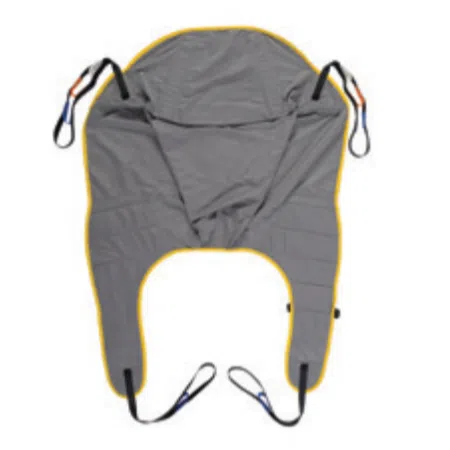
Joerns Hoyer Full Back Patient Sling – Full Body Patient Lift Sling with Head Support (Mesh or Padded Options)
The Joerns Hoyer Full Back Patient Sling is a premium full body patient lift sling engineered to deliver maximum safety, full-body support, and all-day comfort during patient transfers. Designed for individuals with limited mobility, reduced strength, or full dependency, this patient sling provides complete head, neck, and…
View sling details
Joerns Hoyer Disposable Full Back Loop Style Sling – Disposable Full Body Sling for Hoyer Lift Transfers
The Joerns Hoyer Disposable Full Back Loop Style Sling is a hygienic, high-support disposable full body sling for hoyer lift use, designed for safe patient transfers in hospitals, rehabilitation settings, nursing facilities, isolation environments, and other care situations where infection control, efficiency, and patient…
View sling details
Joerns Hoyer Long Seat Sling – Polyester or Mesh Sling for Hoyer Lift with Extended Support
The Joerns Hoyer Long Seat Sling is a specialized polyester or mesh sling for hoyer lift transfers, designed to provide extended lower-body support, improved positioning, and enhanced comfort in situations where a standard sling may not be enough. Built with a unique hammock-style long seat design, this sling is widely used for…
View sling details
Joerns Hoyer Professional Quickfit Deluxe Sling – Versatile Sling for a Hoyer Lift with Deluxe Comfort & Support
The Joerns Hoyer Professional Quickfit Deluxe Sling is a highly versatile sling for a Hoyer lift designed to deliver secure support, easier fitting, and greater patient comfort across a wide range of transfer situations. Built on the trusted Quickfit shape and support profile, this deluxe version adds an extra thigh strap…
View sling details
Joerns Hoyer Comfort Amputee Clip Style Sling – Amputee Sling for Safe & Secure Transfers
The Joerns Hoyer Comfort Amputee Clip Style Sling is a highly specialized amputee sling designed to provide safe, stable, and comfortable transfers for individuals with one or more limb amputations. Engineered for use with clip style cradles and an amputee spreader bar, this sling delivers the precise support needed when…
View sling details
Joerns Hoyer Bariatric Hammock Spacer Sling – Bariatric Sling with Full Support & 850 lb Capacity
The Joerns Hoyer Bariatric Hammock Spacer Sling is a high-capacity bariatric sling engineered to deliver safe, stable, and comfortable transfers for larger patients and those requiring maximum support. With an industry-leading 850 lb weight capacity, this bariatric hammock sling is designed for demanding clinical environments…
View sling details
Invacare Full Body Solid Poly Sling – Full Body Sling for Patient Lift with Maximum Support & Stability
The Invacare Full Body Solid Poly Sling is a high-performance full body sling for patient lift use, designed to deliver superior support, positioning, and stability for safe patient transfers. Built from durable composite polyester fabric (commonly referred to as a nylon lifting sling), this model is ideal for caregivers who…
View sling details
Invacare Dress Toileting High Sling – Full Head Support Sling for Toileting & Secure Hygiene
When a patient needs more support than a standard open toileting sling can provide, the Invacare Dress Toileting High Sling offers a safer and more supportive solution. This specialized hoyer sling for toileting is designed for users who need secure positioning, easier clothing access, and dependable head and neck support…
View sling details
Joerns Hoyer 6-Point Padded Access Toileting Patient Lift Harness – Loop Style Joerns Hoyer Lift Sling
When safe toileting transfers require more access, comfort, and control than a standard sling can provide, the Joerns Hoyer 6-Point Padded Access Toileting Patient Lift Harness is built for exactly that purpose. This specialized patient lift harness is designed to help caregivers perform toileting and hygiene-related transfers…
View sling details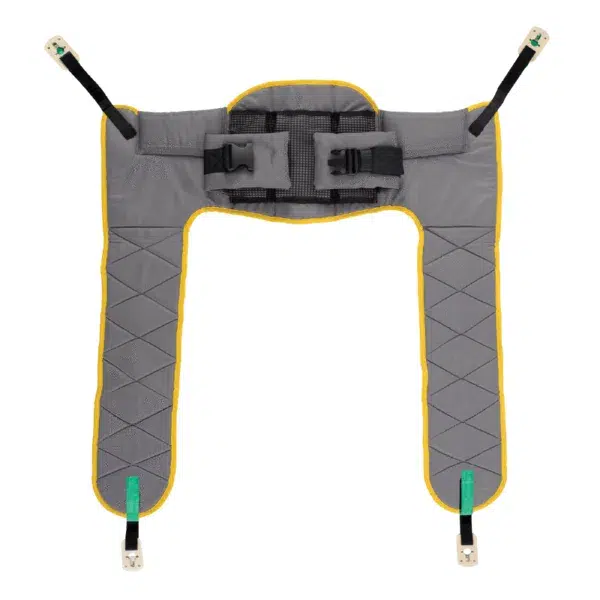
Hoyer Lift Toilet Sling – Joerns Comfort Access Padded Clip Style Sling (With/Without Head Support)
When toileting transfers require both access and secure positioning, choosing the correct hoyer lift toilet sling is essential. The Joerns Hoyer Comfort Access Padded Clip Style Sling is specifically engineered for safe, efficient, and comfortable toileting transfers—while providing the correct support for patients who can…
View sling details
Invacare Stand Assist Sling – Sit to Stand Sling for Patient Transfer Support
The sit to stand sling is a key solution for safer assisted standing and more controlled patient transfers when the user can still bear most of their own weight. This sit to stand lift sling is designed for patients who have head and neck control, can bend at the hips, knees, and ankles, and are able to sit upright on the edge…
View sling detailsAll Patient Lift Slings From the Supplied Master List
Use the filters to study how actual sling designs differ by support, attachment, material, transfer type, capacity and patient participation.
MedCare Mobility sells the products shown below. Product placement does not establish compatibility or suitability. Verify the current sling instructions, sizing, safe working load, lift model, spreader bar and patient requirements.
Proactive Medical Full Body Sling – Heavy-Duty Mesh Breathable Medical Lift Sling (600 lb Capacity)
The Proactive Medical Full Body Mesh Sling is a premium-grade full body sling designed to deliver maximum safety, comfort, and airflow during patient transfers. Built with durable, breathable mesh fabric, this medical lift sling is ideal for both wet and dry environments—making it a top choice for bathing, toileting, and daily…
View sling details
Joerns Hoyer Full Back Patient Sling – Full Body Patient Lift Sling with Head Support (Mesh or Padded Options)
The Joerns Hoyer Full Back Patient Sling is a premium full body patient lift sling engineered to deliver maximum safety, full-body support, and all-day comfort during patient transfers. Designed for individuals with limited mobility, reduced strength, or full dependency, this patient sling provides complete head, neck, and…
View sling details
Joerns Hoyer Disposable Full Back Loop Style Sling – Disposable Full Body Sling for Hoyer Lift Transfers
The Joerns Hoyer Disposable Full Back Loop Style Sling is a hygienic, high-support disposable full body sling for hoyer lift use, designed for safe patient transfers in hospitals, rehabilitation settings, nursing facilities, isolation environments, and other care situations where infection control, efficiency, and patient…
View sling details
Invacare Full Body Mesh Sling – Full Body Sling Lift with Head & Neck Support
The Invacare Full Body Mesh Sling is a dependable, supportive, and easy-to-use full body sling designed for safer patient transfers in home care, hospitals, rehab centers, and long-term care settings. Built to deliver secure positioning with total head and neck support, this full body sling lift helps caregivers transfer…
View sling details
Joerns Hoyer Long Seat Sling – Polyester or Mesh Sling for Hoyer Lift with Extended Support
The Joerns Hoyer Long Seat Sling is a specialized polyester or mesh sling for hoyer lift transfers, designed to provide extended lower-body support, improved positioning, and enhanced comfort in situations where a standard sling may not be enough. Built with a unique hammock-style long seat design, this sling is widely used for…
View sling details
Joerns Hoyer Professional Quickfit Deluxe Sling – Versatile Sling for a Hoyer Lift with Deluxe Comfort & Support
The Joerns Hoyer Professional Quickfit Deluxe Sling is a highly versatile sling for a Hoyer lift designed to deliver secure support, easier fitting, and greater patient comfort across a wide range of transfer situations. Built on the trusted Quickfit shape and support profile, this deluxe version adds an extra thigh strap…
View sling details
Joerns Hoyer Comfort Amputee Clip Style Sling – Amputee Sling for Safe & Secure Transfers
The Joerns Hoyer Comfort Amputee Clip Style Sling is a highly specialized amputee sling designed to provide safe, stable, and comfortable transfers for individuals with one or more limb amputations. Engineered for use with clip style cradles and an amputee spreader bar, this sling delivers the precise support needed when…
View sling details
McKesson Full Body Patient Sling – Hoyer Lift Sling 4 or 6 Point Cradle, 600 lb Capacity
The McKesson Full Body Patient Sling is a highly versatile and dependable full body patient sling designed for safe, comfortable transfers using a compatible Hoyer lift sling system. Built for durability and everyday use, this sling supports patients during a wide range of transfer situations including bed-to-wheelchair,…
View sling details
Invacare Comfort Sling – Full Body Patient Lift Sling for Amputee Support & Delicate Seated Transfers
The Invacare Comfort Sling is a specialized full body patient lift sling designed for amputees and users with chronic postural pain or other delicate support needs who may require a more constant seated position during transfers. Built for movement from a horizontal position to a seated position, this sling is especially…
View sling details
Invacare Universal Patient Lift Sling with Head Support – Full Body Hoyer Lift Sling
The Invacare Universal High Sling is a premium universal patient lift sling designed to deliver full-body support, maximum safety, and superior comfort during patient transfers. Built as a full body sling with head support, it is ideal for patients who require complete assistance, including those with limited head, trunk, or…
View sling details
Joerns Hoyer One-Piece Sling with Positioning Strap – Padded Hoyer Sling for Secure Full-Torso Transfers
The Joerns Hoyer One-Piece Sling with Positioning Strap is a dependable, full-torso hoyer sling designed for safe, supportive patient transfers with loop-style Hoyer lifts. Built for general transport and everyday lifting needs, this sling for a Hoyer lift helps caregivers move patients with greater stability, comfort, and…
View sling details
Joerns Hoyer Bariatric Hammock Spacer Sling – Bariatric Sling with Full Support & 850 lb Capacity
The Joerns Hoyer Bariatric Hammock Spacer Sling is a high-capacity bariatric sling engineered to deliver safe, stable, and comfortable transfers for larger patients and those requiring maximum support. With an industry-leading 850 lb weight capacity, this bariatric hammock sling is designed for demanding clinical environments…
View sling details
Invacare Full Body Solid Poly Sling – Full Body Sling for Patient Lift with Maximum Support & Stability
The Invacare Full Body Solid Poly Sling is a high-performance full body sling for patient lift use, designed to deliver superior support, positioning, and stability for safe patient transfers. Built from durable composite polyester fabric (commonly referred to as a nylon lifting sling), this model is ideal for caregivers who…
View sling details
Proactive Medical Mesh Sling for Hoyer Lift – Full Body Mesh Sling with Commode Opening
When hygiene, safety, and ease of transfers matter most, choosing the right mesh sling for hoyer lift can make all the difference. The Proactive Medical Full Body Mesh Sling with Commode Opening is designed to solve one of the most common challenges caregivers face—safe, comfortable, and hygienic patient transfers without…
View sling details
Invacare Full Body Toileting Sling for Hoyer Lift (Mesh w/ Commode Opening) – Heavy Duty Patient Lift Sling
The Invacare Full Body Toileting Sling for Hoyer Lift is a highly trusted solution for safe, comfortable, and hygienic patient transfers. Designed for individuals who require full-body support, this sling combines stability, breathability, and toileting access in one versatile design—making it one of the most reliable toileting…
View sling details
Invacare Comfort Sling with Commode Opening (Net Fabric) – Medical Comfort Sling for Hoyer Lift Transfers
The Invacare Comfort Sling with Commode Opening (Net Fabric) is a specialized medical sling designed for patients who require enhanced comfort, seated positioning support, and safer toileting transfers. Built for individuals with delicate conditions such as amputations or chronic postural pain, this comfort sling provides a…
View sling details
Invacare Dress Toileting High Sling – Full Head Support Sling for Toileting & Secure Hygiene
When a patient needs more support than a standard open toileting sling can provide, the Invacare Dress Toileting High Sling offers a safer and more supportive solution. This specialized hoyer sling for toileting is designed for users who need secure positioning, easier clothing access, and dependable head and neck support…
View sling details
Joerns Hoyer 6-Point Padded Access Toileting Patient Lift Harness – Loop Style Joerns Hoyer Lift Sling
When safe toileting transfers require more access, comfort, and control than a standard sling can provide, the Joerns Hoyer 6-Point Padded Access Toileting Patient Lift Harness is built for exactly that purpose. This specialized patient lift harness is designed to help caregivers perform toileting and hygiene-related transfers…
View sling details
Hoyer Lift Toilet Sling – Joerns Comfort Access Padded Clip Style Sling (With/Without Head Support)
When toileting transfers require both access and secure positioning, choosing the correct hoyer lift toilet sling is essential. The Joerns Hoyer Comfort Access Padded Clip Style Sling is specifically engineered for safe, efficient, and comfortable toileting transfers—while providing the correct support for patients who can…
View sling details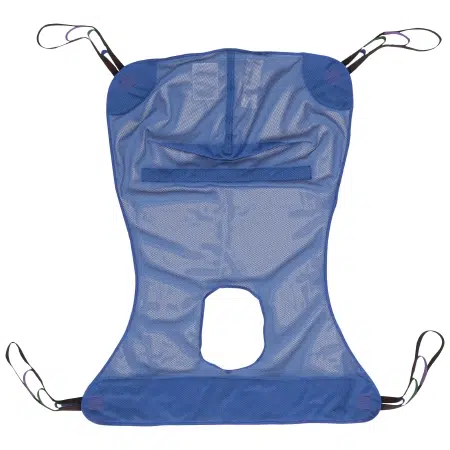
McKesson Full Body Patient Lift Sling with Commode Opening – 600 lb Capacity, 4 or 6 Point Lift Sling
When safety, hygiene, and full-body support are critical, the McKesson Full Body Commode Patient Lift Sling delivers unmatched reliability for both caregivers and patients. Designed for secure transfers and convenient toileting access, this patient lift sling combines high weight capacity, reinforced durability, and thoughtful…
View sling details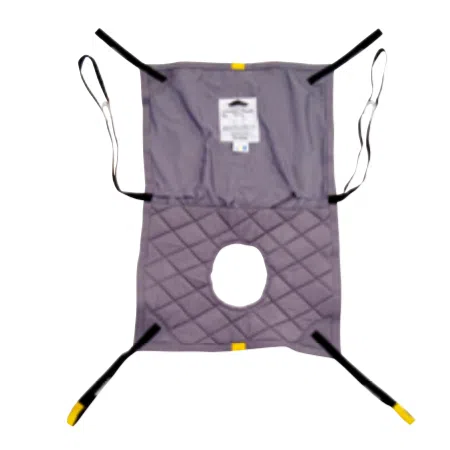
Joerns Full Body Sling for Hoyer Lift – Long Seat Commode Sling (Mesh & Polyester Options)
Choosing the right full body sling for hoyer lift is critical when patient safety, comfort, and hygiene are involved. The Hoyer Long Seat Commode Sling is specifically designed for individuals who require extended sitting support, toileting access, and full-body stability during
View sling details
Invacare Toileting Sling – Solid Fabric Padded Toileting Sling for Invacare Slings & Hygiene Transfers
When quick hygiene access, safer bathroom transfers, and better patient comfort are the priority, the Invacare Toileting Sling is designed to do exactly that. This fully padded Toileting Sling is built for patients who need dependable support during toileting and hygiene routines while still maintaining the upright control…
View sling details
Invacare Stand Assist Sling – Sit to Stand Sling for Patient Transfer Support
The sit to stand sling is a key solution for safer assisted standing and more controlled patient transfers when the user can still bear most of their own weight. This sit to stand lift sling is designed for patients who have head and neck control, can bend at the hips, knees, and ankles, and are able to sit upright on the edge…
View sling details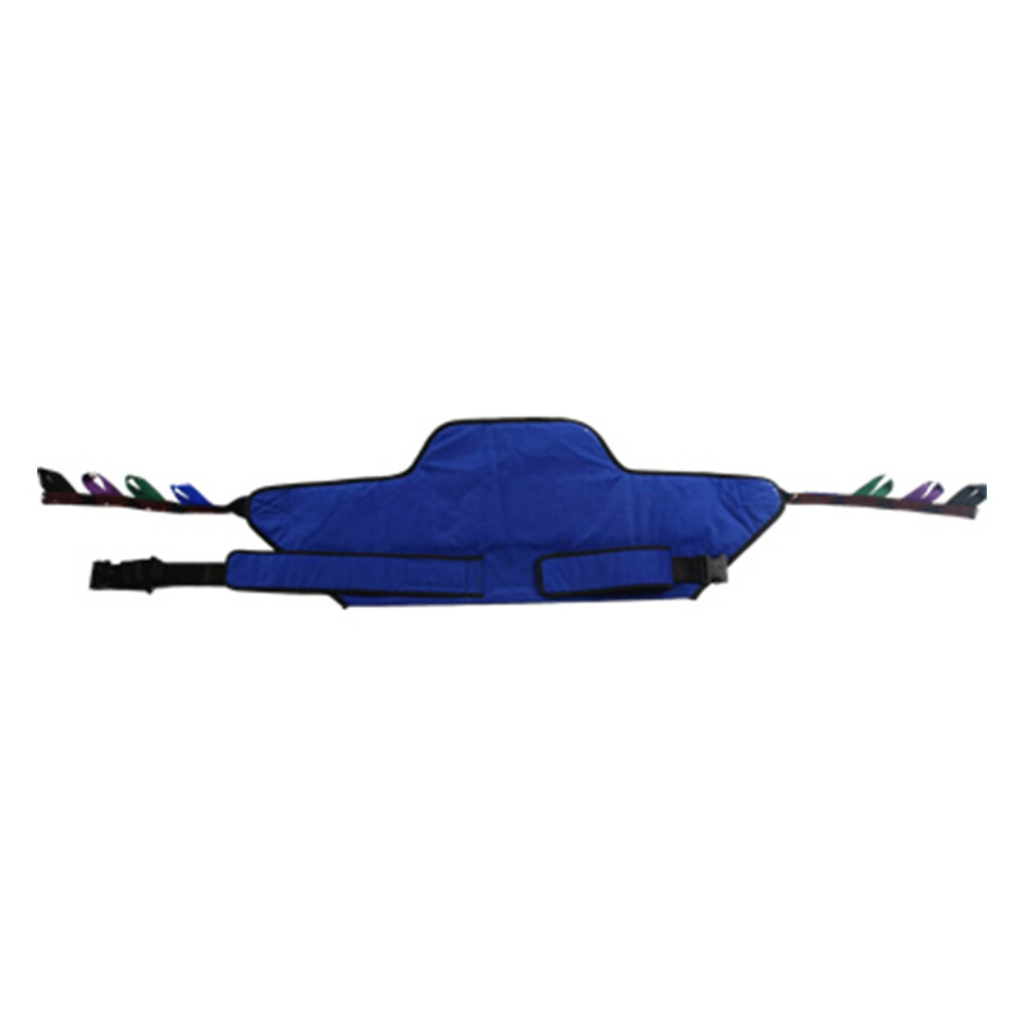
Proactive Sit-to-Stand Sling – Solid Nylon (Stand Assist Sling for Safe Transfers)
The sit to stand sling is designed to support safer, smoother assisted standing and transfer routines for patients who still have some weight-bearing ability. For caregivers and facilities looking for a dependable stand assist sling, this solid nylon model provides strong lower back and torso support during sit-to-stand…
View sling details
Invacare Premier Series Stand-Assist Sling – Invacare Sit to Stand Sling for Safe Patient Transfers
The Invacare stand assist sling is designed to make standing transfers safer, smoother, and more comfortable for patients who can bear some weight but still need meaningful support. The Invacare Premier Series Stand-Assist Sling is built for cooperative users who are partially dependent, have 50% or greater weight-bearing…
View sling details
Joerns Hoyer Deluxe Standing Sling – Trusted Sit to Stand Sling for Safer, Dignified Transfers
The Joerns Hoyer Deluxe Standing Sling is a premium standing sling engineered to deliver safer, more controlled assisted standing and transfer support. Designed for patients who can bear some weight but still need help rising, this professional-grade sit to stand sling provides the stability, comfort, and confidence caregivers…
View sling detailsPatient Lift Sling Guides, Categories and Downloads
Move from sling education into product comparison and category research.
Choosing and Comparing Patient Lift Slings
Compare sling categories, support levels, materials, sizing and transfer applications.
Open the Sling GuidePatient Lift Sling Comparison Chart
Use the printable reference to compare sling options and care pathways.
Open the Comparison PDFPatient Lift Knowledge Base
Understand lift frames, booms, spreader bars, floor lifts, stand-assist lifts and transfer environments.
Open the Patient Lift Knowledge BaseAll Patient Lift Slings
Browse the complete category of full-body, toileting, bariatric, standing and specialized slings.
Browse All SlingsExplore Patient Lift Slings by Support and Transfer Need
All Patient Lift Slings
Browse the complete sling category across all support and transfer pathways.
Browse all slings →Full-Body Slings
Browse slings designed for broad torso, pelvic, leg and optional head support.
Browse full-body slings →Commode and Toileting Slings
Browse open-access and commode-opening designs for hygiene-related transfers.
Browse toileting slings →Patient Lift Sling Questions and Answers
Are patient lift slings universal?
No. A sling must match the patient, lift, spreader bar or cradle, attachment style, transfer type and manufacturer compatibility requirements.
What is the difference between a loop sling and clip sling?
Loop slings attach fabric loops to approved hooks. Clip slings use purpose-built clips that lock onto a compatible cradle. They are not automatically interchangeable.
How do I choose a patient lift sling size?
Use the exact manufacturer sizing chart and consider weight, height, torso length, hip width, thigh size and body shape. Weight alone is not enough.
When is head support needed?
Head support may be needed when the user cannot reliably maintain head and neck position throughout the transfer.
Can a toileting sling be used for a fully dependent patient?
Many open toileting slings require head and trunk control. A high-support toileting sling or full-body commode sling may be more appropriate for selected dependent users.
Can a full-body sling be left under the patient?
Only when the exact sling and care plan permit it. Remaining on sling seams or straps may increase heat, pressure, moisture or skin risk.
Can a mesh sling be used in the shower?
Only when the exact sling and lift system are approved for wet use. Mesh material alone does not confirm shower compatibility.
Who can use a sit-to-stand sling?
Stand-assist users generally need sufficient weight-bearing ability, head and trunk control, joint motion, cooperation and tolerance for upright standing.
Can a 600-pound sling be used with a 450-pound lift?
The complete system is limited to the lowest safe working load, so that combination would remain limited to 450 pounds or less according to the manufacturers’ instructions.
When should a sling be replaced?
Remove it from service when fabric, seams, loops, clips, padding, labels or identification are damaged, unreadable or otherwise uncertain.
Can patient lift slings be machine washed?
Many reusable slings can be washed, but temperatures, detergents and drying methods vary. Follow the exact sling label. Disposable slings should not be washed unless specifically permitted.
What sling is used for an amputee?
Depending on the level and type of amputation, a purpose-built amputee, comfort, hammock or long-seat sling may be required after professional assessment.
Sources, Editorial Method and Safety Boundaries
This Knowledge Base uses the supplied MedCare Mobility product information to explain sling categories, materials, support systems and compatibility patterns. Product examples do not establish that a sling is appropriate for a particular person.
Product information
Model names, materials, attachment systems, capacities, sizes and compatible lift families are based on the supplied product master list. Confirm current specifications and manufacturer instructions before use.
Clinical and operational boundary
Complex transfers involving head-control loss, amputations, bariatric care, wounds, behavioral movement, pediatric use or stand-assist eligibility may require assessment and hands-on training by qualified professionals.