

Hoyer Lift & Patient Lift Knowledge Base
The Complete Patient Lift & Hoyer Lift Knowledge Base
Understand patient lifts, compare electric and hydraulic Hoyer lifts, evaluate transfer chairs, choose compatible slings, plan for home use and reach the right equipment pathway without guessing.
General educational information—not an individualized clinical transfer plan. Always follow the lift and sling manufacturer’s instructions.
What are you trying to solve?
What Is a Patient Lift, and When Is One Used?
A patient lift is assistive equipment used to move a person between surfaces when an independent or manually assisted transfer is not safe or practical. “Hoyer lift” is often used conversationally for a mobile patient lift, although Hoyer is also a specific equipment brand. Full-body lifts, sit-to-stand lifts and patient transfer chairs solve different transfer problems and should not be treated as interchangeable.
Full-body patient lift
Supports the user in a compatible sling during a suspended transfer. Electric and manual hydraulic models are available.
Sit-to-stand lift
Assists a selected user from sitting toward standing when the person meets the device’s participation and weight-bearing requirements.
Patient transfer chair
Keeps a selected user in a supported seated position while moving between compatible surfaces. It is not a replacement for every full-body lift.
The right equipment category depends on what the person can safely do—not only the diagnosis or body weight. Standing participation, trunk and head control, transfer destination, sling needs, room measurements and caregiver support all affect the decision.
Patient lift vs. Hoyer lift
Patient lift is the general equipment category. Hoyer lift is a brand-associated term that is also widely used as a general phrase for a mobile patient lift.
Who can help evaluate the transfer?
Depending on the person and care setting, a physical therapist, occupational therapist, nurse or another appropriately qualified professional may help evaluate transfer ability, equipment fit and caregiver training.
Patient Lifting Devices: Best Medical Lifts for Home Use, Seniors, Caregivers & Facilities
Continue into the complete guide for a broader explanation of patient-lifting equipment, care settings and selection considerations.
Find the Right Patient-Lift Path for the Situation
Lift selection should begin with the person’s transfer ability, caregiver workflow and physical environment. The assessment below helps organize those factors and points users toward equipment categories and deeper resources.
Patient Transfer Lift Assessment
Answer practical questions about weight-bearing ability, participation, weight, caregiver help, home size, transfer frequency and transfer destinations.
- Compare full-body, stand-assist and seated-transfer pathways
- Identify important home and caregiver considerations
- Reach related guides, categories and sling resources
- Use the result as a research starting point—not a medical prescription
An online tool cannot evaluate pain, cognition, post-operative restrictions, contractures, changing medical status or every patient-specific risk. Seek individualized guidance when transfer ability is uncertain or changing.
Patient Lift, Sit-to-Stand Lift or Transfer Chair: Which Path Fits?
A full-body lift suspends the user in a sling. A sit-to-stand lift assists an eligible, participating user toward standing. A patient transfer chair supports selected users in a seated position while moving between compatible surfaces. The correct pathway depends on the person, device instructions and transfer environment.
| Equipment pathway | Usually considered when | Participation | Common transfer examples | Important limitation |
|---|---|---|---|---|
| Full-body patient lift | The user needs extensive or total support during transfer. | May be limited | Bed, wheelchair, commode, recliner | Requires a compatible sling and adequate operating space. |
| Sit-to-stand lift | The user meets the manufacturer’s standing and participation requirements. | Required | Chair, bedside, toilet and commode | Not appropriate for every non-ambulatory or non-weight-bearing user. |
| Patient transfer chair | A supported seated transfer is appropriate and surfaces align with the device. | Varies by model | Bed, chair, toilet, commode and selected vehicle situations | Does not provide the same suspended full-body support as a sling lift. |
Start with function—not the product name
The Main Types of Patient Lifts and Transfer Devices
Patient-transfer equipment should be compared by transfer method, caregiver workload, physical dimensions, sling system, capacity and intended setting. The categories below create the main map of the patient-lift market.
Electric full-body patient lifts
Battery-powered raising and lowering can reduce manual pumping during frequent transfers. Compare batteries, emergency lowering, base operation and sling hookup.
Compare electric lifts →Manual hydraulic patient lifts
A caregiver operates a hydraulic pump to raise the user. Compare pump effort, lifting range, base width, product weight and storage.
Compare hydraulic lifts →Sit-to-stand and stand-assist lifts
Designed for selected users who can participate and meet the device’s requirements. These systems use specialized stand-assist slings.
Compare stand-assist devices →Patient transfer chairs
Chair-based systems can simplify selected bed, chair, toilet and commode transfers while keeping the user seated.
Compare transfer chairs →Portable and folding lifts
Designed around storage or transport. “Portable” does not mean one person can easily carry every model—compare total weight and component weights.
See portable recommendations →Bariatric and heavy-duty lifts
Higher-capacity lifts require compatible high-capacity slings, adequate room, suitable surfaces and a complete handling plan.
Review capacity and fit →Choosing by capacity alone is one of the most common research mistakes. A lift can support the user’s weight yet remain impractical because the base does not clear the bed, the closed width does not fit the route, the sling system is incompatible or the caregiver cannot maneuver the loaded equipment comfortably.
Electric vs. Hydraulic Hoyer Lifts: What Is the Practical Difference?
Electric and hydraulic lifts can both perform full-body transfers when properly selected and used. Electric lifts power the raising and lowering function with a battery; hydraulic lifts require manual pumping. Transfer frequency, caregiver ability, budget, charging and maintenance expectations usually drive the choice.
| Factor | Electric patient lift | Hydraulic patient lift |
|---|---|---|
| Lifting operation | Battery-powered actuator | Manual hydraulic pump |
| Caregiver lifting effort | Generally lower during raising and lowering | Requires repeated pumping |
| Initial purchase cost | Usually higher | Usually lower |
| Power planning | Charging, battery condition and emergency controls | No charging dependency |
| Maintenance focus | Battery, charger, pendant, actuator and controls | Hydraulic pump, release mechanism and mechanical inspection |
| Often favored for | Frequent transfers or caregivers seeking less pumping effort | Budget-sensitive or less frequent transfer routines |
An electric Hoyer lift may fit better when…
- Transfers happen repeatedly every day.
- The caregiver has limited pumping strength.
- Powered controls and optional powered base operation improve workflow.
- Charging can be managed reliably.
A hydraulic Hoyer lift may fit better when…
- Initial cost is a major consideration.
- Transfers are less frequent.
- The caregiver can comfortably operate and maneuver the lift.
- A non-battery-dependent system is preferred.
Patient Lifting Devices Comparison Chart
Use the existing MedCare Mobility PDF to compare patient-lifting approaches and keep a printable reference.
How to Choose a Hoyer Lift for Home Use
The best Hoyer lift for home use is not simply the most powerful model. It must fit the person, the sling, the caregiver and every part of the transfer route. Measure first, map each destination and compare the complete workflow before ordering equipment.
Start and destination surfaces
- Under-bed clearance
- Bed height and width
- Space beside the bed
- Wheelchair or recliner approach
Movement path
- Narrowest doorway
- Thresholds and flooring
- Turning areas
- Furniture obstructions
Toileting and hygiene
- Toilet or commode approach
- Transfer-chair clearance
- Compatible toileting sling
- Dry, level operating surface
Between transfers
- Storage footprint
- Outlet and charging access
- Battery rotation
- Emergency accessibility
Patient Transfers at Home: The Safe Step-by-Step Guide
Use the dedicated transfer guide to plan the complete transfer—not just the lift purchase.
Read the home-transfer guide →Hospital-to-Home Recovery Planner
Prepare equipment, rooms, support and follow-up needs before or after discharge.
Open the recovery planner →Choosing Transfer Equipment Around the Patient’s Actual Abilities
A diagnosis alone does not determine the correct patient lift. Two people with the same diagnosis can have very different strength, balance, cognition, pain, weight-bearing ability and transfer needs. Use functional scenarios to narrow the equipment pathway.
The patient cannot safely stand
Compare a full-body electric or hydraulic lift together with an appropriate full-body sling. Confirm head support, positioning, attachment style, capacity, dimensions and caregiver workflow.
Use the patient-lift assessment →The patient can bear some weight and follow directions
A sit-to-stand pathway may be considered only when the person meets the specific device and sling requirements. Confirm participation, head and trunk control, joint tolerance and standing ability.
Compare stand-assist devices →The patient has limited head or trunk control
Head-support and full-back sling designs may be relevant. The sling must still match the exact lift, attachment system, body dimensions and transfer purpose.
Read the complete sling guide →The patient needs frequent toileting transfers
Compare full-body toileting slings, access slings, stand-assist pathways and selected transfer chairs according to the user’s support and participation needs.
Review toileting-sling pathways →The patient has higher body weight or larger body dimensions
Verify the lift, sling and accessory capacities independently. Also compare body fit, lift width, turning area, transfer surfaces and the caregiver handling plan.
Review capacity and fit →The patient is returning home after hospitalization
Map the home, equipment, transfer destinations, caregiver availability and follow-up needs before discharge whenever possible.
Open the Hospital-to-Home Recovery Planner →Stroke, Parkinson’s disease, ALS, multiple sclerosis, spinal cord injury, post-operative weakness and frailty may all affect transfer ability, but no diagnosis automatically determines one “best” lift. Base the equipment pathway on individualized function and restrictions.
Patient-Lift Solutions for Common Caregiver and Home Challenges
Even a technically appropriate lift can fail in daily use when the caregiver cannot maneuver it, the route is too narrow, charging is unreliable or the sling workflow is too complicated. These practical issues belong in the decision from the beginning.
One caregiver performs most transfers
Check the instructions and care plan for required staffing. Compare powered controls, base operation, sling setup and how the caregiver will position and move the lift.
The caregiver has back or shoulder limitations
Powered raising, powered base adjustment and easier sling attachment may reduce some manual effort, but pushing and positioning the loaded lift still matter.
The home has narrow doors
Compare the lift’s closed external width—not only the open base width. Measure door trim, turns, hallway furniture and the route into each room.
The home has carpet or thresholds
Flooring changes rolling resistance. Check the manufacturer’s intended use and evaluate whether the caregiver can control the device across the actual route.
The lift must be stored
Compare folding design, upright storage, disassembly, total product weight, battery storage and the space needed to access the lift quickly.
The patient travels between locations
Portable models still vary greatly in weight and folded size. Verify vehicle space, component handling, reassembly and sling availability at each destination.
Transfers happen many times per day
Plan battery rotation, charging, sling inspection, backup equipment, cleaning and caregiver fatigue—not only the lift’s advertised cycle count.
The patient feels anxious during transfers
Consistent communication, slower preparation, stable positioning and a familiar routine may improve comfort. Stop when pain, distress or unsafe positioning occurs.
Patient Lift Slings: Types, Fit, Support and Compatibility
The sling is the patient-support interface. It affects positioning, access, comfort and compatibility. Hoyer lift slings are not automatically universal: verify the lift model, attachment style, cradle or spreader bar, sling size, capacity, support level and intended transfer.
General full-support slings
For users needing broader body support. Compare head support, divided-leg or hammock design, fabric and positioning.
Commode and access slings
Designed to improve hygiene or clothing access. Open designs often require more patient control than full-body slings.
Sit-to-stand slings
For selected users who meet the compatible stand-assist lift’s participation and weight-bearing requirements.
Amputee, bariatric and disposable slings
Specialized designs may require exact cradle configurations, high-capacity systems or facility infection-control workflows.
Confirm these details before selecting a patient-lift sling
- Lift manufacturer
- Exact lift model
- Loop or clip attachment
- Number and layout of attachment points
- Spreader bar or cradle configuration
- Sling size and body fit
- Sling safe working load
- Required head, trunk and leg support
- Transfer purpose and access needs
- Manufacturer compatibility and care instructions
Many sling searches begin with “small, medium or large.” Compatibility and transfer purpose should be checked first. A correctly sized sling is still the wrong sling when it does not match the attachment system, support need or intended transfer.
Representative sling solutions by real-world need
These are examples from the full sling catalog. They are organized by use case rather than displayed as an undifferentiated product grid.

Proactive Medical Full Body Sling
General wet or dry transfers where airflow, washable mesh and higher capacity are important.
Review this sling
Joerns Hoyer Full Back Patient Sling
Users needing fuller head, neck and torso support with mesh or padded options.
Review this sling
Joerns Hoyer Professional Quickfit Deluxe Sling
General transfers where an adaptable loop-style sling and multiple fabric options are useful.
Review this sling
Joerns Hoyer Comfort Amputee Clip Style Sling
Amputee transfer situations requiring the specified clip-style cradle and amputee spreader bar.
Review this sling
Joerns Hoyer Bariatric Hammock Spacer Sling
High-capacity full-containment support with a compatible six-point system.
Review this sling
Proactive Medical Mesh Sling for Hoyer Lift
Care routines requiring full-body support together with an integrated hygiene opening.
Review this sling
Invacare Dress Toileting High Sling
Toileting access for selected users who also need greater head and upper-body support.
Review this sling
Invacare Stand Assist Sling
Selected users who can participate in standing and meet the lift manufacturer's requirements.
Review this slingPatient-Lift Weight Capacity, Sling Capacity and Equipment Fit
The lift’s rated capacity is not the only limit that matters. The sling and approved accessories have their own ratings, and the system must physically fit the user, furniture and transfer environment. Always work from the lowest applicable approved capacity.
| Specification | Why it matters | Where to verify it |
|---|---|---|
| Lift safe working load | Establishes the lift’s rated load limit. | Manufacturer specifications and labeling |
| Sling safe working load | The sling must independently support the intended use. | Sling label and manufacturer manual |
| Sling size and geometry | Affects body support, pressure distribution and positioning. | Manufacturer sizing chart and assessment |
| Closed base width | Determines passage through the narrowest route. | Product dimensions and home measurements |
| Open base width | Affects furniture approach and operating footprint. | Product specifications |
| Under-bed clearance | Determines whether the lift legs can position beneath the bed. | Lift dimensions plus actual bed measurement |
| Lifting range | Determines access to low and high transfer surfaces. | Manufacturer specifications |
| Product and component weight | Affects storage, transport and caregiver handling. | Product specifications |
Additional caregivers, extra straps or multiple sling loops do not increase the manufacturer’s stated safe working load. Use the complete system only as approved and configured by the manufacturer.
Patient Lift Comparison Center
A useful patient lift comparison includes transfer method, power source, capacity, base dimensions, lifting range, total weight, spreader-bar or cradle system, emergency controls, portability and intended care setting.
| Category | Compare closely | Often considered for | Main tradeoff |
|---|---|---|---|
| Electric full-body lift | Battery, range, base operation, dimensions, emergency controls | Frequent home or facility transfers | Higher cost and charging requirements |
| Hydraulic full-body lift | Pump effort, lifting range, base design, product weight | Value-focused home or facility use | More caregiver pumping effort |
| Portable/folding lift | Folded size, total weight, component weights, assembly | Travel, storage and multi-location care | Capacity or feature compromises may apply |
| Bariatric lift | Capacity, sling options, width, turning radius, room plan | Higher-capacity transfers | Larger footprint and handling demands |
| Sit-to-stand lift | Participation criteria, knee support, sling system, base access | Selected standing and toileting transfers | Not appropriate for every user |
| Transfer chair | Seat height, surface alignment, width, participation and toileting setup | Selected supported seated transfers | Not a suspended full-body support system |
MedCare Patient Lifting Devices Comparison Chart
Use the downloadable chart while evaluating lift categories, home fit and caregiver requirements.
Patient-Lift Recommendations by Real-World Need
This recommendation center organizes actual MedCare Mobility lift products by the problem they are designed to solve. Product availability is commercial, but the selection framework should remain editorial: compare intended use, specifications, limitations, home fit, caregiver workflow and sling compatibility.
MedCare Mobility sells products shown below. A product should not be chosen solely because it appears here. Verify the manufacturer’s intended use, specifications, exact configuration, sling requirements and patient-specific suitability before purchase.

Protekt Onyx Manual Patient Lift
A straightforward 450 lb manual lift for buyers prioritizing dependable hydraulic operation and broad 4- or 6-point sling support.
View product details
Joerns Hoyer HML400 Manual Hydraulic Patient Lift
A long-established 400 lb Hoyer design with a broad lifting range and tool-free separation for storage or transport.
View product details
McKesson Hydraulic Manual Lift
A 450 lb manual floor lift centered on a six-point swivel bar and durable facility-style construction.
View product details
Invacare 9805P Hydraulic Patient Lift
A comparatively light 450 lb manual lift with a six-point padded swivel bar and a low-to-high transfer range.
View product details
Protekt Transformer Portable Patient Lift
A compact 400 lb hydraulic lift that can later be converted to electric operation with the compatible upgrade system.
View product details
Protekt 500 Electric Hoyer Lift
A powered 500 lb full-body lift with a six-point spreader bar, manual emergency lowering and optional scale.
View product details
Joerns Hoyer Advance Portable Electric Hoyer Lift
A lightweight aluminum electric lift designed to fold without tools and store upright in space-conscious care environments.
View product details
Invacare Birdie Evo XPLUS Electric Hoyer Lift for Sale
A 463 lb folding electric lift with a boom dampener, ergonomic sling hooks and a broad transfer range.
View product details
Invacare Reliant 450 Electric Patient Hoist
A 450 lb electric lift with removable batteries, six-point hookup and optional powered base configuration.
View product details
Protekt Take-A-Long Portable Patient Lift
A 400 lb folding electric lift designed for transport, temporary care and homes with limited storage.
View product details
Invacare Reliant 600 Heavy-Duty Hoyer Lift Machine
A heavy-duty powered lift with an extra-wide six-point bar and configurations for frequent bariatric transfers.
View product details
Joerns Hoyer Presence Medical Hoyer Lift
A 500 lb powered lift with powered leg adjustment, Smart Monitor technology and multiple cradle or scale options.
View product details
Medcare Mobility Electric Patient Lift Transfer Chair With Adjustable Width Legs
A 330 lb chair-based system for selected users who can tolerate supported seated transfers between compatible surfaces.
View product details
EZ Lift Assist Patient Lift Chair
A powered transfer-chair option intended for selected seated transfer workflows; verify dimensions, patient participation and surface compatibility.
View product detailsThe lift and sling should be selected as one compatible system.
Complete Patient-Lift Sling Library
The full supplied sling catalog is included below so users can move from education into a precise compatibility review. Filters organize the products by transfer purpose and design feature; they do not confirm compatibility with a specific lift.
Proactive Medical Full Body Sling
The Proactive Medical Full Body Mesh Sling is a premium-grade full body sling designed to deliver maximum safety, comfort, and airflow during patient transfers. Built with durable, breathable mesh fabric, this medical lift sling is ideal for both wet and dry environments—making it a top choice for bathing, toileting, and daily transfers in home care and clinical settings.
View product details
Joerns Hoyer Full Back Patient Sling
The Joerns Hoyer Full Back Patient Sling is a premium full body patient lift sling engineered to deliver maximum safety, full-body support, and all-day comfort during patient transfers. Designed for individuals with limited mobility, reduced strength, or full dependency, this patient sling provides complete head, neck, and torso support—making it one of the most trusted solutions for safe lifting in both home care an…
View product details
Joerns Hoyer Disposable Full Back Loop Style Sling
The Joerns Hoyer Disposable Full Back Loop Style Sling is a hygienic, high-support disposable full body sling for hoyer lift use, designed for safe patient transfers in hospitals, rehabilitation settings, nursing facilities, isolation environments, and other care situations where infection control, efficiency, and patient dignity matter. Built as a single-patient sling for passive lifts, this product helps caregivers…
View product details
Invacare Full Body Mesh Sling
The Invacare Full Body Mesh Sling is a dependable, supportive, and easy-to-use full body sling designed for safer patient transfers in home care, hospitals, rehab centers, and long-term care settings. Built to deliver secure positioning with total head and neck support, this full body sling lift helps caregivers transfer patients from a bed to a wheelchair, toilet, shower chair, or even from the floor back to bed wit…
View product details
Joerns Hoyer Long Seat Sling
The Joerns Hoyer Long Seat Sling is a specialized polyester or mesh sling for hoyer lift transfers, designed to provide extended lower-body support, improved positioning, and enhanced comfort in situations where a standard sling may not be enough. Built with a unique hammock-style long seat design, this sling is widely used for amputee transfers, recumbent positioning, and extended care routines where stability and c…
View product details
Joerns Hoyer Professional Quickfit Deluxe Sling
The Joerns Hoyer Professional Quickfit Deluxe Sling is a highly versatile sling for a Hoyer lift designed to deliver secure support, easier fitting, and greater patient comfort across a wide range of transfer situations. Built on the trusted Quickfit shape and support profile, this deluxe version adds an extra thigh strap feature for enhanced positioning and support during lifting. For caregivers and facilities looki…
View product details
Joerns Hoyer Comfort Amputee Clip Style Sling
The Joerns Hoyer Comfort Amputee Clip Style Sling is a highly specialized amputee sling designed to provide safe, stable, and comfortable transfers for individuals with one or more limb amputations. Engineered for use with clip style cradles and an amputee spreader bar, this sling delivers the precise support needed when standard slings are not suitable due to altered body balance and weight distribution.
View product details
McKesson Full Body Patient Sling
The McKesson Full Body Patient Sling is a highly versatile and dependable full body patient sling designed for safe, comfortable transfers using a compatible Hoyer lift sling system. Built for durability and everyday use, this sling supports patients during a wide range of transfer situations including bed-to-wheelchair, wheelchair-to-commode, and general repositioning tasks.
View product details
Invacare Comfort Sling
The Invacare Comfort Sling is a specialized full body patient lift sling designed for amputees and users with chronic postural pain or other delicate support needs who may require a more constant seated position during transfers. Built for movement from a horizontal position to a seated position, this sling is especially valuable when a standard transfer sling may not provide the right posture, comfort, or positionin…
View product details
Invacare Universal Patient Lift Sling with Head Support
The Invacare Universal High Sling is a premium universal patient lift sling designed to deliver full-body support, maximum safety, and superior comfort during patient transfers. Built as a full body sling with head support, it is ideal for patients who require complete assistance, including those with limited head, trunk, or hip control.
View product details
Joerns Hoyer One-Piece Sling with Positioning Strap
The Joerns Hoyer One-Piece Sling with Positioning Strap is a dependable, full-torso hoyer sling designed for safe, supportive patient transfers with loop-style Hoyer lifts. Built for general transport and everyday lifting needs, this sling for a Hoyer lift helps caregivers move patients with greater stability, comfort, and confidence between beds, chairs, commodes, and other seated surfaces.
View product details
Joerns Hoyer Bariatric Hammock Spacer Sling
The Joerns Hoyer Bariatric Hammock Spacer Sling is a high-capacity bariatric sling engineered to deliver safe, stable, and comfortable transfers for larger patients and those requiring maximum support. With an industry-leading 850 lb weight capacity, this bariatric hammock sling is designed for demanding clinical environments and advanced home care situations where standard slings are not sufficient.
View product details
Invacare Full Body Solid Poly Sling
The Invacare Full Body Solid Poly Sling is a high-performance full body sling for patient lift use, designed to deliver superior support, positioning, and stability for safe patient transfers. Built from durable composite polyester fabric (commonly referred to as a nylon lifting sling), this model is ideal for caregivers who need a reliable solution for transferring patients with higher dependency needs.
View product details
Proactive Medical Mesh Sling for Hoyer Lift
When hygiene, safety, and ease of transfers matter most, choosing the right mesh sling for hoyer lift can make all the difference. The Proactive Medical Full Body Mesh Sling with Commode Opening is designed to solve one of the most common challenges caregivers face—safe, comfortable, and hygienic patient transfers without unnecessary repositioning.
View product details
Invacare Full Body Toileting Sling for Hoyer Lift (Mesh w/ Commode Opening)
The Invacare Full Body Toileting Sling for Hoyer Lift is a highly trusted solution for safe, comfortable, and hygienic patient transfers. Designed for individuals who require full-body support, this sling combines stability, breathability, and toileting access in one versatile design—making it one of the most reliable toileting slings for hoyer lift use available today.
View product details
Invacare Comfort Sling with Commode Opening (Net Fabric)
The Invacare Comfort Sling with Commode Opening (Net Fabric) is a specialized medical sling designed for patients who require enhanced comfort, seated positioning support, and safer toileting transfers. Built for individuals with delicate conditions such as amputations or chronic postural pain, this comfort sling provides a stable and supportive transition from lying to seated positions while maintaining hygiene acce…
View product details
Invacare Dress Toileting High Sling
When a patient needs more support than a standard open toileting sling can provide, the Invacare Dress Toileting High Sling offers a safer and more supportive solution. This specialized hoyer sling for toileting is designed for users who need secure positioning, easier clothing access, and dependable head and neck support during hygiene and commode transfers.
View product details
Joerns Hoyer 6-Point Padded Access Toileting Patient Lift Harness
When safe toileting transfers require more access, comfort, and control than a standard sling can provide, the Joerns Hoyer 6-Point Padded Access Toileting Patient Lift Harness is built for exactly that purpose. This specialized patient lift harness is designed to help caregivers perform toileting and hygiene-related transfers more efficiently while maintaining patient dignity, comfort, and positioning support.
View product details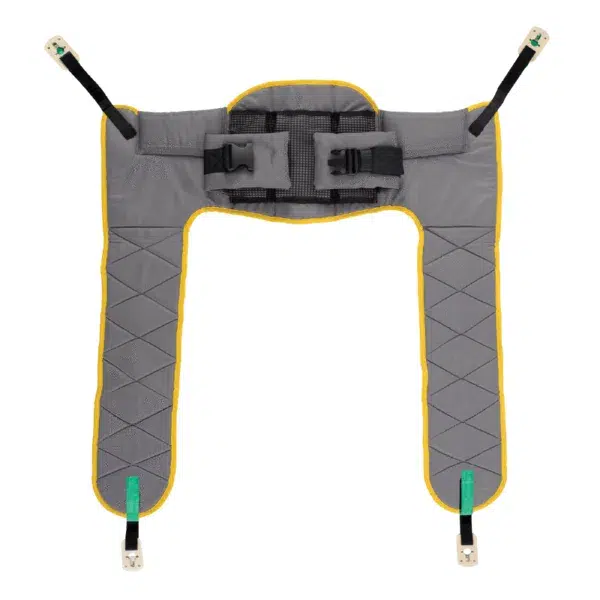
Hoyer Lift Toilet Sling
When toileting transfers require both access and secure positioning, choosing the correct hoyer lift toilet sling is essential. The Joerns Hoyer Comfort Access Padded Clip Style Sling is specifically engineered for safe, efficient, and comfortable toileting transfers—while providing the correct support for patients who can remain in a seated position.
View product details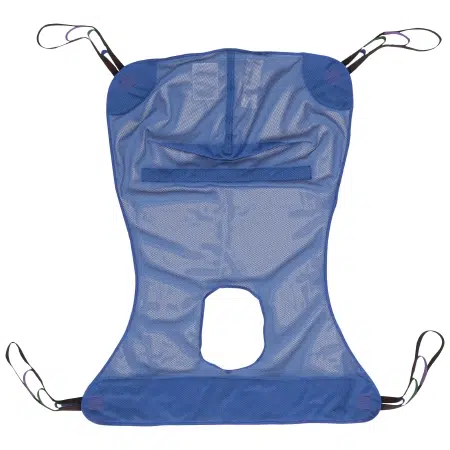
McKesson Full Body Patient Lift Sling with Commode Opening
When safety, hygiene, and full-body support are critical, the McKesson Full Body Commode Patient Lift Sling delivers unmatched reliability for both caregivers and patients. Designed for secure transfers and convenient toileting access, this patient lift sling combines high weight capacity, reinforced durability, and thoughtful comfort features—making it a top choice for home care and professional settings alike.
View product details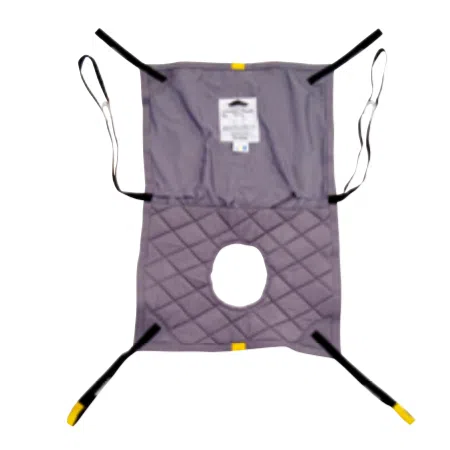
Joerns Full Body Sling for Hoyer Lift
Choosing the right full body sling for hoyer lift is critical when patient safety, comfort, and hygiene are involved. The Hoyer Long Seat Commode Sling is specifically designed for individuals who require extended sitting support, toileting access, and full-body stability during transfers.
View product details
Invacare Toileting Sling
When quick hygiene access, safer bathroom transfers, and better patient comfort are the priority, the Invacare Toileting Sling is designed to do exactly that. This fully padded Toileting Sling is built for patients who need dependable support during toileting and hygiene routines while still maintaining the upright control required for this type of transfer.
View product details
Invacare Stand Assist Sling
The sit to stand sling is a key solution for safer assisted standing and more controlled patient transfers when the user can still bear most of their own weight. This sit to stand lift sling is designed for patients who have head and neck control, can bend at the hips, knees, and ankles, and are able to sit upright on the edge of the bed. When paired with a compatible stand-up lift, it helps support smoother, more st…
View product details
Proactive Sit-to-Stand Sling
The sit to stand sling is designed to support safer, smoother assisted standing and transfer routines for patients who still have some weight-bearing ability. For caregivers and facilities looking for a dependable stand assist sling, this solid nylon model provides strong lower back and torso support during sit-to-stand movement while helping reduce the physical strain of manual lifting.
View product details
Invacare Premier Series Stand-Assist Sling
The Invacare stand assist sling is designed to make standing transfers safer, smoother, and more comfortable for patients who can bear some weight but still need meaningful support. The Invacare Premier Series Stand-Assist Sling is built for cooperative users who are partially dependent, have 50% or greater weight-bearing capacity, and maintain head and neck control. When paired with a compatible Invacare stand-up li…
View product details
Joerns Hoyer Deluxe Standing Sling
The Joerns Hoyer Deluxe Standing Sling is a premium standing sling engineered to deliver safer, more controlled assisted standing and transfer support. Designed for patients who can bear some weight but still need help rising, this professional-grade sit to stand sling provides the stability, comfort, and confidence caregivers need for daily transfers.
View product detailsSafe Patient-Transfer Planning at Home and in Care Settings
A patient lift is one part of a transfer system. The route, destination, sling, equipment condition, patient communication, caregiver readiness and manufacturer instructions all matter before movement begins.
Prepare the transfer
- Clear the route and prepare the destination.
- Inspect the lift, sling and approved accessories.
- Confirm the correct sling and attachment points.
- Explain the transfer and arrange required assistance.
Follow the approved workflow
- Follow the device and sling instructions.
- Maintain communication and observe positioning.
- Move deliberately without rushing.
- Stop for pain, distress or unsafe positioning.
Complete and reset
- Confirm comfort and alignment at the destination.
- Handle the sling according to the care plan and instructions.
- Store or recharge equipment.
- Report damage, unusual operation or transfer concerns.
Common Patient-Lift and Sling Mistakes—and What to Do Instead
Most selection errors are not caused by a lack of product choices. They happen when one important part of the transfer system is ignored.
Choosing only by patient weight
Do instead: compare capacity, body fit, base dimensions, range, transfer surfaces, caregiver handling and sling compatibility.
Assuming every sling fits every lift
Do instead: confirm lift model, attachment style, cradle, number of points, sling size and manufacturer instructions.
Choosing sit-to-stand equipment without confirming participation
Do instead: verify weight-bearing ability, head and trunk control, joint tolerance and the device requirements.
Measuring after the equipment arrives
Do instead: measure doors, under-bed clearance, route, turning area, destinations and storage before ordering.
Ignoring the transfer destination
Do instead: plan access to the bed, wheelchair, toilet, commode, recliner and any other destination separately.
Treating an electric lift as maintenance-free
Do instead: plan charging, battery inspection, emergency lowering, cleaning and scheduled service.
Buying a sling by clothing size
Do instead: use the manufacturer’s sizing system and consider body shape, torso length, support and transfer purpose.
Assuming one caregiver is always enough
Do instead: follow the equipment instructions, care plan and user-specific staffing or assistance requirements.
Patient-Lift Guides, Assessment Tools, Comparison Charts and Checklists
This knowledge base is the central route into MedCare Mobility’s existing patient-transfer ecosystem. Resources are grouped by the decision they help users make.
Choose the right lift
Choose the right sling
Plan safer transfers
Prepare for home recovery
Research fall and patient safety
Reference and link to these resources with clear attribution.
When citing statistics, review and cite the original sources listed in the corresponding MedCare Mobility report. Product specifications should be checked against the current manufacturer documentation.
Patient Lift, Hoyer Lift, Sling and Transfer-Chair Questions
These answers address the most common research questions directly. Expand a question for the full answer and the most relevant next resource.
What is the difference between a patient lift and a Hoyer lift?
“Patient lift” is the general equipment category. “Hoyer lift” is a brand-associated name that is also widely used as a general phrase for a mobile patient lift. Not every patient lift is manufactured by Hoyer, and different patient-lift categories use different transfer methods.
What type of patient lift is best for home use?
The best home patient lift is the model that fits the user’s transfer ability, sling needs, body dimensions, caregiver workflow and actual home measurements. Electric lifts may reduce pumping effort; hydraulic lifts may reduce purchase cost; folding lifts may improve storage. No single model is best for every home.
How do I know whether someone needs a full-body lift?
A full-body lift is commonly considered when a person cannot safely complete a standing or pivot transfer and needs extensive support. The decision should also consider pain, cognition, head and trunk control, restrictions and the transfer environment. Use the assessment tool and seek professional input when uncertain.
When is a sit-to-stand lift appropriate?
A sit-to-stand lift is appropriate only for a user who meets the specific device’s participation and weight-bearing requirements. The person generally needs sufficient control and tolerance to participate in supported standing. A stand-assist lift is not a substitute for a full-body lift when total support is required.
What should I measure before buying a patient lift?
Measure the narrowest doorway, under-bed clearance, transfer path, turning area, storage space and every destination surface. Also compare bed height, toilet or commode access, wheelchair approach and any flooring transitions.
Can a patient lift fit through a standard doorway?
Some patient lifts fit through many residential doorways when the base is closed, but dimensions vary. Compare the lift’s closed external width with the actual clear doorway width, including trim, hinges and the turning space on both sides.
Can a patient lift be used on carpet?
Some mobile lifts may be used on appropriate indoor flooring, but carpet increases rolling resistance and can make a loaded lift harder to maneuver. Check the manufacturer’s instructions and evaluate the actual carpet, thresholds, caregiver ability and transfer route.
Which patient lifts are easiest to store?
Folding and tool-free disassembly models are usually designed around storage, but compare folded dimensions, total weight, component weights and whether the lift stands safely when stored. “Portable” does not automatically mean lightweight.
Is an electric Hoyer lift worth the additional cost?
An electric Hoyer lift may justify the higher cost when transfers are frequent or manual pumping is difficult for the caregiver. Battery care, charging, emergency controls and future replacement costs should be included in the comparison.
What happens if an electric patient-lift battery loses power?
Emergency controls differ by model. Many electric lifts include emergency lowering or backup functions, but users must learn the exact procedure before an emergency occurs. Follow the manufacturer’s instructions and keep the battery charged and maintained.
How often should a patient-lift battery be charged?
Follow the manufacturer’s charging instructions for the exact model. Some systems are intended to remain on charge when not in use, while others use removable battery rotation. Do not rely only on an advertised number of lift cycles.
Are hydraulic lifts difficult for one caregiver to operate?
Difficulty varies by pump design, patient load, transfer frequency, flooring and caregiver strength. Manual pumping is only one part of the task; the caregiver must also apply the sling, position the lift and maneuver it safely. Follow staffing requirements in the instructions and care plan.
Are Hoyer lift slings universal?
No. Universal compatibility should not be assumed. Verify the exact lift, loop or clip attachment, number of points, spreader-bar or cradle design, sling size, safe working load and manufacturer guidance.
How do I determine the correct patient-lift sling size?
Use the manufacturer’s sizing chart and consider body shape, torso length, hip and thigh dimensions, positioning and support needs. Do not choose only by clothing size or body weight.
What is the difference between a mesh and padded sling?
Mesh slings are often selected for airflow, quicker drying and bathing or hygiene routines. Padded or solid slings may provide a more cushioned or structured feel. Fabric does not determine compatibility or patient suitability by itself.
When is a toileting sling used?
A toileting or access sling is used when clothing and hygiene access are needed during selected transfers. More open designs may require greater head, trunk or seated control. Some full-body toileting slings provide more support but still require exact compatibility and assessment.
Do sit-to-stand lifts require special slings?
Yes. Sit-to-stand lifts use compatible stand-assist sling systems designed for their transfer method. A full-body sling should not be substituted unless the manufacturer specifically approves that configuration.
How often should a patient-lift sling be inspected?
Inspect the sling before use and follow the manufacturer’s formal inspection and replacement instructions. Look for damaged stitching, fabric wear, stretched or damaged loops, labels that can no longer be read and contamination that cannot be cleaned appropriately.
Can a damaged patient-lift sling be repaired?
Do not improvise repairs. Remove a damaged sling from service and follow the manufacturer’s instructions or replacement process. Unauthorized stitching, knots, patches or altered attachments can compromise the sling.
What is a patient transfer chair?
A patient transfer chair is a chair-based device that moves a selected user between compatible surfaces while the person remains supported in a seated position. Designs vary widely, and the user must meet the model’s positioning, participation and transfer requirements.
Can a transfer chair replace a Hoyer lift?
Not for every user. A transfer chair does not provide the same suspended full-body support as a sling lift. It may be appropriate for selected seated-transfer workflows, but a user who requires total support may need a full-body lift instead.
Can transfer chairs be used for toilet transfers?
Some transfer chairs include commode seats or are designed to align over compatible toilets. Confirm toilet height, base clearance, bathroom width, user positioning, surface condition and the model’s instructions before use.
Can one caregiver use a patient lift?
Some lifts may be operated by one trained caregiver in some situations, but this cannot be assumed universally. Follow the manufacturer’s instructions, the care plan, facility policy and the user’s specific needs. Additional assistance may be required.
What checks should be completed before using a lift?
Confirm the correct lift and sling, inspect the equipment, prepare the route and destination, verify attachments, arrange required help and review battery or hydraulic operation. Follow the manufacturer’s complete pre-use checklist.
Can a patient lift be used to lift someone from the floor?
Only when the specific lift, sling and procedure support floor-level transfers and the situation is appropriate. A fall may involve injury or medical concerns, so assess the person before attempting movement and follow emergency or clinical guidance when needed.
Who can train a family caregiver to use a patient lift?
Training may come from a physical therapist, occupational therapist, nurse, qualified equipment provider or another professional familiar with the exact device and care plan. Product-specific instruction is important because controls, slings and procedures vary.
What specifications should I compare between patient lifts?
Compare transfer type, power source, safe working load, base width, under-bed clearance, lifting range, total weight, folded dimensions, spreader bar or cradle, sling system, emergency controls, casters, battery arrangement and warranty.
Does a patient lift include a sling?
Some lifts include a sling, chains or attachment accessories, while many sell the sling separately. Never assume the included sling fits the user or transfer. Review the exact product listing and manufacturer documentation.
Where can I compare patient lifts side by side?
Use the comparison section and MedCare Mobility’s Patient Lifting Devices Comparison PDF, then open individual product pages to verify exact specifications and current configurations.
Where can I find Hoyer lifts for sale?
MedCare Mobility organizes electric Hoyer lifts, manual hydraulic patient lifts, sit-to-stand devices and patient transfer chairs in separate categories so buyers can compare equipment by transfer method.
Sources, Product Methodology and Medical-Safety Boundaries
This page combines manufacturer-supplied product specifications, MedCare Mobility’s equipment catalog, existing educational resources and authoritative safety context. Specifications and availability can change and should be verified on the current product page and manufacturer documentation.
How information is organized
Equipment is grouped by transfer method, caregiver workflow, capacity, physical dimensions, portability, sling system and intended care setting.
How recommendations are framed
Recommendations identify a use-case pathway and disclose important considerations. They are not individualized medical prescriptions or guarantees of fit.
How products are reviewed
Product names, URLs, images and specifications were drawn from the supplied MedCare Mobility patient-lift and sling master catalogs. Exact current configurations should be rechecked before publication and purchase.
How safety claims are handled
General caregiver and home-device context links to NIOSH, CDC and FDA resources. Device-specific procedures remain governed by the manufacturer’s instructions and patient-specific guidance.
Move from research to the right equipment pathway
Use the assessment when the category is uncertain, compare specifications when the category is known, or open the complete resource library for deeper education.