

Wheelchair Seat Cushion Knowledge Base
The Complete Wheelchair Seat Cushion Knowledge Base
Understand wheelchair cushion materials, pressure redistribution, skin protection, pelvic positioning, anti-thrust design, air inflation, gel migration, foam density, alternating pressure, bariatric seating, sizing, covers, cleaning, inspection, troubleshooting and cushion-to-wheelchair fit.
General educational information—not an individualized seating or wound-care assessment. Cushion selection, setup and use should follow manufacturer instructions and may require evaluation by a qualified seating, rehabilitation or healthcare professional.
What do you want to understand?
What Is a Wheelchair Seat Cushion, and What Does It Actually Do?
A wheelchair cushion is the interface between the user and the wheelchair seat. It can change comfort, pressure distribution, pelvic position, thigh alignment, stability, heat, moisture and transfer height. A cushion does not work independently from the wheelchair, the user’s posture or the care plan.
Load-management surface
The cushion spreads and redirects seated forces across a larger area instead of allowing pressure to remain concentrated beneath bony prominences.
Positioning base
Contours, wells, ridges and supports can help stabilize the pelvis and guide the thighs, but they must match the user’s body and posture.
Wheelchair system component
Cushion width, depth, height, weight and securement affect armrest height, footrest position, transfers, propulsion and overall wheelchair fit.
No cushion can guarantee prevention or healing of pressure injuries. Effective protection may require pressure relief, repositioning, skin checks, moisture management, nutrition, medical treatment and a complete seating assessment.
Guide to Choosing and Comparing Wheelchair Seat Cushions
This Knowledge Base explains cushion technology, seating mechanics, skin protection and use. The dedicated guide focuses more directly on comparing cushion categories and purchase pathways.
Types of Wheelchair Seat Cushions and Their Intended Roles
Material names describe construction, not guaranteed performance. Two foam, gel or air cushions may behave very differently because of contour, density, cell height, compartment design and cover.
Foam cushions
Use one or more foam densities to provide support, contouring and predictable maintenance.
Understand foam systems →Gel cushions
Combine gel with a support base to redistribute pressure and influence temperature and immersion.
Understand gel systems →Air-cell cushions
Use adjustable or compartmented air cells for immersion, envelopment and pressure redistribution.
Understand air systems →Memory foam cushions
Use temperature- and pressure-sensitive foam to conform more closely to body shape.
Understand viscoelastic support →Hybrid cushions
Combine foam, gel, air or other media to balance stability, immersion and maintenance.
Understand hybrid construction →Anti-thrust cushions
Use a raised front or shaped pelvic well to resist forward sliding and improve pelvic containment.
Understand anti-thrust design →Alternating-pressure cushions
Use powered air cycling to change which areas receive support over time.
Understand powered systems →Bariatric cushions
Use wider dimensions and higher-capacity materials designed for heavier loads and larger body proportions.
Understand bariatric seating →Wheelchair Cushion Anatomy: What Every Layer and Contour Does
A cushion is a seating system. The cover, top layer, load-bearing base, contour, fluid or air compartment and securement method all change how it performs.
Core wheelchair cushion components
Top cover
Controls stretch, friction, moisture resistance, breathability and ease of cleaning.
Comfort layer
Provides immediate softness or immersion through foam, gel, air or another medium.
Support base
Prevents collapse, carries load and helps maintain the intended contour.
Pelvic well
Creates a lower region for pelvic immersion and stability.
Anti-thrust ridge
Forms a raised front support intended to reduce forward migration.
Leg troughs
Guide the thighs and may improve alignment and lateral stability.
Medial support
Helps separate and guide the thighs when included in the design.
Lateral supports
Provide side-to-side guidance around the pelvis or thighs.
Air valve or pump
Controls air volume or powered cycling in adjustable systems.
Non-slip base
Helps reduce cushion movement on the wheelchair seat upholstery.
How Wheelchair Cushions Redistribute Seated Pressure
Pressure redistribution occurs when the cushion changes the size, shape and location of the contact area. Softness alone does not confirm protection; a surface can feel soft and still bottom out or concentrate force.
| Concept | What it means | Why it matters |
|---|---|---|
| Immersion | How deeply the body sinks into the cushion | More contact area can reduce localized loading when support remains adequate |
| Envelopment | How closely the surface conforms around body contours | Reduces sharp pressure gradients around bony areas |
| Offloading | Reducing load under a specific structure | May be important around the coccyx, ischial tuberosities or a wound |
| Stability | Resistance to unwanted movement | Excessive immersion without control can make transfers or posture harder |
| Microclimate | Heat and moisture at the skin-cushion interface | Warm, moist skin may be more vulnerable to breakdown |
| Bottoming out | The body compresses through the support layer | Pressure may become concentrated against the wheelchair seat below |
Wheelchair Cushions, Pressure Injuries and Skin Protection
People with reduced sensation, limited mobility, prior pressure injuries, incontinence, poor nutrition, vascular disease or long sitting times may require closer skin monitoring and professional seating assessment.
What a cushion may help manage
- Pressure concentration beneath the pelvis
- Heat and moisture buildup
- Pelvic instability and sliding
- Uneven loading from posture
- Comfort during prolonged sitting
What a cushion cannot replace
- Regular skin inspection
- Weight shifts and repositioning
- Medical wound evaluation
- Nutrition and hydration support
- Incontinence and moisture management
Bed Sores and Pressure Ulcers: Prevention and Patient Safety
Review warning signs, stages, risk factors, pressure relief and when medical attention may be needed.
Pelvic Position, Thigh Alignment and Seated Stability
Cushions influence posture by changing the shape and friction beneath the pelvis and thighs. A cushion should not force a fixed posture that the user cannot tolerate or safely maintain.
| Pattern | What may be observed | Possible cushion consideration |
|---|---|---|
| Posterior pelvic tilt | Sacral sitting, rounded trunk, sliding forward | Pelvic well, anti-thrust contour and full wheelchair setup review |
| Pelvic obliquity | One side of the pelvis sits lower | Adjustable air compartments or custom contour after assessment |
| Pelvic rotation | One side advances forward | Asymmetric support may be required; avoid guessing with wedges |
| Hip adduction | Knees move together or cross | Medial thigh support may help when appropriately fitted |
| Hip abduction | Thighs fall outward | Lateral contouring may improve guidance and stability |
| Forward migration | User repeatedly slides toward the seat edge | Anti-thrust design plus footrest, back and seat-angle review |
How Anti-Thrust Wheelchair Cushions Work
An anti-thrust cushion uses a raised front section and lower pelvic area to resist forward movement. It should not be used simply to block a user from sliding without identifying why the sliding occurs.
Potential benefit
Improves pelvic containment and may reduce repeated forward migration.
Common use
Users with posterior pelvic tilt, weakness, neurological conditions or poor seated stability.
Fit concern
A ridge that is too high or poorly positioned can create thigh pressure or interfere with transfers.
System concern
Footrest height, seat depth, back support and wheelchair tilt may be part of the sliding problem.
Foam and Memory Foam Wheelchair Cushions
Foam cushions range from flat budget surfaces to multi-density molded positioning systems. Memory foam conforms slowly under heat and pressure, while firmer structural foams preserve shape and stability.
| Foam feature | Possible advantage | Tradeoff |
|---|---|---|
| High-density polyurethane | Predictable support and low maintenance | May feel firm and may retain heat |
| Visco memory foam | Conforms and improves immersion comfort | Temperature sensitive and slower to recover |
| Molded contour | Built-in pelvic and thigh guidance | Less adaptable if posture or body shape changes |
| Layered foam | Balances a softer top with a firmer base | Performance depends on layer thickness and quality |
Gel Wheelchair Cushions, Bladders and Gel Migration
Gel is commonly paired with foam because gel alone does not provide enough structural shape. Compartmented bladders may reduce migration and help keep material beneath the intended pressure areas.
If gel moves away from the sitting area, bunches, leaks or becomes uneven, the cushion may no longer support the body as intended. Follow the product inspection and replacement instructions.
Air-Cell and SmartCell Wheelchair Cushions
Air cushions can provide deep immersion and pressure redistribution, but they must maintain the correct air volume and remain free from leaks. Multi-compartment designs may also help manage pelvic asymmetry.
Confirm these points before routine use
- The cushion is facing the correct direction
- The valve is accessible and closes securely
- Air volume follows the manufacturer setup method
- The user does not bottom out
- Compartments are balanced as prescribed
- No cell is folded beneath the user
- The cover is fully installed
- The cushion is secured to the wheelchair
- Pressure is rechecked after temperature or altitude changes when required
- A leak plan and repair kit are available when supplied
Gel, Air and Memory Foam Hybrid Wheelchair Cushions
Hybrid systems commonly use a stable foam base with a softer immersion layer. Their goal is to combine pressure redistribution with transfer stability, contour control and easier setup.
Why materials are combined
- Foam provides structure
- Gel manages immersion and heat
- Memory foam conforms to shape
- Air allows adjustability
What still requires verification
- Total cushion height
- Weight capacity
- Bottoming-out risk
- Cover orientation
- Maintenance requirements
Alternating Pressure Wheelchair Seat Cushions
Alternating-pressure cushions use a pump to cycle air between cells. They are active systems, unlike static foam, gel or manually inflated air cushions.
| Factor | Why it matters | What to verify |
|---|---|---|
| Cycle operation | Changes which cells carry load | Cycle timing and comfort setting |
| Battery runtime | Determines mobile use | Charging routine and low-battery indication |
| Static mode | Maintains uniform inflation | When and how static mode should be used |
| Alarm system | Warns of pressure or system problems | Response plan for low-pressure indicators |
| Pump placement | Affects portability and tubing safety | Tubing is not kinked, trapped or pulled |
Bariatric Wheelchair Cushions and High-Capacity Seating
A bariatric cushion must match the wheelchair seat, body width, thigh support, cushion depth and safe working load. A wider cushion placed on a narrower seat can become unstable or deform.
| Factor | Why it matters | What to verify |
|---|---|---|
| Weight capacity | Defines structural load limit | Cushion and wheelchair capacities |
| Seat width | Controls lateral support and clearance | Cushion fits within the seat rails |
| Seat depth | Affects thigh support and knee clearance | Back-to-knee measurement and footrest setup |
| Foam density | Helps prevent compression and bottoming out | Correct model and thickness |
| Transfers | Higher contours may affect access | Transfer method and edge stability |
How to Size a Wheelchair Seat Cushion
Cushion size is normally based on the wheelchair’s usable seat dimensions and the user’s body dimensions. Product labels may list width first and depth second.
Confirm before routine use
- Cushion width matches the usable wheelchair seat
- Cushion depth supports the thighs without pressing behind the knees
- The user is within the cushion capacity
- The front and back orientation are correct
- The cushion lies flat on the seat upholstery
- No edge is trapped beneath side guards
- The cover is installed without wrinkles
- The pelvis is centered in the intended well
- Leg troughs align with the thighs
- Footrests are adjusted for the new seat height
- Armrest and back-support heights remain appropriate
- The cushion remains stable during propulsion and transfers
Two-, Three- and Four-Inch Wheelchair Cushions
A taller cushion may provide more immersion or structural depth, but it also raises the user. This can change foot contact, armrest support, wheel access, table clearance and transfer difficulty.
Footrests, back support, armrests, pelvic belt position and seat-to-floor height may need adjustment. A cushion should not be added on top of another cushion unless the manufacturer and seating plan specifically allow it.
Wheelchair Cushion Covers and Skin Microclimate
The cover is a functional part of the cushion. Replacing it with an unrelated cover or adding thick pads may change immersion, friction and pressure performance.
| Feature | Possible benefit | Important caution |
|---|---|---|
| Four-way stretch | Allows the body to immerse with less surface tension | Must remain correctly oriented and wrinkle-free |
| Fluid resistance | Protects internal foam and gel | Inspect for punctures and open seams |
| Breathable fabric | May improve heat and moisture transfer | Breathability varies with clothing and incontinence products |
| Non-slip base | Helps keep the cushion in position | Does not replace correct sizing or securement |
| Washable cover | Supports hygiene and reuse | Follow temperature and drying limits |
Wheelchair Seat, Sling Upholstery, Solid Bases and Cushion Securement
Flexible sling upholstery can sag and change the contour of a cushion. Some cushions perform best on a solid seat insert or rigid base when specified by the manufacturer.
Sling-seat sag
May create unwanted hammocking, narrow the cushion and increase pelvic instability.
Solid seat insert
Can create a flatter foundation but adds height, weight and rigidity.
Hook-and-loop securement
Helps prevent cushion migration when aligned with the wheelchair seat.
Folding wheelchairs
Rigid cushions or seat inserts may need removal before folding.
Installing and Using a Wheelchair Seat Cushion
The cushion should be placed directly on the intended seat surface with the correct front, back, top and bottom orientation.
Inspect the wheelchair and cushion
- Check seat width and depth.
- Confirm cushion model and capacity.
- Inspect cover, foam, cells and valves.
- Remove unrelated pads or folded blankets.
Orient and secure the cushion
- Place the labeled front forward.
- Align the cushion squarely on the seat.
- Connect approved securement.
- Confirm air or powered setup.
Check posture and function
- Center the pelvis.
- Confirm thighs and feet are supported.
- Check transfers and wheel access.
- Inspect skin according to the care plan.
Cleaning Foam, Gel, Air and Powered Wheelchair Cushions
Cleaning instructions vary by material. The removable cover may be washable even when the internal cushion cannot be submerged.
Routine care
- Follow the model-specific label
- Clean spills promptly
- Dry completely before use
- Keep valves and tubing clear
- Use only approved disinfectants
Avoid unless specifically permitted
- Machine washing internal foam
- High heat drying
- Bleach or solvent exposure
- Submerging pumps or valves
- Unauthorized cover replacement
Wheelchair Cushion Inspection and Replacement
There is no universal replacement interval. Replace or professionally reassess a cushion when it no longer maintains its intended shape, pressure performance, cover integrity or positioning function.
Review regularly and whenever seating changes
- Cover has no tears, punctures or failed seams
- Foam returns to shape and is not permanently compressed
- Gel remains contained and evenly distributed
- Air cells hold pressure
- Valves close and tubing remains intact
- Pump, alarms and battery operate correctly
- Non-slip base remains functional
- Labels are readable
- No odor, contamination or trapped moisture remains
- The user is not bottoming out
- Posture has not worsened
- Skin response remains acceptable under the care plan
Wheelchair Seat Cushion Troubleshooting
Stop using a cushion and seek professional or manufacturer guidance when the user develops new skin damage, severe pain, loss of balance or unexplained postural change.
The user keeps sliding forward
Check pelvic position, anti-thrust contour, footrest height, seat depth, back support, wheelchair seat angle, clothing friction and whether the cushion is facing the correct direction.
The cushion feels too hard
Confirm the correct model, side, cover and setup. A firmer base may be intentional to prevent bottoming out. Do not cut or soften the cushion unless authorized.
The cushion feels too soft or unstable
Check for foam fatigue, low air volume, gel migration, incorrect size or excessive immersion. Reassess transfer and propulsion needs.
The user is sitting unevenly
Confirm the cushion is centered, the wheelchair seat is level, air compartments are set correctly and the pelvic asymmetry has been professionally assessed.
The cushion moves during transfers
Check the non-slip base, hook-and-loop securement, seat upholstery, cushion width and transfer technique.
The cover becomes hot or damp
Review cover material, clothing, room temperature, continence products, sitting duration and whether a more breathable system is needed.
The air cushion loses inflation
Inspect the valve, cells and tubing for leaks. Use the supplied repair process when permitted and remove the cushion from service if safe inflation cannot be maintained.
The powered cushion alarm is active
Follow the manufacturer alarm instructions, check power, tubing and pressure, and move the user to a safe alternative surface if therapy cannot be maintained.
Common Seating and Cushion Terms Explained
Pressure redistribution
Changing the magnitude and location of load across the sitting surface.
Immersion
The depth the body sinks into the cushion.
Envelopment
How closely the support surface conforms around body contours.
Bottoming out
Compression through the cushion until support from the base or wheelchair seat is felt.
Shear
Internal tissue distortion caused when skin and deeper tissues move differently.
Friction
Resistance between the skin, clothing and seating surface.
Microclimate
Heat and moisture conditions at the skin-support interface.
Pelvic obliquity
A side-to-side difference in pelvic height.
Posterior pelvic tilt
Backward rotation of the pelvis, often associated with sacral sitting.
Anti-thrust contour
A raised front support intended to resist forward sliding.
Trochanter cutout
A shaped relief area near the greater trochanter region.
SmartCell
An individual air-filled cell used in selected Vicair cushion systems.
Representative Wheelchair Seat Cushions and What They Demonstrate
These products illustrate different engineering and care pathways. They are not universal recommendations.
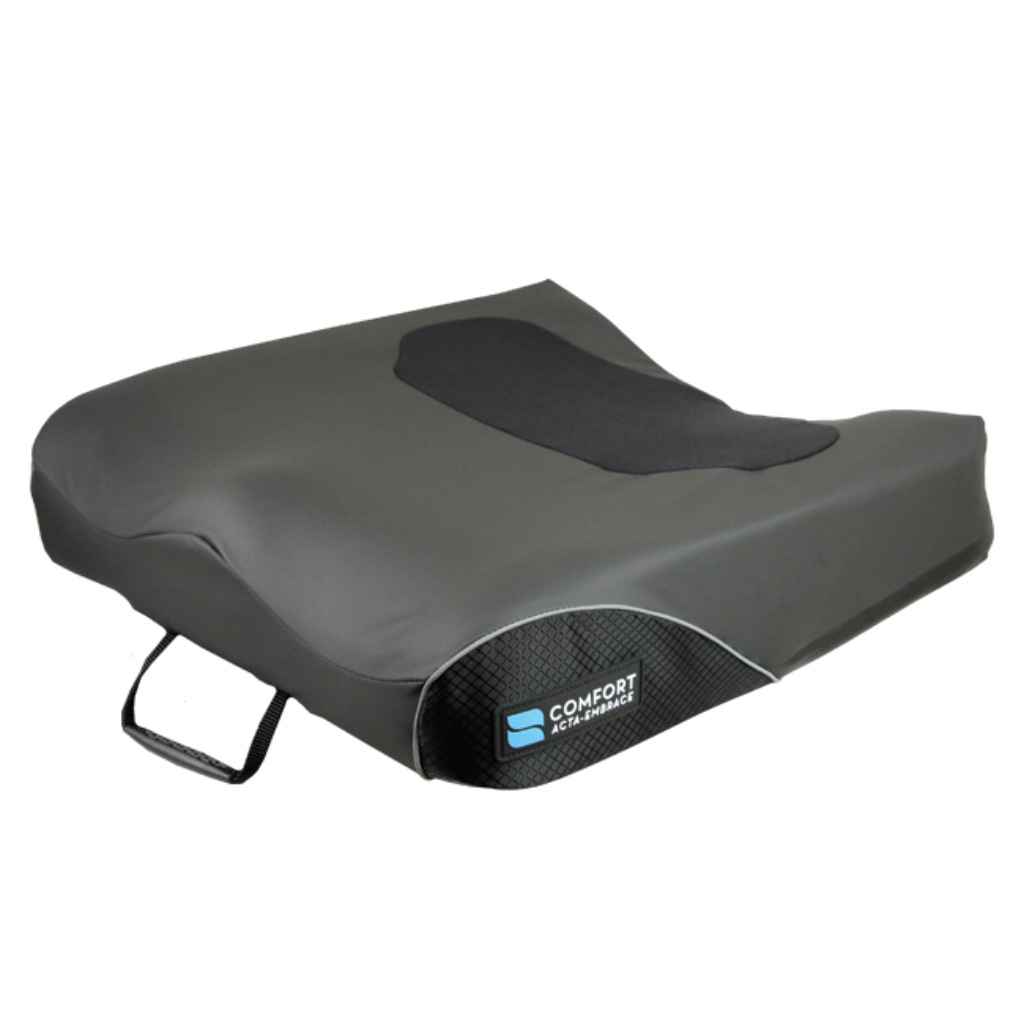
Acta Embrace Anti-Thrust Cushion
A deep-contour positioning cushion designed to reduce forward migration, improve pelvic stability and redistribute pressure for users requiring more than basic comfort.
View cushion details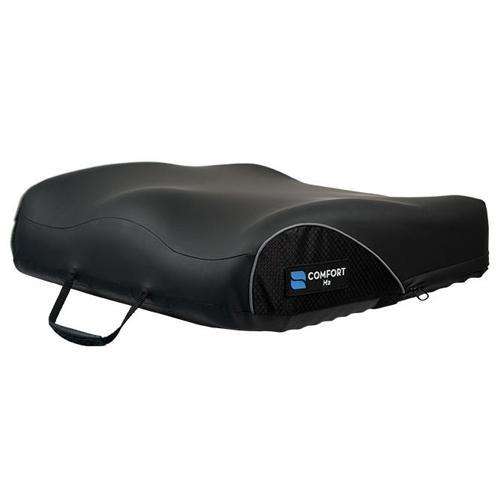
M2 Anti-Thrust Cushion
Combines a four-compartment QuadraGel pack, memory foam and anti-thrust contouring to support immersion, reduce gel migration, improve pelvic control and manage heat during prolonged sitting.
View cushion details
Protekt Alternating Pressure Seat Cushion
A rechargeable alternating-air-cell cushion with gel-infused memory foam, adjustable settings, static mode and low-pressure indicators for users needing active pressure redistribution.
View cushion details
Vicair Active O2 Low Cushion
A breathable, washable SmartCell cushion with a low profile and ergonomic foam front for pressure redistribution, moisture control, transfer access and frontal and lateral stability.
View cushion details
Protekt O2 Seat Cushion
An adjustable neoprene air-cell cushion with two compartments, deep immersion, dual-valve control, hand pump and patch kit for pressure redistribution and pelvic stability.
View cushion details
Protekt Supreme Seat Cushion
A molded pressure-sensitive foam cushion with leg troughs and a raised anti-slide ridge to improve thigh alignment, postural support and seated stability.
View cushion details
Protekt Ultra Seat Cushion
A gel-infused visco memory foam cushion with a gel bladder, trochanter cutouts and medial and lateral supports for deeper immersion, heat dissipation and advanced positioning.
View cushion details
Protekt Ultra Bariatric Cushion
A bariatric hybrid cushion with gel-infused visco foam, dual gel bladder, trochanter cutouts and medial and lateral supports for high-capacity pressure and positioning needs.
View cushion detailsAll Wheelchair Seat Cushions From the Supplied Master List
Use the filters to study how actual cushions differ by material, pressure strategy, positioning design, capacity, maintenance and intended use.
MedCare Mobility sells the products shown below. Product placement does not establish clinical suitability. Verify current dimensions, capacity, setup, cover, maintenance and manufacturer instructions.
Acta Embrace Anti-Thrust Cushion
A deep-contour positioning cushion designed to reduce forward migration, improve pelvic stability and redistribute pressure for users requiring more than basic comfort.
View cushion details
M2 Anti-Thrust Cushion
Combines a four-compartment QuadraGel pack, memory foam and anti-thrust contouring to support immersion, reduce gel migration, improve pelvic control and manage heat during prolonged sitting.
View cushion details
Permobil Ascent Positioning Cushion with Visco Memory Foam
A visco memory foam and contoured positioning cushion intended to improve pelvic stability, comfort, pressure redistribution and skin protection in rehabilitation and long-term seating.
View cushion details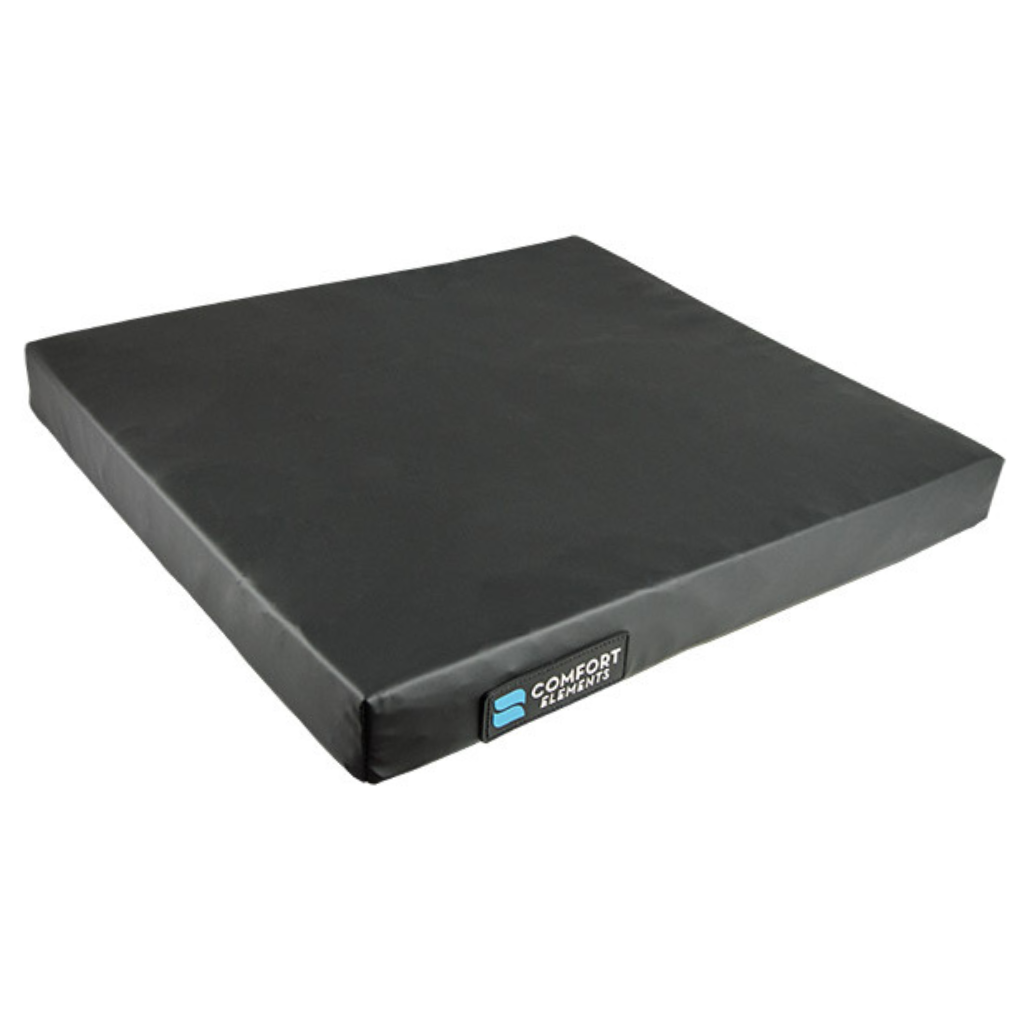
Elements Gel Wheelchair Cushion
A gel bladder over a foam support base for everyday wheelchair comfort, modest pressure redistribution and a cooler seating feel than a basic flat foam surface.
View cushion details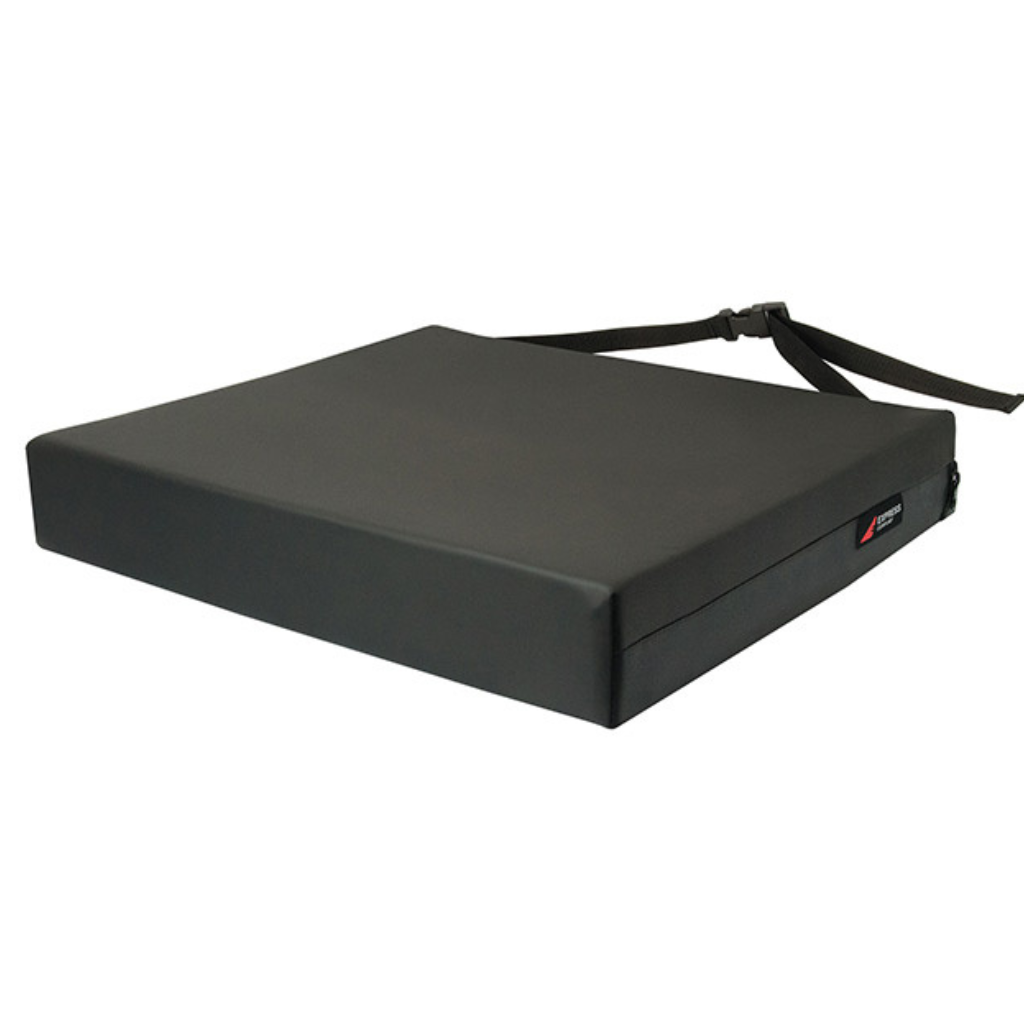
Comfort Gel Cushion for Wheelchair
A straightforward gel-and-foam wheelchair cushion for daily padding, basic pressure relief and improved comfort in wheelchairs and transport chairs.
View cushion details
Curve Cushion
A high-density contoured foam cushion that provides a stable sitting surface, basic postural guidance and more shape than a flat wheelchair cushion.
View cushion details
Protekt Alternating Pressure Seat Cushion
A rechargeable alternating-air-cell cushion with gel-infused memory foam, adjustable settings, static mode and low-pressure indicators for users needing active pressure redistribution.
View cushion details
Vicair Active O2 Low Cushion
A breathable, washable SmartCell cushion with a low profile and ergonomic foam front for pressure redistribution, moisture control, transfer access and frontal and lateral stability.
View cushion details
Protekt O2 Seat Cushion
An adjustable neoprene air-cell cushion with two compartments, deep immersion, dual-valve control, hand pump and patch kit for pressure redistribution and pelvic stability.
View cushion details
Protekt Gel Seat Cushion
A high-density foam cushion with a dual-compartment gel bladder intended to limit gel migration, redistribute pressure and improve everyday sitting comfort.
View cushion details
Protekt Supreme Seat Cushion
A molded pressure-sensitive foam cushion with leg troughs and a raised anti-slide ridge to improve thigh alignment, postural support and seated stability.
View cushion details
Protekt Supreme Bariatric Cushion
A heavy-duty molded foam cushion with leg trough alignment and an anti-slide ridge for bariatric users needing stronger structural support and positioning.
View cushion details
Protekt Ultra Seat Cushion
A gel-infused visco memory foam cushion with a gel bladder, trochanter cutouts and medial and lateral supports for deeper immersion, heat dissipation and advanced positioning.
View cushion details
Protekt Ultra Bariatric Cushion
A bariatric hybrid cushion with gel-infused visco foam, dual gel bladder, trochanter cutouts and medial and lateral supports for high-capacity pressure and positioning needs.
View cushion details
Protekt Foam Seat Cushion
A budget-friendly polyurethane foam cushion with a breathable replaceable cover for basic daily comfort, mild pressure reduction and simple wheelchair support.
View cushion details
Protekt Foam Bariatric Cushion
An ultra-high-density bariatric foam cushion with a breathable replaceable cover for daily heavy-duty seating and basic pressure prevention.
View cushion details
Karman GEL Foam Wheelchair Cushion
A flat, washable gel-and-foam cushion with fire-retardant construction for general wheelchair and transport-chair comfort.
View cushion details
Karman CU-ERGO Ergonomic Memory Foam Cushion
A contoured memory foam cushion with anti-thrust support and washable waterproof material for improved posture, reduced sliding and long-term comfort.
View cushion detailsWheelchair Cushion Guides, Tools, Downloads and Products
Move from education into structured comparison, self-assessment and product research.
Choosing and Comparing Wheelchair Seat Cushions
Compare major cushion types, pressure strategies, positioning features and purchase pathways.
Open the Cushion GuideWheelchair Seat Cushion Comparison Chart
Use the printable reference to compare cushion technologies and seating characteristics.
Open the Comparison PDFWheelchair Cushion Assessment Tool
Review pressure risk, posture, transfers, maintenance and other practical seating factors.
Open the Assessment ToolBed Sores and Pressure Ulcers
Understand warning signs, stages, risk factors, prevention and pressure-relief planning.
Open the Pressure Ulcer GuideWheelchair Seat Cushions
Browse foam, gel, air, positioning, bariatric and advanced pressure-redistribution cushions.
Browse All Seat CushionsExplore Wheelchair Cushions by Seating Priority
Everyday comfort
Basic foam and gel options for general wheelchair or transport-chair seating.
Explore everyday cushions →Positioning support
Contoured and anti-thrust cushions for pelvic and thigh stability.
Understand positioning →Advanced pressure management
Air, SmartCell, hybrid and powered alternating-pressure technologies.
Understand pressure management →Wheelchair Seat Cushion Questions and Answers
What is the best wheelchair cushion for pressure sores?
There is no single best cushion for every user. Skin risk, posture, sensation, transfer ability, body shape, current wounds and wheelchair setup should guide the choice, often with professional assessment.
Does a wheelchair cushion prevent bed sores?
A cushion may reduce risk by redistributing pressure and managing posture or microclimate, but it cannot guarantee prevention and does not replace repositioning, skin checks or medical care.
What is the difference between foam, gel and air cushions?
Foam provides structure and predictable support; gel adds immersion and may influence heat; air offers adjustable immersion and pressure redistribution but requires inflation and leak monitoring.
What is an anti-thrust wheelchair cushion?
It has a raised front contour and lower pelvic area intended to reduce forward sliding and improve pelvic containment.
Why do I keep sliding forward in my wheelchair?
Possible causes include posterior pelvic tilt, poor foot support, excessive seat depth, back-support angle, weakness, tone, clothing friction or an unsuitable cushion. The complete seating system should be reviewed.
How thick should a wheelchair cushion be?
Thickness depends on material, body weight, pressure needs, stability and wheelchair geometry. Two-, three- and four-inch cushions can all be appropriate in different situations.
How do I know if a cushion is bottoming out?
Follow the manufacturer check. In general, bottoming out means there is insufficient support material between the body and the wheelchair seat base.
How much air should be in an air wheelchair cushion?
Use the exact manufacturer setup method. Too much air may reduce immersion; too little may cause bottoming out and instability.
Can I put two wheelchair cushions together?
Usually not unless specifically approved. Stacking changes height, stability, pressure distribution and wheelchair fit.
Can a wheelchair cushion be used in a regular chair?
Some may be used on other stable seats, but dimensions, base support, height and securement must remain appropriate. Follow product instructions.
How often should a wheelchair cushion be replaced?
There is no universal schedule. Replace it when foam remains compressed, gel leaks or migrates, air cells fail, the cover is damaged, posture worsens or pressure performance becomes uncertain.
How do I clean a wheelchair cushion?
Follow the exact model instructions. Covers are often removable, but internal foam, gel, air cells and pumps may require different cleaning methods.
What cushion is best for coccyx pain?
The cause of pain matters. A contour or offloading design may help some users, but open cutouts can shift pressure elsewhere and should not be selected without considering posture and skin condition.
What cushion helps pelvic obliquity?
Adjustable multi-compartment air or specialized positioning systems may help manage selected flexible asymmetries, but pelvic obliquity should be assessed before correction or accommodation.
Are bariatric cushions just wider?
No. They may also use higher-density support materials, greater capacities and contours designed for larger body proportions and heavier loads.
Sources, Editorial Method and Safety Boundaries
This Knowledge Base uses the supplied MedCare Mobility cushion master sheet to explain material families, product design, pressure-management pathways, sizing and maintenance. Product examples do not establish that a cushion is appropriate for a particular person.
Product information
Model names, materials, capacities, sizes, construction and intended-use summaries are based on the supplied master product sheet. Confirm current specifications and manufacturer instructions before use.
Clinical and operational boundary
Existing pressure injuries, loss of sensation, major pelvic asymmetry, severe tone, bariatric seating, progressive neurological conditions or rapid posture changes may require evaluation by qualified seating, rehabilitation or wound-care professionals.