10
May
Best Wheelchair Seat Cushion Guide: How to Choose the Right Cushion for Comfort, Pressure Relief, Skin Protection & Support
The best wheelchair seat cushion is not always the softest cushion — it is the cushion that matches the user’s real seating problem.
Many people compare seat cushions for wheelchairs by comfort alone, but wheelchair seating is more serious than basic padding. The wrong cushion can lead to pressure buildup, sliding forward, tailbone pain, sweating, pelvic instability, poor posture, sitting fatigue, and extra caregiver strain.
This guide will help you understand how to choose the best wheelchair seat cushion based on the user’s daily needs — whether the goal is simple comfort, pressure redistribution, skin protection, bariatric support, anti-thrust positioning, or a better best wheelchair cushion for elderly users who sit for long periods.
Quick Cushion Finder
Use this simple starting point before comparing foam, gel, air, anti-thrust, positioning, and pressure relief wheelchair cushions.
How to choose
Understand comfort, pressure risk, posture needs, size, height, and daily sitting time.
Types explained
Compare foam, gel, memory foam, air, alternating pressure, anti-thrust, and bariatric cushions.
Best by need
Match real problems like sliding, soreness, pressure sores, sweating, and pelvic instability.
Compare 18 options
Review cushion type, materials, sizes, capacity, features, and best user fit side by side.
Not sure what cushion you need?
MedCare Mobility can help you compare wheel chair cushions based on seat size, user weight, sitting time, pressure risk, posture needs, and whether the user needs basic comfort, advanced support, or wheelchair cushions for pressure relief.
Foam, Gel, Air & Anti-Thrust Wheel Chair Cushions Explained: Understanding the Different Types of Wheelchair Seat Cushions
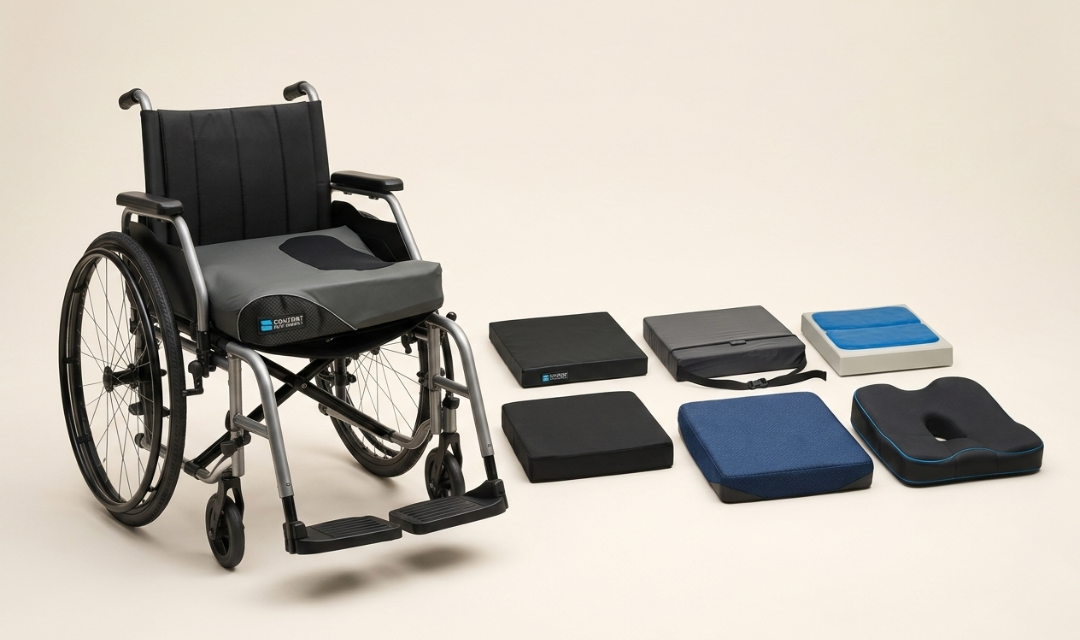
Not all wheelchair seat cushions work the same way. Some are designed mainly for everyday comfort, while others are built for pressure redistribution, skin protection, pelvic stability, anti-thrust positioning, bariatric support, or long-term sitting protection.
Understanding how each cushion type works is one of the most important steps in choosing the best wheelchair seat cushion. This section explains what each type actually does, who it is best for, and when a more advanced cushion becomes important.
Foam Wheelchair Cushions
Foam cushions are usually the most affordable and lightweight seat cushions for wheelchairs. They add padding, reduce hard-seat discomfort, and provide simple everyday support.
Best for: Everyday comfort, elderly users, transport chairs, rehab seating, and lower pressure-risk users.
Not ideal for: Existing pressure sores, severe sliding, or advanced pelvic positioning needs.
Gel Wheelchair Cushions
Gel cushions use gel layers or gel bladders to help spread pressure more evenly across the seating surface. Many users prefer gel because it often feels cooler and softer than standard foam.
Best for: Long sitting comfort, mild-to-moderate pressure relief, soreness, and elderly wheelchair users.
Not ideal for: Severe posture collapse or advanced pressure sore risk without additional positioning support.
QuadraGel & Multi-Compartment Gel Cushions
Multi-compartment gel systems help keep gel positioned directly under the seated area instead of shifting away during movement. This creates better pressure redistribution and more stable sitting support.
Best for: Long sitting, ischial pressure protection, coccyx discomfort, heat sensitivity, and anti-thrust support.
Not ideal for: Users only needing very basic low-cost comfort padding.
Memory Foam & Visco Wheelchair Cushions
Memory foam and visco foam cushions contour to the body and help distribute weight over a larger seating area. They are often used in more premium wheelchair cushions for pressure relief.
Best for: Long sitting comfort, pressure-sensitive users, contouring support, and improved immersion.
Not ideal for: Users needing active pressure changes or powered pressure redistribution.
Anti-Thrust Wheelchair Cushions
Anti-thrust cushions use raised front contours and positioning support to help reduce forward sliding. This helps improve seated posture and reduce shear forces on the tailbone area.
Best for: Forward sliding, pelvic instability, posture support, neurological seating, and rehab users.
Not ideal for: Users only wanting a flat low-profile comfort cushion.
Molded Positioning Cushions
Molded positioning cushions use structured contouring to guide the pelvis, thighs, and sitting posture. Many include leg troughs, anti-slide contours, medial supports, or trochanter support areas.
Best for: Pelvic stability, posture support, thigh alignment, sacral sitting, and long-term seating.
Not ideal for: Users wanting a completely flat simple cushion feel.
Air Wheelchair Cushions
Air cushions use adjustable air cells or SmartCell technology to allow deeper immersion and improved pressure redistribution. These are often used for higher skin protection needs.
Best for: Pressure sore prevention, long sitting, pelvic asymmetry, and high pressure-risk users.
Not ideal for: Users wanting very simple maintenance-free seating.
Alternating Pressure Wheelchair Cushions
Alternating pressure cushions use powered air cycles that continuously shift pressure between different air cells over time instead of keeping pressure on the same area all day.
Best for: High pressure sore risk, users unable to reposition often, and advanced pressure management.
Not ideal for: Users only needing simple comfort padding or lightweight transport seating.
Bariatric Wheelchair Cushions
Bariatric wheelchair cushions are wider, stronger, and designed with higher weight capacities. Some focus on basic support, while others provide advanced pressure redistribution and positioning.
Best for: Larger users, heavy-duty wheelchairs, wider seat widths, and bariatric pressure relief support.
Not ideal for: Narrow transport wheelchairs or users not needing wider seating support.
If The User Already Has Pressure Sores...
Choosing the wrong wheelchair cushion can increase pressure concentration and skin breakdown risk.
Do not choose a best wheelchair cushion for elderly users or high-risk wheelchair users based only on softness or comfort. Pressure redistribution matters much more than simply adding padding.
Users with fragile skin, limited repositioning ability, spinal cord injury, diabetes, long sitting routines, or previous pressure ulcers often benefit more from air-cell cushions, alternating pressure systems, advanced gel technology, or molded positioning support.
Best Wheelchair Seat Cushion Options Based on Real Problems, Sitting Needs & Daily Challenges
The best wheelchair seat cushion depends less on the cushion category itself and more on what the user is actually experiencing every day. Some people simply need softer support, while others struggle with pressure buildup, sliding forward, sweating, pelvic instability, or long sitting fatigue.
This section is designed to help users connect real-life seating problems with the right cushion features, support level, and product type — without needing advanced medical seating knowledge.
Best Cushion for Basic Comfort
Many wheelchair users simply need better comfort than a hard sling seat or flat wheelchair surface provides. Long sitting on unsupported seating can quickly lead to soreness, stiffness, and fatigue.
Foam and gel cushions are often a strong starting point for users who want improved daily comfort without requiring advanced positioning support.
Best Cushion for Sitting All Day
Users sitting in a wheelchair for many hours often experience heat buildup, pressure concentration, tailbone soreness, fatigue, and discomfort that worsens throughout the day.
More advanced wheelchair cushions for pressure relief are often better for long daily sitting because they help spread weight more evenly across the seating surface.
Best Cushion for Pressure Sores
Pressure sores usually happen when the same areas of skin experience constant pressure for long periods without enough movement or pressure redistribution.
Users with fragile skin, diabetes, spinal cord injury, or prior pressure ulcers often benefit from more advanced medical seating systems instead of basic comfort cushions.
Best Cushion for Sliding Forward
Sliding forward is more than a comfort issue. It can create unsafe sitting posture, increase tailbone pressure, worsen pelvic tilt, and make repositioning harder for caregivers.
Softer cushions alone usually do not stop sliding. Anti-thrust and molded positioning support are often much more effective.
Best Cushion for Pelvic Stability
Pelvic instability can lead to leaning, sacral sitting, uneven pressure distribution, posture collapse, and increased fatigue during long sitting.
Users with neurological conditions, weak trunk control, or posture instability often need more than basic flat wheelchair padding.
Best Cushion for Heat & Sweating
Heat and moisture buildup are very common problems for wheelchair users who sit for long periods, especially in warmer climates or with limited movement.
Users who sweat easily or develop rashes often prefer cushions with breathable air-cell systems or advanced gel technology designed for longer sitting comfort.
Best Cushion for Bariatric Users
Bariatric wheelchair users often need wider seating, higher weight capacities, stronger support materials, and more advanced pressure redistribution during long sitting.
A bariatric wheelchair cushion should match both the wheelchair width and the user’s seating support requirements.
Best Cushion for Elderly Users
Elderly wheelchair users often need a balance between comfort, easier transfers, pressure relief, and supportive seating without overly aggressive positioning contours.
The best wheelchair cushion for elderly users depends on sitting time, skin condition, mobility level, and how much posture support is needed.
If The User Keeps Sliding Forward...
Sliding in a wheelchair is usually a positioning problem — not simply a lack of softness.
Forward sliding can create shear forces, pelvic tilt, posture collapse, increased tailbone pressure, fatigue, and extra caregiver repositioning challenges. Many users mistakenly try softer cushions first, but softer padding alone usually does not solve sliding.
Anti-thrust and molded positioning cushions are often more effective because they help guide the pelvis and thighs into a more stable sitting posture while reducing forward migration.
How to Choose the Best Wheelchair Seat Cushion Without Guessing
Choosing the best wheelchair seat cushion becomes much easier when you evaluate the right details in the right order. Instead of starting with the softest cushion or lowest price, start with sitting time, pressure risk, posture needs, cushion size, transfer height, and whether the user needs basic comfort or medical seating support.
This section gives you a clear buying framework for comparing seat cushions for wheelchairs, especially for elderly users, long sitting routines, pressure relief needs, bariatric sizing, and everyday wheelchair comfort.
Start With Daily Sitting Time
A user sitting for short periods may only need basic foam or gel comfort. A user sitting most of the day usually needs stronger pressure redistribution, better immersion, heat control, and a cushion that stays supportive for longer use.
Identify Pressure Risk Level
Low-risk users may do well with basic comfort support. Moderate-risk users may need gel, visco foam, or molded support. High-risk users may need air-cell, alternating pressure, or advanced wheelchair cushions for pressure relief.
Check If The User Slides Forward
If the user keeps sliding forward, look beyond softness. Check whether the cushion has anti-thrust contouring, leg troughs, pelvic support, or molded positioning features that help reduce forward migration.
Look At Positioning Needs
Pelvic tilt, leaning, weak trunk control, poor thigh alignment, and unstable sitting may require more structured support. A basic flat cushion may feel comfortable at first but still fail to support posture.
Think About Cushion Height
Thicker does not always mean better. A taller cushion may improve immersion, but it can also raise the user’s seated height, affect foot placement, make transfers harder, or change wheelchair armrest positioning.
Decide Standard vs Clinical Support
Standard cushions are mainly for comfort and light pressure relief. Clinical-style cushions are designed for pressure redistribution, postural stability, skin protection, pelvic support, and more complex seating needs.
How to Measure for the Right Wheelchair Cushion Size
A cushion should fit the wheelchair and the user. The wrong size can reduce comfort, cause instability, interfere with transfers, or create poor support.
For Bariatric Users, Size and Capacity Must Match Together
Bariatric seating is not only about choosing a wider cushion. The cushion must also support the user’s weight, seat depth, wheelchair width, and long-term sitting needs.
A bariatric cushion should match the wheelchair seat width, provide enough depth for proper thigh support, and meet the user’s weight capacity needs. Wider cushions that are too soft, too short, or under-rated for weight can create instability and uneven pressure.
For stronger bariatric support, compare wider high-capacity options such as the Protekt Ultra Bariatric, Protekt Supreme Bariatric, Protekt O2 Air Cushion, and Vicair Active O2.
Helpful Cushion Resources Before You Choose
Still comparing wheel chair cushions? These helpful MedCare Mobility resources can make it easier to review cushion options, compare best-selling models, and answer common questions before choosing.
Compare Wheelchair Seat Cushions by Type, Material, Pressure Relief, Positioning Support, Size & User Need
Choosing the best wheelchair seat cushion is easier when every major detail is shown side by side. This comparison chart organizes seat cushions for wheelchairs by comfort level, cushion type, pressure relief, positioning support, sliding control, bariatric fit, available sizes, and best user type.
Master Wheelchair Cushion Comparison Chart
Swipe left to compare product type, material, best use, support level, sizing, capacity, and key features.
Important Wheelchair Cushion Buying Guidance Most Shoppers Miss
Before choosing the best wheelchair seat cushion, it helps to understand a few seating details that can completely change the right recommendation. These points matter for comfort, pressure protection, posture, transfers, hygiene, and long-term cushion performance.
Pressure Relief vs Redistribution
Pressure relief reduces discomfort. Pressure redistribution spreads weight more evenly across the seated surface to help protect skin during longer sitting.
Why Sliding Matters
Sliding forward can increase shear, pelvic tilt, tailbone pressure, posture collapse, and fatigue. Softer padding alone may not solve it.
Heat, Moisture & Sweating
Long sitting can trap heat and moisture. Breathable covers, air-cell designs, gel systems, and washable materials may help improve comfort.
When to Get Seating Help
Seek professional seating advice for spinal cord injury, severe posture issues, pressure ulcers, pelvic obliquity, or neurological conditions.
Standard vs Rehab Cushion
Standard cushions focus on comfort. Rehab-style cushions focus on skin protection, pelvic control, posture, alignment, and pressure management.
When to Replace a Cushion
Replace cushions when foam flattens, gel becomes unstable, air cells leak, covers wear out, hygiene declines, or support feels uneven.
Wheelchair Cushion FAQs: Comfort, Pressure Relief, Air Cushions, Sizing, Bariatric Support & More
These frequently asked questions answer the most common buying concerns people have when comparing the best wheelchair seat cushion, seat cushions for wheelchairs, wheelchair cushions for pressure relief, bariatric cushions, anti-thrust cushions, air cushions, and cushions for elderly wheelchair users.
Comfort & Everyday Wheelchair Cushion Questions
What is the best wheelchair seat cushion for everyday comfort?
The best wheelchair seat cushion for everyday comfort depends on how long the user sits and whether they need only basic padding or more pressure support. For simple comfort, the Protekt Foam Seat Cushion, Comfort Gel Cushion, and Karman GEL Foam Cushion are practical options.
For longer sitting or more soreness, consider gel, memory foam, or air-cell support instead of a basic flat cushion.
What is the most comfortable wheelchair cushion for sitting all day?
For sitting all day, comfort alone is not enough. The cushion should also provide pressure redistribution, immersion, heat control, and stable support. Strong options include the M2 Anti-Thrust Cushion, Protekt Ultra Seat Cushion, Elements Gel Cushion, and Vicair Active O2 Low Cushion.
Users who sit most of the day should pay close attention to pressure risk, heat buildup, posture, and cushion durability.
Is a gel or foam wheelchair cushion better?
Foam cushions are usually better for budget-friendly comfort and simple support. Gel cushions are often better for users who need more pressure relief, softer sitting comfort, and better weight distribution.
A foam cushion like the Protekt Foam Seat Cushion may work well for short-to-moderate sitting. A gel option like the Protekt Gel Seat Cushion or Elements Gel Cushion may be better for longer sitting and pressure discomfort.
Should a wheelchair cushion be firm or soft?
A wheelchair cushion should not be chosen only by softness. A cushion that is too soft may feel comfortable at first but allow the user to sink unevenly, slide forward, or lose posture support.
The best cushion usually has a balance of comfort and support. Users with posture needs may need molded cushions such as the Protekt Supreme Seat Cushion or advanced support such as the Acta-Embrace Anti-Thrust Cushion.
Pressure Relief, Pressure Sores & Skin Protection
What is the best wheelchair cushion for pressure relief?
The best wheelchair cushion for pressure relief depends on the user’s risk level. For mild pressure discomfort, gel or visco foam may help. For higher pressure risk, air-cell, alternating pressure, or advanced gel positioning cushions may be better.
Strong pressure relief options include the Protekt O2 Air Cushion, Vicair Active O2 Low Cushion, Protekt Alternating Pressure Seat Cushion, and Protekt Ultra Seat Cushion.
What is the best wheelchair cushion for pressure sores?
For existing pressure sores or high pressure sore risk, do not choose only by comfort. Look for pressure redistribution, immersion support, skin protection, and reduced constant pressure on the same areas.
Common options include air cushions like the Protekt O2, SmartCell cushions like the Vicair Active O2, and powered systems like the Protekt Alternating Pressure Cushion. Users with active wounds should also follow professional medical seating guidance.
Can a wheelchair cushion prevent pressure ulcers?
A wheelchair cushion can help reduce pressure ulcer risk, but no cushion can guarantee prevention by itself. Pressure ulcer prevention also depends on repositioning, skin checks, hygiene, nutrition, medical condition, sitting tolerance, and proper wheelchair fit.
For higher-risk users, wheelchair cushions for pressure relief such as air-cell, alternating pressure, advanced gel, or molded positioning cushions may provide better protection than basic foam.
What is the difference between pressure relief and pressure redistribution?
Pressure relief usually means reducing discomfort or pressure in a specific area. Pressure redistribution means spreading body weight more evenly across the cushion surface to reduce pressure concentration under the sitting bones, tailbone, and other high-risk areas.
For long sitting or higher skin risk, pressure redistribution is usually more important than simply choosing a softer cushion.
What cushion is best for tailbone pain?
Tailbone pain may come from pressure concentration, sliding forward, poor pelvic position, or sitting too long on a flat surface. A gel, memory foam, air, or anti-thrust cushion may help depending on the cause.
For tailbone pressure plus sliding, compare the M2 Anti-Thrust Cushion or Acta-Embrace. For pressure redistribution, compare the Protekt O2, Vicair Active O2, or Protekt Ultra.
Anti-Thrust, Sliding & Positioning Questions
What is an anti-thrust wheelchair cushion?
An anti-thrust wheelchair cushion has a raised or contoured front area designed to help reduce forward sliding. It helps guide the pelvis and thighs into a more stable seated position.
Anti-thrust options include the Acta-Embrace Anti-Thrust Cushion, M2 Anti-Thrust Cushion, Karman CU-ERGO, and Protekt Supreme.
What wheelchair cushion helps stop sliding forward?
A cushion that helps stop sliding forward should have anti-thrust contouring, molded positioning, leg troughs, or pelvic support. A soft flat cushion may feel better but may not solve the sliding problem.
Good options to compare include the Acta-Embrace, M2 Anti-Thrust, Protekt Supreme, CU-ERGO, and Curve Cushion.
What cushion is best for pelvic stability?
For pelvic stability, look for cushions with molded contours, air-cell adjustment, medial/lateral support, pelvic positioning, or anti-thrust design. The goal is to help the user sit more evenly and reduce unstable shifting.
Strong choices include the Acta-Embrace, Protekt O2 Air Cushion, Protekt Ultra, M2 Cushion, and Vicair Active O2.
What cushion helps with posture in a wheelchair?
A wheelchair cushion that helps posture should support the pelvis, thighs, and sitting alignment. Molded positioning cushions, anti-thrust cushions, and some air-cell cushions can help more than basic flat padding.
For posture support, compare products like the Protekt Supreme, Protekt Ultra, Acta-Embrace, and Permobil Ascent.
Air Cushions, Gel Cushions & Advanced Cushion Materials
Are air wheelchair cushions better than gel cushions?
Air cushions are often better for advanced pressure redistribution, deep immersion, and high pressure-risk users. Gel cushions may be better for users who want simpler comfort, cooling support, and moderate pressure relief without air adjustment.
For air support, compare the Protekt O2 and Vicair Active O2. For gel support, compare the Elements Gel, Protekt Gel, and M2 QuadraGel Anti-Thrust Cushion.
When do I need an alternating pressure wheelchair cushion?
An alternating pressure cushion may be appropriate when the user sits for long periods, cannot reposition often, or has higher pressure sore risk. These cushions use a powered pump to shift pressure between air cells over time.
The Protekt Alternating Pressure Seat Cushion is designed for users who need active pressure management beyond passive foam or gel support.
What is a QuadraGel wheelchair cushion?
A QuadraGel wheelchair cushion uses separated gel compartments to help keep gel positioned under the seated area. This can help reduce gel migration and improve pressure redistribution compared with some basic gel designs.
The M2 Anti-Thrust Cushion uses a four-compartment QuadraGel system combined with high-resiliency foam, memory foam comfort, and anti-thrust positioning support.
What is the best wheelchair cushion for heat and sweating?
For heat and sweating, look for breathable covers, air-cell construction, moisture control, gel systems, or materials designed to reduce heat buildup. Users sitting all day often need more than simple foam padding.
Strong options include the Vicair Active O2 Low Cushion, M2 Anti-Thrust Cushion, Elements Gel Cushion, and Protekt O2 Air Cushion.
Bariatric Wheelchair Cushion Questions
What is the best bariatric wheelchair cushion?
The best bariatric wheelchair cushion should match the wheelchair width, user weight, seat depth, and support need. Some bariatric users only need wider foam support, while others need advanced gel, positioning, or air-cell pressure redistribution.
Compare the Protekt Foam Bariatric Cushion, Protekt Supreme Bariatric Cushion, Protekt Ultra Bariatric Cushion, Protekt O2, and Vicair Active O2.
What wheelchair cushion supports 500 lbs?
Several wheelchair cushions support higher weight capacities, but the right one depends on width, pressure needs, and positioning requirements. The Protekt Supreme Bariatric Cushion and Protekt Ultra Bariatric Cushion support up to 500 lbs.
The Protekt O2 Air Cushion also supports up to 500 lbs, and the Vicair Active O2 Low Cushion supports up to 550 lbs.
Do bariatric wheelchair users need special cushions?
Yes, bariatric users often need cushions with wider sizes, stronger materials, higher weight capacity, and better pressure management. A cushion that is too narrow, too soft, or under-rated can reduce stability and create uneven pressure.
Bariatric users should compare both width and capacity, not just comfort level.
Sizing, Measuring & Elderly User Questions
How do I measure for a wheelchair cushion?
Measure the wheelchair seat width from side to side and the seat depth from the back of the seat to the front edge. The cushion should match the wheelchair seat closely without hanging over, bunching, or leaving large gaps.
Also consider cushion height, transfer ability, footrest position, armrest height, user weight, and whether the user needs bariatric sizing.
How thick should a wheelchair cushion be?
Many wheelchair cushions are around 2 to 4 inches thick, but the best thickness depends on comfort, pressure risk, transfers, and wheelchair setup. Thicker cushions may improve immersion but can also raise the user too high.
Before choosing a thicker cushion, check foot placement, armrest height, table clearance, transfer safety, and overall seated posture.
What is the best wheelchair cushion for elderly users?
The best wheelchair cushion for elderly users depends on skin condition, sitting time, posture, transfer ability, and pressure risk. For basic comfort, the Comfort Gel Cushion, Protekt Gel Seat Cushion, or Protekt Foam Cushion may be enough.
For elderly users with sliding, pressure risk, or long sitting needs, consider stronger options such as the Protekt Supreme, Protekt O2, or Protekt Ultra.
Choosing the Right Cushion Matters
The wrong wheelchair cushion can make sitting less comfortable, worsen sliding, increase pressure concentration, and create more work for caregivers.
MedCare Mobility can help you compare cushion options based on seat size, weight capacity, sitting time, pressure risk, posture support, bariatric needs, and daily wheelchair use. The goal is not just to buy a softer cushion — it is to choose the right support for the user’s real seating needs.