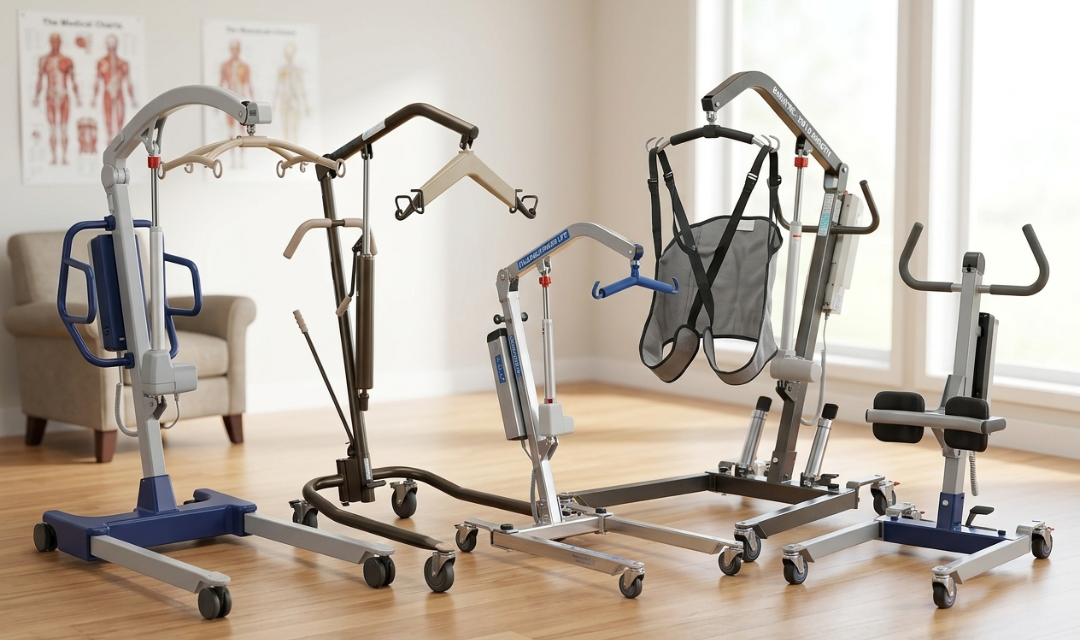
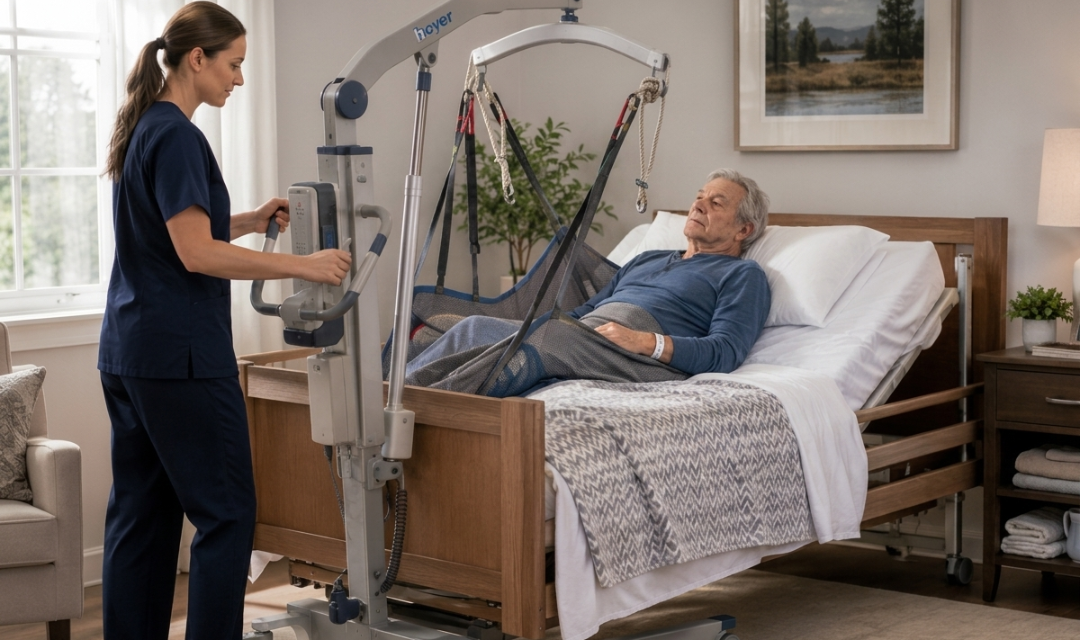
Patient lifting devices lineup including electric Hoyer lift, hydraulic patient lift, bariatric medical lift and stand assist device for home use

4

May

Patient Lifting Devices: Best Medical Lifts for Home Use, Seniors, Caregivers & Facilities

Key Takeaway

Choosing the right patient lifting device can completely change how safe, manageable, and dignified daily transfers feel at home, in senior care, and inside professional care facilities.

If you are comparing patient lifting devices, medical lifts, or lifts for patients, the real goal is not just finding a lift with the right weight capacity. The goal is choosing the correct transfer solution for the patient’s strength, body weight, room layout, caregiver ability, sling needs, and daily transfer routine.

This complete guide breaks down the most important options, including electric Hoyer lifts for sale, hydraulic patient lifts, portable folding lifts, bariatric medical lifts, facility-ready transfer systems, and practical medical lifts for home use designed for seniors, caregivers, rehab settings, nursing homes, and long-term care environments.

In this guide, you will learn how to compare patient lifting devices by real use case — including bed-to-wheelchair transfers, floor recovery, toileting support, bariatric care, one-caregiver use, tight home spaces, travel needs, and high-frequency facility transfers.

What you will learn

Electric, hydraulic, portable, bariatric, homecare, and facility patient lift options.

Why this matters

The wrong lift can increase caregiver strain, transfer risk, sling problems, and daily frustration.

Who this helps

Seniors, family caregivers, rehab teams, nursing homes, assisted living, and facility buyers.

What comes next

You will compare lift types, patient needs, buying features, top models, and common questions.

Lift Types

Types of Patient Lifting Devices and How to Choose the Right Hoyer Lift for Real Transfer Needs

When families, caregivers, and facilities compare patient lifting devices, the most important decision is not simply choosing the strongest lift. The right choice depends on the patient’s weight, ability to assist, transfer type, caregiver strength, room layout, floor recovery needs, sling compatibility, budget, portability, and whether the lift will be used at home or in a professional care setting.

This section explains the main categories of medical lifts and Hoyer-style transfer equipment, including hydraulic Hoyer lifts, electric Hoyer lifts for home use, bariatric heavy-duty Hoyer lifts, and Hoyer lifts for hospitals, nursing homes, rehab centers, assisted living communities, and long-term care facilities.

The best Hoyer lift is the one that matches the real transfer routine. A senior who needs occasional bed-to-wheelchair transfers at home may need a very different lift than a bariatric resident in long-term care, a patient who needs floor recovery, or a facility handling multiple transfers every day.
HYD

Hydraulic Hoyer Lifts

Manual medical lifts for dependable transfer support

Hydraulic Hoyer lifts are manual patient lifting devices that use a pump handle instead of battery-powered lifting. They are often chosen for homecare, backup facility use, budget-conscious buyers, and caregivers who want a reliable lift without depending on charging systems or electronics.

These lifts are best when transfers are needed regularly but not necessarily at very high volume. They can support bed-to-wheelchair transfers, wheelchair-to-chair transfers, toileting routines, and floor-level transfer needs when the model has the proper lift range and sling setup.

Best for

Home caregivers, seniors, budget buyers, rehab recovery, hospice care, and basic facility transfer needs.

Decision factors

Caregiver strength, pump effort, sling compatibility, patient weight, base width, lift range, and transfer frequency.

ELEC

Electric Hoyer Lifts for Home Use

Powered lifting for smoother caregiver operation

Electric Hoyer lifts for home use use battery-powered controls to raise and lower the patient with less manual effort. These lifts are often preferred when transfers happen daily, when one caregiver is doing most of the work, or when the patient cannot safely assist during movement.

Electric models can be especially valuable for medical lifts for seniors because they reduce repeated pumping, help create smoother lifting, and give caregivers more control during bed, wheelchair, recliner, commode, and floor recovery transfers.

Best for

Daily home transfers, frail seniors, one-caregiver routines, heavier assistance, and smoother lifting support.

Decision factors

Battery system, emergency lowering, lift height, base clearance, floor recovery ability, portability, and sling type.

BAR

Bariatric Heavy-Duty Hoyer Lifts

Higher capacity lifts for larger patients and heavier transfers

Bariatric heavy-duty Hoyer lifts are designed for patients who need higher weight capacity, stronger frames, wider lifting support, and more stable handling. These medical lifts are commonly used when standard patient lifting devices do not provide enough strength or confidence for heavier transfer needs.

Bariatric transfers require more than simply checking the weight capacity. Buyers should also consider base width, turning space, sling size, cradle style, caregiver control, floor recovery ability, and whether the lift will be used in a home, hospital, rehab center, nursing home, or long-term care environment.

Best for

Bariatric patients, heavy-assist transfers, facilities, larger users, and higher-capacity daily care routines.

Decision factors

Weight capacity, sling size, powered base, stability, floor lift range, caregiver control, and room clearance.

FAC

Hoyer Lifts for Hospital and Facility Use

Commercial medical lifts for repeated professional transfers

Facility-ready Hoyer lifts are built for higher-frequency transfers, multiple caregivers, varied patient sizes, and demanding care environments. These lifts are often used in hospitals, rehab centers, assisted living communities, skilled nursing facilities, long-term care programs, and professional homecare agencies.

In commercial settings, the best lifts for patients usually need more than basic lifting power. Facilities should consider durability, service tracking, powered base options, sling compatibility, digital scale options, emergency controls, battery downtime, maneuverability, and how well the lift supports repeated use across many patients.

Best for

Hospitals, rehab centers, nursing homes, assisted living, long-term care, and high-use caregiver teams.

Decision factors

Commercial durability, serviceability, patient range, sling options, scale needs, powered base, and staff efficiency.

What the Right Patient Lift Really Depends On

Before comparing specific models, it helps to understand the buying factors that actually change the recommendation. The best patient lifting device should match the patient, the caregiver, the transfer routine, and the environment where the lift will be used.

Patient Weight Choose a lift with enough safe working load for the patient, sling, and transfer routine. Bariatric users may need higher-capacity medical lifts.
Ability to Assist If the patient cannot stand, pivot, or help reliably, a full-body Hoyer lift is usually more appropriate than a standing aid.
Transfer Type Bed, wheelchair, commode, recliner, floor, and car-related transfers each create different clearance and positioning needs.
Home vs Facility Use Homes often need compact maneuverability. Facilities often need stronger durability, repeated-use reliability, and broader patient compatibility.
Floor Recovery Needs If a patient may need to be lifted from the floor, confirm the lift can safely reach low enough for floor-level pickup.
Sling Compatibility The lift must work with the correct sling type, attachment style, size, and support level for the patient’s condition.
Caregiver Strength Electric lifts may reduce strain for caregivers who cannot repeatedly pump or manage difficult manual transfers.
Budget Hydraulic lifts usually cost less, while electric and commercial models offer more convenience, power, and advanced features.
Portability Portable and folding designs matter when the lift must travel, store compactly, or move between rooms, homes, or care locations.
If the patient cannot assist safely, becomes unstable during transfers, needs floor recovery, or requires full-body support, a Hoyer-style lift is usually the more complete category to compare. If the patient can stand partially, a stand assist device may be worth reviewing. If the goal is seated, sling-free movement, a transfer lift chair may be the better direction. The key is matching the equipment to the patient’s real mobility level, not forcing every transfer problem into one product category.
Best By Need

Best Patient Lift by Need, Patient Type, Transfer Situation, and Care Setting

The best patient lifting devices are not chosen by product name alone. A lift that works beautifully for a senior at home may not be strong enough for bariatric care, compact enough for tight bedrooms, advanced enough for hospitals, or practical enough for one caregiver handling repeated transfers every day.

This section matches the most common buyer needs to the most appropriate medical lifts, including hydraulic Hoyer lifts, electric Hoyer lifts for home use, portable folding lifts, bariatric patient lifts, and commercial-grade Hoyer lifts for nursing homes, rehab centers, hospitals, assisted living, and long-term care.

Use this as a real-world decision guide. Start with the patient’s actual transfer problem — elderly homecare, one-caregiver support, floor recovery, bed-to-wheelchair movement, toileting access, tight spaces, car transfer needs, bariatric care, or facility use — then compare the lift models that best match that need.
HOME

Best Patient Lifts for Elderly at Home

Daily senior care, safer transfers, and home mobility support

For elderly users at home, the best lift should feel practical, not overwhelming. The main priorities are safe bed-to-wheelchair transfers, stable lifting, easy caregiver control, enough base clearance for home beds, and a setup that works in bedrooms, bathrooms, and living spaces.

A hydraulic option can be excellent for lower-cost home use, while an electric lift is often better when transfers happen daily or the caregiver needs less physical strain.

Best direction

Choose hydraulic for budget value; choose electric for smoother daily lifting and less caregiver effort.

Key buying factors

Home space, patient weight, caregiver strength, sling fit, bed clearance, and transfer frequency.

1CARE

Best Patient Lifts for One Caregiver

Reduced strain, smoother controls, and easier repeated transfers

When one caregiver is responsible for most transfers, powered lifting becomes especially valuable. Electric patient lifts reduce the physical work of raising and lowering the patient, which can make daily routines more manageable and less exhausting.

For one-caregiver homecare, look for smooth electric controls, emergency lowering, manageable turning diameter, base adjustment, and a sling system that is not overly complicated.

Best direction

Electric Hoyer lifts or portable powered lifts for easier lifting and better caregiver control.

Key buying factors

Battery reliability, hand pendant, emergency lowering, base movement, patient cooperation, and sling setup.

FLOOR

Best Hoyer Lifts for Floor Transfers

Floor recovery, low lifting range, and full-body support

Floor transfers are one of the most important reasons families and facilities compare lifts for patients. If a person may slide, fall, or need to be lifted from a low position, the lift must have a low enough lifting range and stable full-body sling support.

Electric lifts with floor recovery capability are often preferred because they help reduce caregiver strain during one of the hardest transfer situations.

Best direction

Choose a full-body Hoyer lift with floor lift capability and strong sling compatibility.

Key buying factors

Lowest lift height, sling support, patient weight, base stability, caregiver control, and emergency lowering.

BED

Best Lifts for Bed-to-Wheelchair Transfers

Everyday transfer routines from bed, chair, and wheelchair

Bed-to-wheelchair transfers are one of the most common reasons people search for medical lifts for home use. The lift should roll close enough to the bed, raise the patient smoothly, and position the patient securely into a wheelchair without rushed manual lifting.

For basic homecare, hydraulic lifts can work very well. For daily or more demanding routines, electric lifts usually provide a smoother experience for the caregiver and patient.

Best direction

Hydraulic for affordable home use; electric for daily bed-to-wheelchair lifting and smoother control.

Key buying factors

Bed clearance, lift height, base width, wheelchair access, sling type, and caregiver comfort.

TOIL

Best Lifts for Toileting and Commode Access

Bathroom routines, hygiene transfers, and sling selection

Toileting transfers require more planning than basic bed transfers because bathrooms are tight, urgent, and sensitive. A lift must have the right base access, turning ability, and sling compatibility to support safe positioning around toilets, commodes, and hygiene routines.

For full-body support, choose a Hoyer lift that works with toileting or commode-opening slings. For patients who can partially stand, a stand assist device may be more appropriate.

Best direction

Use a full-body lift with toileting sling compatibility, or consider stand assist for partial weight-bearing users.

Key buying factors

Bathroom space, sling opening, patient trunk control, transfer urgency, base access, and caregiver confidence.

TIGHT

Best Patient Lifts for Tight Home Spaces

Compact rooms, narrow storage, and easier maneuverability

In smaller homes, apartments, and crowded bedrooms, the best lift is often the one that can maneuver, store, and position without making every transfer feel impossible. Compact folding lifts and narrower homecare models can be especially helpful.

Buyers should compare base width, turning diameter, folded storage, under-bed clearance, and whether the lift must move between rooms or travel in a vehicle.

Best direction

Portable folding electric lifts or compact homecare hydraulic lifts with practical base dimensions.

Key buying factors

Doorways, hallway turns, storage space, base width, bed clearance, and caregiver maneuvering ability.

CAR

Best Lifts for Car Transfer Support

Travel, transportation, appointments, and outside-the-home movement

Car transfers are difficult because vehicle seats create a different height, angle, and doorway challenge than beds or wheelchairs. Not every lift is ideal for car transfer support, so portability, folding design, positioning range, and sling control matter.

The strongest options are portable transfer-focused lifts or seated transfer chair solutions, depending on the patient’s mobility level and transfer method.

Best direction

Portable electric transfer lifts for full-body support, or transfer lift chairs for seated transfer situations.

Key buying factors

Vehicle height, patient posture, sling positioning, portability, caregiver strength, and whether seated transfer is possible.

BARI

Best Patient Lifts for Bariatric Patients

Heavy-duty capacity, stability, and stronger transfer support

Bariatric patients need more than a higher number on a spec sheet. The lift must provide appropriate safe working load, stable base design, stronger frame confidence, compatible bariatric slings, and enough room for safe positioning.

For bariatric care, facilities often prefer powered models with higher capacity, powered base options, scale options, and service-focused features.

Best direction

Choose 500 lb, 600 lb, or 700 lb capacity lifts based on patient size, sling needs, and setting.

Key buying factors

Weight capacity, sling size, spreader bar, powered base, room clearance, caregiver team, and transfer frequency.

NURS

Best Patient Lifts for Nursing Homes

Repeated transfers, resident range, and staff efficiency

Nursing homes need dependable medical lifts that can support repeated use, different resident sizes, toileting routines, bed transfers, floor recovery, and staff workflows. Reliability, sling compatibility, powered operation, and service tracking can be more important than lowest price.

Strong nursing home options should support daily resident handling while helping reduce caregiver strain and transfer inconsistency.

Best direction

Choose commercial-grade powered lifts or durable high-capacity models with broad resident compatibility.

Key buying factors

Repeat-use durability, sling systems, service reminders, batteries, powered base, lift range, and scale options.

REHAB

Best Lifts for Hospitals, Rehab, and Long-Term Care

Clinical performance, high-use handling, and advanced safety features

Hospitals, rehab centers, and long-term care facilities usually need patient lifting devices that perform consistently across many transfer scenarios. These settings often require stronger lifting range, advanced safety features, broad sling compatibility, and durable construction.

Premium commercial lifts are often worth considering because they can improve staff confidence, patient comfort, maintenance visibility, and long-term reliability.

Best direction

Premium commercial electric Hoyer lifts with strong stability, service features, and broad clinical transfer capability.

Key buying factors

Clinical durability, safety systems, service tracking, lift range, battery downtime, staff usability, and sling options.

BUD

Best Budget Hydraulic Patient Lift Options

Affordable medical lifts for safe, practical homecare

Budget-conscious buyers often start with hydraulic Hoyer lifts because they provide real full-body transfer support at a lower cost than powered models. These lifts are especially useful for homecare, backup transfer support, and lower-frequency transfer routines.

The main tradeoff is caregiver effort. A hydraulic lift can be dependable and affordable, but the caregiver must manually pump the lift and control the lowering process.

Best direction

Choose a dependable hydraulic lift when budget matters and transfers are manageable with manual operation.

Key buying factors

Weight capacity, pump effort, base width, sling support, warranty, caregiver ability, and assembly/storage needs.

PRO

Best Premium Commercial Patient Lift Options

Advanced medical lifts for facilities and serious care environments

Premium commercial lifts are built for organizations that need more than occasional homecare support. These models are designed for demanding transfer environments where patient comfort, caregiver control, durability, service tracking, and broad transfer capability all matter.

These lifts are typically best for professional care settings, larger facilities, bariatric programs, rehab centers, and buyers who want long-term confidence rather than the lowest upfront cost.

Best direction

Choose premium commercial models for repeated use, facility workflows, advanced safety, and stronger long-term reliability.

Key buying factors

Commercial durability, advanced stability, powered base, service monitoring, scale options, and patient range.

The lift is only one part of choosing the right transfer setup

A Hoyer lift becomes much more effective when it is paired with the correct sling, patient positioning plan, and transfer method. A full-body sling, divided-leg sling, toileting sling, bariatric sling, or mesh bathing sling can completely change how safe and practical the lift feels during daily use.

Some patients may also be better matched to a seated patient transfer lift chair or a standing assist device instead of a full-body Hoyer lift. The right choice depends on whether the patient can bear weight, follow directions, sit upright, assist with standing, or requires full-body support.

How To Choose

How to Choose Medical Lifts for Home Use Without Guessing

Choosing medical lifts for home use becomes much easier when you compare the details that actually affect daily transfers. Instead of only looking at price or weight capacity, buyers should check how the lift works around beds, wheelchairs, recliners, commodes, low floors, narrow rooms, caregiver strength, sling needs, and future care changes.

This section gives you a direct buying checklist for comparing patient lifting devices, medical lifts, and lifts for patients before choosing a hydraulic Hoyer lift, electric Hoyer lift for home use, bariatric lift, portable lift, or facility-ready model.

A good patient lift should match the patient’s body, the caregiver’s ability, the room layout, the sling style, and the transfer routine. The best lift is not always the strongest or most expensive — it is the one that works safely in the exact places where transfers happen every day.
Manual vs electric Hoyer lift

Choose hydraulic for value, electric for easier daily lifting

A hydraulic Hoyer lift can be a smart choice when budget matters and the caregiver is comfortable using a manual pump. An electric Hoyer lift is usually better when transfers happen often, when one caregiver is doing most of the work, or when smoother powered lifting would reduce strain.

How much weight capacity do I need?

Match capacity to the patient, not just today’s minimum

Most standard homecare lifts support around 400 to 450 lbs, while stronger electric and bariatric models may support 500, 600, or 700 lbs. Choose enough capacity for the patient’s actual size, sling needs, transfer frequency, and whether care needs may increase over time.

Will the base fit around furniture?

Check base width, clearance, and turning space

Base design matters because the lift must roll around beds, wheelchairs, commodes, recliners, and tight bedroom furniture. Compare closed width, opened width, under-bed clearance, caster height, and turning diameter before buying, especially in smaller homes or facility rooms.

What lift range should I look for?

Low pickup and high transfer range both matter

Lift range determines whether the lift can pick a patient up from a low position, clear a bed, and position the patient safely into a wheelchair or chair. If floor recovery is a concern, confirm the lift reaches low enough. If high beds or facility surfaces are involved, confirm the upper range is sufficient.

Can the lift pick someone up from the floor?

Floor pickup ability is essential for fall recovery

Not every lift is equally suited for floor recovery. If the patient may need help after sliding or falling, choose a full-body lift with a low enough lift range, stable base, proper sling support, and caregiver controls that make low transfers safer and more controlled.

Which sling or cradle style do I need?

The lift must match the sling system

Sling compatibility affects comfort, safety, and how easy transfers feel. Compare 2-point, 4-point, and 6-point sling systems, clip-style versus loop-style attachment, full-body support, toileting needs, bariatric sizing, and whether the patient needs head support or divided-leg positioning.

What safety features should I compare?

Battery, emergency lowering, and backup controls matter

Electric lifts should be compared by more than power. Look for emergency stop buttons, manual emergency lowering, low-battery alerts, removable batteries, charging stations, backup lowering systems, and clear controls. These details matter most during daily use and unexpected power or battery problems.

Do I need a portable patient lift?

Portability matters for travel, storage, and small homes

Portable and folding patient lifts are helpful when the lift must be stored compactly, moved between rooms, transported in a vehicle, or used by mobile caregivers. Check folded size, product weight, setup process, and whether portability sacrifices capacity or lift range.

What should facilities prioritize?

Facility durability is about repeat use, not just capacity

Facilities should look beyond basic lifting. Important details include service monitoring, powered base options, scale compatibility, strong casters, broad sling compatibility, battery uptime, staff usability, bariatric readiness, and how well the lift supports repeated transfers across many residents.

What is easiest for home caregivers?

Simple controls and realistic handling matter most

Home caregivers should choose a lift they can actually operate with confidence. Consider how heavy the lift feels to move, how easy the base opens, whether the sling is simple to attach, how often transfers happen, and whether electric lifting would prevent fatigue or unsafe manual effort.

Quick Buying Checklist for Patient Lifting Devices

Use this simple checklist before choosing a Hoyer lift, medical lift, or patient transfer solution.

Measure the patient Confirm weight, body size, sitting support needs, trunk control, and whether bariatric capacity is required.
Measure the room Check doorway width, bed clearance, bathroom space, recliner access, turning area, and storage location.
Know the transfer surfaces List the main transfers: bed, wheelchair, toilet, commode, recliner, floor, car, or facility surfaces.
Choose manual or electric Hydraulic works for lower-cost support. Electric is better for daily lifting, one caregiver, or higher strain routines.
Match the sling Choose the correct sling size, attachment style, support level, toileting design, and head-support needs.
Plan for future care If mobility is declining, choose a lift that can still work as transfers become heavier or more frequent.

Need help choosing the right sling?

The sling can completely change the safety, comfort, and practicality of the lift. Review full-body slings, toileting slings, divided-leg slings, bariatric slings, mesh slings, and head-support options before buying.

Complete Guide to Choosing Slings

Still unsure which transfer solution fits?

If you are choosing based on a specific patient problem — weakness, falls, toileting, bed transfers, car transfers, or caregiver strain — review the transfer problem guide before comparing models.

Guide to Transfer Lifts by Patient Problem
Compare Options

Patient Lifting Devices Comparison Chart: Compare Hoyer Lifts by Type, Capacity, Use Case, and Features

Comparing patient lifting devices becomes much easier when the most important buying details are shown side by side. This chart helps you compare hydraulic Hoyer lifts, electric Hoyer lifts for home use, portable lifts, bariatric medical lifts, and facility-ready lifts by capacity, transfer type, best use, home or facility fit, and core features.

Use this chart as a quick decision tool before choosing a lift. The right option should match the patient’s weight, transfer surfaces, caregiver ability, sling requirements, room layout, floor pickup needs, portability needs, and whether the lift is being used at home or in a professional care environment.

Compare Top Patient Lifts and Hoyer Lift Models

Review product type, capacity, best use, transfer types, home/facility fit, key features, and price range in one clear chart.

Swipe left to compare type, capacity, best use, transfer types, home/facility fit, key features, and price range.
Product
Type
Capacity
Best Use
Transfer Types
Home / Facility Fit
Key Features
Price Range
Electric full-body Hoyer lift
500 lb
Heavy-duty homecare, bariatric support, floor recovery, low-bed access, and demanding daily transfers.
Bed, wheelchair, chair, low bed, floor recovery, and full-body sling transfers.
Strong fit for homes, hospitals, nursing homes, assisted living, rehab, and facilities needing higher capacity.
6-point spreader bar, floor lift capability, low-bed access, foot pedal base opening, electric controls, emergency lowering, optional digital scale.
Around $1,255
Folding electric patient lift
400 lb
Homecare, travel, compact storage, mobile caregivers, and families needing powered lifting in smaller spaces.
Bed, chair, wheelchair, room-to-room, travel, and full-body sling transfers.
Best for home use, travel use, compact homes, and multi-location caregiving; lighter than many heavy-duty models.
Folding design, battery-powered lifting, tool-free setup, low-battery and overload alerts, battery gauge, emergency stop, optional scale.
Around $1,079
Hydraulic patient lift with optional electric upgrade
400 lb
Budget-conscious homecare buyers who want reliable sling-based transfers with the option to upgrade later.
Bed, wheelchair, chair, toilet/commode area, and full-body sling transfers.
Excellent homecare fit; also useful for hospice, rehab recovery, and lower-volume care settings.
Manual hydraulic operation, optional electric upgrade kit, 6-point spreader bar, compact frame, tool-free setup, 3-year frame warranty.
Around $639 hydraulic / $999 electric upgrade
Portable electric transfer lift
350 lb
Versatile home or travel transfers where car, floor, chair, wheelchair, and bed movement are major concerns.
Car, floor, bed, wheelchair, chair, and full-body sling transfers.
Strong for homecare, travel, appointments, and caregivers needing more transfer flexibility outside the bedroom.
Foldable frame, built-in battery, 4-point clip-style spreader bar, foot pedal base adjustment, battery alert, manual emergency lowering.
Around $1,200
Electric patient Hoyer lift
400 lb
Smooth electric transfers for homecare, hospitals, rehab, assisted living, and professional caregiving.
Bed, wheelchair, commode, seating, and general full-body sling transfers.
Good fit for home and clinical settings needing trusted electric operation and ergonomic handling.
Adjustable U-base, reverse-mounted actuator for knee clearance, 6-point non-sway cradle, emergency stop, manual emergency lowering, optional scale.
Around $1,598
Portable folding Hoyer lift
341 lb
Portability, compact storage, tight rooms, travel, and transfers where maneuverability matters more than maximum capacity.
Floor, bed, chair, wheelchair, commode-area, and portable transfer situations.
Best for homes, clinics, compact settings, and mobile use; not the top choice for bariatric needs.
No-tools folding design, aluminum frame, swan-neck tapered legs, ergonomic push handle, wide leg opening, EN ISO 10535 tested.
Around $2,518
Premium electric floor lift
463 lb
Hospitals, rehab centers, long-term care, assisted living, and premium homecare needing stable, smooth transfers.
Bed, chair, wheelchair, floor, high surfaces, and full-body sling transfers.
Excellent facility fit; also suitable for homecare buyers wanting a higher-end Invacare lift.
Slow’R boom dampener, ergonomic sling hooks, curved boom for patient eye contact, folding frame, service monitoring, 2 batteries included.
Around $3,150
Heavy-duty electric bariatric lift
600 lb
Bariatric care, heavier patients, hospitals, long-term care, rehab centers, and high-support transfer routines.
Bed, chair, wheelchair, floor, high surfaces, commode-area, and bariatric sling transfers.
Best for bariatric homecare and professional care facilities requiring heavy-duty lifting capacity.
Extra-wide padded 360° swivel bar, six-point sling hookup, total pinch-point protection, dual 24V batteries, anti-entrapment, manual lowering.
Around $3,185
Battery-powered electric patient lift
450 lb
Reliable powered transfers for homecare, facilities, floor lifts, commode access, and repeated caregiver use.
Chair, commode, floor, bed, wheelchair, and high-surface transfers.
Good fit for homes, hospitals, rehab, assisted living, and long-term care settings.
Total pinch-point protection, padded 360° swivel bar, two 24V batteries, manual emergency lowering, anti-entrapment, 150–300 lifts per charge.
Around $2,180
Premium electric bariatric Hoyer lift
700 lb
High-capacity bariatric care, facilities, hospitals, rehab, long-term care, and larger patient populations.
Bariatric bed, chair, wheelchair, floor, and full-body sling transfers.
Best for professional bariatric programs and facilities needing maximum capacity and advanced monitoring.
Powered base, interchangeable cradle options, Hoyer Smart Monitor, optional integrated scale, ergonomic push handle, EN ISO 10535 tested.
Around $4,626 standard / $7,240 with scale
Commercial electric medical Hoyer lift
500 lb
High-use care settings needing broad transfer range, powered base, monitoring, and advanced facility performance.
Floor, bed, high surfaces, chair, wheelchair, stretcher option, and full-body sling transfers.
Excellent for hospitals, long-term care, rehab, nursing homes, and advanced homecare setups.
Smart Monitor, powered leg adjustment, interchangeable cradle options, optional scale, optional low leg kit, stretcher option, aluminum frame.
Around $5,293
Manual hydraulic patient lift
450 lb
Affordable homecare, elderly transfers, basic facility use, and caregivers wanting a strong manual lift.
Bed, wheelchair, toilet/commode area, recliner, chair, and full-body sling transfers.
Strong homecare and light facility fit; excellent for buyers wanting value and higher manual capacity.
Hydraulic pump, 4- and 6-point sling compatibility, tool-free assembly, hand-operated base, rear locking casters, welded steel frame.
Around $549
Manual hydraulic Hoyer lift
400 lb
Trusted homecare hydraulic lifting, basic clinical transfers, and caregivers wanting a proven Joerns Hoyer model.
Bed, wheelchair, commode, chair, furniture access, and sling-based transfers.
Best for homecare and light clinical use where manual operation is acceptable.
Rotating pump handle, adjustable U-base, non-sway cradle, disassembles for storage, powder-coated frame, compact homecare design.
Around $695
Manual hydraulic floor lift
450 lb
Durable homecare or clinical lifting with strong frame construction and affordable manual operation.
Bed, wheelchair, chair, patient floor lift use, and sling-based transfers.
Good for homecare, clinics, facilities, and buyers wanting McKesson durability at a value price.
Silver vein steel frame, 6-point cradle, rotating pump handle, adjustable base, offset mast and boom, 5-inch casters, latex-free, HCPCS E0630.
Around $649
Manual hydraulic Hoyer lift
450 lb
Affordable manual medical lift for homecare, facilities, floor pickup needs, and Invacare sling compatibility.
Floor, bed, chair, wheelchair, commode-area, and full-body sling transfers.
Good homecare and facility fit for buyers wanting an Invacare manual lift at a lower price point.
Six-point padded swivel bar, 360° patient rotation, low-friction 5-inch casters, side-to-side pump handle, wide lift range, disassembles for transport.
Around $639

Common Questions

Common Questions About Patient Lifting Devices, Hoyer Lifts, and Medical Lifts for Home Use

These answers are designed to help families, caregivers, seniors, and facility buyers understand how to choose the right patient lifting devices, compare medical lifts for home use, and decide between hydraulic Hoyer lifts, electric Hoyer lifts, bariatric lifts, patient transfer lift chairs, and stand assist devices.

The safest lift choice depends on the patient’s weight, strength, ability to assist, transfer surfaces, sling needs, caregiver ability, room layout, and whether the lift is being used at home, in rehab, or in a professional care facility.
What is the best patient lifting device for home use?

The best patient lifting device for home use is usually a full-body Hoyer lift when the patient cannot stand, pivot, or transfer safely with caregiver assistance alone. For many homes, a hydraulic lift such as the Protekt Transformer Homecare Patient Lift is a strong budget-friendly option, while an electric model such as the Protekt 500 Electric Hoyer Lift or Protekt Take-A-Long Folding Electric Patient Lift may be better for daily transfers and reduced caregiver strain.

If the patient can still sit upright and transfer in a seated position, a patient transfer lift chair may also be worth comparing. If the patient can bear some weight, stand assist devices may be more appropriate than a full-body lift.

What is the best Hoyer lift for seniors?

The best Hoyer lift for seniors depends on how much the senior can assist during transfers. If the senior cannot stand reliably, a full-body Hoyer lift is usually the safer choice. For occasional home transfers, a manual hydraulic model such as the Joerns Hoyer HML400 or Protekt Onyx Hydraulic Patient Lift can work well.

For daily transfers, one-caregiver routines, or frailer seniors, an electric Hoyer lift for home use can reduce manual effort and make lifting smoother. Models such as the Protekt 500 Electric Hoyer Lift or Joerns Hoyer HPL402 are stronger options when powered lifting and caregiver ease matter.

Is an electric Hoyer lift better than a hydraulic Hoyer lift?

An electric Hoyer lift is usually better when transfers happen frequently, when one caregiver is doing most of the work, or when the caregiver wants smoother lifting with less physical effort. Electric lifts use powered controls, often include emergency stop or emergency lowering features, and can be easier for daily homecare or facility use.

A hydraulic Hoyer lift is usually better when budget matters, transfers are less frequent, and the caregiver is comfortable using a manual pump. For budget-friendly hydraulic options, compare the hydraulic Hoyer lifts collection. For powered options, compare electric Hoyer lifts for sale.

What medical lift is best for one caregiver?

The best medical lift for one caregiver is usually an electric Hoyer lift because powered lifting reduces the need for repeated manual pumping. One caregiver still needs enough space, the right sling, and safe transfer technique, but electric operation can make the transfer more controlled and less physically demanding.

Good options to compare include the Protekt Take-A-Long Folding Electric Patient Lift, Joerns Hoyer HPL402, and Invacare Reliant 450 Battery-Powered Transfer Lift. The right choice depends on capacity, lift range, room size, and whether portability is needed.

Can a Hoyer lift pick someone up from the floor?

Yes, many Hoyer lifts can pick someone up from the floor, but not every model is equally suited for floor recovery. To lift a patient from the floor, the lift must have a low enough lifting range, stable base, compatible full-body sling, and enough capacity for the patient.

Strong floor-transfer options include the Protekt 500 Electric Hoyer Lift, Protekt All-In-One Portable Electric Patient Lift, and Invacare Birdie Evo XPLUS. Always confirm lift range and sling compatibility before buying.

What is the best lift for bariatric patients?

The best lift for bariatric patients is a heavy-duty Hoyer lift with enough safe working load, stable construction, compatible bariatric slings, and enough room for safe positioning. Bariatric buyers should not choose by capacity alone; base width, sling size, caregiver control, room clearance, and transfer frequency all matter.

Top bariatric options include the Invacare Reliant 600 Heavy-Duty Power Lift with a 600 lb capacity and the Joerns HPL700 Bariatric Hoyer Lift with a 700 lb capacity. For a strong 500 lb electric option, compare the Protekt 500 Electric Hoyer Lift.

What is the difference between a patient lift chair and a Hoyer lift?

A Hoyer lift is a full-body patient lifting device that usually uses a sling to lift and transfer a patient between surfaces such as a bed, wheelchair, chair, commode, or floor. It is usually better for patients who cannot stand, pivot, or assist safely.

A patient transfer lift chair is a seated transfer device designed to move a patient in a chair-like position. It may be useful for bed, toilet, chair, dining, and some vehicle-related transfers when the patient can sit upright and the transfer environment allows it. A lift chair is not a replacement for every full-body Hoyer lift situation.

Do I need a sling for every Hoyer lift?

Yes, most Hoyer lifts require a compatible patient lift sling. The sling supports the patient’s body during the transfer and must match the lift’s cradle or spreader bar, attachment style, patient size, weight capacity, and care need.

Common sling types include full-body slings, divided-leg slings, toileting slings, mesh bathing slings, bariatric slings, and slings with head support. Before choosing a lift, review the complete guide to choosing patient lift slings so the lift and sling work safely together.

What should I measure before buying a medical lift?

Before buying a medical lift, measure the patient’s weight, approximate body size, bed height, under-bed clearance, doorway width, hallway space, bathroom space, wheelchair height, commode area, and available turning room. These measurements help determine whether the lift can move, position, and transfer safely in the actual care environment.

You should also check the lift’s base width, open width, closed width, caster height, lift range, turning diameter, product weight, sling compatibility, and whether it can handle floor pickup if needed. This is especially important when choosing electric Hoyer lifts for sale for home use.

Where can I buy electric Hoyer lifts for sale?

You can buy electric Hoyer lifts from a medical equipment provider that offers product guidance, warranty support, sling compatibility help, and real customer service before and after purchase. MedCare Mobility offers a dedicated collection of electric Hoyer lifts for sale for homecare, senior care, bariatric care, and facility use.

When buying online, compare more than price. Make sure the lift matches the patient’s weight, room setup, transfer type, sling needs, and caregiver ability.

What is the best way to lift a patient?

The best way to lift a patient is to avoid manual lifting whenever the transfer is unsafe, heavy, unpredictable, or repeated daily. A properly matched patient lifting device can reduce strain on the caregiver and create a more controlled transfer for the patient.

The safest method depends on the patient’s condition. A full-body Hoyer lift is usually best when the patient cannot stand or assist. A stand assist device may work when the patient can bear weight. A patient transfer lift chair may work when seated transfers are appropriate. For more scenario-based guidance, review the guide to transfer lifts based on patient problems.

How do you lift a heavy patient out of bed?

To lift a heavy patient out of bed safely, use a properly rated full-body patient lift with enough weight capacity, the correct sling size, and enough clearance around the bed. The lift should roll close enough to the bed, support the patient fully in the sling, and allow a controlled transfer to the wheelchair, chair, or commode.

For heavier patients, compare high-capacity options such as the Protekt 500 Electric Hoyer Lift, Invacare Reliant 600, or Joerns HPL700 Bariatric Hoyer Lift. Never rely on caregiver strength alone for a heavy transfer.

How do you lift a bedridden patient?

A bedridden patient usually needs a full-body Hoyer lift with a properly fitted sling. The sling is positioned under the patient, attached to the lift, and then the lift raises the patient in a controlled way so they can be moved to a wheelchair, recliner, commode, shower chair, or other supported surface.

For bedridden patients, prioritize lift range, sling support, patient comfort, caregiver access around the bed, and whether the lift can work with the bed height and under-bed clearance. A sling with head support may be needed for patients with poor trunk or neck control. Review the patient lift sling guide before choosing.

How do you lift a patient from the floor?

To lift a patient from the floor, use a full-body patient lift designed with floor pickup capability. The caregiver positions the appropriate sling under the patient, attaches it securely to the lift, raises the patient slowly, and transfers them to a bed, wheelchair, or chair.

Important buying factors include the lift’s lowest lifting height, sling compatibility, patient weight capacity, stability, and emergency lowering system. Good options to compare include the Protekt All-In-One Portable Electric Patient Lift, Protekt 500 Electric Hoyer Lift, and Invacare Birdie Evo XPLUS.

Where can I buy a Hoyer lift?

You can buy a Hoyer lift from a medical equipment supplier that carries hydraulic lifts, electric lifts, bariatric lifts, slings, and related transfer accessories. MedCare Mobility offers both electric Hoyer lifts for sale and hydraulic Hoyer lifts for sale.

Before buying, compare capacity, lift range, home or facility fit, sling compatibility, warranty, caregiver ease, and whether you need portability or bariatric support.

What are the best Hoyer lifts?

The best Hoyer lifts depend on the use case. For homecare value, the Protekt Transformer, Protekt Onyx, and Joerns HML400 are strong hydraulic options. For powered home use, the Protekt 500 Electric Hoyer Lift, Protekt Take-A-Long, and Joerns HPL402 are strong choices.

For premium facility and bariatric use, compare the Invacare Birdie Evo XPLUS, Joerns Hoyer Presence, Invacare Reliant 600, and Joerns HPL700.

How do I choose the right Hoyer lift?

Choose the right Hoyer lift by starting with the patient’s transfer needs. Ask whether the patient can bear weight, whether they need full-body support, how much they weigh, whether floor recovery is needed, how often transfers happen, and whether the lift must work in a small home or high-use facility.

Then compare manual versus electric operation, weight capacity, lift range, base width, under-bed clearance, sling compatibility, emergency lowering, portability, warranty, and facility durability. For a deeper transfer-based decision path, review the guide to choosing transfer lifts by patient problem.

What are the different types of patient lifts?

The main types of patient lifts include hydraulic Hoyer lifts, electric Hoyer lifts, portable folding patient lifts, bariatric patient lifts, facility-grade medical lifts, patient transfer lift chairs, and stand assist devices. Each type solves a different transfer problem.

Hydraulic lifts are manual and budget-friendly. Electric lifts reduce caregiver effort. Portable lifts help with travel and storage. Bariatric lifts support heavier patients. Facility lifts are built for repeated professional use. Patient transfer lift chairs support seated transfers, while stand assist devices are for patients who can still bear some weight.

Trusted Medical Resources

For additional guidance on safe patient handling, caregiver safety, and proper use of patient lifting devices, review these highly trusted medical and healthcare sources used by hospitals, caregivers, and professionals nationwide.


Leave a Reply

RELATED

Posts