

Wheelchair Knowledge Base
The Complete Manual Wheelchair Knowledge Base
Understand manual wheelchair types, sizing, seating, propulsion, frames, wheels, armrests, footrests, transport, pressure management, maintenance and the design differences that shape real-world mobility.
General educational information—not an individualized wheelchair seating, positioning or mobility evaluation. Long-term users and people with complex postural, pressure, neurologic or transfer needs may require assessment by a qualified clinician or wheelchair professional.
What do you want to understand?
What Is a Manual Wheelchair, and What Does It Actually Do?
A manual wheelchair provides seated mobility through large rear wheels that may be propelled by the user, pushed by a caregiver or used in both ways. Its function depends on more than weight and seat width. Frame geometry, seat dimensions, axle position, wheel size, caster design, arm configuration, foot support and the user’s posture all influence comfort, safety and mobility efficiency.
Self-propelled wheelchair
Uses large rear wheels and handrims that allow the seated user to propel and steer when strength, coordination and fit permit.
Caregiver-assisted wheelchair
Includes push handles and may still have large rear wheels, allowing a companion to assist over distances, slopes or difficult environments.
Transport wheelchair
Uses smaller rear wheels and is intended primarily for caregiver propulsion rather than independent handrim propulsion.
The right wheelchair should match the user’s body dimensions, transfer ability, propulsion method, sitting duration, support needs, environment, caregiver capability and transportation routine.
Wheelchair vs. transport chair
A wheelchair may support independent propulsion. A transport chair is lighter and more compact but usually requires a caregiver to push.
Wheelchair vs. rollator
A rollator supports standing mobility and temporary rest. A wheelchair provides seated mobility when walking is unsafe, too tiring or not possible for the required distance.
Complete Manual Wheelchair Buying and Comparison Guide
This Knowledge Base explains wheelchair function, fit, mechanics and maintenance. The dedicated guide focuses more directly on choosing and comparing wheelchair categories.
Types of Manual Wheelchairs and How Their Purposes Differ
Wheelchair labels describe a general design class, not a complete fit. Two chairs in the same category can differ significantly in weight, adjustability, seat geometry, transport features and long-term suitability.
Standard wheelchairs
Durable everyday folding chairs commonly used for home care, recovery, hospitals and facilities.
Browse standard wheelchairs →Lightweight wheelchairs
Reduce lifting and rolling effort while often adding better arms, axles, wheels or seating adjustments.
Browse lightweight wheelchairs →Ultra-light and active wheelchairs
Prioritize low frame weight, propulsion efficiency and configurable geometry for frequent or independent users.
Explore ultra-light designs →Transport wheelchairs
Use smaller rear wheels and are pushed by a caregiver for appointments, travel and short-distance transport.
Browse transport wheelchairs →Bariatric wheelchairs
Provide wider seating, reinforced frames and higher capacities, but also require more doorway and turning clearance.
Understand bariatric fit →Reclining wheelchairs
Use a high back and recline mechanism for selected positioning, head support and care needs.
Browse reclining wheelchairs →Hemi-height wheelchairs
Lower the seat-to-floor height for foot propulsion, shorter users or selected transfer situations.
Understand hemi height →Pediatric wheelchairs
Use child-sized seat dimensions, wheel geometry and support components rather than simply shrinking an adult chair.
Explore pediatric models →Manual Wheelchair Anatomy: What Every Part Does
A wheelchair is a connected mobility and seating system. Changing one component can affect stability, transfer access, posture, turning, propulsion, folding or maintenance.
Core wheelchair components
Frame and cross brace
Determine rigidity, folding behavior, weight, width and structural capacity.
Seat and back upholstery
Support the body and influence posture, immersion, pressure and ease of cleaning.
Rear wheels and axles
Drive propulsion, affect stability and may be fixed, quick-release or position-adjustable.
Handrims
Provide the surface the user pushes and steers. Diameter, coating and shape affect grip and efficiency.
Front casters and forks
Control turning response, obstacle approach and front-end vibration.
Wheel locks
Hold the rear wheels during transfers and parking. They are not usually dynamic service brakes.
Armrests and side guards
Support the arms, protect clothing and affect side transfers and access to tables.
Footrests and legrests
Support the lower legs and feet while affecting overall length, transfers and turning clearance.
Push handles
Allow caregiver assistance and may include hand brakes on transport-oriented designs.
Anti-tippers and accessories
Add selected stability or function but must match the exact chair and configuration.
Manual Wheelchair Fit: The Measurements That Matter Most
Wheelchair fit affects posture, transfers, pressure distribution, propulsion and the ability to move through the environment. Advertised seat width alone is not enough.
Confirm the body, chair and environment together
- Seat width allows support without excessive space
- Seat depth supports the thighs without pressing behind the knees
- Seat height permits foot support or intended foot propulsion
- Back height provides needed trunk support without restricting movement
- Armrest height supports relaxed shoulders
- Footrests position the feet without excessive pressure
- Knees and hips remain in a usable posture
- Rear wheels are reachable for intended self-propulsion
- Wheel locks are reachable and hold securely
- Overall width clears doors and bathrooms
- Chair and user can be transported safely
- Cushion height is included in the final setup
Wheelchair Seat Width and Seat Depth
Seat width and depth shape pelvic position, thigh support, propulsion access, pressure distribution and doorway clearance.
| Measurement | If too small | If too large | What to verify |
|---|---|---|---|
| Seat width | Crowding, side pressure and transfer difficulty | Reduced trunk support, harder propulsion and wider chair | Body width, clothing, side supports and overall wheelchair width |
| Seat depth | Reduced thigh support and higher seat pressure | Pressure behind knees and slouched posture | Buttock-to-knee length, cushion and back upholstery |
| Seat-to-back relationship | May force the pelvis forward | May reduce stable contact | Back angle, upholstery tension and cushion placement |
A wider wheelchair is not automatically more comfortable. Excess width can make self-propulsion harder, reduce lateral support and prevent the chair from fitting through important spaces.
Seat-to-Floor Height, Hemi Height and Rear Axle Position
Seat height affects transfers, table access, foot propulsion and handrim reach. Rear axle position changes stability and propulsion efficiency.
Lower or hemi-height setup
- May allow the feet to reach the floor.
- Can support selected foot-propulsion patterns.
- May make some transfers easier.
- Can change caster and rear-wheel setup requirements.
Rear axle moved forward
- Usually makes the handrim easier to reach.
- Can reduce propulsion effort.
- Increases responsiveness.
- May reduce rearward stability and increase anti-tipper needs.
Changing axle or caster positions can alter seat angle, wheel-lock alignment, caster trail and tipping characteristics. Follow the exact manufacturer instructions or use a qualified wheelchair professional.
Wheelchair Frames: Steel, Aluminum, Folding and Active Geometry
Frame material matters, but geometry, tubing, cross braces, axle hardware and configuration often matter just as much.
| Frame type | Main advantage | Main limitation | Often used for |
|---|---|---|---|
| Steel folding frame | Durability and accessible cost | Usually heavier | Standard, facility and bariatric chairs |
| Aluminum folding frame | Lower carrying weight | May cost more | Lightweight, travel and daily-use chairs |
| Performance folding frame | Adjustability with transport convenience | More setup points to maintain | K0005 and long-term mobility |
| Active geometry | Efficient propulsion and close body-to-wheel relationship | Requires precise fit and stability tuning | Independent frequent users |
Rear Wheels, Front Casters, Wheel Size and Turning
Rear wheel diameter and axle location influence propulsion. Front caster diameter and fork geometry influence turning, vibration and obstacle approach.
| Component | Typical role | Tradeoff |
|---|---|---|
| 24-inch rear wheels | Common self-propulsion size with accessible handrims | Add width and transport bulk |
| 20- to 22-inch rear wheels | Compact or pediatric configurations | Different propulsion leverage and seat geometry |
| Small transport wheels | Reduce chair weight and folded bulk | Require caregiver propulsion |
| 5- to 6-inch casters | Quick turning and active-chair response | More sensitivity to cracks and thresholds |
| 7- to 8-inch casters | Better obstacle approach for general use | More weight and turning swing |
Wheelchair Tires, Handrims and Quick-Release Wheels
Tire construction affects traction, vibration and maintenance. Handrim design affects grip and propulsion. Quick-release axles improve transport but require correct re-engagement.
Solid polyurethane tires
Flat-free and low maintenance, but usually transmit more vibration than pneumatic tires.
Pneumatic tires
Can improve traction and ride feel but require pressure checks and puncture planning.
Composite mag wheels
Durable and low maintenance, commonly used in standard and facility wheelchairs.
Spoked performance wheels
May reduce rotational weight and improve ride response while requiring spoke and rim inspection.
Ergonomic or coated handrims
Can improve grip for selected users but may create more friction or heat during braking.
Quick-release axles
Make vehicle loading easier. Each wheel must click fully into place and be pull-tested before use.
Wheelchair Armrests, Footrests and Elevating Legrests
Arm and leg supports affect comfort, side access, table clearance, transfer technique and overall chair length.
| Component | Main use | Important limitation |
|---|---|---|
| Desk-length arms | Allow closer access to tables | Provide less forearm support than full-length arms |
| Full-length arms | Support more of the forearm and may assist push-up transfers | Can limit table access |
| Flip-back arms | Open the side for transfers | Must lock securely when returned |
| Removable arms | Provide maximum side access | Loose or incorrect installation creates risk |
| Swing-away footrests | Clear the front for transfers | Increase overall length when forward |
| Elevating legrests | Support selected leg-positioning needs | Do not automatically treat swelling or circulation problems |
Manual Wheelchair Propulsion, Steering and Shoulder Load
Self-propulsion requires repeated contact with the handrims. Seat height, axle position, wheel reach, user strength, technique and environment all affect effort.
Wheel reach
If the rear wheels sit too far back or the seat is too high, the user may reach inefficiently and shorten the push stroke.
Push frequency
A chair with high rolling resistance requires more frequent pushes and can increase fatigue.
Turning
Independent turning usually combines pushing one handrim while slowing or reversing the other.
Slopes
Uphill travel increases propulsion demand; downhill travel requires controlled braking without overheating the hands.
Shoulder preservation
Efficient fit, smooth technique, appropriate tire pressure and avoiding unnecessary loads can reduce repetitive strain.
Caregiver propulsion
Push-handle height, chair weight, wheel condition and surface slope affect caregiver control and effort.
Transport Chair vs. Manual Wheelchair
The central difference is who propels the chair. Transport chairs prioritize caregiver handling and portability. Manual wheelchairs can support self-propulsion but are usually wider and heavier.
| Factor | Manual wheelchair | Transport chair | Convertible 2-in-1 |
|---|---|---|---|
| Primary propulsion | User or caregiver | Caregiver | User or caregiver depending on mode |
| Rear wheels | Usually 20–24 inches with handrims | Usually smaller wheels | Large wheels remove for transport mode |
| Independent mobility | Possible when fit and ability permit | Usually not possible | Possible in wheelchair mode |
| Transport weight | Moderate to low depending on model | Often lower | Can become lighter after wheel removal |
| Best use | Daily mobility and mixed independence | Appointments, travel and short-distance assistance | Changing levels of independence and assistance |
High-Back Reclining Wheelchairs
Reclining wheelchairs move the backrest rearward and are often paired with head support, elevating legrests, anti-tippers and set-back rear wheels. Recline is different from tilt-in-space: recline changes the hip angle, while tilt generally changes the orientation of the entire seating system.
Reclining can increase sliding and shear if the pelvis moves forward. Head support, legrest position, anti-tippers, wheel locks and caregiver technique must be managed together.
High-Back Reclining Wheelchairs
Compare full-recline wheelchairs for home care, rehabilitation and facility environments.
Bariatric and Extra-Wide Wheelchairs
Bariatric wheelchairs use reinforced frames, wider seats and higher capacities. Capacity alone does not confirm fit. Seat width, seat depth, foot support, doorway clearance, vehicle access and caregiver handling are equally important.
| Factor | Why it matters | What to verify |
|---|---|---|
| Seat width and depth | Body support and pressure distribution | Actual body dimensions and clothing |
| Overall width | Doorway, bathroom and hallway access | Narrowest route in the home or facility |
| Weight capacity | Structural limit | Current manufacturer specification |
| Chair weight | Caregiver pushing and vehicle loading | Who will handle the chair |
| Footplate and leg support | Lower-extremity alignment and clearance | Foot size, leg position and transfer plan |
Wheelchair Pressure Management, Posture and Cushions
A wheelchair frame does not provide a complete seating solution by itself. Cushion type, seat sling tension, back support, pelvic position, foot support and repositioning ability all influence comfort and skin protection.
Pressure redistribution
A suitable cushion may spread load and improve immersion, but it does not replace movement, skin checks or clinical care.
Pelvic stability
The pelvis forms the base of seated posture. Sliding, rotation or tilt can affect the trunk, head and limb position.
Foot support
Footplate height and angle affect thigh loading, pelvic position and pressure under the feet.
Complete Guide to Wheelchair Seat Cushions
Compare foam, gel, air and hybrid cushions and understand pressure, posture, moisture and sizing considerations.
Wheelchair Transfers, Wheel Locks and Safety
Transfer methods vary by strength, weight-bearing status, cognition, equipment and caregiver training. General preparation still matters.
Position the chair
- Use a firm, level surface.
- Move close to the transfer destination.
- Remove or swing away footrests.
- Move armrests only when the chair allows it.
Stabilize the wheelchair
- Engage both wheel locks.
- Confirm the rear wheels do not rotate.
- Check anti-tippers when required.
- Do not use loose furniture for support.
Use the prescribed method
- Follow clinical weight-bearing instructions.
- Use transfer boards or lifts only when appropriate.
- Protect hands, feet and skin.
- Stop when the setup feels unstable.
Wheelchair Use Indoors, Outdoors, on Ramps and Across Thresholds
Wheel size, caster diameter, tire material, chair width, slope, surface condition and user control determine how the wheelchair behaves.
Tight indoor spaces
Overall width and footrest length may matter more than product weight.
Door thresholds
Small casters can stop suddenly. Approach slowly and squarely when safe.
Carpet
Rolling resistance increases, especially with small casters, soft tires or heavier users.
Ramps
Uphill effort and downhill braking demand increase. Follow slope and ramp safety guidance.
Sidewalk cracks
Caster size, approach angle and speed influence the chance of a sudden stop.
Grass and gravel
Loose or soft surfaces increase resistance and can overwhelm small front casters.
Folding, Vehicle Loading, Quick-Release Wheels and Storage
Evaluate what the caregiver actually lifts, not only the advertised frame weight. Footrests, wheels, cushions and accessories may be removed separately.
Chair closure
- Cross-fold frame
- Fold-down backrest
- Latch and pinch points
- Cushion removal
Detachable components
- Footrests
- Quick-release wheels
- Armrests where approved
- Accessories
Cargo fit
- Trunk opening
- Folded dimensions
- Safe handholds
- Secure placement
Before use
- Wheels fully locked in
- Footrests secured
- Frame fully open
- Wheel locks aligned
Manual Wheelchair Maintenance and Cleaning
Wheelchairs experience repeated folding, vibration, transfers, curb impacts and load. Gradual wear can change how the chair rolls, locks or supports the user.
Check these areas regularly
- Frame and cross braces are not bent or cracked
- Folding pivots open and close correctly
- Rear wheels do not wobble
- Quick-release axles lock fully
- Casters rotate and swivel freely
- Tires are not worn, split or underinflated
- Wheel locks hold both rear wheels
- Armrests and footrests latch securely
- Upholstery is not stretched, torn or contaminated
- Anti-tippers and accessories remain secure
Why a Wheelchair Pulls, Wobbles, Squeaks or Feels Hard to Push
Common problems can come from wheel alignment, tire condition, caster resistance, brake drag, uneven loading, upholstery or frame damage.
The wheelchair pulls to one side
Compare tire pressure, caster resistance, wheel alignment, wheel-lock drag and frame condition on both sides.
The chair feels unusually hard to push
Check soft or underinflated tires, carpet, overloaded bags, brake drag, bearing resistance and whether the user is sitting too far back from the rear wheels.
A rear wheel wobbles
Stop and inspect the axle, quick-release engagement, wheel bearing, hub and spokes or composite wheel structure.
The front casters flutter
Speed, caster angle, fork alignment, loose hardware or an incorrect axle/caster setup may be responsible.
The wheel locks no longer hold
Tire wear, tire pressure or lock position may have changed. Adjust only according to the chair manual.
The seat sags or the user slides forward
Inspect upholstery tension, seat depth, back angle, cushion position and pelvic support.
The footrests feel uneven
Confirm equal length settings, proper latch engagement, footplate angle and frame alignment.
The chair tips too easily backward
Axle position, user movement, rear loading, slopes and anti-tipper setup all affect rearward stability.
Wheelchair Cushions, Anti-Tippers, Belts, Trays and Add-Ons
Accessories can improve comfort, positioning, visibility and daily function, but they can also alter weight, width, folding, pressure or stability.
Seat cushions
Foam, gel, air and hybrid cushions address different comfort, posture and pressure needs.
Anti-tippers
Limit rearward tipping travel but must be correctly positioned for curbs, transport and daily use.
Pelvic positioning belts
May support pelvic position when clinically appropriate. They are not a general restraint substitute.
Trays and work surfaces
Support selected activities but affect access, transfers and upper-body space.
Oxygen and IV holders
Must be approved for the chair and positioned to avoid tipping, wheel interference and excess rear loading.
Wheel and handrim upgrades
Can change weight, propulsion feel, maintenance and compatibility with wheel locks.
Common Wheelchair Terms Explained
These definitions provide a consistent reference for product specifications and clinical conversations.
Seat-to-floor height
The vertical distance from the seat surface to the floor.
Hemi height
A lower seat configuration intended for selected users, including some who propel with their feet.
Camber
The outward angle of the rear wheels when viewed from the front or back.
Center of gravity
The relationship between user mass, seat position and wheelbase that affects stability and responsiveness.
Caster trail
The geometry that helps a front caster align behind its pivot while rolling.
Quick-release axle
A removable rear-wheel axle operated by a center button.
Wheel lock
A parking lock that presses against the rear tire to prevent rotation.
Cross brace
The folding structural assembly connecting the two frame sides.
Riggings
A broad term often referring to removable front footrest or legrest assemblies.
Desk-length arm
A shorter armrest designed to permit closer access to tables.
Elevating legrest
A leg support that raises the lower leg through an adjustable angle.
Transport chair
A caregiver-propelled chair with smaller rear wheels and no user handrims.
Representative Manual Wheelchairs and What They Demonstrate
These products serve as concrete examples of wheelchair engineering. They are not universal recommendations.

Invacare Essential SX3 Regular Wheelchair
A lighter daily-use wheelchair with adjustable seat depth, flip-back desk arms and a 300 lb capacity.
View wheelchair details
Chariot IV XTC Adjustable Height Wheelchair
A lightweight aluminum wheelchair with adjustable seat depth, back angle, back height, axle position and quick-release rear wheels.
View wheelchair details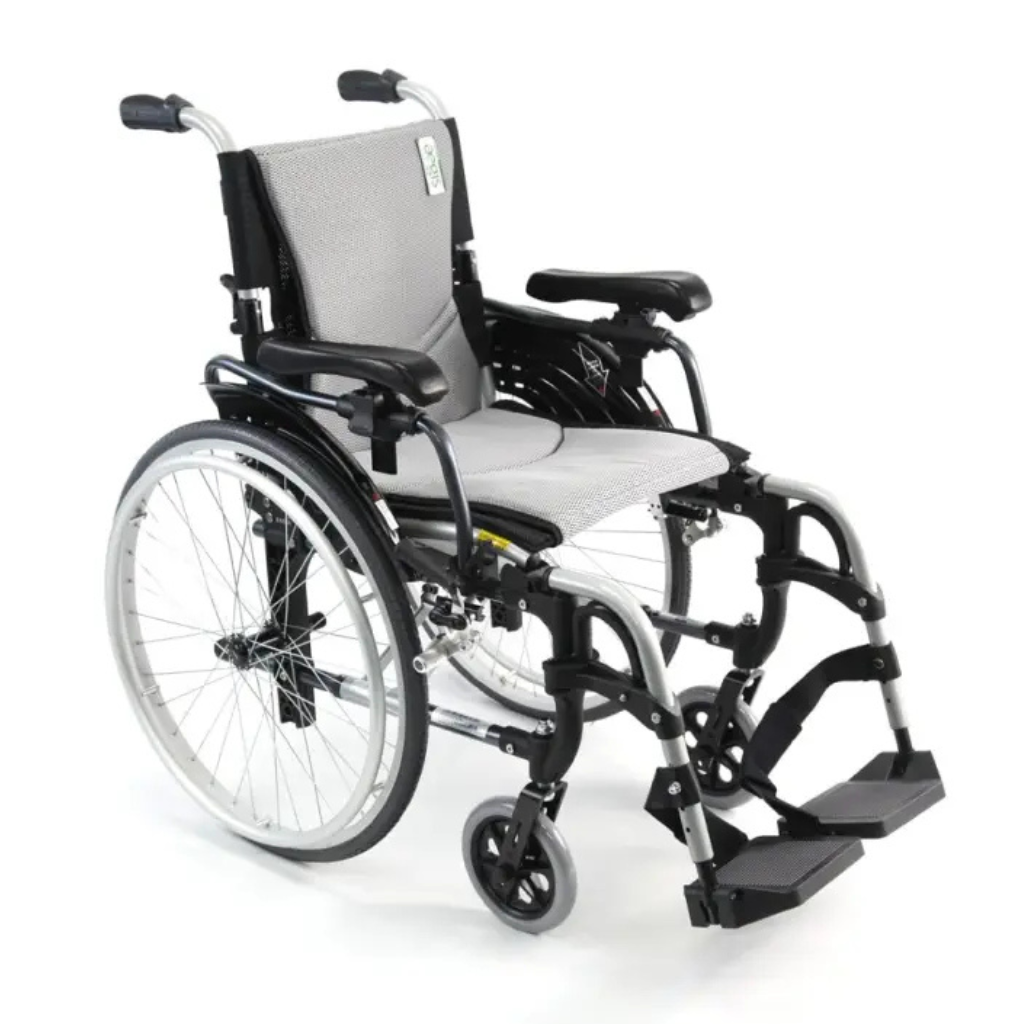
Karman S-ERGO 305 Ultra Lightweight Ergonomic Wheelchair
A K0005 ergonomic wheelchair with S-shape seating, quick-release wheels and multiple fit adjustments for long-term mobility.
View wheelchair details
S-ERGO ATX Active Wheelchair
A highly configurable aircraft-grade aluminum wheelchair with adjustable center of gravity, seat heights and back geometry.
View wheelchair details
Protekt Cambria 2-in-1 Wheelchair
A dual-use chair that converts from self-propelled wheelchair mode to caregiver-pushed transport mode.
View wheelchair details
Titus Extra Wide Wheelchair
A reinforced steel wheelchair offered in 22–30 inch seat widths with capacities from 500 to 700 lb.
View wheelchair details
Karman T-2700 Transfer Wheelchair
A folding transport wheelchair with detachable desk arms that open the side for assisted transfers.
View wheelchair details
Astra Aluminum Transfer Wheelchair
A 19 lb aluminum transport chair for appointments, vehicle transfers, clinics and short-distance caregiver mobility.
View wheelchair details
Chariot IV XTC-RC Reclining Wheelchair
A 90–180 degree reclining wheelchair with adjustable seat depth, high-back support and elevating legrests.
View wheelchair details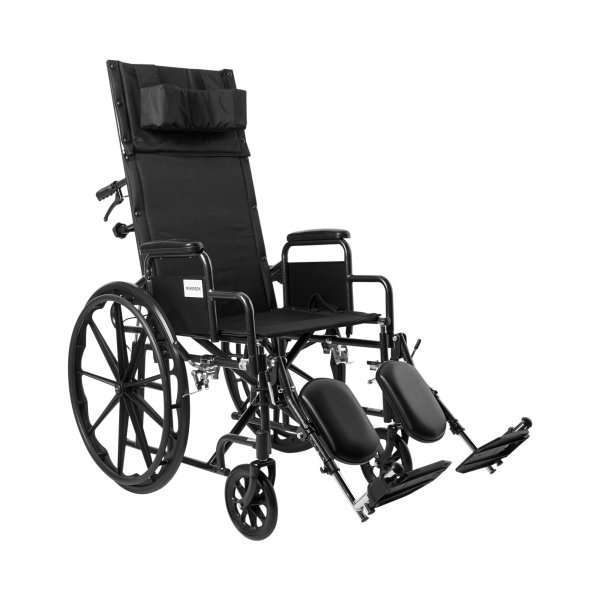
McKesson Reclining Wheelchair
A hydraulic reclining wheelchair with head support, elevating legrests, set-back rear wheels and anti-tippers.
View wheelchair detailsAll Manual Wheelchairs From the Supplied Master List
Use the filters to study how actual wheelchair designs differ by frame, weight, seating, propulsion, capacity, recline, transport and fit. This library supports research; it does not replace the Manual Wheelchair Assessment or professional fitting.
MedCare Mobility sells the products shown below. Product placement does not establish that a wheelchair is appropriate for a particular person. Verify current specifications, configuration, fit, instructions, availability and clinical suitability.

Invacare Essentials EX1 Wheelchair
A straightforward steel-frame manual wheelchair for daily mobility, home care, hospitals and facilities.
View wheelchair details
Invacare Essential SX3 Regular Wheelchair
A lighter daily-use wheelchair with adjustable seat depth, flip-back desk arms and a 300 lb capacity.
View wheelchair details
Chariot IV XTC Adjustable Height Wheelchair
A lightweight aluminum wheelchair with adjustable seat depth, back angle, back height, axle position and quick-release rear wheels.
View wheelchair details
Chariot IV Ultra Lightweight Wheelchair
A customizable folding wheelchair with seat-depth, axle, armrest and footrest adjustments for daily use and rehabilitation.
View wheelchair details
Karman LT-980 Feather Light Wheelchair
A simple 24 lb folding wheelchair designed around easier lifting, vehicle loading and everyday portability.
View wheelchair details
Karman S-ERGO 305 Ultra Lightweight Ergonomic Wheelchair
A K0005 ergonomic wheelchair with S-shape seating, quick-release wheels and multiple fit adjustments for long-term mobility.
View wheelchair details
Chariot II Hemi Wheelchair
A durable steel wheelchair that converts between standard and hemi seat heights for foot propulsion and easier access.
View wheelchair details
Karman LT-K5 Ultra Lightweight Wheelchair
A 28 lb folding wheelchair with adjustable axle height, flip-back arms and a folding backrest.
View wheelchair details
Karman LT-990 Ultra Lightweight Manual Wheelchair
A 24 lb travel-focused wheelchair with quick-release rear wheels and front casters for a very compact transport footprint.
View wheelchair details
Karman LT-800T Standard Manual Wheelchair
A dependable folding wheelchair with padded nylon seating, swing-away footrests and flat-free wheels.
View wheelchair details
S-ERGO ATX Active Wheelchair
A highly configurable aircraft-grade aluminum wheelchair with adjustable center of gravity, seat heights and back geometry.
View wheelchair details
Protekt Cambria 2-in-1 Wheelchair
A dual-use chair that converts from self-propelled wheelchair mode to caregiver-pushed transport mode.
View wheelchair details
Karman S-ERGO 115 Ergonomic Wheelchair
A 25 lb wheelchair using Karman’s S-shape seating system for posture, pressure distribution and reduced forward sliding.
View wheelchair details
McKesson Lightweight Wheelchair
A dual-axle facility wheelchair with flip-back removable desk arms and swing-away or elevating legrest options.
View wheelchair details
Karman 802-DY Lightweight Manual Wheelchair
A 30 lb aluminum folding wheelchair with flip-back desk arms and detachable swing-away footrests.
View wheelchair details
Karman Flexx Ultra Lightweight Wheelchair
A configurable K0005 wheelchair with adjustable center of gravity, seat height, seat depth and back angle.
View wheelchair details
Titus Extra Wide Wheelchair
A reinforced steel wheelchair offered in 22–30 inch seat widths with capacities from 500 to 700 lb.
View wheelchair details
McKesson Bariatric Wheelchair
A 22 or 24 inch heavy-duty wheelchair with a 450 lb capacity and dual-axle hemi-height capability.
View wheelchair details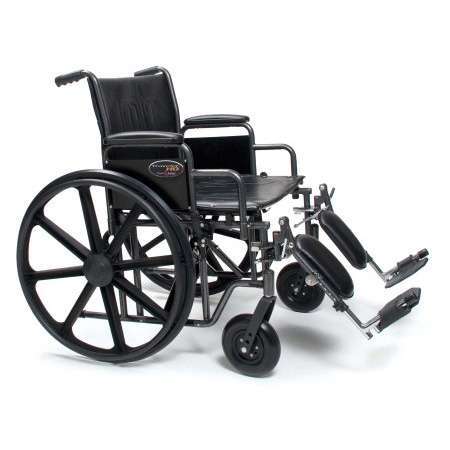
Graham-Field Traveler HD Bariatric Wheelchair
A reinforced dual-axle wheelchair with 20–24 inch seating and multiple arm and legrest configurations.
View wheelchair details
Karman KN-900W Bariatric Wheelchair
A steel bariatric wheelchair available in 24, 26 and 28 inch widths with capacities up to 600 lb.
View wheelchair details
Karman T-2700 Transfer Wheelchair
A folding transport wheelchair with detachable desk arms that open the side for assisted transfers.
View wheelchair details
Karman Aluminum LT-1000 Transport Wheelchair
A lightweight aluminum transport chair with attendant hand brakes, parking brakes and larger rear transport wheels.
View wheelchair details
Karman T-900 Heavy Duty Transport Chair
A reinforced steel transport chair with 20 or 22 inch seating and a 450 lb capacity.
View wheelchair details
Astra Aluminum Transfer Wheelchair
A 19 lb aluminum transport chair for appointments, vehicle transfers, clinics and short-distance caregiver mobility.
View wheelchair details
Chariot IV XTC-RC Reclining Wheelchair
A 90–180 degree reclining wheelchair with adjustable seat depth, high-back support and elevating legrests.
View wheelchair details
Invacare Tracer SX5 Wheelchair Recliner
A high-strength reclining wheelchair with 90–180 degree positioning and dual-axle seat-height options.
View wheelchair details
Karman KN-880 Reclining Back Wheelchair
A 180-degree reclining wheelchair with detachable full arms, elevating footrests and flat-free wheels.
View wheelchair details
McKesson Reclining Wheelchair
A hydraulic reclining wheelchair with head support, elevating legrests, set-back rear wheels and anti-tippers.
View wheelchair details
Chariot IV XTC Pediatric Wheelchair
A child-sized wheelchair with 12 and 14 inch seating, adjustable back height and standard anti-tippers.
View wheelchair details
Chariot IV XTC-RC Pediatric Reclining Wheelchair
A child-sized 90–180 degree reclining wheelchair with head support, elevating legrests and offset rear wheels.
View wheelchair detailsManual Wheelchair Guides, Categories, Tools and Downloads
Use these MedCare Mobility resources to continue from wheelchair education into sizing, comparison, product research, seating support and broader mobility planning.
Manual Wheelchair Assessment
Answer practical questions about the user, caregiver support, seating, propulsion, transfers, environment and transportation needs.
Start the Wheelchair AssessmentManual Wheelchair Buying and Comparison Guide
Compare standard, lightweight, transport, bariatric, reclining and specialized wheelchair categories.
Open the Wheelchair GuideLightweight Manual Wheelchair Comparison Chart
Use the printable chart to compare wheelchair weight, seat sizing, capacity, adjustability and portability.
Open the Comparison PDFComplete Guide to Wheelchair Seat Cushions
Understand foam, gel, air and hybrid cushions for pressure redistribution, posture, comfort and moisture management.
Read the Wheelchair Cushion GuideWheelchairs for Hospitals and Healthcare Facilities
Review durability, infection-control, sizing, transport, fleet management and staff workflow considerations.
Read the Facility Wheelchair ResourceSenior Mobility Challenges and Solutions
Connect wheelchair use with walking difficulty, balance, outdoor safety, mobility aids and independence.
Explore the Senior Mobility ResourceExplore Manual Wheelchairs by Design and Use
Move directly into the wheelchair category that best matches the type of equipment you want to research.
Lightweight Wheelchairs
Explore folding wheelchairs designed to reduce lifting, transport and caregiver-handling demands.
Browse lightweight wheelchairs →Standard Wheelchairs
Explore dependable everyday wheelchairs for home care, rehabilitation, hospitals and facilities.
Browse standard wheelchairs →Transport Wheelchairs
Explore caregiver-propelled chairs for appointments, travel, transfers and short-distance mobility.
Browse transport wheelchairs →High-Back Reclining Wheelchairs
Explore manual reclining chairs with extended back support, elevating legrests and positioning features.
Browse reclining wheelchairs →Manual Wheelchair Questions and Answers
What is the difference between a standard and lightweight wheelchair?
Lightweight wheelchairs generally reduce chair weight and may add better axle, arm, wheel or seat adjustments. Standard chairs prioritize durability and straightforward everyday use.
How do I choose wheelchair seat width?
Measure the user and allow enough room for clothing and movement without creating excessive side space. Also verify the resulting overall chair width.
What does hemi height mean?
Hemi height is a lower seat-to-floor configuration. It may help selected users reach the floor for foot propulsion or use a lower transfer height.
Can a transport chair be self-propelled?
Most transport chairs cannot be propelled through handrims because they use small rear wheels. A convertible 2-in-1 model may support both modes.
Are elevating legrests always better?
No. They increase chair length and change leg position. They should be selected for a specific support or care need rather than added automatically.
What is the benefit of quick-release wheels?
They reduce the size and weight of the chair for vehicle loading. The wheels must be fully reinstalled and checked before use.
What makes an active wheelchair different?
Active wheelchairs usually place the user closer to the rear wheels and offer more control over center of gravity, seat angle and wheel configuration for efficient self-propulsion.
Does a reclining wheelchair prevent pressure sores?
No. Recline can change position but may also increase sliding and shear. Pressure management requires a complete seating, cushion, repositioning and skin-care plan.
How often should a wheelchair be inspected?
High-use chairs should receive frequent visual and functional checks, with a more complete inspection on a regular schedule and after impacts, transport damage or performance changes.
Can any cushion be used on any wheelchair?
No. Cushion dimensions, height, material, cover and positioning must work with the seat, armrests, footrests and user’s needs.
Sources, Editorial Method and Product Boundaries
This Knowledge Base combines the supplied MedCare Mobility product specifications with established wheelchair fitting, seating, propulsion and safety concepts. Product examples are used to explain design differences, not to diagnose a user or guarantee suitability.
Product information
Weights, capacities, dimensions and configurations are based on the supplied master product list. Current product pages and manufacturer documents should be checked before purchase because specifications can change.
Clinical boundary
Complex seating, pressure, neurologic, pediatric, bariatric or long-term mobility needs may require evaluation by a physical therapist, occupational therapist, rehabilitation engineer or qualified wheelchair professional.