18
May
How to Choose the Best Mattress for Hospital Bed Use: Medical Bed Mattress, Foam, Air, Low Air Loss, Bariatric & Pressure Relief Guide
The best mattress for hospital bed use is not always the softest mattress — it is the mattress that matches the patient’s real care needs.
Choosing the right medical bed mattress is one of the most important decisions for elderly care, homecare recovery, long-term bed support, pressure injury prevention, and facility-level patient care. A hospital bed mattress is not simply a place to sleep. It can affect skin protection, moisture control, repositioning, transfers, comfort, stability, and caregiver workload every single day.
Many people compare mattresses for hospital bed use by softness, thickness, or price alone. But when someone spends many hours in bed, the wrong mattress can increase pressure on vulnerable areas, trap heat and moisture, make transfers harder, reduce positioning support, and even worsen pressure injuries — even when the mattress feels soft at first.
This complete guide is designed to help you understand exactly how to choose the best hospital bed mattress for the person, not just the bed. You will learn how foam, gel foam, medical bed mattress support surfaces, air mattress for hospital bed systems, low air loss therapy, alternating pressure, bariatric mattress options, and advanced rotation systems are used for different patient needs.
Why a Hospital Bed Mattress Matters More Than Most People Realize
A good mattress supports comfort. The right mattress supports the whole care plan.
Choose by real problem
Match the mattress to bed sores, sweating, heel pressure, immobility, transfers, or bariatric needs.
Understand mattress types
Learn the difference between foam, gel, air, alternating pressure, low air loss, and rotation systems.
Compare by risk level
Separate basic comfort needs from low, moderate, high, and very high pressure injury risk.
Shop with confidence
Use the comparison chart and best-pick sections to make a more informed mattress decision.
Soft does not always mean safer.
A soft mattress may feel comfortable at first, but if it does not properly redistribute pressure, manage moisture, support transfers, or match the patient’s mobility level, it may not be the safest long-term choice. This guide will help you understand when basic comfort is enough — and when a stronger pressure relief mattress, low air loss system, bariatric surface, or advanced medical support surface should be considered.
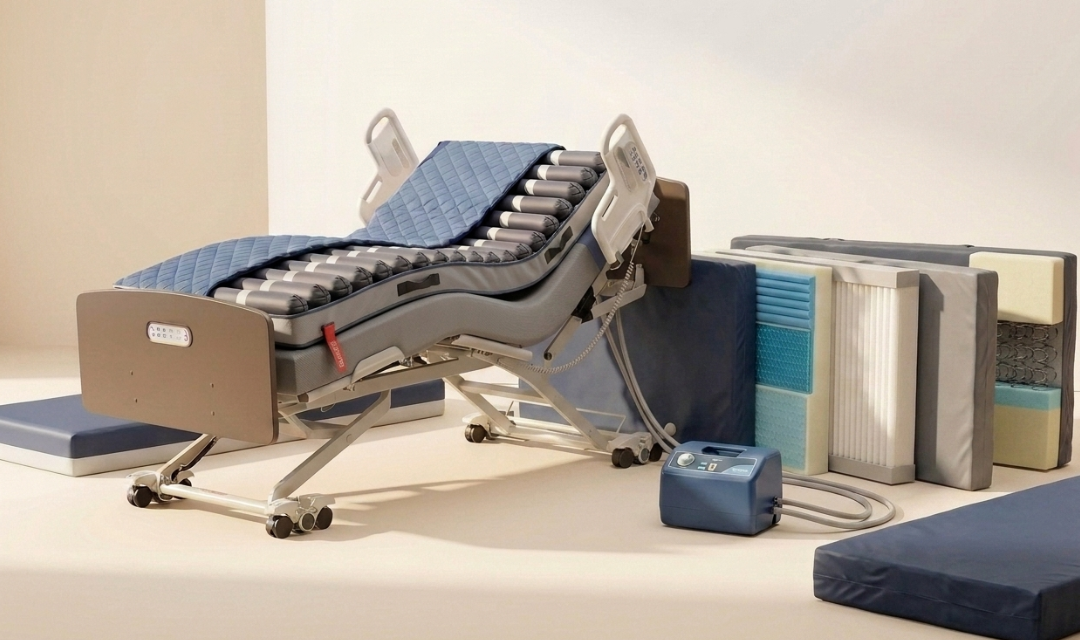
Understanding Hospital Bed Mattress Types: Foam, Gel, Air, Low Air Loss, Bariatric & Pressure Relief Systems
One of the biggest mistakes people make when shopping for a hospital bed mattress is assuming all mattresses perform the same way. In reality, different hospital mattresses are designed for completely different clinical needs, pressure levels, skin conditions, body weights, moisture concerns, and mobility situations.
Some mattresses for hospital bed use are focused mainly on comfort and basic support, while others are designed specifically for pressure redistribution, pressure ulcer prevention, moisture control, bariatric support, pulmonary positioning, or advanced wound management. Choosing the correct medical bed mattress type can dramatically improve long-term comfort, caregiver support, transfer stability, and skin protection.
Foam Pressure Redistribution Mattresses
The most common category for elderly care, homecare support, rehab recovery, and long-term bed comfort.
Pressure redistribution foam mattresses are designed to spread body weight more evenly across the surface instead of allowing pressure to build up heavily in one area. Compared to basic household foam mattresses, these therapeutic support surfaces are built to reduce concentrated pressure on vulnerable areas such as the hips, shoulders, tailbone, and heels.
Many modern hospital bed mattresses in this category use multi-layer therapeutic foam, convoluted foam zones, heel protection sections, low-shear covers, reinforced side support, and immersion-focused foam structures to improve long-term comfort and reduce skin breakdown risk.
Gel Foam Hospital Bed Mattresses
Designed for cooling support, pressure redistribution, and improved long-term comfort.
Gel foam hospital bed mattresses combine therapeutic foam with gel-infused support layers to improve heat dissipation and reduce heat buildup around the body. This becomes especially important for patients who spend many hours in bed and experience sweating, overheating, or moisture concerns.
Many gel foam systems also improve immersion and body contouring compared to standard foam surfaces, helping distribute pressure more evenly across the mattress while maintaining supportive structure and transfer stability.
Memory Foam / Visco / Immersion Mattresses
Advanced contouring support designed for immersion, body shaping, and higher-end pressure care.
Memory foam and viscoelastic medical bed mattresses are designed to contour more deeply around the body to reduce concentrated pressure points and improve immersion support. These systems often provide a more premium support feel while helping minimize pressure buildup and skin shear.
Some advanced models combine memory foam with perimeter support, castellated foam, gel memory foam, TEMPUR® layers, or hybrid air systems to improve pressure ulcer prevention and long-term immobility support.
Fiber-Core Mattresses
Firm, lightweight, durable support surfaces designed as a simpler alternative to traditional innerspring systems.
Fiber-core mattresses use densified fiber construction instead of coils or deep immersion foam systems. These hospital bed mattresses are often lighter in weight, easier for caregivers to handle, and preferred by users who want firmer support instead of softer immersion.
They are commonly used in homecare and facility environments where durability, ease of cleaning, stable support, and long-term value are important priorities.
Innerspring Hospital Bed Mattresses
Traditional firm-support hospital mattresses using durable coil systems.
Innerspring mattresses remain popular in some homecare and facility settings because they provide a firmer, more traditional support feel. These hospital mattresses usually use steel coil systems with supportive comfort layers and durable vinyl covers designed for healthcare environments.
While they generally do not provide the same advanced pressure redistribution as therapeutic foam or air systems, many users still prefer their stable sleep surface, familiar feel, and simple long-term durability.
Alternating Pressure Mattress Systems
Powered air systems designed to actively cycle pressure away from vulnerable body areas.
Alternating pressure systems use powered air cells that inflate and deflate in cycles to reduce prolonged pressure on the body. These air mattress for hospital bed systems are commonly used for patients who cannot reposition independently or who are at higher risk for pressure injuries.
By continuously shifting pressure patterns, these systems help reduce constant load on vulnerable tissue areas and are often used for more advanced pressure management than standard foam surfaces can provide.
Low Air Loss Mattress Systems
Advanced therapeutic air systems focused heavily on airflow, cooling, moisture reduction, and skin protection.
Low air loss systems are designed to move air across the support surface to reduce heat and moisture buildup around the patient’s skin. These systems are especially important for patients with sweating issues, fragile skin, wound concerns, or long-term immobility.
Many advanced medical bed mattress systems combine low air loss with alternating pressure therapy, pulsation modes, airflow control, and advanced therapeutic positioning support.
Lateral Rotation Mattress Systems
Advanced therapeutic systems designed to assist with turning therapy and pulmonary support.
Lateral rotation systems are among the most advanced hospital bed mattresses available for high-risk care environments. These systems slowly rotate or reposition the patient side to side to reduce prolonged pressure and assist with pulmonary positioning support.
These systems are commonly considered for patients who are unable to reposition independently, have severe pressure injury risk, pulmonary complications, pneumonia concerns, or require very advanced immobility support.
Most caregivers choose mattresses too late.
Many families begin researching a better hospital bed mattress only after visible problems start appearing. In many situations, the patient has already been experiencing pressure buildup, overheating, skin irritation, or reduced mobility support for weeks or months before the mattress is upgraded.
Early mattress selection is one of the most important parts of long-term patient comfort and pressure injury prevention. Upgrading before serious symptoms appear can often improve comfort, moisture management, positioning support, caregiver assistance, and skin protection significantly.
How to Choose the Best Mattress for Hospital Bed Use Based on the Patient’s Real Needs
Choosing the right hospital bed mattress becomes much easier once you stop focusing only on mattress names and start focusing on the patient’s actual condition, daily challenges, mobility level, skin concerns, moisture issues, and long-term care needs.
Different mattresses for hospital bed use are designed for completely different situations. Some patients mainly need comfort and stability. Others need pressure redistribution, moisture control, advanced air therapy, bariatric support, heel protection, or rotation therapy. Matching the support surface to the patient’s real condition is often the most important factor in improving comfort, protecting skin, reducing caregiver stress, and preventing worsening complications.
Needs Comfort Only
For users mainly seeking a stable, supportive, and more comfortable sleep surface.
Some patients remain fairly mobile and mainly need a more supportive medical bed mattress for short-term recovery, homecare comfort, post-surgery support, or everyday hospital bed use. In these situations, advanced powered therapy may not be necessary.
Firmer innerspring mattresses, basic therapeutic foam mattresses, and supportive fiber-core systems are often strong starting points for patients who do not currently have serious skin breakdown, severe moisture issues, or major immobility concerns.
Elderly Long-Term Users
For seniors spending many hours in bed who need better pressure redistribution and comfort support.
Elderly patients often become more vulnerable to pressure buildup, fragile skin, soreness, transfer difficulty, and long-term discomfort after extended time in bed. Standard household mattresses usually are not designed for these care situations.
Therapeutic foam and gel foam hospital mattresses are commonly considered for elderly users because they help distribute body weight more evenly while improving immersion support and long-term comfort.
Bed Sore Prevention
For patients at risk for pressure injuries who need improved pressure management.
One of the most common reasons families upgrade to a better hospital bed mattress is to help reduce prolonged pressure buildup before pressure ulcers begin developing. Patients who spend long periods sitting or lying in one position often need more than basic foam comfort.
Pressure redistribution mattresses, gel foam systems, immersion support surfaces, and hybrid therapy mattresses are often considered to reduce concentrated pressure on high-risk body areas.
Existing Pressure Ulcers
For patients already dealing with pressure wounds, advanced pressure management becomes much more important.
When pressure ulcers or skin breakdown are already present, the support surface often needs to move beyond basic foam comfort and into more active therapy support. Constant pressure on affected areas may worsen tissue damage and delay healing.
Alternating pressure systems, low air loss systems, and advanced therapeutic air mattresses are commonly considered for higher-risk pressure injury management and long-term immobility support.
Moisture & Sweating Problems
For patients dealing with overheating, sweating, skin moisture, or maceration risk.
Heat and moisture trapped between the body and mattress can significantly increase skin fragility and discomfort over time. Patients who sweat heavily or remain in bed for long periods often benefit from stronger airflow and cooling support.
Gel foam systems and low air loss hospital mattresses are commonly used to help improve airflow, cooling, moisture management, and skin protection.
Heel Pressure Concerns
Heel pressure is one of the most common high-risk pressure areas in bedridden patients.
The heels are especially vulnerable to pressure injuries because they contain very little natural cushioning between the bone and skin. Long-term bed rest can place continuous pressure directly on this area.
Many therapeutic foam and advanced air systems use heel slope sections, immersion zones, or targeted pressure redistribution to reduce concentrated heel pressure.
Bariatric Patients
For higher body weight support, wider sleep surfaces, and stronger pressure redistribution.
Bariatric patients usually require more than simply a wider mattress. Weight capacity, edge support, pressure redistribution, foam density, immersion control, and transfer stability all become extremely important.
Many bariatric medical bed mattress systems are available in 42", 48", 54", and wider configurations with reinforced support structures and higher therapeutic weight capacities.
Cannot Reposition Independently
For patients who remain mostly in one position for extended periods.
Patients unable to turn, shift, or reposition themselves independently face much higher pressure injury risk. Constant pressure in the same areas can quickly increase skin breakdown concerns.
Powered alternating pressure, low air loss, and advanced therapeutic air systems are commonly considered for these situations because they actively redistribute pressure instead of relying only on static support.
Pulmonary Complications
Some advanced support systems assist with positioning and pulmonary therapy support.
Patients with severe immobility, pulmonary complications, pneumonia risk, or respiratory concerns may require more advanced repositioning support than standard foam mattresses can provide.
Lateral rotation systems slowly reposition the patient side-to-side to help reduce prolonged pressure while supporting pulmonary positioning and advanced immobility care.
Transfer Instability
For patients struggling with sitting balance, edge support, or safer transfers.
Some softer mattresses may feel comfortable but create instability when the patient tries to sit near the edge, transfer into a wheelchair, or reposition. Edge collapse can increase transfer difficulty and caregiver strain.
Many advanced foam and bariatric mattresses now include reinforced edge systems, perimeter support, or transfer stability features to improve safer positioning and movement.
Fall-Risk Patients
For patients vulnerable to rolling, sliding, instability, or unsafe bed exits.
Some patients become more vulnerable to falls because of weakness, instability, dementia, confusion, or mobility limitations. Mattress structure and support can play an important role in helping improve safer positioning and transfers.
Raised perimeter systems, reinforced edge support, and stable transfer surfaces are often considered for patients with higher fall concerns.
Home Hospice / Palliative Care
Comfort, skin protection, and reducing daily discomfort often become top priorities.
Hospice and palliative care patients often spend extended periods in bed while dealing with fragile skin, discomfort, repositioning difficulty, weakness, and increased sensitivity to pressure or moisture.
In these situations, choosing the right hospital bed mattress can significantly improve comfort, pressure management, moisture reduction, and overall quality of daily care.
When a patient becomes mostly bedbound…
The mattress often needs to evolve beyond basic comfort support. Patients who spend most of the day in bed usually face significantly higher risks involving pressure buildup, heat retention, moisture, reduced circulation, fragile skin, and long periods without repositioning.
This is usually the point where powered therapy systems become much more important. Alternating pressure, low air loss, hybrid air therapy, and lateral rotation systems are commonly considered because they actively help reduce prolonged pressure, improve airflow, support moisture control, and assist with advanced immobility care.
Choosing the Best Mattress for Hospital Bed Use by Pressure Risk Level
A hospital bed mattress should match the patient’s risk level, not just the bed size. The right choice depends on how much the patient moves, whether they can turn independently, how fragile the skin is, whether moisture is present, and how often a caregiver can reposition the patient.
Low Risk
Basic foam / innerspring
Usually fits patients who move independently, have no current skin breakdown, limited moisture concerns, and mainly need stable comfort for a hospital bed.
Low–Moderate
Therapeutic foam
Often fits elderly users or long-term bed users who move some, but may have early soreness, fragile skin, heel pressure, or longer daily bed time.
Moderate–High
Gel + powered therapy
Often fits patients with limited turning ability, heat buildup, sweating, higher pressure risk, or increasing caregiver repositioning needs.
High Risk
Low air loss
Often fits mostly bedbound patients with fragile skin, moisture buildup, pressure sore risk, limited mobility, or reduced ability to reposition.
Very High Risk
Rotation + advanced air
Often fits complex-care patients with severe immobility, existing wounds, pulmonary concerns, bariatric needs, or limited caregiver turning availability.
Before choosing a medical bed mattress, check these five details.
The mattress direction changes when mobility, moisture, skin condition, turning ability, or caregiver support changes.
A higher-risk patient usually needs more than softness.
Softness may feel comfortable, but it does not automatically solve pressure risk.
For higher-risk patients, the most important mattress features are often pressure redistribution, airflow, immersion, moisture control, active therapy, and safe repositioning support. A soft mattress that traps heat, allows bottoming out, lacks airflow, or fails to reduce constant pressure may not be the safest long-term choice.
Master Hospital Bed Mattress Comparison Chart: Foam, Gel, Air, Low Air Loss, Bariatric & Rotation Systems
Choosing the best mattress for hospital bed use becomes much easier when every important detail is compared side by side. This chart organizes hospital bed mattresses by mattress type, width options, length options, height, weight capacity, powered therapy, pressure relief level, moisture control, bariatric availability, and best patient fit.
Hospital Bed Mattress Master Comparison Chart
Swipe left to compare mattress type, sizes, widths, height, weight capacity, pressure relief, moisture control, bariatric support, and best-use guidance.
42" model: 600 lbs
Defend / Console / Alleviate: 500 lbs
60" model listed at 80"
60" option listed as 6"
48": 750 lbs
54": 1000 lbs
60": verify by configuration
42": 600 lbs
48": 650 lbs
54": 700 lbs
8"/11" with foam raised rails
8"/11" with foam raised rails
42" x 84" listed
42"/48": 1000 lbs
42"/48": 1000 lbs
Choosing Hospital Bed Mattresses for Homecare, Nursing Homes, Rehab Facilities & Hospice Care
The best hospital bed mattress is not always the same for every care setting. A family buying a medical bed mattress for homecare may need comfort, simple setup, and easy cleaning, while a nursing home or rehab facility may need infection control, transfer support, durability, and multiple mattress types for different patient risk levels.
Homecare Buyers
For families caring for an elderly parent, recovering patient, or long-term bed user at home.
Homecare buyers usually need a best mattress for hospital bed setup that feels supportive, is easy to manage, and does not create unnecessary caregiver stress. Comfort matters, but so does cleaning, sizing, setup, transfer stability, and knowing when basic foam is enough versus when air therapy should be considered.
Nursing Homes
For long-term care settings managing many patients with different pressure risk levels.
Nursing homes often need more than one type of hospital bed mattress. Some residents need basic comfort support, while others need pressure redistribution foam, low air loss, bariatric support, or advanced powered therapy. Durability, cover quality, infection control, and mattress rotation planning matter heavily.
Rehab Facilities
For patients transitioning between bed rest, therapy, transfers, and mobility recovery.
Rehab facilities often care for patients whose mobility is changing. A patient may be bedbound at first, then gradually transfer more often, sit up longer, or begin therapy. The mattress must support wound prevention, repositioning frequency, transfer safety, and changing mobility needs.
Hospice / Palliative Care
For comfort-focused care where skin fragility, moisture, and long lying time matter deeply.
In hospice and palliative care, the right medical bed mattress can make a major difference in daily comfort. Patients may have fragile skin, limited movement, long sitting or lying periods, moisture concerns, and higher sensitivity to pressure. Comfort and skin protection should work together.
Facilities should never standardize every room with the same mattress.
Different patients need different support surfaces.
A facility may use basic foam for lower-risk residents, pressure redistribution foam for long-term prevention, bariatric mattresses for higher weight capacities, low air loss systems for moisture and skin protection, and advanced air or rotation systems for complex-care patients. Matching the mattress to the patient’s risk level is usually safer and more effective than using one mattress type for every room.
Best Mattress for Hospital Bed Use by Situation: Quick Recommendations for Real Care Needs
The best mattress for hospital bed use depends on what the patient needs most: comfort, pressure relief, cooling, moisture control, bariatric support, wound prevention, or advanced repositioning support. Use these quick picks to compare the strongest hospital bed mattresses by situation.
Best Basic Mattress
Best for basic comfort, short-term use, and users who prefer a traditional firm support surface.
Best Affordable Pressure Mattress
Best for homecare users who need more than an innerspring mattress but do not need powered air therapy.
Best Elderly Mattress
Elderly users often need support that helps reduce pressure buildup without making transfers too unstable.
Best Cooling Mattress
Cooling support matters when the patient overheats, sweats, or develops moisture-related skin discomfort.
Best Memory Foam Mattress
Memory foam-style support is helpful for patients needing better immersion, shear reduction, and premium comfort.
Best Bariatric Foam Mattress
Bariatric mattress selection should consider width, weight capacity, pressure redistribution, and transfer support together.
Best Bariatric Air Mattress
Wider powered air systems can support higher-risk bariatric patients who need airflow, pressure therapy, and higher capacities.
Best Alternating Pressure Mattress
Alternating pressure helps reduce constant pressure by cycling support through air cells over time.
Best Low Air Loss Mattress
Low air loss systems are often preferred for moisture control, heat reduction, and advanced skin protection.
Best Advanced Wound Mattress
Existing wounds, severe immobility, and fragile skin often require stronger therapy than basic foam can provide.
Best for Sweating
Patients who sweat heavily may need airflow support to help reduce moisture buildup around the skin.
Best for Pulmonary Complications
Lateral rotation systems are designed for complex immobility care where turning support is especially important.
Best Facility Mattress
Facilities often need a mix of prevention foam, bariatric support, low air loss, and advanced air therapy.
Best Homecare Mattress
Homecare buyers usually need a practical balance of comfort, support, cleaning ease, and budget control.
Best Mattress for Bed Sores
For bed sore prevention, therapeutic foam may help. For existing ulcers or severe risk, low air loss or alternating pressure may be more appropriate.
Pressure injury prevention is bigger than the mattress alone.
The right support surface matters, but repositioning, skin checks, moisture control, and clinical care planning still matter.
For additional trusted guidance, the Agency for Healthcare Research and Quality provides a pressure ulcer prevention toolkit for care teams and facilities. Review the AHRQ resource on preventing pressure ulcers in hospitals.
Hospital Bed Mattress FAQs: Pressure Relief, Air Mattresses, Bariatric Support, Medicare & Buying Questions
These are some of the most searched and most important questions people ask when trying to choose the best mattress for hospital bed use. The answers below are designed to help families, caregivers, rehab facilities, and long-term care providers better understand different hospital bed mattresses, powered air systems, pressure redistribution surfaces, bariatric options, and long-term patient comfort needs.
What mattress helps prevent skin breakdown?
A pressure redistribution foam mattress or a low air loss mattress is usually best for helping reduce skin breakdown risk. Patients who spend many hours in bed may benefit from therapeutic foam surfaces that redistribute pressure away from vulnerable areas like the heels, hips, and tailbone.
For moderate-to-high risk patients, mattresses like the Protekt 300, Protekt 500, or powered low air loss systems from the medical bed mattress category may provide stronger protection.
Do low air loss mattresses help sweating?
Yes. Low air loss mattresses are specifically designed to help manage moisture and heat buildup around the skin. These systems circulate airflow through the mattress surface to help reduce sweating, humidity, and skin maceration.
Patients with sweating concerns often benefit from systems like the Protekt Aire 4000DX or the Invacare MA800.
Is memory foam enough for pressure sores?
Memory foam can help reduce pressure and improve immersion, but severe pressure ulcer risk or existing wounds often require stronger support surfaces like alternating pressure or low air loss therapy.
Premium immersion mattresses like the Invacare Softform may help with moderate risk, while advanced wounds may require powered systems from the best seller mattress guide.
What mattress is best for bedridden elderly patients?
Elderly bedridden patients often benefit from therapeutic foam, gel foam, or powered air therapy depending on mobility level and pressure risk.
Many families choose the Protekt 300 or Protekt 500 for homecare elderly support because they combine comfort with pressure redistribution.
What mattress is best after hospital discharge?
After hospital discharge, the best mattress depends on whether the patient is mobile, partially bedbound, recovering from surgery, or dealing with skin fragility.
Foam pressure redistribution mattresses are often appropriate for recovery at home, while patients discharged with wounds or severe immobility may require powered air systems from the hospital mattress category.
What mattress is best for hospice patients?
Hospice patients usually need comfort-focused pressure redistribution with strong moisture and skin protection support. Long lying periods and fragile skin often make therapeutic foam or low air loss systems more appropriate than standard mattresses.
Common hospice choices include the Protekt 500, Joerns PrevaMatt, and advanced low air loss systems for higher-risk patients.
What is the best mattress for a hospital bed?
The best hospital bed mattress depends on the patient’s mobility, pressure risk, sweating, weight, and how many hours they spend in bed.
Basic foam may work for low-risk patients, while moderate-to-high risk users may need therapeutic foam, gel foam, alternating pressure, or low air loss therapy. The best hospital bed mattress guide breaks down the strongest options by situation.
What kind of mattress is best for a hospital bed?
Foam pressure redistribution mattresses are among the most common choices because they balance comfort, support, and pressure reduction. Higher-risk patients may require low air loss or alternating pressure systems.
The right choice depends on whether the patient needs comfort only, pressure prevention, moisture control, bariatric support, or active air therapy.
What is the best bariatric mattress for a hospital bed?
Bariatric patients usually need wider mattress sizes, stronger edge support, higher weight capacities, and improved pressure redistribution.
Foam bariatric options like the Protekt 600 work well for many users, while advanced bariatric air therapy may require systems like the Invacare MA900.
Do you need a special mattress for a hospital bed?
Yes. Hospital beds usually require mattresses designed specifically for articulating bed frames. Standard household mattresses may not flex properly and can affect patient positioning or bed function.
Proper hospital bed mattresses are designed for head elevation, knee articulation, pressure redistribution, and long-term patient support.
Does Medicare pay for hospital bed mattresses?
Medicare coverage depends on medical necessity, physician documentation, and the type of mattress prescribed. Some therapeutic support surfaces may qualify under certain conditions.
Coverage rules can vary depending on pressure ulcer risk, existing wounds, and whether the mattress qualifies as durable medical equipment. Always confirm details directly with Medicare or a qualified supplier.
How do you use a medical air mattress?
A medical air mattress connects to a powered pump that controls airflow through air cells inside the mattress. Depending on the model, the system may alternate pressure, provide low air loss airflow, or perform lateral rotation therapy.
Caregivers should confirm proper inflation, pressure settings, hose connections, and patient positioning. Advanced systems may include alarms, auto-firm modes, and moisture management features.
What is a medical air mattress?
A medical air mattress is a powered therapeutic mattress designed to help redistribute pressure, improve airflow, and reduce prolonged pressure on vulnerable areas of the body.
These systems are commonly used for patients with limited mobility, pressure injury risk, sweating concerns, pulmonary complications, or long-term bed confinement.
Are gel foam mattresses better than regular foam?
Gel foam mattresses can help reduce heat buildup while still providing pressure redistribution. Many users prefer gel foam because it feels cooler and more stable during long periods in bed.
The Protekt 500 Gel Foam Mattress is a common choice for patients needing additional cooling support.
When should someone upgrade to an alternating pressure mattress?
Alternating pressure systems become more important when the patient cannot reposition independently, spends most of the day in bed, or begins showing redness, pressure buildup, or fragile skin.
Many caregivers wait too long before upgrading support surfaces. Higher-risk patients often benefit from powered therapy earlier than expected.
What mattress helps with heel pressure?
Therapeutic foam and alternating pressure mattresses are commonly used to help reduce heel pressure. Mattresses with heel slope design, immersion support, or active pressure redistribution may help reduce concentrated pressure on the heels.
Several models discussed throughout the mattress buying guide include advanced heel support features.
Final Mattress Decision Framework
The easiest way to choose the right hospital bed mattress is to match the patient’s actual condition and risk level with the proper support surface.
Continue Exploring Hospital Bed Mattresses
Explore more mattress comparisons, best sellers, pressure relief systems, and caregiver guidance resources.
Browse all hospital bed mattresses, bariatric mattresses, low air loss systems, gel foam options, and alternating pressure mattresses.
Browse Mattress CategoryExplore the most popular hospital bed mattresses and compare the strongest pressure redistribution systems by patient need.
Read Mattress Buying GuideFind additional caregiver questions, mattress answers, troubleshooting guidance, and hospital bed mattress recommendations.
Visit Mattress FAQs