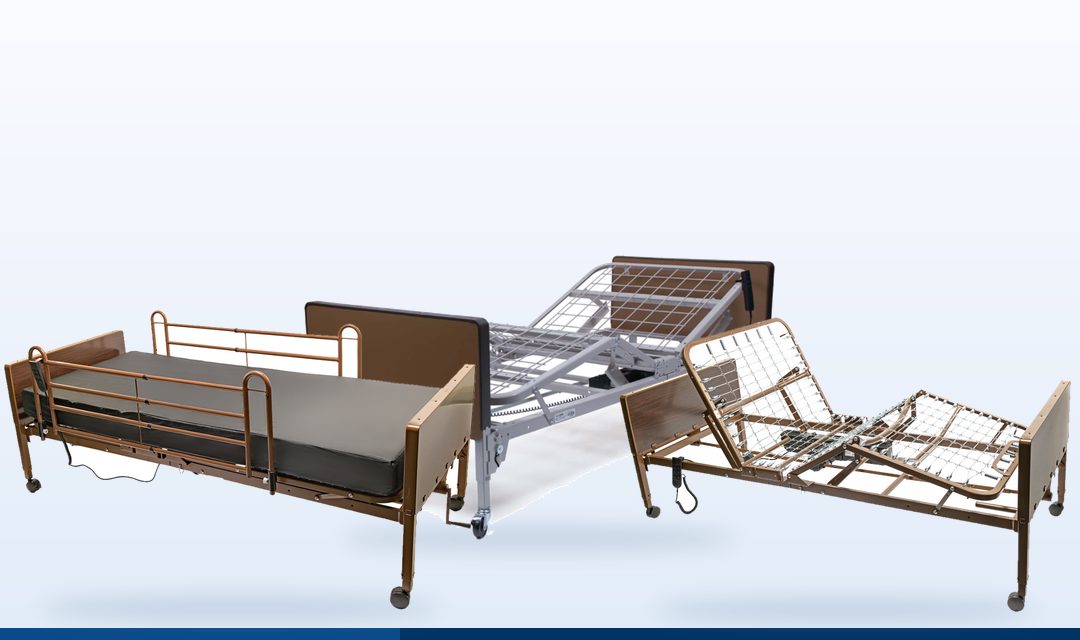
Hospital bed buying guide: Protekt Akra semi-electric, Lumex Patriot full-electric and Protekt Akra-FE low hospital beds

20

Oct

Hospital Bed Buying Guide: How to Choose the Right Bed for Home or Long-Term Care

Hospital Bed Buying Guide

How Do You Choose the Right Hospital Bed for Home or Long-Term Care?

Pick the bed by the person and the care, not the price tag. Start with how much help they need getting in and out, whether they're at risk of falling, how long they'll be in bed each day, their weight, and the room it's going into. Those five answers point you to a semi-electric, full electric, low, long-term care or bariatric bed, and to the mattress that should go on it.

Most families call us after something changed fast. Mom fell getting out of bed, Dad's coming home from rehab after a hip fracture, or a hospice nurse said the regular bed has to go. You've got a few days, a bedroom that wasn't planned for medical equipment, and a lot of options that look alike online.

This hospital bed buying guide walks through it the way we do on the phone: the bed types, the specs that actually matter, which bed fits which condition, how to size the room and doorways, the mattress and rails that go with it, and a checklist before you order. Every bed and mattress named here is one we sell, with specs taken from its product page.

The Short Version For most people at home, a full electric bed is worth the extra cost because the caregiver can raise the whole bed to working height with a button. Choose a low bed (7 to 9.5 inches) when falls are a worry, a bariatric bed when the user's weight is close to 350 lbs or more, and match the mattress to the person's pressure sore risk, not to the bed.

What is a hospital bed for home use?

A home hospital bed is a medical bed with a motorized or crank-adjusted head and foot section, an adjustable height deck, and fittings for side rails and accessories. It's usually 36 inches wide and 80 inches long at the sleep surface, so it fits a twin-size medical mattress, and it comes apart into pieces that carry through a normal doorway.

Hospital Beds for Home Use

Full electric, semi-electric and low homecare beds sized for a bedroom.

Shop Homecare Beds

Long-Term Care Beds

Facility-grade hi-low beds with wide height ranges and expandable decks.

Shop Long-Term Care Beds

Hospital Bed Mattresses

Foam, alternating pressure and low air loss mattresses for every risk level.

Shop Mattresses
Bed Types

What Are the Different Types of Hospital Beds?

There are five kinds of hospital beds you'll run into: semi-electric, full electric, low (or ultra-low), long-term care hi-low, and bariatric. They all raise the head and the knees. The difference is how the height changes, how low and how high the deck goes, how wide it gets, and how much weight it's built for.

Fully manual crank beds still exist, but every adjustment is a hand crank at the foot of the bed. They're the hardest on a caregiver, so we usually steer families toward one of the types below.

In Short Semi-electric beds motorize the head and foot but crank the height. Full electric beds motorize everything. Low beds add fall protection, long-term care beds add range and features for heavy daily care, and bariatric beds add width and capacity.

Semi-Electric Hospital Beds

Motorized head and foot, hand-crank height. The lowest-cost way into a real hospital bed.

Protekt Akra-SE semi-electric hospital bed for home use

A semi-electric hospital bed uses a motor to raise the head and the knees, and a crank to change the bed's height. The Protekt Akra-SE goes from 15 to 23 inches high (without the mattress) and holds 450 lbs. The Lumex Patriot Semi-Electric runs 15 to 24 inches. You'll set the height once or twice a day at most, so it works when the caregiver doesn't need to raise and lower the bed often.

Best For
Short-term recovery Tighter budgets User repositions on their own Occasional caregiver help
Choose This If The user can sit up and get in and out mostly on their own, and nobody needs to raise the bed many times a day.
Avoid This If A caregiver changes, bathes or transfers the person in bed every day. Cranking the height gets old fast, and it's hard on the back.

Full Electric Hospital Beds

Head, foot and height all on the hand pendant. The everyday choice for home caregiving.

Protekt Akra-FE full electric low hospital bed

A full electric hospital bed raises and lowers the whole deck with the same hand pendant that moves the head and foot. That's what lets a caregiver bring the bed up to waist height for care and back down for a safe exit. The Protekt Akra-FE goes from 9 to 23 inches and holds 450 lbs. The Drive Delta Ultra-Light 1000 runs 12.5 to 21.5 inches, and the Invacare IVC Full-Electric runs 15 to 23 inches.

Best For
Daily caregiving Bed baths and changes Transfers to a wheelchair Hospice at home
Choose This If Someone helps the user in bed most days, or the user needs the bed at different heights to stand up, sit in a wheelchair, or use a lift.
Avoid This If The budget is very tight and the user is mostly independent. A semi-electric bed covers the basics for less.

Low and Ultra-Low Beds

Deck heights of 7 to 9.5 inches for people who might roll or climb out.

Protekt Protopia ultra low long term care bed

A low hospital bed drops the sleep deck close to the floor so a roll-out is a short drop, not a fall. The Protekt Protopia Ultra Low goes down to 7 inches and up to 31 inches, with a 500 lb capacity. The Invacare IVC Full-Electric Low runs 9.5 to 20 inches, and the Lumex Patriot can be set up in a low position of 9.5 to 20 inches.

Best For
Dementia Fall history Night confusion Restless sleepers
Choose This If The user has fallen, gets up at night without calling for help, or has dementia, Parkinson's or a condition that affects balance.
Avoid This If The user is tall and stands up from the bed on their own. A deck that only goes to 20 inches can make standing harder, so check the high end too.

Long-Term Care Hi-Low Beds

Facility-grade beds with 7 to 31 inch height ranges and more positions.

Joerns EasyCare long term care hospital bed

Long-term care beds are built for heavy daily use in nursing homes, assisted living and serious home care. They usually have the widest height range and extra positions. The Joerns EasyCare goes from 7 to 30 inches with a 600 lb safe working load and a deck that widens from 35 to 39 or 42 inches. The Invacare CS600 also runs 7 to 30 inches at 600 lbs.

Best For
Nursing homes Assisted living Bedbound users Multiple caregivers
Choose This If The person is in bed most of the day, several caregivers share the work, or you're furnishing a facility room.
Avoid This If You need a light bed that one person can take apart and move. Facility beds are heavier, and the EasyCare frame alone is 220 to 230 lbs.

Bariatric and Expandable Beds

Wider decks and capacities from 600 to 1,000 lbs.

Protekt Protopia expandable width bariatric hospital bed

A bariatric hospital bed gives a larger person room to turn and a frame rated well above their weight. The Protekt Protopia Expandable Bariatric widens from 36 to 42 or 48 inches without tools and holds 750 lbs. The Protekt Akra Bariatric comes in 42, 48 and 54 inch widths rated 600, 750 and 1,000 lbs. The Lumex B700 holds 600 lbs patient weight.

Best For
Users over 350 lbs Room to reposition Heavier caregiving Wider mattresses
Choose This If The user weighs near or above 350 lbs, feels squeezed on a 36 inch bed, or the caregiver needs room to turn them.
Avoid This If The room or doorways can't take a 42 or 48 inch bed. Measure before you order, and remember the mattress must match the width.

Hospital Bed or Adjustable Bed From a Furniture Store?

Consumer adjustable beds are made for comfort. A hospital bed is made for care: it raises to a caregiver's working height, it takes side rails and a trapeze, it comes apart for delivery, and it's sized for medical mattresses. If someone will need help in bed, or there's any risk of falls or pressure sores, a hospital bed is the safer buy.

Specs That Matter

Which Hospital Bed Specs Actually Matter?

Six numbers decide whether a bed works in your home: the height range, the size, the weight capacity, how it moves, the mattress it takes, and the rails and accessories it accepts. Get those right and the rest is preference.

Rule of Thumb Check the low end of the height range for falls, the high end for caregiving, and the capacity against the user's weight plus the mattress and accessories. Then measure the room before anything else.
Height Low end for fall safety, high end for caregiving. 7 to 9.5 inches is a low bed.
Size Most homecare beds are 36 by 80 inches. Bariatric beds go to 42, 48 and 54 inches wide.
Capacity Pick a bed rated above the user's weight. Some beds list patient weight and total weight separately.
Power Full electric moves the height too. Check the battery or crank backup for power outages.

1. Height Range

The single spec that matters most for safety and for the caregiver's back.

A bed's height range is measured at the deck, without the mattress. The low number decides how far someone falls if they roll out. The high number decides whether a caregiver can work without bending. A bed that covers both, like a 7 to 30 inch long-term care bed, does both jobs.

7 to 9.5 inches (low)
Protekt Protopia Ultra Low (7"), Joerns EasyCare (7"), Invacare CS600 (7"), Protekt Akra-FE (9"), Invacare IVC Full-Electric Low (9.5")
About 12 to 15 inches (standard low end)
Drive Delta Ultra-Light 1000 (12.5"), Invacare IVC Full-Electric (15"), Protekt Akra-SE (15")
23 inches and up (caregiver height)
Protekt Akra-FE (23"), Lumex Patriot standard setup (23.5"), Joerns WeCare (28"), Joerns EasyCare and Invacare CS600 (30"), Protekt Protopia (31")
Models to Look At
Protekt Protopia Ultra Low Joerns EasyCare Protekt Akra-FE
Dealer Tip Add the mattress thickness to the deck height. A 6 inch mattress on a 15 inch deck puts the sleep surface at 21 inches, which is about where most people can sit and stand easily.

2. Bed Size, Room and Doorways

Measure before you order. It saves a second delivery.

Standard homecare beds have a 36 by 80 inch sleep surface and run about 86 to 88 inches long overall with the head and foot boards. Many take an extension kit to 84 inches for tall users. Bariatric beds go to 42, 48 and 54 inches wide. Homecare beds ship in sections, so a normal interior door is usually fine, but leave walking room on at least one side.

36" x 80" (standard)
Protekt Akra-FE and Akra-SE (86" overall), Lumex Patriot (87" overall), Invacare IVC and Drive Delta (88" overall)
Width that expands
Protekt Protopia Expandable 36 / 42 / 48", Joerns EasyCare 35 / 39 / 42", Joerns WeCare 35" with optional 39" and 42"
Length that extends
Protekt Protopia 80 / 84 / 88" tool-free, Invacare CS600 80" to 84" kit, Joerns EasyCare 4" and 8" extensions
Room to plan for
Bed footprint plus about 3 feet on the caregiver side, more if a patient lift or wheelchair needs to get next to the bed
Models to Look At
Protekt Protopia Expandable Joerns EasyCare Invacare CS600
Measure These The room (length and width), the door and hallway widths on the way in, any tight turns, and where the outlet is. The bed needs power at the head end.

3. Weight Capacity

Rated above the user, with room for the mattress and accessories.

Read the listing carefully. Some beds give one number, and some give a patient weight and a total weight. The Lumex Patriot, for example, lists 350 lbs patient weight and 450 lbs total, evenly distributed. The total has to cover the person, the mattress, the rails and anything else on the bed.

350 to 450 lbs
Most standard homecare beds, like the Protekt Akra-FE (450 lbs), Invacare IVC Full-Electric (450 lbs) and Lumex Patriot (350 patient / 450 total)
500 to 650 lbs
Protekt Protopia Ultra Low (500), Protekt Protopia Expandable (550), Joerns EasyCare and Invacare CS600 (600 safe working load), Joerns UltraCare XT (650)
600 to 1,000 lbs (bariatric)
Lumex B700 (600 patient / 700 total), Invacare BAR600 (600), Protekt Protopia Expandable Bariatric (750), Protekt Akra Bariatric 54" (1,000)
Models to Look At
Protekt Akra Bariatric Protekt Protopia Expandable Bariatric Lumex B700
Good to Know If the user is within about 50 lbs of a bed's limit, step up a class. It also gets you more width, which helps with turning.

4. Motors, Positions and Power Backup

What the hand pendant can do, and what happens when the power goes out.

Every hospital bed raises the head and the knees. A full electric bed adds powered height. Facility beds add positions like Trendelenburg (head lower than feet), a chair position, and auto contour, where the knees rise with the head so the user doesn't slide down. For outages, most homecare beds take a 9V battery that lowers the head and foot, and some add a hand crank.

Head, foot and height
Protekt Akra-FE, Drive Delta Ultra-Light 1000, Invacare IVC Full-Electric, Lumex Patriot
Auto contour and more functions
Protekt Protopia Expandable (8-function pendant with auto contour), Protopia Bariatric (10 functions incl. Trendelenburg), Joerns EasyCare AdvanceCare models (Trendelenburg, programmable transfer height)
Outage backup
9V battery lowering on the Protekt Akra-FE, Akra-SE, Drive Delta and Lumex Patriot; emergency crank on the Akra-FE and Invacare IVC
Models to Look At
Protekt Protopia Expandable Joerns EasyCare Protekt Akra-FE
Check This Ask which sections the backup actually lowers. Most lower the head and foot only, not the whole deck.

5. The Mattress

The bed positions the person. The mattress protects their skin.

Hospital beds are sold without a mattress more often than not, and a regular mattress won't bend with the deck. Choose by pressure sore risk. Foam suits people who move on their own. Alternating pressure shifts air between cells every few minutes for people who can't reposition well. Low air loss adds airflow to keep skin dry for people who are in bed most of the day.

Foam (lower risk)
Protekt 100 (6" or 9", up to 350 lbs), Joerns PrevaMatt (35" x 80" x 6"), Invacare Solace Prevention (36" wide, 80" or 84")
Alternating pressure (moderate risk)
Protekt Aire 1500 pad (10-minute cycle, 300 lbs), Protekt Aire 3000 (20 air bladders, 36" x 80" x 8")
Low air loss (higher risk)
Invacare microAIR MA500 (350 lbs), Protekt Aire 4000DX (400 lbs), Protekt Aire 6000
Bariatric
Protekt 600 (42" to 60" widths, up to 1,000 lbs), Invacare Bariatric Foam (42"), Protekt Supreme Support (35" to 54", 500 to 700 lbs)
Models to Look At
Protekt 100 Protekt Aire 4000DX Invacare microAIR MA500
Fit Warning The mattress width has to match the bed. A gap between the mattress and the rail is an entrapment risk, so a 42" bed needs a 42" mattress.

6. Rails, Trapezes and Overbed Tables

The accessories that make the bed safe to use every day.

Half rails give a handhold for turning and getting up while leaving the exit open. Full rails run the length of the bed. A trapeze lets a user with good arm strength pull up and reposition. An overbed table rolls under the bed for meals and reading. Rails have to fit the specific bed, so buy them for the bed you're getting.

Bed rails
Lumex Liberty Half No-Gap rail (31.5" long, 17" high), Lumex Liberty Full-Length, Proactive half and full length side rails, Invacare full length rail
Assist handles
Stander Prime Safety Bed Rail (400 lbs, 6 to 15" mattresses), Bed Assist Handle with Swing-Out Support (300 lbs, 10 to 15" mattresses)
Trapezes
Invacare 7740A trapeze bar (250 lb safe working load), Graham-Field Versa-Helper (43" to 52" high), bariatric trapezes
Overbed tables
Invacare 6418 Tilt-Top (28" to 40"), McKesson non-tilt (28.25" to 43.25", 50 lbs), Protekt non-tilt (27" to 40", 40 lbs), Lumex Deluxe Tilt (30" to 43.8")
Models to Look At
Lumex Liberty Half Rail Invacare Trapeze 7740A Invacare Tilt-Top Overbed Table
Safety Note Rails can be a hazard for some people with dementia who try to climb over them. A low bed with a floor mat is often the better choice. Ask the care team.
Common Mistake Buying a bed with no mattress plan. Order the mattress with the bed so the width matches and it arrives together.
Dealer Tip If a patient lift will be used, check that its base can roll under the bed frame. Ask us and we'll confirm the clearance for the bed you're looking at.
Good to Know A wider height range costs more, but it's what lets one bed be both fall-safe at night and back-friendly during care.
Room Check Plan the bed position before delivery day: outlet at the head end, the caregiver side clear, and a path for a wheelchair or walker.
Choose by Condition

What Is the Best Hospital Bed for Each Condition?

This is where most of our calls end up. The diagnosis, how much the person can move, and who's doing the care tell you more about the right bed than any feature list. Find the situation closest to yours below. Each one names the bed type we'd start with and the models we carry that fit.

The Short Answer For recovery at home, a full electric bed with half rails. For dementia or a fall history, a low or ultra-low bed. For someone in bed most of the day, a full electric or long-term care bed with an alternating pressure or low air loss mattress. For users over 350 lbs, a bariatric bed rated well above their weight.
Falls Low beds that go down to 7 to 9.5 inches, plus a floor mat.
Skin Bedbound users need the right mattress as much as the right bed.
Caregiver Full electric height saves the caregiver's back on every change and transfer.
Weight Bariatric beds from 600 to 1,000 lbs, with widths to match.

Hip Fracture or Joint Replacement Recovery

Start here: a full electric bed set at a height where the feet reach the floor.

Common Challenge Getting in and out without twisting, sitting up for meals and exercises, and following hip precautions for several weeks.
Best Type Full electric homecare bed with half rails.
Why It Helps Powered height lets the user sit on the edge with feet flat on the floor and hips above the knees, then stand with less strain. Half rails give a handhold without blocking the exit.
What To Avoid A bed too low to stand from, or full rails that make the user climb around them.

Stroke With One-Sided Weakness

Start here: a full electric bed, rail on the strong side, room on the exit side.

Common Challenge Weakness on one side, trouble rolling and sitting up, and transfers that need a caregiver or a lift.
Best Type Full electric bed, or a long-term care bed if transfers are heavy.
Why It Helps Raising the head and adjusting height on demand helps the user sit up and lets the caregiver bring the bed to the right height for a stand assist or patient lift.
What To Avoid Semi-electric beds if the caregiver will be cranking the height several times a day.

Dementia, Alzheimer's and Night Wandering

Start here: a low or ultra-low bed and a floor mat.

Common Challenge Getting up at night without calling for help, rolling out, and trying to climb over rails.
Best Type Low or ultra-low bed.
Why It Helps A deck that drops to 7 to 9.5 inches turns a fall into a short slide. Caregivers raise it for care and lower it again for sleep.
What To Avoid Full-length rails without guidance from the care team. Some people with dementia try to climb over them.

Parkinson's Disease

Start here: a low-capable full electric bed with an assist handle.

Common Challenge Stiffness turning over, trouble getting up from lying down, and balance problems on the first steps.
Best Type Full electric low bed with a half rail or assist handle.
Why It Helps The head section does the work of sitting up, a handle gives something to push from, and a low setting cuts the fall risk at night.
What To Avoid Very high fixed heights and slippery mattress covers that make turning harder.

ALS, MS and Other Progressive Conditions

Start here: a bed that can grow with the care needs.

Common Challenge Mobility that changes over months, more time in bed, and more help needed for repositioning and transfers.
Best Type Long-term care hi-low bed with auto contour, paired with a pressure-redistributing mattress.
Why It Helps A wide height range and extra positions cover both early independence and later full care, so you don't buy twice.
What To Avoid Basic semi-electric beds that you'll outgrow as care increases.

Bedbound, With Pressure Sores or at High Risk

Start here: full electric or long-term care bed plus the right air mattress.

Common Challenge Long hours in one position, skin breakdown on the heels, hips or tailbone, moisture, and frequent repositioning.
Best Type Full electric or long-term care bed with an alternating pressure or low air loss mattress.
Why It Helps The bed makes turning and positioning easier on the caregiver. The mattress takes pressure off the skin and, with low air loss, keeps it drier.
What To Avoid A plain foam mattress for someone who can't change position on their own.

Hospice and End-of-Life Care at Home

Start here: a full electric bed that's easy on the family doing the care.

Common Challenge Comfort, frequent position changes, mouth care and bathing in bed, and family members taking turns.
Best Type Full electric homecare bed with a pressure-redistributing or alternating pressure mattress.
Why It Helps Raising the whole bed to working height is the difference between a manageable shift and a sore back. The head section helps with breathing and eating comfort.
What To Avoid Crank-only height, or a mattress that bottoms out under the hips.

Heart Failure, COPD or Acid Reflux

Start here: any hospital bed with a powered head section.

Common Challenge Shortness of breath lying flat, coughing at night, and reflux that's worse when lying down.
Best Type Semi-electric or full electric bed.
Why It Helps The head raises with a button, so the user can sleep propped up without a pile of pillows that slides out from under them.
What To Avoid Wedges and pillows on a regular bed, which shift and leave the user sliding down.

Larger Users and Bariatric Care

Start here: a bariatric bed rated well above the user's weight.

Common Challenge Not enough room to turn, frames rated too close to the user's weight, and harder transfers for the caregiver.
Best Type Bariatric or expandable-width bed with a matching bariatric mattress.
Why It Helps Wider decks give room to reposition, and higher ratings leave a safety margin for the mattress and accessories.
What To Avoid Standard 36" beds for users near or above 350 lbs, or a mattress narrower than the deck.

The Caregiver Has Back Pain

Start here: full electric, with a high end of 23 inches or more.

Common Challenge Bending over a low bed for changes, bed baths and dressing, often several times a day.
Best Type Full electric or long-term care bed.
Why It Helps Bringing the bed up to waist height takes the strain off the caregiver's back. It's the most common reason families upgrade from semi-electric.
What To Avoid Beds that top out at about 20 inches if the caregiver is tall.
A Note on Medical Advice This guide is here to help you shop. It doesn't replace advice from a physician, nurse, physical therapist or occupational therapist. Ask the care team about rails and positioning for the person you're caring for.
Where to Start Get the height range and the mattress right first. Those two choices do most of the work.
Want Help Choosing? Call a MedCare Mobility specialist at 585-505-6665 or contact us and we'll help you match a bed and mattress to the person.
By Room & Setting

Will a Hospital Bed Fit in Your Room?

Almost always, yes, if you measure first. A standard homecare bed takes about the floor space of a twin bed, a little longer. What trips people up is the space around it: room for the caregiver, a wheelchair or a lift, and a clear path to the bathroom.

The Short Answer Plan for the bed's overall length (about 86 to 88 inches for a standard bed) and width (36 inches, more for bariatric), plus about 3 feet of clear floor on the side where the caregiver works. Homecare beds come in sections, so standard doorways are rarely the problem.
Bedroom Keep one long side clear and the head of the bed near an outlet.
Main Floor No bedroom downstairs? A living room or den works if there's privacy and a path to a bathroom.
Facility Room Long-term care beds are made for daily use by more than one caregiver.
With a Lift A patient lift needs room to roll in beside the bed and clearance under the frame.

A Small Bedroom or Apartment

What to look at: a standard 36" homecare bed and the clear side.

Best Type Full electric homecare bed on a 36" x 80" deck.
Why It fits where a twin bed went, and powered height means the caregiver doesn't need a lot of room to bend and work.
Avoid Expandable or bariatric frames that leave no room to walk around the bed.
Models to Consider Protekt Akra-FE, Drive Delta Ultra-Light 1000, Invacare IVC Full-Electric.

A Main-Floor Living Room

What to look at: a bed that looks less clinical and moves easily.

Best Type Full electric homecare bed, often with a low setting.
Why Families set up downstairs when stairs aren't safe. A bed on casters can be moved for cleaning, and a low bed is safer in a busy room.
Avoid Very large facility beds that dominate a shared living space.
Models to Consider Lumex Patriot, Protekt Akra-FE, Invacare CS600.

Nursing Home or Assisted Living Room

What to look at: height range, positions and durability.

Best Type Long-term care hi-low bed.
Why Facility beds are built for many caregivers and daily use, with 7 to 30 inch height ranges and features like auto contour and Trendelenburg.
Avoid Light homecare frames for residents who need full care every day.
Models to Consider Joerns EasyCare, Joerns WeCare, Protekt Protopia Ultra Low, Invacare CS600.

A Room Shared With a Patient Lift

What to look at: clearance under the bed and room beside it.

Best Type Full electric or long-term care bed, raised to lift height.
Why Raising the bed makes it easier to position the sling and line up the lift. Leave room for the lift's legs to roll under and open.
Avoid Placing the bed against a wall on the side you need for the lift.
Models to Consider Protekt Akra-FE, Joerns EasyCare, Protekt Protopia Expandable.
Compare Beds

How Do Our Hospital Beds Compare?

Here's every bed featured in this guide side by side: height range, size, capacity, positions and outage backup. Click a bed for full specs, rail options and current pricing.

We took these specs from each product page and the manufacturers' listings. Heights are measured at the deck, without the mattress. Where a bed lists patient weight and total weight separately, we show both.

Hospital Bed Comparison

Swipe left to see height range, size, capacity, positions, backup, low height, width options and who each bed suits.

Shop All Hospital Beds
Swipe left to compare all details. The product column stays visible as you scroll.
Product
Bed Type
Height Range
Size
Weight Capacity
Positions
Outage Backup
Low Bed
Wider Widths
Best For
Semi-Electric Beds
Protekt Akra-SE
Semi-electric
Semi-electric
15" to 23"
80" x 36" deck, 86" overall
450 lbs
Powered head and foot, crank height
9V battery
No
No
Budget homecare for fairly independent users
Semi-electric
15" to 24"
87" x 36" overall
350 lbs patient / 450 lbs total
Head up to 60°, crank height
Battery backup
No
No
Sleeping propped up for breathing or reflux
Semi-electric
15" to 23"
80" x 36" deck, 88" overall
450 lbs
Powered head and foot, crank height
Not listed
No
No
A simple, proven homecare bed
Semi-electric
12.5" to 21.5"
88" x 36"
450 lbs
Powered head and foot, crank height
Not listed
No
No
Easy setup; ships in two cartons
Full Electric Homecare Beds
Protekt Akra-FE
Full electric low
Full electric
9" to 23"
80" x 36" deck, 86" overall
450 lbs
Head, foot, knee and height
9V battery and hand crank
Yes
No
Fall risk plus daily caregiving
Full electric
12.5" to 21.5"
88" x 36"
450 lbs
Head, foot and height
9V battery
No
No
A light frame for home care
Full electric
15" to 23"
80" x 36" deck, 88" overall
450 lbs
Head, foot and height
Emergency crank
Low version
No
Easy-clean IPX6 motors
Full electric
9.5" to 20" (low) or 13" to 23.5" (standard)
87" x 36"
350 lbs patient / 450 lbs total
Head 60°, knee 30°, height
9V battery
Yes
No
One bed, two height setups
Full electric
9.5" to 20"
88" x 36"
350 lbs
Head, foot and height
Not listed
Yes
No
Fall-risk users at home
Low and Long-Term Care Beds
Full electric
7" to 31"
36" wide, 80" to 88" long
500 lbs
8-function pendant with auto contour
Not listed
Yes
No
Dementia and fall risk
Full electric
7" to 31"
36", 42" or 48" wide; 80", 84" or 88" long
550 lbs
8-function pendant with auto contour
Not listed
Yes
Yes
Care needs that will grow
Joerns EasyCare
Long-term care
Full electric
7" to 30"
35" x 80" deck, widens to 39" or 42"
600 lbs safe working load
Powered back, knee and height; Trendelenburg on AdvanceCare models
Not listed
Yes
Yes
Facilities and heavy home care
Joerns WeCare
Long-term care
Full electric
8" to 28" (roll-in-low)
35" x 80", optional 39" or 42"
400 lbs patient
3-function pendant plus auto contour
Not listed
Yes
Optional
Nursing home rooms
Invacare CS600
Long-term care
Full electric
7" to 30"
80" x 36" deck, 88" overall; 84" kit
600 lbs safe working load
Full electric positioning
Not listed
Yes
No
Home look with facility range
Bariatric and Expandable Beds
Full electric
13" to 26" (42"); 13" to 24.5" (48" and 54")
42", 48" or 54" wide x 80" deck
600 / 750 / 1,000 lbs by width
Full electric positioning
Not listed
7" with casters removed
Yes
Matching width to the user's weight
Full electric
9" to 28"
36", 42" or 48" wide; 80", 84" or 88" long
750 lbs
10 functions incl. Trendelenburg and auto contour
Not listed
Yes
Yes
Larger users who need room to turn
Lumex B700
Bariatric
Full electric
17" to 27"
87" long, 46.5" wide with rails
600 lbs patient / 700 lbs total
Full electric positioning
Not listed
No
Yes
Bariatric care at home
Full electric
14" to 22"
88" long
600 lbs
Full electric positioning
Manual crank
No
Yes
A proven bariatric frame


Prices change with rail options and promotions, so we've left them off. Check each product page for current pricing and options, or call us at 585-505-6665.

Compare Mattresses

Which Hospital Bed Mattress Do You Need?

Choose the mattress by pressure sore risk. Foam for people who move on their own, alternating pressure for people who can't shift their weight well, and low air loss for people who spend most of the day in bed or already have skin breakdown.

Specs come from each product page. Sizes are width x length x height. Make sure the width matches your bed deck, and ask the care team which support surface they recommend.

Mattress Comparison

Swipe left to see size, height, capacity, how it works, pump, risk level, wide sizes and who each mattress suits.

Shop All Mattresses
Swipe left to compare all details. The product column stays visible as you scroll.
Product
Type
Size
Height
Weight Capacity
How It Works
Pump
Risk Level
Wide Sizes
Best For
Foam Mattresses
Protekt 100
Pressure redistribution foam
Foam
36" wide; 76", 80" or 84" long
6" or 9" (Plus)
Up to 350 lbs
Foam that spreads pressure
None
Lower
No
Users who reposition on their own
Joerns PrevaMatt
Pressure redistribution foam
Foam
35" x 80", 42" x 80", 35" x 84"
6" flat, 8" raised perimeter
300 or 500 lb models
Foam, optional raised edges
None
Lower
Yes
Long-term care beds
Invacare Solace Prevention
Pressure redistribution foam
Foam
36" wide; 80" or 84" long
6"
Ask us
Therapeutic foam
None
Lower
No
Prevention for at-risk users
Alternating Pressure
Protekt Aire 1500
Alternating pressure pad
35.5" x 78.5"
3"
300 lbs
Alternates every 10 minutes
Yes
Moderate
No
Adding pressure relief over a mattress
Protekt Aire 3000
Alternating pressure with low air loss
Alternating pressure
36" x 80"
8" (8"/11" raised rail)
350 lbs
20 air bladders, 10-minute cycle
Yes
Moderate to high
No
Users who can't shift their weight
Protekt Supreme Support
Self-adjusting air
Self-adjusting air, optional pump
35", 42", 48" or 54" wide; 80" or 84" long
7"
500 to 700 lbs by width
Self-adjusting cells; alternating with optional pump
Optional
Moderate to high
Yes
Wide beds and changing needs
Low Air Loss
Invacare microAIR MA500
Alternating pressure and low air loss
Low air loss
80" x 36"
8"
350 lbs
10-minute cycle, 8 comfort settings, airflow
Yes
High
No
Bedbound users with skin concerns
Protekt Aire 4000DX
Air mattress, digital pump
Low air loss
36" x 80"
8" (8"/11" raised rail)
400 lbs
10-minute alternating cycle
Yes (digital)
High
No
Higher risk at home
Protekt Aire 6000
Low air loss with alternating pressure
Low air loss
36" x 80" (84" on order)
8"
450 lbs
Four alternating cycle times
Yes
High
No
Heavier users at high risk
Bariatric Mattresses
Protekt 600
Bariatric foam
Bariatric foam
42", 48", 54" or 60" wide
Ask us
600 to 1,000 lbs by width
High-density foam, firm base
None
Lower to moderate
Yes
Bariatric beds
Bariatric foam
42" wide
Ask us
Ask us
Foam for 42" bariatric beds
None
Lower
Yes
42" bariatric frames

Mattress prices vary by size and model, so check each product page or call 585-505-6665. Medicare and insurance coverage depends on the person's plan and medical need, so check with your provider.

Before You Buy

What Should You Check Before Buying a Hospital Bed?

Run through this list before you order. It covers the things we ask on the phone, and it's what saves people from a second delivery.

The Checklist in One Line Know the user's weight and height, the care they need, the fall and skin risk, and the room and doorway sizes. Then pick the bed, the matching mattress and the rails together.
1. The User Weight (and expected changes), height, and how much they can move on their own.
2. The Care Who does it, how often, and whether a patient lift or stand assist will be used.
3. Fall Risk Any falls, night wandering or confusion? If yes, look at low beds from 7 to 9.5 inches.
4. Skin Risk Time in bed each day and any redness or sores. That picks the mattress type.
5. The Room Length and width of the floor space, plus about 3 feet clear on the caregiver side.
6. The Path In Door and hallway widths, tight turns and stairs between the entrance and the room.
7. Power An outlet near the head of the bed, and a plan for outages (9V battery or crank).
8. Mattress Width The mattress must match the deck width: 36", 42", 48" or 54".
9. Rails Half or full rails for this specific bed, or a low bed and floor mat instead.
10. Extras Trapeze, overbed table, assist handle or bed extension for a tall user.
Delivery and Setup We ship nationwide, delivered to your door. Homecare beds arrive in sections that go together at the bedside, and the product page lists what's in the box.
Coverage Questions Medicare and other insurance may cover a hospital bed when it's medically necessary and prescribed. Rules vary by plan, so check with your provider before you order.
Order It Together Beds, mattresses and rails ordered at the same time arrive sized for each other. It's the easiest way to avoid gaps and returns.
Still Not Sure? Call 585-505-6665. Tell us the user's weight, the care they need and your room size, and we'll narrow it to two or three beds.
Talk to Us

Not Sure Which Bed Is Right?

Tell us who the bed is for, how much help they need, and the size of the room. We'll help you pick the bed, the mattress and the rails so it all arrives together and fits.

Rated No. 1 in Customer Service Talk to someone who knows these beds before you buy.
Authorized Dealer & Provider A huge selection of homecare, long-term care and bariatric beds.
Fast Nationwide Shipping Delivered to your door anywhere in the U.S.
Manufacturer Warranties Every bed comes with its manufacturer's warranty.
FAQ

Hospital Bed Questions We Hear Every Week

Straight answers to the questions families and facilities ask us most.

Quick Take Full electric for daily caregiving, low beds for fall risk, bariatric beds for larger users, and a mattress chosen by skin risk. Measure the room before you order.

Choosing a Bed

What is the best hospital bed for home use?

For most homes, the best choice is a full electric bed with a height range that goes low for safety and high enough for the caregiver, like the Protekt Akra-FE (9 to 23 inches, 450 lbs). If falls are a concern, go lower; if the user is over about 350 lbs, go bariatric.

Then match the mattress to the person's skin risk and add half rails if the care team recommends them.

What's the difference between a full electric and a semi-electric hospital bed?

A semi-electric bed has motors for the head and foot, but you change the bed's height with a hand crank. A full electric bed moves the head, foot and height with the hand pendant.

If a caregiver raises and lowers the bed every day, full electric is worth it.

What is a long-term care bed?

A long-term care bed is a facility-grade hospital bed built for daily use by several caregivers, usually with a wide height range and extra positions. The Joerns EasyCare, for example, goes from 7 to 30 inches with a 600 lb safe working load.

They're used in nursing homes and assisted living, and at home for people who need full care.

What is the best bed for someone with dementia?

A low or ultra-low bed is usually the safest choice, because it drops close to the floor so a roll-out is a short slide. The Protekt Protopia Ultra Low goes down to 7 inches.

Many families add a floor mat. Talk with the care team before adding full rails.

How much weight can a hospital bed hold?

Standard homecare beds hold about 350 to 450 lbs. Long-term care beds often hold 500 to 650 lbs, and bariatric beds go from 600 to 1,000 lbs.

Check whether the listing gives patient weight or total weight, and leave room for the mattress and accessories.

Size, Room and Delivery

How big is a hospital bed?

Most homecare hospital beds have a 36 by 80 inch sleep surface and run about 86 to 88 inches long overall. Bariatric beds come 42, 48 and 54 inches wide.

Many beds take an extension kit to 84 inches for tall users.

Will a hospital bed fit through my door?

Usually, yes. Homecare beds come apart into the head end, foot end and deck sections, so they carry through standard interior doors.

Measure the door, hallway and any tight turns anyway, especially for bariatric and long-term care beds.

Can a hospital bed go upstairs?

Yes, in sections. Two people can usually carry homecare bed sections up a staircase.

If the stairs are hard for the user, many families set the bed up on the main floor instead.

Do you ship hospital beds?

Yes. We offer fast nationwide shipping, delivered to your door.

Call us at 585-505-6665 if you need it by a certain date, like a hospital discharge.

Mattresses and Accessories

Does a hospital bed come with a mattress?

Not always. Many beds are sold without one, so check the listing. A regular home mattress won't bend with the bed, so you'll want a hospital bed mattress that matches the deck width.

See our hospital bed mattresses.

What mattress is best for bedsores?

For someone in bed most of the day, or with existing sores, an alternating pressure or low air loss mattress is the usual choice, like the Protekt Aire 4000DX or the Invacare microAIR MA500. Foam works for people who can still change position on their own.

Ask the care team which support surface they recommend.

Do I need bed rails?

It depends on the person. Half rails help many people turn over and get up, and full rails keep someone from rolling out.

For some people with dementia, rails can be a climbing risk, and a low bed with a floor mat is safer. Always use rails made for your bed.

What is a trapeze bar used for?

A trapeze hangs above the bed so a user with good arm strength can pull up to reposition or sit up. The Invacare 7740A has a 250 lb safe working load.

It doesn't replace a lift for someone who can't help with the move.

Cost and Coverage

Does Medicare cover hospital beds?

Medicare Part B may cover a hospital bed as durable medical equipment when a doctor prescribes it and it's medically necessary. Coverage and costs depend on the person's plan.

Check with Medicare or your plan before you order.

Should I buy or rent a hospital bed?

If the bed will be needed for more than a few months, buying is usually the better value, and you choose exactly the bed and mattress you want.

For short recoveries, ask your discharge planner about options.

The Bottom Line

Choose the hospital bed around the person and the care: full electric for daily caregiving, low for fall risk, long-term care for full-time care, and bariatric for larger users. Pick the mattress by skin risk, measure the room first, and order the bed, mattress and rails together. If you'd like a second opinion, call us at 585-505-6665.

Want to know how long a bed lasts, what upkeep it needs and what each feature does before you buy? Read our Hospital Bed Knowledge Base.


Leave a Reply

Your email address will not be published. Required fields are marked *

RELATED

Posts