

Medical mattress knowledge base
The Complete Medical & Hospital Bed Mattress Knowledge Base
Understand medical mattress types, compare foam, alternating-pressure and low-air-loss systems, plan for hospital-bed compatibility, evaluate pressure-injury considerations and reach the right mattress pathway without guessing.
General educational information—not an individualized wound-care or treatment plan. Follow the mattress, pump and bed manufacturer’s instructions and seek qualified clinical guidance when skin breakdown or pressure injuries are present.
What are you trying to solve?
What Is a Medical Mattress, and How Is It Different From a Regular Mattress?
A medical mattress is a support surface designed for a hospital bed or healthcare environment and may provide features such as pressure redistribution, fluid-resistant covers, reduced-shear surfaces, reinforced edges, powered air therapy or specialized bariatric support. Medical mattresses vary widely: a basic innerspring mattress, therapeutic foam mattress and advanced low-air-loss system are not interchangeable.
Non-powered medical mattress
Uses innerspring, fiber, foam, gel or self-adjusting materials without continuous electrical power.
Powered therapeutic mattress
Uses a pump and air cells to provide alternating pressure, low air loss, pulsation or lateral rotation.
Pressure-redistribution surface
Designed to spread load and reduce concentrated pressure, but it remains only one part of a complete care plan.
The right hospital bed mattress depends on mobility, repositioning ability, skin condition, pressure-injury risk, moisture, body size, bed dimensions, caregiver support and the level of maintenance the care environment can manage.
Hospital bed mattress vs. regular mattress
Hospital-bed mattresses are built around adjustable decks, healthcare cleaning needs and specific dimensions. A residential mattress may not articulate correctly, fit safely or provide the required cover and pressure-management features.
Who can help evaluate the support surface?
A physician, wound-care clinician, nurse, physical therapist, occupational therapist or other qualified professional may help evaluate skin risk, positioning, transfer needs and the role of a therapeutic support surface.
How to Choose the Best Mattress for Hospital Bed Use
Continue into the complete MedCare Mobility buying guide for deeper education about foam, air, low-air-loss, bariatric and pressure-relief mattresses.
Find the Right Hospital Bed Mattress Path
Mattress selection should begin with the person’s mobility, skin risk, moisture, body size, bed dimensions and care environment. The assessment organizes those factors and points users toward relevant mattress categories and resources.
Hospital Bed Mattress Assessment
Answer practical questions about mobility, repositioning, time in bed, skin condition, moisture, weight, hospital-bed size and powered-therapy needs.
- Compare foam, hybrid, alternating-pressure and low-air-loss pathways
- Identify size, capacity, cover and maintenance considerations
- Reach related guides, products and pressure-care resources
- Use the result as a research starting point—not a wound-care prescription
An online assessment cannot stage a wound, diagnose skin damage, determine a complete treatment plan or evaluate every medical restriction. Existing or worsening skin breakdown requires qualified clinical evaluation.
The Main Types of Medical and Hospital Bed Mattresses
Medical mattresses should be compared by support method, pressure redistribution, moisture management, capacity, dimensions, powered features, caregiver workload and intended care environment.
Innerspring hospital-bed mattresses
Traditional firm support with a stable sleep surface. Usually selected for basic use rather than advanced pressure management.
Compare innerspring options →Medical foam mattresses
Use layered, zoned, castellated or convoluted foam to improve immersion, comfort and pressure redistribution.
Compare foam mattresses →Gel and hybrid mattresses
Combine foam with gel or self-adjusting air to address heat, immersion, edge support and pressure redistribution.
Compare gel and hybrid options →Alternating-pressure mattresses
Use timed inflation and deflation of air cells to vary which areas bear pressure over time.
Understand alternating pressure →Low-air-loss mattresses
Use controlled airflow to help manage heat and moisture at the patient-support surface interface.
Understand low air loss →Lateral-rotation systems
Provide automated turning or rotation features for selected complex care plans and clinically supervised use.
See advanced systems →Bariatric mattresses
Offer wider dimensions, stronger cores and higher capacities, but the mattress and bed frame must be matched as a system.
Review bariatric fit →Raised-perimeter configurations
Use foam or air bolsters to create a defined mattress edge. They are not a substitute for approved bed rails or fall-prevention planning.
Review compatibility →“Pressure relief mattress” is often used as a broad shopping phrase, but it does not identify one therapy level. A foam mattress, alternating-pressure system and true low-air-loss surface can all address different parts of the pressure-care problem.
Foam vs. Alternating-Pressure and Low-Air-Loss Mattresses
Foam mattresses provide continuous non-powered support. Powered air systems use pumps and cells to vary pressure, manage microclimate or provide advanced therapy modes. The best pathway depends on risk, clinical goals, comfort, maintenance and caregiver capability.
| Factor | Medical foam | Alternating pressure | Low air loss / combination |
|---|---|---|---|
| Support method | Layered or zoned foam | Timed inflation and deflation | Airflow, often combined with alternating cells |
| Electricity | Not required | Required | Required |
| Maintenance | Cover and foam inspection | Pump, hoses, cells and alarms | Pump, airflow, cells, filters and alarms |
| Noise | Silent | Pump sound varies | Continuous airflow may be more noticeable |
| Moisture management | Depends on cover and materials | May be included | Core purpose of low-air-loss therapy |
| Caregiver workload | Lower equipment complexity | Requires setup and monitoring | Requires setup, settings and ongoing monitoring |
| Typical cost | Lower to moderate | Moderate to high | Higher, especially advanced systems |
| Main limitation | No active pressure cycling | Does not automatically equal true low air loss | More complex and power-dependent |
A foam mattress may fit better when…
- Non-powered support is appropriate.
- Caregivers need a simpler surface.
- Noise and charging are concerns.
- Pressure redistribution can be addressed without advanced powered therapy.
A powered air system may fit better when…
- The patient has greater immobility or pressure-management needs.
- Microclimate or moisture control is important.
- Dynamic therapy is recommended.
- The care environment can manage pumps, alarms and maintenance.
Pressure Injuries, Bed Sores and Medical Mattress Selection
A support surface can help redistribute pressure and, depending on the design, manage heat and moisture. It does not replace repositioning, skin inspection, wound care, nutrition, continence care, pain management or an individualized clinical plan.
Pressure
Concentrated load over time can affect tissue, especially over bony areas such as the sacrum, hips and heels.
Shear and friction
Sliding, dragging and bed articulation can increase tissue stress even when the mattress feels soft.
Heat and moisture
Perspiration, incontinence and trapped heat can weaken the skin environment and increase care complexity.
Do not choose a mattress solely by wound stage or a marketing label. A clinician should evaluate the wound, mobility, moisture, turning plan, body size, comfort, comorbidities and complete support-surface needs.
Bed Sores & Pressure Ulcers: Prevention, Early Warning Signs, Stages and Risk Factors
Review early warning signs, common pressure points, prevention principles and the role of pressure redistribution in a broader care plan.
How Alternating-Pressure Mattresses Work
An alternating-pressure mattress uses groups of air cells that inflate and deflate in timed cycles. The changing support pattern periodically unloads different areas instead of leaving the same tissue under continuous pressure.
Cycle time
Systems may offer a fixed cycle or multiple selectable cycle lengths. The available options and appropriate use vary by model and care plan.
Static mode
Temporarily stops alternation and creates more uniform support for selected care activities, transfers or comfort needs.
Max Firm or Auto Firm
Rapidly firms the surface for setup, repositioning, transfers or care procedures, then returns to therapeutic operation.
Seat-Inflate support
Adds support around the seated area when the head of the bed is raised, helping address increased sacral loading in Fowler’s position.
Cell-on-cell protection
Uses a lower air-filled section or protected base to reduce sudden bottoming out during power interruption.
Alarms and monitoring
Low-pressure, power-failure and therapy alarms help caregivers identify interruptions, but they require prompt response and routine testing.
Alternating pressure describes how the cells cycle. It does not automatically tell you whether the mattress also provides true low air loss, pulsation, rotation or a protected lower support base.
What Is a Low-Air-Loss Mattress?
A low-air-loss mattress uses controlled airflow to help manage heat and moisture between the patient and the support surface. Many systems combine low air loss with alternating pressure, but the terms describe different functions.
| Therapy | Primary purpose | How it works | What to verify |
|---|---|---|---|
| Alternating pressure | Dynamic pressure redistribution | Cells inflate and deflate in timed groups | Cycle times, comfort settings, static mode and cell construction |
| Low air loss | Heat and moisture management | Controlled airflow supports the skin microclimate | Airflow design, cover, exhaust, pump output and moisture strategy |
| Combination system | Pressure redistribution plus microclimate support | Integrates alternating cells and airflow | Whether both therapies operate as described and at the needed level |
A basic inflatable hospital mattress is not automatically a low-air-loss system. Verify the manufacturer’s airflow design, pump, cells, cover and intended therapy rather than relying only on the word “air.”
How to Choose a Medical Mattress for Home Use
The best hospital bed mattress for home use must fit the bed deck, articulate correctly, support the patient, work with transfers and rails, and remain manageable for the caregiver.
Deck and dimensions
- Width and length
- Deck articulation
- Mattress retainers
- Rail and gap compatibility
Support needs
- Mobility and repositioning
- Weight and body dimensions
- Skin and moisture concerns
- Comfort and pain
Daily care
- Transfers and edge support
- Cleaning and covers
- Turning and skin checks
- Alarm response
Powered-system setup
- Pump mounting
- Outlet access
- Hose routing
- Power-failure plan
Care for Elderly & Bedridden Patients at Home
Connect the mattress decision with transfers, repositioning, skin checks and broader home-care planning.
Read the home-care resource →Hospital Bed Mattress Assessment
Use patient and home factors to narrow the most relevant support-surface pathway.
Start the mattress assessment →Choosing a Medical Mattress Around the Patient’s Actual Needs
No diagnosis or wound stage automatically determines one mattress. Mobility, repositioning, moisture, comfort, body size, transfers, treatment goals and caregiver resources must be considered together.
The patient repositions independently
A basic innerspring, fiber or medical foam surface may be considered depending on comfort, support, skin risk and hospital-bed compatibility.
Compare non-powered mattresses →The patient has limited mobility
Compare higher-specification foam, gel foam, hybrid or powered surfaces according to repositioning ability, skin risk, moisture and clinical recommendations.
Use the mattress assessment →The patient is unable to reposition independently
A higher-level pressure-redistribution surface may be needed as part of a complete turning, skin and wound-care plan. Powered therapy may be considered when clinically appropriate.
Compare support surfaces →Moisture, sweating or incontinence is a major concern
Compare vapor-permeable covers, cleaning requirements and low-air-loss or microclimate features. Moisture management remains necessary even with an advanced mattress.
Understand low air loss →The patient has an existing pressure injury
Qualified wound-care guidance is important. Mattress choice should support—not replace—the complete treatment plan, offloading, repositioning and skin management.
Review the pressure-ulcer resource →The patient needs bariatric support
Match mattress width and capacity to the patient and bed frame. Compare edge support, bottoming-out protection, transfers, rail fit and room access.
Review bariatric capacity and fit →The patient is transitioning home after hospitalization
Confirm the bed, mattress, pump, cover, sheets, transfer plan, caregiver training and replacement-part access before discharge whenever possible.
Plan home care →Comfort and pain are major concerns
Compare firmness, immersion, gel or memory foam, cell movement, pump noise and the patient’s tolerance. Comfort should be considered alongside support and skin goals.
Review mattress pathways →Medical Mattress Solutions for Common Caregiver and Bed Challenges
A mattress can be clinically sophisticated yet fail in daily use when it does not fit the bed, makes transfers unstable, traps moisture, creates alarm confusion or cannot be maintained consistently.
The patient slides when the head is elevated
Compare shear-reduction surfaces, seat support, side bolsters where appropriate and the complete positioning plan.
Transfers feel unstable at the mattress edge
Compare reinforced perimeters, edge support, mattress height and whether the bed can be lowered appropriately for transfers.
The patient feels hot or sweaty
Review cover breathability, gel technologies, moisture management and whether a true low-air-loss system is appropriate.
The mattress keeps moving on the deck
Confirm non-skid design, retainers, exact dimensions and correct orientation. Do not improvise restraints that interfere with articulation.
The pump alarm keeps sounding
Check hoses, CPR valves, cells, power, filters and the manufacturer’s troubleshooting steps. Do not silence an unresolved therapy alarm.
The caregiver needs easier cleaning
Compare removable covers, fluid resistance, zipper protection, contamination flaps and manufacturer-approved cleaning methods.
The home loses power
Understand emergency procedures, protected lower support bases, expected air retention and the backup plan before an outage occurs.
The patient needs a wider surface
Confirm the bed frame expands to the same width and capacity. A wide mattress should never overhang an incompatible bed deck.
Hospital Bed Mattress Size, Height and Compatibility
A mattress must fit the bed deck and work with articulation, retainers, rails and transfer routines. Width, length and height all affect safety and usability.
| Dimension or feature | Why it matters | What to verify |
|---|---|---|
| 36-inch width | Common standard hospital-bed mattress width | Exact bed-deck width and rail configuration |
| 76, 80 or 84-inch length | Affects fit, patient height and articulation | Bed deck, extension kit and retainers |
| 42, 48, 54 or 60-inch width | Used with wider bariatric beds | Matching bed width and capacity |
| 6 to 10-inch height | Affects transfers, rails, entrapment zones and overall bed height | Bed and rail manufacturer guidance |
| Raised perimeter | Creates a defined edge and may affect transfers | Patient mobility, rail use and care plan |
| Articulation cuts or flexible cells | Allow the mattress to follow head and knee elevation | Compatibility with the adjustable deck |
A mattress that is too narrow, short, thin or compressible can change gaps within the bed system. Verify mattress and rail compatibility with the bed manufacturer rather than assuming any hospital mattress will fit safely.
Medical Mattress Weight Capacity, Width and Bottoming-Out Protection
The mattress, bed frame and accessories each have separate limits. The complete setup should be governed by the lowest applicable approved capacity and must provide enough width, depth and support for the patient.
| Specification | Why it matters | Where to confirm it |
|---|---|---|
| Mattress weight capacity | Establishes the support surface limit | Current product specifications |
| Bed-frame capacity | The frame must independently support the total load | Bed manufacturer documentation |
| Mattress width | Affects body fit, turning space and edge stability | Patient needs and bed width |
| Foam density and core design | Affects support, durability and bottoming-out risk | Manufacturer specifications |
| Air-cell and base design | Affects support during therapy and power interruption | Mattress-system manual |
| Caregiver and equipment load | Additional loads can affect the bed system | Bed and mattress instructions |
Medical Mattress Comparison Center
A useful mattress comparison includes support type, power needs, pressure redistribution, microclimate management, dimensions, capacity, edge support, cover, alarms, maintenance and intended setting.
| Category | Compare closely | Often considered for | Main tradeoff |
|---|---|---|---|
| Innerspring | Firmness, coil construction, cover and exact size | Basic support and firm preference | Limited advanced pressure redistribution |
| Medical foam | Zones, density, heel design, cover and edge support | Non-powered pressure redistribution | No active therapy or airflow |
| Gel or hybrid | Cooling, immersion, edge support and optional pump features | Comfort plus enhanced pressure redistribution | More complex than basic foam |
| Alternating pressure | Cycle times, comfort settings, alarms and cell construction | Dynamic pressure redistribution | Power and maintenance dependency |
| Low air loss | Airflow, cover, pump output, exhaust and combination therapies | Heat and moisture management | Higher cost and complexity |
| Lateral rotation | Angles, cycles, bolsters, alarms and clinical use | Selected advanced turning and pulmonary plans | Highest complexity and training needs |
| Bariatric | Width, capacity, core, edge support and matching bed | Higher body weight and wider support needs | Requires a compatible bariatric bed system |
MedCare Hospital Bed Mattress Comparison Chart
Use the downloadable chart while comparing mattress types, therapy levels, size, capacity and care needs.
Representative Medical Mattresses by Real-World Need
These examples introduce the major product pathways without forcing users directly into an undifferentiated catalog. Exact suitability, availability and configuration should be confirmed before purchase.

Protekt® 300 Pressure Foam Hospital Bed Mattress
A multi-layer pressure-redistribution pathway with heel protection and optional raised perimeter configurations.
Review this mattress
Protekt® 500 Gel Foam Medical Mattress
A higher-capacity foam option designed around cooling, airflow, edge support and pressure redistribution.
Review this mattress
Protekt® Supreme Support Self-Adjusting Air/Foam Mattress
A self-adjusting surface that can remain non-powered or convert to powered alternating pressure.
Review this mattress
Protekt® Aire 7000 Lateral Rotation Mattress System
Rotation, alternating pressure, pulsation and low-air-loss support for complex care plans.
Review this mattress
Protekt® Aire 3000 Alternating Low Air Loss Mattress System
Alternating pressure plus low-air-loss support at a more accessible level than premium systems.
Review this mattress
Protekt® 600 Bariatric Hospital Bed Mattress
Multiple wide sizes and capacities for bariatric users who need non-powered pressure redistribution.
Review this mattress
Invacare Deluxe Innerspring Hospital Bed Mattress
For buyers who prefer a conventional firm innerspring hospital-bed surface.
Review this mattress
Invacare Essentials Mattress
A practical zoned-foam option for home care, residential care and long-term support.
Review this mattress
Invacare Softform Premier Bariatric Pressure Ulcer Mattress
High-resiliency foam, reduced-shear design and firm side support for high-risk bariatric care.
Review this mattress
Invacare microAIR® MA600 Low Air Loss Mattress
Multiple alternating cycles, heel support and cell-in-cell protection in a standard 36-inch footprint.
Review this mattress
Invacare microAIR® MA800 Alternating Pressure Low Air Loss Mattress System
High-flow microclimate management, alternating pressure, pulsation and bariatric width options.
Review this mattress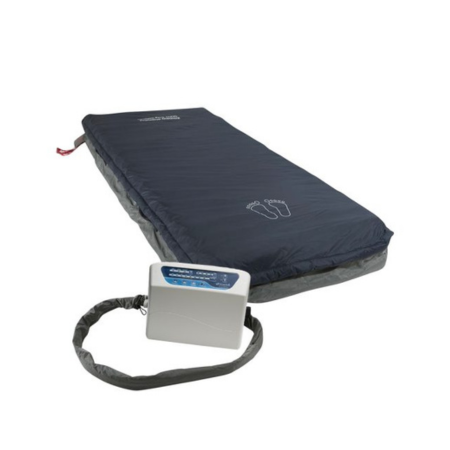
Protekt® Aire 6000 Low Air Loss Mattress System
Low air loss, programmable alternating cycles, seat support and a lower air-filled safety base.
Review this mattressMedical Mattress Recommendations by Real-World Need
This recommendation center organizes MedCare Mobility mattresses by the problem they are designed to solve. The framework remains editorial: compare intended use, specifications, limitations, bed compatibility, caregiver workflow and clinical guidance.
MedCare Mobility sells products shown below. A mattress should not be selected solely because it appears here. Verify the current product configuration, manufacturer instructions, bed compatibility and patient-specific suitability.
Protekt® 300 Pressure Foam Hospital Bed Mattress
elderly patients, homecare users, rehab patients, and long-term care patients who need better pressure redistribution than a basic foam mattress but do not need powered air therapy
View mattress details
Protekt® 500 Gel Foam Medical Mattress
elderly patients, homecare patients, and long-term bed users who need a cooler, more breathable, more supportive foam mattress than standard foam
View mattress details
Protekt® Fiber Mattress
patients who need a firm hospital bed mattress, elderly users who prefer stable support, and facilities needing a lightweight, durable, non-powered support surface
View mattress details
Protekt® Supreme Support Self-Adjusting Air/Foam Mattress
patients who need advanced pressure redistribution but may not always need a fully powered air mattress. Also strong for bariatric users because of the wider 42”, 48”, and 54” sizes
View mattress details
Protekt® Aire 4000DX Hospital Air Mattress
patients needing low air loss plus alternating pressure therapy for pressure ulcer treatment and prevention
View mattress details
Protekt® Aire 7000 Lateral Rotation Mattress System
high-risk patients needing rotation therapy, pulmonary support, advanced pressure injury treatment, and moisture management
View mattress details
Protekt® Aire 3000 Alternating Low Air Loss Mattress System
moderate pressure sore risk, moisture concerns, and patients needing powered therapy at a more accessible level than premium systems
View mattress details
Protekt® 600 Bariatric Hospital Bed Mattress
bariatric patients at medium-to-high risk of pressure injury who need strong foam support and wider mattress sizing
View mattress details
Protekt® 100 Pressure Redistribution Foam Mattress
low-to-moderate risk patients needing soft foam pressure redistribution and better comfort than a standard hospital bed mattress
View mattress details
Invacare Deluxe Innerspring Hospital Bed Mattress
users who prefer firm traditional innerspring support instead of foam immersion or air therapy
View mattress details
Invacare Essentials Mattress
homecare, residential care, long-term care, elderly users, and facilities needing an affordable pressure redistribution foam mattress
View mattress details
Invacare Softform Premier Bariatric Pressure Ulcer Mattress
bariatric users and very-high-risk patients needing premium foam-based pressure ulcer prevention without powered air therapy
View mattress details
Invacare Solace Prevention Bariatric Mattress
bariatric patients who need a 42” wide mattress with pressure sore prevention, stable edges, and easier transfer support
View mattress details
Invacare Solace Prevention Mattress
elderly patients, homecare users, rehab patients, and long-term bed users who need pressure sore prevention in a non-powered foam mattress
View mattress details
Invacare microAIR® MA500 Alternating Pressure Low Air Loss Mattress
low-to-medium risk patients needing entry-level powered alternating pressure and low air loss support
View mattress details
Invacare Bariatric Foam Mattress
bariatric users needing a simple, durable, non-powered 42” hospital bed foam mattress
View mattress details
Invacare microAIR® MA600 Low Air Loss Mattress
medium-to-high risk patients who need stronger therapy than MA500 while staying in a 36” hospital bed configuration
View mattress details
Invacare microAIR® MA800 Alternating Pressure Low Air Loss Mattress System
medium-to-high risk patients, bariatric patients, and users with moisture, maceration, sweating, or advanced pressure injury concerns
View mattress details
Joerns PrevaMatt Hospital Bed Mattress Series
customers who need to choose by clinical level: Basic for simple prevention, Defend for heel protection and Stage 1 prevention, Console for memory foam comfort, and Alleviate for advanced pressure redistribution with optional TEMPUR® support
View mattress details
Invacare microAIR® MA900 Lateral Rotation Low Air Loss Mattress System
very-high-risk patients who need turning assistance, pulmonary positioning support, advanced moisture control, and lateral rotation therapy
View mattress details
Protekt® Aire 6000 Low Air Loss Mattress System
High-risk, long-term and clinically supervised pressure-injury care requiring dynamic pressure redistribution and microclimate management.
View mattress detailsComplete Medical and Hospital Bed Mattress Library
Use the filters to narrow the complete supplied mattress catalog by support type and care need. Filters organize products; they do not diagnose the patient or confirm clinical suitability.
Protekt® 300 Pressure Foam Hospital Bed Mattress
elderly patients, homecare users, rehab patients, and long-term care patients who need better pressure redistribution than a basic foam mattress but do not need powered air therapy
View mattress details
Protekt® 500 Gel Foam Medical Mattress
elderly patients, homecare patients, and long-term bed users who need a cooler, more breathable, more supportive foam mattress than standard foam
View mattress details
Protekt® Fiber Mattress
patients who need a firm hospital bed mattress, elderly users who prefer stable support, and facilities needing a lightweight, durable, non-powered support surface
View mattress details
Protekt® Supreme Support Self-Adjusting Air/Foam Mattress
patients who need advanced pressure redistribution but may not always need a fully powered air mattress. Also strong for bariatric users because of the wider 42”, 48”, and 54” sizes
View mattress details
Protekt® Aire 4000DX Hospital Air Mattress
patients needing low air loss plus alternating pressure therapy for pressure ulcer treatment and prevention
View mattress details
Protekt® Aire 7000 Lateral Rotation Mattress System
high-risk patients needing rotation therapy, pulmonary support, advanced pressure injury treatment, and moisture management
View mattress details
Protekt® Aire 3000 Alternating Low Air Loss Mattress System
moderate pressure sore risk, moisture concerns, and patients needing powered therapy at a more accessible level than premium systems
View mattress details
Protekt® 600 Bariatric Hospital Bed Mattress
bariatric patients at medium-to-high risk of pressure injury who need strong foam support and wider mattress sizing
View mattress details
Protekt® 100 Pressure Redistribution Foam Mattress
low-to-moderate risk patients needing soft foam pressure redistribution and better comfort than a standard hospital bed mattress
View mattress details
Invacare Deluxe Innerspring Hospital Bed Mattress
users who prefer firm traditional innerspring support instead of foam immersion or air therapy
View mattress details
Invacare Essentials Mattress
homecare, residential care, long-term care, elderly users, and facilities needing an affordable pressure redistribution foam mattress
View mattress details
Invacare Softform Premier Bariatric Pressure Ulcer Mattress
bariatric users and very-high-risk patients needing premium foam-based pressure ulcer prevention without powered air therapy
View mattress details
Invacare Solace Prevention Bariatric Mattress
bariatric patients who need a 42” wide mattress with pressure sore prevention, stable edges, and easier transfer support
View mattress details
Invacare Solace Prevention Mattress
elderly patients, homecare users, rehab patients, and long-term bed users who need pressure sore prevention in a non-powered foam mattress
View mattress details
Invacare microAIR® MA500 Alternating Pressure Low Air Loss Mattress
low-to-medium risk patients needing entry-level powered alternating pressure and low air loss support
View mattress details
Invacare Bariatric Foam Mattress
bariatric users needing a simple, durable, non-powered 42” hospital bed foam mattress
View mattress details
Invacare microAIR® MA600 Low Air Loss Mattress
medium-to-high risk patients who need stronger therapy than MA500 while staying in a 36” hospital bed configuration
View mattress details
Invacare microAIR® MA800 Alternating Pressure Low Air Loss Mattress System
medium-to-high risk patients, bariatric patients, and users with moisture, maceration, sweating, or advanced pressure injury concerns
View mattress details
Joerns PrevaMatt Hospital Bed Mattress Series
customers who need to choose by clinical level: Basic for simple prevention, Defend for heel protection and Stage 1 prevention, Console for memory foam comfort, and Alleviate for advanced pressure redistribution with optional TEMPUR® support
View mattress details
Invacare microAIR® MA900 Lateral Rotation Low Air Loss Mattress System
very-high-risk patients who need turning assistance, pulmonary positioning support, advanced moisture control, and lateral rotation therapy
View mattress details
Protekt® Aire 6000 Low Air Loss Mattress System
High-risk, long-term and clinically supervised pressure-injury care requiring dynamic pressure redistribution and microclimate management.
View mattress detailsNeed a Replacement Pump, Mattress Cover, Cell, Hose or Other Part?
Many replacement components are model-specific and may not be listed in a public category. MedCare Mobility can help identify and source compatible pumps, covers, cells, hoses, CPR components and other mattress-system parts.
Contact us with the mattress manufacturer and exact model
For the fastest help, provide the product name, model number, serial number when available, the part needed and a photo of the existing component or label.
- Replacement mattress pumps
- Top covers and full replacement covers
- Air cells, hoses and connectors
- CPR valves and related components
- Power cords, filters and pump accessories
- Other model-specific replacement parts
Do not substitute a pump, cover, air cell or connector solely because it looks similar. Provide the exact mattress model so compatibility can be verified.
Medical Mattress Setup, Cleaning and Maintenance
Follow the exact manufacturer instructions. The steps below are general planning reminders, not a substitute for the product manual.
Prepare the system
- Confirm bed and mattress size.
- Orient the head and foot correctly.
- Secure retainers and route hoses safely.
- Inflate and set the pump as instructed before use.
Monitor support and skin
- Check alarms, hoses, cells and surface firmness.
- Inspect skin according to the care plan.
- Keep the cover dry and properly positioned.
- Confirm the patient is not bottoming out.
Clean and inspect
- Use manufacturer-approved cleaning products.
- Inspect the cover for tears or fluid intrusion.
- Check filters, power cords and connectors.
- Remove damaged components from service.
Common Medical Mattress Mistakes—and What to Do Instead
Most problems arise when one part of the patient, bed, mattress and care-plan relationship is ignored.
Choosing by wound stage alone
Do instead: combine clinical evaluation with mobility, moisture, comfort, body size, turning and complete care needs.
Assuming every air mattress provides low air loss
Do instead: verify airflow, pump, cells, cover and the manufacturer’s stated therapy.
Ignoring repositioning because the mattress is advanced
Do instead: follow the individualized repositioning and skin-care plan unless a clinician changes it.
Ordering before measuring the bed deck
Do instead: confirm width, length, height, retainers, rails and articulation before purchase.
Exceeding the bed or mattress capacity
Do instead: follow the lowest approved limit in the complete bed system.
Blocking therapy with thick bedding
Do instead: use linens and pads that follow the manufacturer’s instructions and do not interfere with immersion or airflow.
Ignoring cover damage
Do instead: inspect routinely and replace damaged covers before fluid reaches the inner core.
Using the wrong replacement pump or part
Do instead: verify the exact model and approved replacement component.
Leaving pump settings unchanged in every position
Do instead: follow the manual and care plan for comfort, transfer and Fowler-position features.
Treating the mattress as the entire treatment plan
Do instead: integrate the surface with skin care, repositioning, nutrition, moisture management and clinical treatment.
Medical Mattress Guides, Assessment Tools and Comparison Resources
This knowledge base connects the complete MedCare Mobility mattress and pressure-care ecosystem by the decision each resource helps users make.
Choose the right mattress
Understand pressure injuries
Browse medical mattresses
Get replacement-part help
Continue across all equipment topics
Reference and link to these resources with clear attribution.
When citing clinical recommendations or statistics, review the original authority source. Product specifications and therapy claims should be checked against current manufacturer documentation.
Medical Mattress, Hospital Bed Mattress and Pressure-Relief Questions
Search or expand the most common questions about mattress types, powered therapy, sizing, pressure care, maintenance and replacement parts.
What is the difference between a hospital bed mattress and a regular mattress?
A hospital bed mattress is designed to fit and articulate with a medical bed and often includes healthcare-specific dimensions, fluid-resistant covers, pressure-redistribution materials or therapeutic air features. A regular mattress may not fit, bend or work safely with the bed and rails.
What is the best mattress for a hospital bed at home?
The best mattress depends on mobility, ability to reposition, skin condition, moisture, weight, comfort, bed dimensions and caregiver capability. Use the mattress assessment rather than choosing one model for every home.
What is a pressure-relief mattress?
Pressure-relief mattress is a broad shopping phrase for a surface intended to reduce concentrated pressure or improve redistribution. It can refer to foam, gel, alternating-pressure, low-air-loss or combination systems, which provide different levels of support.
Can a mattress prevent bed sores by itself?
No mattress can replace a complete prevention plan. Repositioning, skin inspection, moisture management, nutrition, transfers and clinical care remain important.
What is the difference between alternating pressure and low air loss?
Alternating pressure changes which air cells support the body over time. Low air loss uses controlled airflow to help manage heat and moisture. Some systems combine both therapies.
Is every hospital air mattress a low-air-loss mattress?
No. Verify the manufacturer’s airflow design, pump, cells, cover and intended therapy. An inflatable or alternating-pressure surface does not automatically provide true low air loss.
When should a foam medical mattress be considered?
Foam may be considered when a non-powered surface provides the needed pressure redistribution, comfort, capacity and support. Higher-risk or complex situations may require a different surface based on clinical evaluation.
What does cell-on-cell mean?
Cell-on-cell designs use an upper therapeutic air-cell section and a lower protected support section. The lower cells may retain air during power interruption to reduce sudden bottoming out.
What is Static Mode on an alternating-pressure mattress?
Static Mode pauses the alternating cycle and provides more uniform support. It may be used for selected transfers, care activities or comfort needs according to the product instructions.
What is Max Firm or Auto Firm Mode?
Max Firm or Auto Firm temporarily increases surface firmness for setup, transfers, repositioning or care procedures. The system should be returned to the prescribed therapeutic setting afterward.
What is Seat-Inflate mode?
Seat-Inflate adds support beneath the seated or sacral area when the head of the bed is elevated. It is intended to address increased loading in an upright position on compatible systems.
What is lateral rotation therapy?
Lateral rotation systems automatically turn or tilt the patient through programmed angles and cycles. They are advanced support surfaces for selected care plans and require clinical oversight, correct setup and monitoring.
Can a low-air-loss mattress replace repositioning?
Do not stop or change repositioning solely because of the mattress. Follow the individualized care plan and qualified clinical guidance.
What size mattress fits a standard hospital bed?
Many standard hospital beds use a mattress near 36 by 80 inches, but 76-inch and 84-inch lengths also exist. Confirm the exact bed-deck size and manufacturer compatibility before ordering.
Can I use a 42-inch mattress on a 36-inch hospital bed?
No. A wider mattress requires a matching wider bed deck and compatible frame. The mattress should not overhang an undersized bed.
How thick should a hospital bed mattress be?
Medical mattresses commonly range from about 6 to 10 inches, but the correct height depends on the mattress design, bed, rails, transfer height and manufacturer instructions.
Does mattress height affect bed-rail safety?
Yes. Mattress height and compressibility can change rail height and gaps within the bed system. Verify the approved mattress and rail combination.
What weight capacity should I choose?
Select a mattress and bed frame that each independently support the patient and all expected loads. Follow the lowest approved limit in the complete bed system.
What is a bariatric hospital bed mattress?
A bariatric mattress is designed for wider bariatric beds and higher support needs. Compare width, capacity, core design, edge support and the matching bariatric frame.
Why does my air mattress feel too firm or too soft?
Possible causes include the comfort setting, patient-weight setting, incorrect setup, hose issues, therapy mode or a malfunction. Follow the manual and contact support if the surface does not perform as expected.
What should I do if the mattress pump alarm sounds?
Check the power, hoses, connections, CPR valve, cells and the exact alarm instructions. Do not ignore or silence an unresolved alarm when therapeutic support may be interrupted.
What happens to an air mattress during a power outage?
Air retention varies. Some systems include cell-on-cell support or protected bases, while others may gradually lose pressure. Learn the model-specific emergency procedure before an outage.
Can I put a mattress pad on a low-air-loss mattress?
Use only linens and pads permitted by the manufacturer. Thick or non-breathable layers can interfere with immersion, pressure redistribution and airflow.
Can I use regular fitted sheets on a hospital bed mattress?
Use sheets that fit the mattress without compressing the surface or interfering with articulation. Powered systems may require specific guidance regarding sheet depth and breathability.
How should a medical mattress cover be cleaned?
Follow the manufacturer’s approved cleaners, concentrations and contact times. Avoid harsh chemicals or methods that damage the waterproof or vapor-permeable barrier.
When should a hospital bed mattress cover be replaced?
Replace the cover when it is torn, cracked, delaminated, permanently contaminated or no longer protects the inner core. Follow the manufacturer’s inspection criteria.
Can fluid enter a hospital mattress through a damaged cover?
Yes. A damaged cover can allow fluid intrusion into the inner mattress, which is why routine inspection and prompt replacement are important.
Can I buy a replacement pump for my hospital air mattress?
Often, yes, but pumps are model-specific. Call MedCare Mobility at 585-505-6665 or use live chat with the manufacturer, model number and a photo of the existing pump label.
Can I buy a replacement mattress cover?
Replacement covers are available for many models. Provide the exact mattress model, size and current cover details so compatibility can be confirmed.
Can individual air cells or hoses be replaced?
Many systems have replaceable cells, hoses or connectors, but the parts must match the exact model and configuration. Contact MedCare Mobility for sourcing help.
Does Medicare cover a pressure-relieving mattress?
Coverage depends on the support-surface group, code, documentation, supplier requirements and current Medicare policy. A product having an HCPCS code does not guarantee coverage for every patient or purchase.
Where can I compare hospital bed mattresses?
Use this Knowledge Base, the Hospital Bed Mattress Assessment and the MedCare Hospital Bed Mattress Comparison PDF, then verify exact product specifications.
Where can I buy a medical mattress for a hospital bed?
MedCare Mobility offers medical foam, innerspring, alternating-pressure, low-air-loss, lateral-rotation and bariatric hospital bed mattresses in the Medical Bed Mattress category.
Sources, Product Methodology and Medical-Safety Boundaries
This page combines manufacturer-supplied product details, the MedCare Mobility mattress catalog, existing educational resources and authoritative safety context. Specifications, therapy descriptions and availability can change and should be verified before purchase.
How information is organized
Mattresses are grouped by support method, power, pressure redistribution, microclimate management, dimensions, capacity, caregiver workload and intended setting.
How recommendations are framed
Recommendations identify use-case pathways and disclose important limitations. They are not wound staging, medical advice or guarantees of suitability.
How products are reviewed
Product names, images, URLs and summaries were drawn from the supplied MedCare Mobility mattress master sheet. Current variations and exact specifications should be checked before publishing and purchasing.
How safety claims are handled
General pressure-care, mattress-cover and home-device context links to authoritative organizations. Product operation remains governed by the manufacturer’s instructions and the patient’s care plan.
Explore the Complete Home Medical Equipment Knowledge Base
Continue researching patient lifts, medical mattresses, hospital beds, wheelchairs, walkers, cushions, seating, home safety and other care-equipment topics.