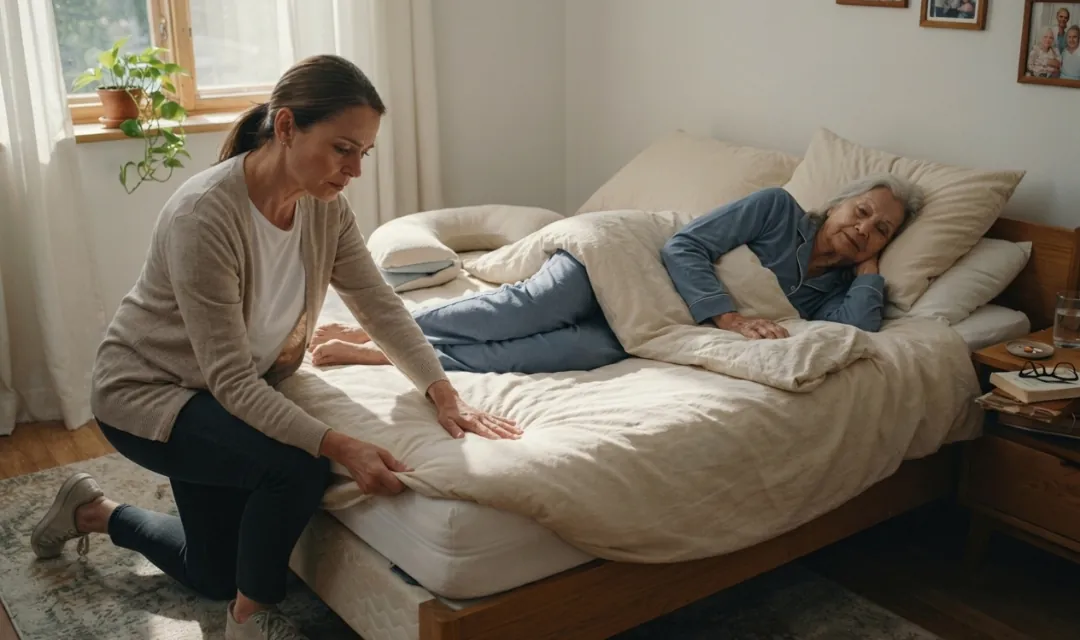
Related: 7 Signs the Mattress Is Working Against Your Loved One's Skin, a quick checklist of warning signs that a mattress is raising bed sore risk.

27
Oct
Hospital Bed Positions and Settings, Condition by Condition
Hospital Bed Setup Guide
A hospital bed is not one setting. The same bed can be flat, half upright, fully upright, tilted head down or tilted head up, raised to waist height or lowered almost to the floor. Each of those settings does a specific job, and the right one depends on the person in the bed: the dad with heart failure who can't breathe lying flat, the mom with dementia who gets up at 3 AM, the husband home after a stroke who can only push with one arm.
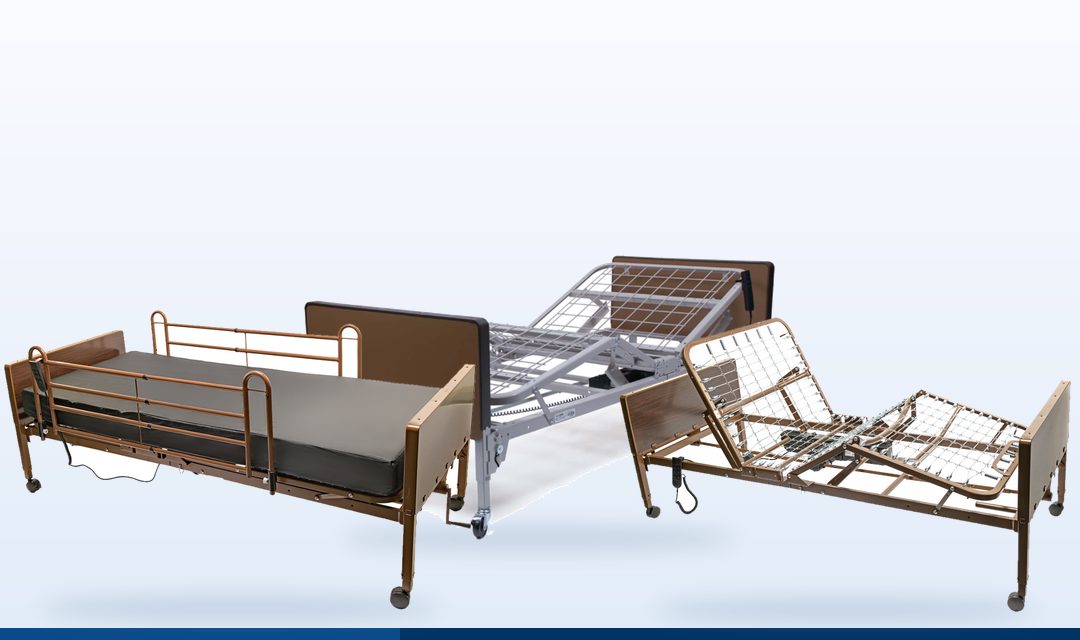
This guide explains every common hospital bed position and setting in plain words, then goes condition by condition: what usually goes wrong, which settings help, what to avoid, and which beds and accessories can actually do it. If you are still choosing a bed, start with our hospital bed buying guide, or compare our hospital beds for home use and the full range of hospital beds for sale, from homecare to long-term care models. This page is for setting the bed up and using it well.
What are the main hospital bed positions?
The main hospital bed positions are flat (supine), semi-Fowler's (head raised about 30 to 45 degrees), Fowler's (about 45 to 60 degrees), high Fowler's (close to 90 degrees, sitting straight up), Trendelenburg (the whole bed tilted so the head is lower than the feet), reverse Trendelenburg (tilted so the head is higher than the feet) and side-lying with a 30 degree tilt. A semi-electric bed can do the head and knee positions; Trendelenburg, reverse Trendelenburg and a one-touch chair position need a full electric bed that lists those functions.[1][2][9]
Jump to a section:
Positions
Hospital Bed Positions Explained: What Each One Is For
Nurses use these names every day. Families usually hear them for the first time at discharge. Here is what each one means and when it is used.[1][2]
| Position | How the bed is set | What it is used for | Bed that can do it |
|---|---|---|---|
| Flat (supine) | Deck level, head and knees down | Sleep, some exercises, checking skin, after a stroke when the therapist advises a flat bed | Any bed |
| Semi-Fowler's | Head up about 30 to 45 degrees, knees often slightly bent | Eating help, reflux, tube feeding, easier breathing, watching TV without sliding | Semi-electric or full electric |
| Fowler's | Head up about 45 to 60 degrees | Meals, talking, breathing difficulty, reading | Semi-electric or full electric |
| High Fowler's | Head up close to 90 degrees | Eating for people at risk of choking, severe breathlessness | Beds with a high head angle (many homecare beds stop near 65 to 70 degrees) |
| Trendelenburg | Whole deck tilted, head lower than feet | Clinical uses only; a care team decision. No longer routinely recommended for shock | Full electric beds that list Trendelenburg |
| Reverse Trendelenburg | Whole deck tilted, head higher than feet (about 15 degrees) | Keeps the body angled head-up without folding at the hips; used in clinical care | Full electric beds that list reverse Trendelenburg |
| 30 degree side-lying | Person turned about 30 degrees onto one side, supported with pillows or a wedge | Taking pressure off the tailbone while avoiding the hip bone | Any bed (a wedge or rail guard wedge helps hold the position) |
| Chair or cardiac chair | Head up, knees up, foot down, so the bed forms a chair | Sitting up for meals, getting ready to stand, breathing | Full electric beds with a chair function |
| Auto contour | Knees rise automatically as the head rises | Stops sliding down the bed when sitting up | Many full electric beds |
Fowler's vs semi-Fowler's: which one at home?
StatPearls describes high or full Fowler's as upright at about 90 degrees and semi-Fowler's as tilted back about 30 to 45 degrees.[1] At home, semi-Fowler's is the position you will use most: high enough to help breathing, reflux and eating, low enough that the person does not slide or sit on the tailbone for hours. Most homecare beds raise the head to about 65 to 70 degrees (the Medacure HCFE36 lists head 0 to 70 degrees), so true high Fowler's at home usually means extra pillows or a chair position.
Trendelenburg vs reverse Trendelenburg
Trendelenburg tilts the bed so the head is lower than the feet. Cleveland Clinic notes it was used for shock but "is no longer routinely recommended," and its risks grow with steeper angles and longer time.[2] At home, nobody should use head-down tilt unless a clinician has said so. Reverse Trendelenburg raises the head about 15 degrees over the feet with the body kept straight.[2] It is a care-team position too, but it is the reason many families ask for a "full electric bed with tilt."
If a doctor or therapist has asked for either one, the bed has to list it. On our site those include the Joerns WeCare Long Term Care Bed, the Joerns EasyCare Expandable Bed, the Invacare CS600 Full-Electric Bed, the Protekt Protopia BARI EXP Bariatric Bed (Proactive), the Medacure ULB3.9 Super Low Floor Bed and the Medacure Lincoln LX-BARI-S Bariatric Bed with Scale and Exit Alarm.
What is the difference between Trendelenburg and reverse Trendelenburg?
In Trendelenburg the whole bed tilts so the head is lower than the feet. In reverse Trendelenburg it tilts the other way, so the head is about 15 degrees higher than the feet. Both keep the body straight instead of bending at the hips, and both are clinical positions used on a care team's advice.[2]
Settings
The Settings That Matter as Much as Position
Bed height: low for rest, high for care
The FDA's bed safety guide gives the rule simply: keep the bed in the lowest position with the wheels locked.[4] Raise it only while you are giving care, then lower it again before you step away. That one habit protects the person (a shorter fall) and the caregiver (less bending). A hi-lo full electric bed does both with a button; a semi-electric bed changes height with a hand crank, which is why caregivers with back pain usually end up wanting full electric.
How low is low? It varies a lot: the Protekt Akra-SE and Invacare IVC Semi-Electric sit at 15 to 23 inches, the Akra-FE goes down to 9 inches, the Invacare IVC Low to 9.5 inches, the Medacure ULB7/30 to 7 inches and the Medacure ULB3.9 to 3.9 inches. For more on deck types and room measurements, see the Hospital Bed Knowledge Base.
Rails: up, down, half or none
Rails help some people and endanger others. The FDA lists the benefits (turning and repositioning, a hand hold, a feeling of security, reaching the controls) and the risks: strangling, suffocation or death when someone is caught between rails or between the rail and mattress, worse falls when people climb over rails, bruises and cuts, and agitation when rails are used as a restraint.[4] Between 1985 and 2013 the FDA received 901 reports of people caught, trapped, entangled or strangled in hospital beds, including 531 deaths; most were frail, elderly or confused.[3]
Alarms and floor mats
A bed exit alarm warns you when someone sits up or leaves the bed. A floor mat softens a fall that still happens. The FDA suggests mats next to the bed when a person is at risk of falling out, "as long as this does not create a greater risk of accident."[4] Both are covered in detail in the safety section below.
By Condition
Bed Positions and Settings by Condition
Below, each condition gets the same four answers: what goes wrong in bed, which settings help, what to watch out for, and which products can do it. Your care team's instructions always come first. Our condition-based bed comparison covers which bed type to buy for each condition; this section is about how to set it and use it.
Dementia, Night Wandering and High Fall Risk
What usually goes wrong: The person wakes confused, tries to get up alone (often to use the bathroom), and either falls from a standard-height bed or climbs over a rail. More than one in four older adults report a fall every year.[14]
Settings that help:
- Bed at its lowest height whenever the person is resting, wheels locked.[4]
- A low or floor-level bed so a roll-out is a short drop, not a 20 inch fall.
- Mats beside the bed if they will not become a trip hazard when the person does get up.[4]
- Meet the reasons people get up: the FDA lists hunger, thirst, the bathroom, restlessness and pain.[4] A night light and a bedside commode within reach help.
- A short assist bar on the exit side instead of full-length rails, if the person can still stand.
Watch out for: Full rails raised on a confused person. The FDA links climbing over rails to more serious falls.[4]
Products that fit this need
- Medacure ULB3.9 Super Low Floor Bed (from $1,743.99): 3.9 to 25 inches, Trendelenburg and auto contour
- Medacure ULB7/30 Ultra Low Long Term Care Bed (from $1,470.99): 7 to 30 inches, Q-Bar assist bars included
- Invacare IVC Full-Electric Low Homecare Bed ($989.00): 9.5 to 20 inches
- Protekt Akra-FE Full-Electric Low Bed (Proactive) (from $799.99): 9 to 23 inches
- Medacure ProEx Firm Perimeter Mattress ($217.99): firm edges on both sides
- Medacure Lincoln LX-BARI-S Bariatric Bed with Scale and Exit Alarm (from $3,656.99): built-in bed exit alarm
Bed Sores, Pressure Injuries and Being Bed Bound
What usually goes wrong: A person who cannot shift their own weight sits on the same spots (tailbone, hips, heels) for hours. Sitting high in bed adds sliding and shear on the tailbone.
Settings that help:
- A turning schedule set by the nurse, alternating sides. A common pattern in research is left side with a 30 degree tilt, then on the back with the head and foot raised 30 degrees, then right side with a 30 degree tilt.[16]
- For the 30 degree side-lying position, NPIAP suggests checking with your hand that the sacrum is off the bed.[9]
- Keep the head of the bed at 30 degrees or lower when the person doesn't need it higher. NPIAP advises a foam dressing on the sacrum when the head has to stay above 30 degrees.[9]
- Use auto contour or raise the knees a little before the head, so the person doesn't slide down.
- Slide sheets for boosting up the bed instead of dragging skin across the sheet.
Watch out for: Treatment of an existing wound is a clinical decision. Our bed sore guide explains stages and prevention, and the mattress guide compares surfaces.
Products that fit this need
- Medacure ProEx Memory Foam Mattress (from $198.99)
- Joerns PrevaMatt Foam Mattress (from $374.00)
- Medacure Air Wave AW7000 Alternating Pressure / Low Air Loss Mattress ($504.99)
- Medacure Comfort Zone Low Air Loss Mattress with Air Bolsters (from $707.99)
- Medacure Comfort Zone Lateral Rotation Mattress ($2,935.99)
- Joerns Hoyer Slide Sheets (from $84.00)
- Protekt Rail Guard Wedge (Proactive) (from $63.00): doubles as a positioning wedge
Heart Failure, COPD and Breathing Trouble
What usually goes wrong: Lying flat makes breathing harder. Cleveland Clinic notes people with orthopnea may need several pillows, and some sleep sitting up.[12] Pillows slip, the person slides down, and nobody sleeps.
Settings that help:
- Semi-Fowler's or Fowler's, with the knees slightly raised to stop sliding.
- A chair or cardiac chair position for long stretches of sitting up, if the bed has one.
- Hi-lo height so the person can sit on the edge with feet flat before standing (breathless people tire fast).
Watch out for: Long hours sitting high put pressure on the tailbone. Combine with a pressure redistribution mattress and position changes.
Products that fit this need
- Invacare CS600 Full-Electric Bed ($1,375.00): cardiac chair and Trendelenburg
- Joerns EasyCare Expandable Bed (from $1,834.00): one-touch Comfort Chair
- Medacure HCFE36 Full-Electric Homecare Bed (from $701.99): head up to 70 degrees
- Protekt Protopia EXP Home Care Bed (Proactive) (from $1,325.00)
- Medacure ProEx Memory Foam Mattress (from $198.99)
Acid Reflux, Swallowing Problems and Tube Feeding
What usually goes wrong: Lying flat after meals lets stomach contents come back up. For people with swallowing problems or a feeding tube, that can mean aspiration.
Settings that help:
- For reflux, NIDDK suggests raising the head 6 to 8 inches with a foam wedge or pillows under the head and upper back.[11] A hospital bed does the same with the head section, without the wedge sliding away.
- For tube feeding, a nursing protocol studied in hospitals kept the head of the bed at 30 degrees or higher unless a doctor said otherwise.[10] Follow the feeding instructions from your care team.
- Upright (Fowler's or high Fowler's) for meals, then semi-Fowler's for a while after.
Watch out for: Balancing this with pressure care: when the head has to stay above 30 degrees, ask the nurse about protecting the sacrum (see the pressure section above).
Products that fit this need
- Medacure HCFE36 Full-Electric Homecare Bed (from $701.99)
- Medacure HCSE36 Semi-Electric Homecare Bed (from $596.99)
- Protekt Non-Tilt Overbed Table (Proactive) ($89.99)
- Invacare Tilt-Top Overbed Table ($165.00)
Stroke and One-Sided Weakness
What usually goes wrong: One side is weak or numb, so the person can't feel when an arm is trapped or a shoulder is out of line, and can only push up or roll with the strong side.
Settings that help:
- UMass Memorial's stroke positioning guide says that when lying down the bed should be flat, without tilting the head or foot, because that can make muscle tightness worse.[15] Ask the therapist whether this applies.
- Lying on the affected side, supported with pillows, is described as an important position.[15]
- Place the bed so the person gets out on their strong side, with an assist bar on that side.
- Put the overbed table, call button and phone where the person can see and reach them.
Watch out for: Full rails can trap a weak arm or leg the person doesn't feel.
Products that fit this need
- Medacure Q-Bar QB900 Bed Grab Bar (from $133.99)
- Medacure Pivot Assist Bar PAB100 ($148.99)
- Invacare Clamp-On Half-Length Rail ($199.00)
- Invacare Tilt-Top Overbed Table ($165.00): tilt top for reading and therapy work
Parkinson's Disease
What usually goes wrong: Turning over and getting out of bed are hard because of stiffness and slowness, especially at night when medication has worn off.
Settings that help:
- Parkinson's UK says satin sheets can help with turning over, with an area of friction at the end or sides of the bed so the person doesn't slide out too quickly.[13]
- Electric profiling or hospital beds help the person sit up from lying down; Parkinson's UK notes some people also find they reduce dizziness and ankle swelling.[13]
- Bedside grab rails help adjust position and get in and out, but need moderate upper body strength.[13]
- Head section up first, then swing the legs out: the bed does the sit-up work.
Watch out for: Over-bed trapezes let a person pull up to sitting,[13] but pulling is not the same as rolling. Ask an occupational therapist which suits the person.
Products that fit this need
- Medacure Universal Q-Bar UQB950 ($170.99)
- Joerns F025AL Assist Handle ($135.00)
- Invacare 7740A Trapeze Bar ($199.99)
- Protekt Akra-FE Full-Electric Low Bed (Proactive) (from $799.99)
- Joerns Mangar Sit-U-Up Pillow Lift ($675.00)
ALS, MS and Other Progressive Conditions
What usually goes wrong: Needs change month by month: first help sitting up, then help turning, then full care in bed.
Settings that help:
- Pick a full electric bed from the start, so height and position changes don't depend on someone cranking.
- Plan the surface in stages: foam first, then an alternating pressure or low air loss mattress, and lateral rotation if turning becomes hard.
- Leave room for a patient lift beside the bed (see our Patient Lift Knowledge Base).
Watch out for: A trapeze helps only while the arms are strong. It is not a long-term plan for weakening arms.
Products that fit this need
- Joerns UltraCare XT Bed (from $2,607.00): 7 inch low height, one-touch Comfort Chair
- Medacure ULB48-X Ultra Low Expandable Bed (from $1,736.99): expands 36 to 48 inches wide
- Medacure Air Wave AW7000 Alternating Pressure / Low Air Loss Mattress ($504.99)
- Medacure Comfort Zone Lateral Rotation Mattress ($2,935.99)
- Joerns Hoyer Slide Sheets (from $84.00)
After Hip or Knee Surgery
What usually goes wrong: Getting in and out without breaking the surgeon's movement rules, and without the caregiver lifting.
Settings that help:
- Raise the bed so the hips are at or slightly above the knees when sitting on the edge: standing up is easier and the hip bends less.
- A trapeze helps the person lift and shift in bed using their arms.
- Get out on the side the therapist recommends, and keep a walker beside the bed.
Watch out for: Follow the hip precautions you were given at discharge; settings that bend the hips sharply may be off limits for a while.
Products that fit this need
- Invacare 7740A Trapeze Bar ($199.99): rated 250 lb
- Medacure TR500 Floor Standing Bariatric Trapeze ($639.99): 500 lb, no bed attachment needed
- Joerns N529AL Bed Trapeze (for EasyCare) ($750.00)
- Stander Security Pole (from $209.99)
- Protekt Non-Tilt Overbed Table (Proactive) ($89.99)
Larger Bodies and Bariatric Care
What usually goes wrong: A standard 36 inch deck is too narrow to turn, rails press against the body, and the weight limit includes the mattress and anything on the bed.
Settings that help:
- Weight capacity above the person's weight plus mattress and accessories, with margin.
- A 42 to 48 inch wide deck so the person can turn and caregivers can position them.
- Hi-lo height for safe transfers, and a trapeze rated for the weight if the person can use one.
Watch out for: Rail gaps on a wider mattress: the mattress must fit the deck so no gap opens at the sides (see the entrapment zones below).[5]
Products that fit this need
- Protekt Protopia BARI EXP Bariatric Bed (Proactive) (from $1,599.00): 750 lb, 9 to 28 inches, Trendelenburg
- Protekt Akra Bariatric Bed (Proactive) (from $1,050.00): up to 1,000 lb
- Medacure Bariatric Homecare Bed (42/48/54 in) (from $1,393.99): up to 1,000 lb
- Medacure Lincoln LX-BARI-S Bariatric Bed with Scale and Exit Alarm (from $3,656.99): 750 lb, scale and exit alarm
- Invacare BAR600 Bariatric Bed ($2,775.00)
- Medacure Comfort Zone Bariatric Low Air Loss Mattress (1,000 lb) (from $1,143.99)
- Medacure TR500 Floor Standing Bariatric Trapeze ($639.99)
Hospice and End of Life at Home
What usually goes wrong: Comfort comes first: easier breathing, fewer painful turns, family close by, and no fighting with equipment.
Settings that help:
- Semi-Fowler's for breathing and comfort, with pillows for support.
- A low air loss or alternating pressure mattress to cut down on painful turns.
- Full electric height so family can give care at waist height and then lower the bed to sit close.
- If the person is on hospice, ask the hospice team first what they will supply, then fill the gaps.
Products that fit this need
- Medacure HCFE36 Full-Electric Homecare Bed (from $701.99)
- Medacure Comfort Zone Low Air Loss Mattress with Air Bolsters (from $707.99)
- Medacure Air Wave AW7000 Alternating Pressure / Low Air Loss Mattress ($504.99)
- Invacare Overbed Table with Auto-Touch ($189.99)
- Medacure Drop-Arm Folding Commode ($91.99)
When the Caregiver Has Back Pain
What usually goes wrong: Most care happens bent over a low bed: changing, washing, turning, dressing.
Settings that help:
- Raise the bed to working height for every task, then lower it to the lowest position when done.[4]
- Full electric height control, not a crank, so you actually do it every time.
- Slide sheets for boosting and turning instead of lifting.
- A battery backup so the bed can still lower in a power cut.
Products that fit this need
- Medacure HCFE36 Full-Electric Homecare Bed (from $701.99)
- Protekt Akra-FE Full-Electric Low Bed (Proactive) (from $799.99)
- Joerns EasyCare Expandable Bed (from $1,834.00)
- Joerns Hoyer Slide Sheets (from $84.00)
- Hospital Bed Battery Backup ($535.99)
Care Settings
Home, Long-Term Care, Assisted Living and Hospice: What Changes
The bed may be the same model. The rules and the people around it are not.
| Setting | Who sets the bed up | What is different | What to prioritize |
|---|---|---|---|
| Home | Family, with discharge or therapy advice | No one checks the rail and mattress fit for you. One or two caregivers, often not trained | Low height, easy controls, full electric if the caregiver has back pain, correct mattress size |
| Long-term care / SNF | Facility staff | Federal rules for bed rails: try alternatives first, assess entrapment risk, review risks and get informed consent, match the bed to the resident's size and weight, follow the maker's instructions{ref(7)} | Ultra-low beds, assist bars instead of full rails, durable frames, staff-friendly height range |
| Assisted living | Resident and staff, under state rules | Residents are usually more independent; rules for rails and equipment vary by state | Low beds that look like home furniture, assist handles, room for a walker |
| Hospice at home | Hospice team and family | Comfort-focused, often short-term, needs can change fast | Full electric, pressure relief mattress, overbed table, commode |
For facilities replacing beds after recent supply changes, our long-term care bed replacement page lists drop-in options. For moving from hospital to home, see our discharge planning guide.
Safety
Bed Rails, Entrapment Zones, Alarms and Mats: The Safety Settings
The 7 hospital bed entrapment zones
The FDA's dimensional guidance names seven places around a hospital bed where a person can get trapped.[5] Most come down to gaps: inside the rail, under it, beside the mattress, and at the head and foot ends.
| Zone | Where the gap is | FDA guidance (summary) | Simple fix |
|---|---|---|---|
| 1 | Inside the rail, between the rail bars | Under 120 mm (4 3/4 in) | Rails that meet the guidance; see-through rail covers |
| 2 | Under the rail, between the rail supports or next to one support | Under 120 mm (4 3/4 in) | Correct rail for the bed; correct mattress thickness |
| 3 | Between the inside of the rail and the mattress edge | Under 120 mm (4 3/4 in) | Mattress that fits the deck width; a gap filler wedge |
| 4 | Under the rail at its ends | Under 60 mm (2 3/8 in) | Rail and mattress made for the bed |
| 5 | Between split rails | Assessed by the facility | Avoid mixing rail parts |
| 6 | Between the end of the rail and the head or foot board | Assessed by the facility | Correct rail length |
| 7 | Between the head or foot board and the mattress end | Assessed by the facility | Mattress of the right length; a mattress extender on extended beds |
The most common home mistake is a mattress that is too narrow, too short or too soft at the edges for the bed it sits on. That opens zones 3 and 7. If you extend a bed to 84 or 88 inches, extend the mattress too: a Medacure Mattress Extender (from $60.99) closes the end gap, and a Protekt Rail Guard Wedge (Proactive) (from $63.00) fills the side gap between rail and mattress.
Clip-on "adult portable bed rails" for regular beds are a separate product class. The FDA notes death and injury reports for them, mostly entrapment, suffocation and falls,[6] and the CPSC issued a mandatory safety standard for them in 2023.[17] Our bed rails for seniors guide covers rails for regular beds and assist handles.
Do bed alarms prevent falls?
Not on their own. In a large hospital trial, an intervention that increased bed alarm use had no statistically or clinically significant effect on fall-related events.[8] An alarm only tells you someone is getting up; it works when someone can respond in time and when the reasons for getting up (bathroom, thirst, pain) are handled. At home, an alarm helps most for a caregiver who sleeps in the next room and needs a few seconds of warning. The Medacure Lincoln LX-BARI-S Bariatric Bed with Scale and Exit Alarm has a bed exit alarm built in.
Floor mats
The FDA lists mats beside the bed as an alternative to rails for people at risk of rolling out, with the warning that the mat must not create a bigger risk.[4] A beveled-edge mat beside a low bed is the usual pairing. Fold or move it when the person is up and walking.
Are bed rails safe for elderly people with dementia?
Often not. The FDA lists climbing over rails, entrapment between rail and mattress, and agitation as risks, and most entrapment deaths it received involved frail, elderly or confused people.[3][4] A low bed at its lowest height, a mat if it is not a trip hazard, and a short assist bar on the exit side are the usual alternatives.
Glossary
What Every Hospital Bed Feature Actually Means
Short definitions you can scan on a product page. For how each part is built and maintained, see the Hospital Bed Knowledge Base.
- Semi-electric
- Motors raise the head and knees; the bed height changes with a hand crank.
- Full electric
- Head, knees and height all move with the hand pendant. The one to choose if the caregiver will raise and lower the bed many times a day.
- Hi-lo
- The whole deck rises and lowers: low for rest and safety, high for care and transfers.
- Low and ultra-low bed
- A bed whose lowest height is about 7 to 10 inches, or less on floor-level beds, so a roll-out is a short drop.
- Auto contour
- The knees lift as the head lifts, so the person doesn't slide toward the foot of the bed.
- Trendelenburg / reverse Trendelenburg
- The whole deck tilts head-down or head-up with the body kept straight. Clinical positions used on a care team's advice.[2]
- Chair / cardiac chair position
- The bed folds into a seated shape: head up, knees up, feet down.
- Safe working load / weight capacity
- The total load the bed is rated for, usually including the mattress and accessories, not just the person.
- Half rail vs full rail
- A half rail covers the upper part of the bed and leaves a gap to get out; a full rail runs most of the length. Both need to match the bed and mattress to avoid entrapment gaps.[5]
- Assist bar / assist handle
- A short handle near the head of the bed to push up from and hold while standing. Not a fall barrier.
- Trapeze
- A triangle handle hung above the chest from a bed-mounted or floor-standing frame, so the person can lift and shift with their arms.
- Overbed table
- A rolling table on a C-shaped base that slides under the bed so the top sits over the person's lap, for meals, reading and therapy.
- Pressure redistribution foam
- Zoned or memory foam that spreads body weight over a larger area.
- Alternating pressure
- Air cells inflate and deflate in turn, so no spot stays loaded for long.
- Low air loss
- Air flows through the mattress surface to help manage heat and moisture at the skin.
- Lateral rotation
- The mattress slowly tilts the person side to side to help with turning.
- Bed exit alarm
- A sensor that sounds when a person sits up or leaves the bed.
- Central locking
- One pedal locks all the casters at once.
- Battery backup
- Lets an electric bed lower or flatten during a power cut.
Accessories
Trapeze, Overbed Table, Rails and Assist Bars: Who Each One Helps
| Accessory | Best for | Not ideal for | On our site |
|---|---|---|---|
| Bed-mounted trapeze | People with strong arms recovering from hip or knee surgery, or who reposition themselves | People with weak arms or shoulder injuries, or who should not pull up (ask the therapist) | Invacare 7740A Trapeze Bar ($199.99), Joerns N529AL Bed Trapeze (for EasyCare) ($750.00) |
| Floor-standing trapeze | Beds without a trapeze socket; bariatric users | Small rooms (needs floor space at the head of the bed) | Medacure TR500 Floor Standing Bariatric Trapeze ($639.99) |
| Assist bar / Q-bar | Standing up and sitting down at the bedside; stroke (on the strong side) | Stopping roll-outs (it is not a barrier) | Medacure Q-Bar QB900 Bed Grab Bar (from $133.99), Medacure Universal Q-Bar UQB950 ($170.99), Medacure Pivot Assist Bar PAB100 ($148.99), Joerns F025AL Assist Handle ($135.00) |
| Half rail | A hand hold for turning, and access to controls | People with dementia who may climb over it | Invacare Clamp-On Half-Length Rail ($199.00) |
| Rail guard wedge | Closing the side gap between rail and mattress; side-lying support | Replacing a correct-size mattress | Protekt Rail Guard Wedge (Proactive) (from $63.00) |
| Overbed table | Meals, reading, therapy work, keeping the call button in reach | Leaning on to stand up (it rolls) | Protekt Non-Tilt Overbed Table (Proactive) ($89.99), Invacare Tilt-Top Overbed Table ($165.00), Invacare Overbed Table with Auto-Touch ($189.99) |
| Transfer pole | Standing and pivoting next to any bed | Rooms where the ceiling cannot take the pole | Stander Security Pole (from $209.99) |
Browse the full range in trapeze bars, bed assists and accessories and overbed tables. Our overbed table guide compares tables in detail.
Quick Reference
Quick Reference: Settings by Condition
| Condition | Usual position | Bed height | Rails | Surface | Key accessory |
|---|---|---|---|---|---|
| Dementia / fall risk | As comfortable | Lowest when resting | Avoid full rails; short assist bar | Firm-edge foam | Floor mat, low or floor bed |
| Bed sores / bed bound | 30 degree side tilts, head 30 degrees or lower | Raise for care, lower after | As assessed | Alternating pressure or low air loss | Slide sheets, wedge |
| Heart failure / COPD | Semi-Fowler's to Fowler's, knees slightly up | Edge-sitting height for standing | Half rails or assist bar | Pressure redistribution foam | Chair position |
| Reflux / tube feeding | Head up (30 degrees or more for feeding, per care team) | As needed | As assessed | Foam | Overbed table |
| Stroke | Flat or as therapist advises; affected-side lying | Low | Assist bar on strong side | Foam | Tilt-top table |
| Parkinson's | Use head section to sit up | Low | Assist handle | Foam (satin sheet panel) | Pillow lift, trapeze if advised |
| ALS / progressive | Changes over time | Full electric | As assessed | Foam, then air | Patient lift space |
| Hip / knee surgery | As surgeon allows | Hips at or above knees for standing | Half rail | Foam | Trapeze |
| Bariatric | As needed | Hi-lo | Rails sized for the bed | Bariatric foam or air | Bariatric trapeze |
| Hospice | Semi-Fowler's for comfort | Waist height for care | As family prefers | Low air loss or alternating | Overbed table, commode |
A short note on cost: the features in this guide (full electric height, tilt functions, ultra-low height, air surfaces) are what move a bed from a few hundred dollars to a few thousand. Buy for the settings the person actually needs today and in the next few months. Most orders ship within a day.
FAQ
Frequently Asked Questions
What is the Fowler's position used for?
Fowler's position, with the head of the bed raised about 45 to 60 degrees, is used for eating, talking, reading and easier breathing. Semi-Fowler's (about 30 to 45 degrees) is the everyday version for reflux, tube feeding and resting upright; high Fowler's is close to 90 degrees.[1]
What is the difference between Fowler's and semi-Fowler's?
Semi-Fowler's raises the head about 30 to 45 degrees; Fowler's raises it further, to about 45 to 60 degrees, and high Fowler's to about 90. At home, semi-Fowler's is the one used most because it helps breathing and reflux with less sliding and less pressure on the tailbone.[1]
What is reverse Trendelenburg used for?
Reverse Trendelenburg tilts the whole bed so the head is about 15 degrees higher than the feet, keeping the body straight instead of bending at the hips. It is a clinical position used on a care team's advice; a bed has to list it as a function to do it.[2]
Can a home hospital bed do Trendelenburg?
Some can. Semi-electric beds and basic full electric homecare beds usually raise only the head, knees and height. Beds that list Trendelenburg include the Joerns WeCare and EasyCare, the Invacare CS600, the Protekt Protopia BARI EXP and the Medacure ULB3.9 and Lincoln LX-BARI-S. Head-down tilt should only be used if a clinician asks for it.[2]
What is the best bed position for someone with heart failure or COPD?
Usually semi-Fowler's to Fowler's, with the knees slightly raised so the person doesn't slide down. People with orthopnea often need to sleep propped up.[12] A chair position helps for long periods of sitting up. Follow the care team's advice.
How high should a hospital bed be?
At its lowest whenever the person is resting, with the wheels locked, as the FDA recommends. Raise it to the caregiver's working height only while giving care, then lower it again.[4] For standing up, set it so the person's feet are flat on the floor.
Are bed rails safe for elderly people with dementia?
Do bed alarms prevent falls?
Not on their own. In a large hospital trial, increasing bed alarm use had no significant effect on falls.[8] An alarm gives a warning; it helps when someone can respond in time and the reasons for getting up are handled.
What are the 7 bed entrapment zones?
The FDA names seven gaps: inside the rail, under the rail, between rail and mattress, under the rail at its ends, between split rails, between the rail end and the head or foot board, and between the head or foot board and the mattress end. Zones 1 to 3 should be under 120 mm (4 3/4 in) and zone 4 under 60 mm (2 3/8 in).[5]
What does bed bound mean, and what bed settings help?
Bed bound means a person spends all or nearly all of their time in bed. The settings that matter most are a turning schedule with 30 degree side tilts, keeping the head of the bed at 30 degrees or lower when possible, and a pressure redistribution or air mattress.[9][16]
Not sure which settings your bed needs? Tell us the condition, the room and who is giving care, and we will match a bed, mattress and accessories. Call 585-505-6665 or email info@medcaremobility.com. Still comparing models? Our Hospital Bed Buying Guide walks through every bed type side by side.
Sources
Sources
All sources accessed October 27, 2026.
- StatPearls (NCBI Bookshelf): Anatomy, Patient Positioning
- Cleveland Clinic: Trendelenburg Position
- FDA: Hospital Beds (entrapment reports 1985 to 2013)
- FDA: A Guide to Bed Safety, Bed Rails in Hospitals, Nursing Homes and Home Health Care
- FDA: Hospital Bed System Dimensional and Assessment Guidance to Reduce Entrapment
- FDA: Safety Concerns about Adult Portable Bed Rails
- 42 CFR 483.25(n), Bed rails (eCFR)
- Shorr RI et al., Annals of Internal Medicine 2012: bed alarm cluster randomized trial
- NPIAP: Prevention Points
- Metheny NA et al., 2010: aspiration risk-reduction protocol (PMC)
- NIDDK: Treatment for GER and GERD
- Cleveland Clinic: Orthopnea
- Parkinson's UK: Bedroom equipment
- CDC STEADI: Patient and Caregiver Resources
- UMass Memorial Health: Good Positioning After a Stroke
- Gillespie BM et al., Cochrane review 2020: Repositioning for pressure injury prevention (PMC)
- CPSC: Adult Portable Bed Rails
This guide is general information, not medical advice. Positions and equipment should follow the instructions of the person's doctor, nurse or therapist.
Share: